
One day while I was minding my own business, I received an email from the fish and wildlife department. I had signed up to get them but not out of malice or some secret plan to track their actions, but I gotta say reading it gave me chills sadness and great disappointment… and that was my first reaction then it made me remember the elk kill that happened in December 2011; for a little background. I was reading local online news when I saw an article about an elk kill that was going to happen that following Monday. It went on to say that there was a golf course built in the area and after two years the course was suffering from damage so a request for containment was obviously put in and approved. This story just gets worse as the silly and ugly of it all becomes known and the obnoxious takes over; I read for more information.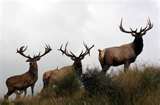 The article says about 30 Elk were noted encroaching, creating a mess for the owners and that a schedule of Elk Kills were made …I am becoming more upset and decided it is time to call. The contact person was great, but he said that there were only about three Elk. The dept. had arranged with the Owners of the golf course, but between you and me, it did not sound kosher because the kill had not been announced, the community did not know and the tribes in that area seemed to be left out as well. I am not against sport fishing or hunting but this is not the definition of it… it seems more like legalized poaching, which is wrong on so many levels. My dad hunted and fished but in the good way. Anyway, I decided to put the original article and my reaction out into the airwaves to see what would happen. Apparently, the story was already getting a negative response with plenty of phone calls to the department. Thank goodness the community heard about it and demanded the kill be stopped. The area’s tribe stated they did not know about the kill and stated that some of the land where the kills would take place were on sacred land, which made me relax because unless or until a mutual agreement is made the Elk just might be safe. If they needed the meat, far be it from me to obstruct as long as the tribes and that area’s food banks are filled for the local communities. I cannot say that was on their minds though as one of the employee’s stated online, if they had just kept it quiet, the commotion would be less… there is more but I will spare you…
Now, in a different part of the Pacific NW, not only are they hiring to help with the elk kill they have a wait list of volunteers and “paid helpers” to “round” up the elk which is sickening. Why? Because not too long ago the number of Elk was reduced to almost zero and five years later WA state decides to thin out the Elk again. btw wtf is taking the most sought out meat home? Again, another …hmmm did they talk to that area’s tribes?
My inquiry is below
Hello:
I just had to respond to an email, which I guess I subscribed to on a regular basis. First, I want to state that I have nothing against hunting, but I really do not understand why these elk kills are put on if the elk are truly not harming anyone. If someone could explain to the public who decides the kills are needed and why and how many and what could be done other than an every 5yr plan or so. I have to ask because the available habitat seems to be shrinking. At one point, the number of elk was very low with humans building roads and or homes on wildlife land. I assure you that I am not the only Washingtonian that misunderstands, and some object to the kills. I am no expert but who is invading whom. I received an email looking for volunteers, who included the following: “The department’s management plan calls for reducing the herd size to bring the number of animals into balance with available habitat,” Jonker said. For me, as a Washington resident exposed to hunting and fishing all my life; this just seems like a legalized poach and bringing the number in balance with the available habitat is only as big as the space taken up by the next golf course or family center or housing development. I do not understand who gets the meat, hopefully it will go to ALL the Tribes in that area … who, should be the only “hunters” by the way or the areas food banks but the whole “Volunteers” are needed to facilitate access for elk hunts “sounds the opposite of what hunting is all about.
Their response:
Thank you for contacting the Department of Fish and Wildlife. I am forwarding your e-mail to our Wildlife Management Program, so they can address your concerns.
If you have, any questions please feel free to contact us at360-902-2464 or email us atlicensing@dfw.wa.gov.
Nicole
**************************************************
Like I said, I have nothing against hunting and fishing but what we have here is nothing close and poaching wildlife that already is dealing with humans that have decided to not just spread out but develop land at whatever cost to the Wildlife, just is opposite of Washington State should be about. They have been trying to bring back other predators and given how much development has been created… NOW, puts not only residents at risk but kids and animals on what feels like a monthly basis! There are Black and Brown bears, bob cats and such folks are told to beware of don’t do this that and the other … uh, live side by side? They want and want food…right? It’s up to the department to instruct and fine those who don’t exercise proper sanitation and or maybe don’t know how to clean their area, so wildlife stay in the habitat, which btw is surrounded by homes, schools and off-road trails… sigh 
Washingtonians also have issues with Whales beaching themselves, not only are they dying of unknown illnesses, but pods of tagged Females are also having trouble keeping their calves alive. It could even be how they are being handled and honestly the possibility of sonars being the only thing,” those in the know” seem to be pointing toward as more and more die is weird. I may not know anything about the Puget Sound’s Whales, but I do feel that our Navy should cease and desist with all the sonar or at least tell the public what the sonars are being used against. IMHO, Sonars are just the beginning or the problem, there are Cruise Ships, Trollers, Boaters and Whale Watching Boats that are not only getting too close, but testing has also found Fuel and Garbage harming and or killing the Marinelife.
Organized kills of Marinelife and Wildlife should concern us all. Why? Because there is no announcement no explanation and this leaves some of us wondering what new development is about to shrink the habitat even more and who knows what the consequences will be but given what we’ve seen it can’t be good.
Nativegrl77


 1558 – Elizabeth I ascended the English throne upon the death of Queen Mary Tudor.


You must be logged in to post a comment.