
Have you gotten your copy?
|
||
|
|

“A room without a book is like a body without a soul.”
unknown
Have you gotten your copy?
|
||
|
|
 The Global Clean – Water Crisis
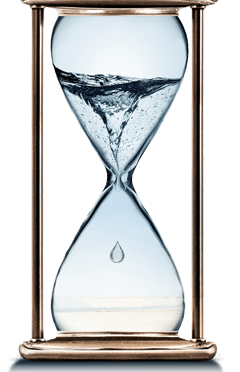
The Scientists in Jessica Yu‘s documentary, about the global clean-water crisis, say that half the world’s population will no have access to adequate drinking water by the year 2025. The documentary is deftly constructed and devastating, the film is a stunning eye opener that will at the very least, have you taking shorter showers and turning off the tap while you brush your teeth. – jg Vogue
Last Call at the Oasis ~ the Book … edited by Karl Weber ~ the Video can be seen on youtube … Part 1 of 6 is below
Take a look at the Trailer below …
http://www.lastcallattheoasis.com/
https://www.facebook.com/lastcallattheoasis
http://twitter.com/#!/lastcalloasis
In select theaters 5/4
Developed, financed and executive produced by Participant Media, the company responsible for AN INCONVENIENT TRUTH, FOOD, INC. and WAITING FOR “SUPERMAN”, LAST CALL AT THE OASIS presents a powerful argument for why the global water crisis will be the central issue facing our world this century.
Illuminating the vital role water plays in our lives, exposing the defects in the current system and depicting communities already struggling with its ill-effects, the film features activist Erin Brockovich and such distinguished experts as Peter Gleick, Alex Prud’homme, Jay Famiglietti and Robert Glennon.
“The Sunburnt Queen is an extraordinary narrative. The writing’s fresh immediacy brings history to life.”—The Sunday Independent (South Africa)
In the late 1730s, the local inhabitants of South Africa found a seven-year-old girl called Bessie, washed ashore on the beach of the Wild Coast. Bessie was brought up by them, growing into a young woman of legendary beauty and wisdom, and marrying one of the most important tribal chiefs in the area.
Using oral histories and written accounts by early missionaries, Hazel Crampton traces the extraordinary story of Bessie and the turbulent history of the Eastern Cape.
Resource: amazon.com

so, i read this review of a book that took me back to information given to us in class at the UW …stunning, sad and eye opening information yet this book review revealed much more …
By Leonard Pitts Jr. / Syndicated columnist
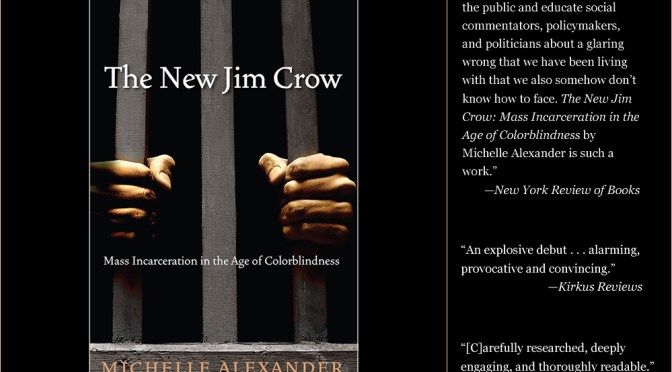
Michelle Alexander’s ‘The New Jim Crow,’ a troubling and necessary book
Columnist Leonard Pitts Jr. suggests reading “The New Jim Crow,” by Michelle Alexander, who contends that the mass incarceration of black men for nonviolent drug offenses, combined with sentencing disparities and laws making it legal to discriminate against felons in housing, employment, education and voting, constitute nothing less than a new racial caste system.
Syndicated columnist
Related
“You have to face the fact that the whole problem is really the blacks. The key is to devise a system that recognizes this all while not appearing to.”
— Richard Nixon as quoted by H.R. Haldeman, supporting a get-tough-on drugs strategy
“They give black people time like it’s lunch down there. You go down there looking for justice, that’s what you find: just us.”— Richard Pryor
Michelle Alexander was an ACLU attorney in Oakland, preparing a racial-profiling lawsuit against the California Highway Patrol. The ACLU had put out a request for anyone who had been profiled to get in touch. One day, in walked this black man.
He was maybe 19 and toted a thick sheaf of papers, what Alexander calls an “incredibly detailed” accounting of at least a dozen police stops over a nine-month period, with dates, places and officers’ names. This was, she thought, a “dream plaintiff.”
But it turned out he had a record, a drug felony — and she told him she couldn’t use him; the state’s attorney would eat him alive. He insisted he was innocent, said police had planted drugs and beaten him. But she was no longer listening. Finally, enraged, he snatched the papers back and started shredding them.
“You’re no better than the police,” he cried. “You’re doing what they did to me!” The conviction meant he couldn’t work or go to school, had to live with his grandmother. Did Alexander know how that felt? And she wanted a dream plaintiff? “Just go to my neighborhood,” he said. “See if you can find one black man my age they haven’t gotten to already.”
She saw him again a couple of months later. He gave her a potted plant from his grandmother’s porch — he couldn’t afford flowers — and apologized. A few months after that, a scandal broke: Oakland police officers accused of planting drugs and beating up innocent victims. One of the officers involved was the one named by that young man.
“It was,” says Alexander now, more than 10 years later, “the beginning of me asking some hard questions of myself as a civil-rights lawyer. … What is actually going on in his neighborhood? How is it that they’ve already gotten to all the young African-American men in his neighborhood? I began questioning my own assumptions about how the criminal-justice system works.”
The result is a compelling new book. Others have written of the racial bias of the criminal-injustice system. In “The New Jim Crow,” Alexander goes a provocative step further. She contends that the mass incarceration of black men for nonviolent drug offenses, combined with sentencing disparities and laws making it legal to discriminate against felons in housing, employment, education and voting, constitute nothing less than a new racial caste system. A new segregation.
She has a point. Yes, the War on Drugs is officially race-neutral. So were the grandfather clause and other Jim Crow laws whose intention and effect was nevertheless to restrict black freedom.
The War on Drugs is a war on African-American people and we countenance it because we implicitly accept certain assumptions sold to us by news and entertainment media, chief among them that drug use is rampant in the black community. But. The. Assumption. Is. WRONG.
According to federal figures, blacks and whites use drugs at a roughly equal rate in percentage terms. In terms of raw numbers, whites are far and away the biggest users — and dealers — of illegal drugs.
So why aren’t cops kicking their doors in? Why aren’t their sons pulled over a dozen times in nine months? Why are black men 12 times likelier to be jailed for drugs than white ones? Why aren’t white communities robbed of their fathers, brothers, sons?
With inexorable logic, “The New Jim Crow” propounds an answer many will resist and most have not even considered. It is a troubling and profoundly necessary book.
Please read it.
Miami Herald columnist Leonard Pitts Jr.’s column appears regularly on editorial pages of The Times. His e-mail address is: lpitts@miamiherald.com
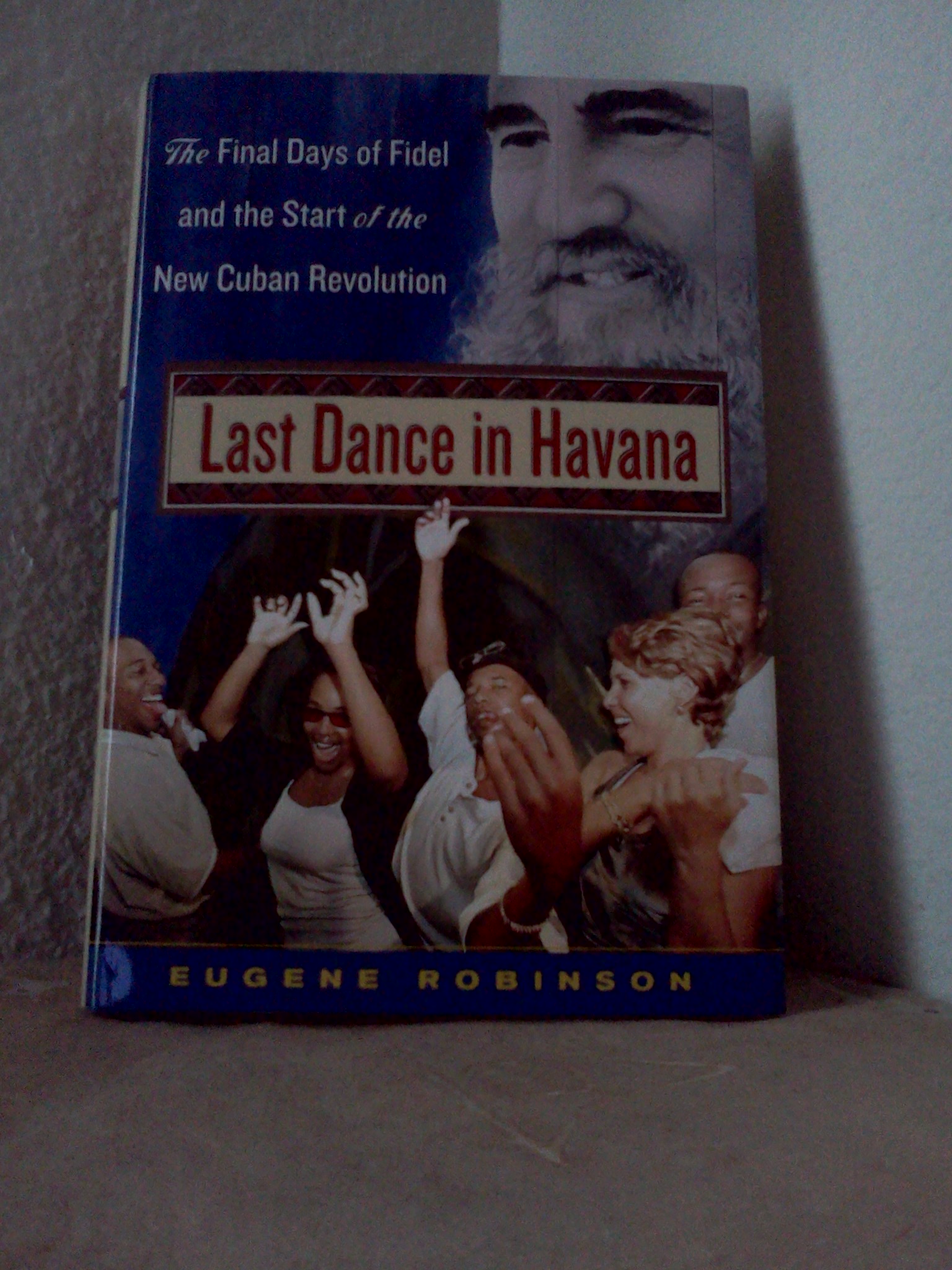
In power for forty-four years and counting, Fidel Castro has done everything possible to define Cuba to the world and to itself — yet not even he has been able to control the thoughts and dreams of his people. Those thoughts and dreams are the basis for what may become a post-Castro Cuba. To more fully understand the future of America’s near neighbor, veteran reporter Eug…moreIn power for forty-four years and counting, Fidel Castro has done everything possible to define Cuba to the world and to itself — yet not even he has been able to control the thoughts and dreams of his people. Those thoughts and dreams are the basis for what may become a post-Castro Cuba. To more fully understand the future of America’s near neighbor, veteran reporter Eugene Robinson knew exactly where to look — or rather, to listen. In this provocative work, Robinson takes us on a sweaty, pulsating, and lyrical tour of a country on the verge of revolution, using its musicians as a window into its present and future.
Music is the mother’s milk of Cuban culture. Cubans express their fondest hopes, their frustrations, even their political dissent, through music. Most Americans think only of salsa and the “Buena Vista Social Club” when they think of the music of Cuba, yet those styles are but a piece of a broad musical spectrum. Just as the West learned more about China after the Cultural Revolution by watching “From Mao to Mozart,” so will readers discover the real Cuba — the living, breathing, dying, yet striving Cuba.
Cuban music is both wildly exuberant and achingly melancholy. A thick stew of African and European elements, it is astoundingly rich and influential to have come from such a tiny island. From rap stars who defy the government in their lyrics to violinists and pianists who attend the world’s last Soviet-style conservatory to international pop stars who could make millions abroad yet choose to stay and work for peanuts, Robinson introduces us to unforgettable characters who happily bring him into their homes and backstage discussions.
Despite Castro’s attemptsto shut down nightclubs, obstruct artists, and subsidize only what he wants, the musicians and dancers of Cuba cannot stop, much less behave. Cubans move through their complicated lives the way they move on the dance floor, dashing and darting and spinning on a dime, seducing joy and fulfillment and next week’s supply of food out of a broken system. Then at night they take to the real dance floors and invent fantastic new steps. “Last Dance in Havana” is heartwrenching, yet ultimately as joyous and hopeful as a rocking club late on a Saturday night.






 Be a Seed for Change
You must be logged in to post a comment.