

 Comparing the Compensation of Federal and Private-Sector Employees
Category Archives: ~ politics petitions pollution and pop culture

Support Darcy Bruner … Jim Dean from … DFA

Washington DC is broken.
Washington state needs a representative who knows what it takes to fix the system and bring jobs back home. Darcy Burner is an engineer by training and a politician by necessity. She’ll work to get government working for all of us again — not just Wall Street.
In 2009, Darcy became the first President and Executive Director of ProgressiveCongress.org, a non-profit based in Washington, D.C. that works with the Congressional Progressive Caucus on public health, civil rights, education, environmental sustainability and economic opportunity. She is one of the progressive movement’s strongest allies.
With the overwhelming support of DFA members across the district, I am honored to announce Democacy for America’s endorsement of Darcy Burner for Congress.
Help send a true progressive to Congress by signing up to volunteer for Darcy Burner.
Help send a true progress to Congress by contributing $3 to Darcy Burner’s campaign.
Since we first endorsed Darcy Burner in 2006, she has work relentlessly to advance the progressive movement both in WA and in DC. Now, we need a progressive champion like Darcy inside Congress, someone with the tenacity and energy to bring real reforms.
We ask you to support Darcy with your vote, with your time and with your resources.
-Jim
Jim Dean, Chair
Democracy for America
Share this:


James Kvaal – Policy Director, BarackObama.com
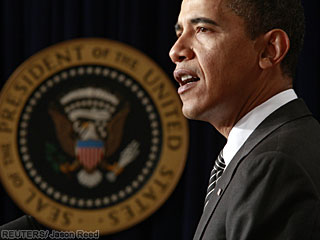
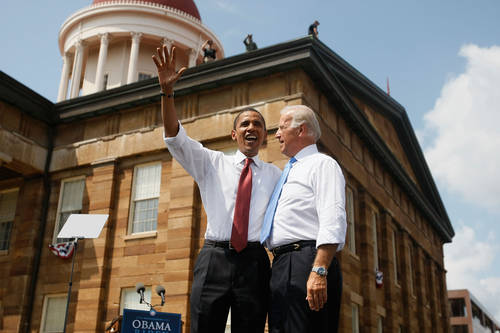 Here’s something that President Obama laid out in his State of the Union that I think deserves special attention:
Recent news reports have raised questions about whether members of Congress are profiting from inside information about the very businesses they’re supposed to be regulating — information about pending legislation that could move markets and generate investor profits.
The President offered one simple fix: End insider trading by members of Congress, extending the rules that apply to anyone else whose jobs give them access to sensitive information about businesses.
If you think this simple effort at good government should be a priority during this campaign, it’s up to you to speak out. Say you support the President and spread the word:
http://barackobama.com/Ban-Insider-Trading
Thanks,
James
James Kvaal
National Policy Director
Obama for America
P.S. — Here’s the full quote from the State of the Union:
“Send me a bill that bans insider trading by members of Congress; I will sign it tomorrow. Let’s limit any elected official from owning stocks in industries they impact. Let’s make sure people who bundle campaign contributions for Congress can’t lobby Congress, and vice versa — an idea that has bipartisan support, at least outside of Washington.”
Share this:


a message from Caroline Kennedy
 Four years ago today, I joined my Uncle Teddy and thousands of excited students at American University to endorse Barack Obama as the next president of the United States.
Barack Obama had stirred something in young people and the young at heart. I saw the passion in my own teenage children, and I heard it from a different generation of people who said they felt like they did when my father ran for president.
We felt strongly that we needed to elect a president who urged us to believe in ourselves, who could tie that belief to our highest ideals, and who understood that together we can do great things.
Four years later, as I think about what first inspired me to support Barack Obama, I’m proud we have a president who has fought hard for the values Teddy held dear, and stood up on issues that matter.
Will you join me by saying what first inspired you to stand with Barack Obama?
http://my.barackobama.com/Teddy
Teddy understood that the challenges of health care aren’t political — they are personal. That’s why he fought for 40 years to make health care a right and not a privilege for American families.
How proud he would have been to see his candidate sign the Affordable Care Act into law as president, giving all Americans the security of knowing that their health care will be there when they need it most.
In his speech four years ago today, Teddy reminded us all of that bright light of hope and possibility that shines even in the darkest hours. He knew that with Barack Obama as president, America would shine again. I don’t think he would be surprised to know that four years later, this president would have ended the war in Iraq, repealed “Don’t Ask, Don’t Tell,” and guaranteed women the right to equal pay for equal work.
The 2012 election will be harder than the last. As you think about what role you can play this time, I want you to remember that when Teddy joined this campaign, it wasn’t just Barack Obama who drew him in.
It was you.
The possibility of a campaign run by ordinary people determined to change our country for the better and willing to work as hard as necessary inspired him then, and it’s what inspires me today.
Thanks for all you do.
I’ll see you out there,
P.S. — If you’d like to take some time to watch that speech, it’s here.
Share this:

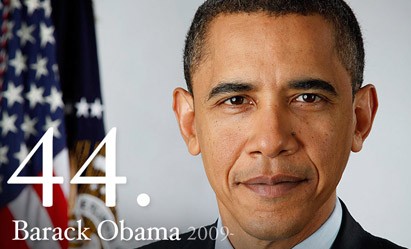
What a Fair Shot at Success Means …for ALL Americans
What a Fair Shot at Success Means
Posted by Matt Compton on December 6, 2011 at 6:47 PM EST
In the state where his mother was born, President Obama made an argument about laying a new foundation for broad-based prosperity in America.
“It starts,” he said, “with making sure that everyone has a fair shot at success.”
That means giving Americans the education, infrastructure, and resources necessary to out-innovate our global competitors, structuring our tax system fairly to pay for those investments, and it means creating an environment where everyone — from Main Street to Wall Street — plays by the same set of rules. The President said:
As infuriating as it was for all of us, we rescued our major banks from collapse, not only because a full blown financial meltdown would have sent us into a second Depression, but because we need a strong, healthy financial sector in this country.
But part of the deal was that we would not go back to business as usual. That’s why last year we put in place new rules of the road that refocus the financial sector on this core purpose: getting capital to the entrepreneurs with the best ideas, and financing to millions of families who want to buy a home or send their kids to college. We’re not all the way there yet, and the banks are fighting us every inch of the way.
And Republicans are standing with Wall Street to block broader reform by refusing to confirm a head of the Consumer Financial Protection Bureau — the watchdog group is charged with protecting everyday Americans from lenders who are out to take advantage of them. Here’s what President Obama had to say:
The man we nominated for the post, Richard Cordray, is a former Attorney General of Ohio who has the support of most Republican and Democratic Attorneys General throughout the country.
But the Republicans in the Senate refuse to let him do his job. Why? Does anyone think the problem before that led to this crisis was too much oversight of mortgage lenders or debt collectors? Every day we go without a consumer watchdog in place is another day when a student, or a service member, or a senior citizen could be tricked into a loan they can’t afford – something that happens all the time. Financial institutions have plenty of lobbyists looking out for their interests. Consumers deserve to have someone whose job it is to look out for theirs. And I intend to make sure they do.
The Senate is slated to vote on Richard Cordray’s confirmation later this week. Check back at WhiteHouse.gov for more information.
Learn more about , Economy
-
President Obama: “In America, We Are Greater Together”
Posted by Matt Compton on December 6, 2011 at 5:43 PM EST Members of the audience listen as President Barack Obama delivers remarks at Osawatomie High School in Osawatomie, Kansas, Dec. 6, 2011. (Official White House Photo by Pete Souza)
More than a century after Teddy Roosevelt outlined a vision for a “New Nationalism” in a Kansas town called Osawatomie, President Obama visited the same community to talk about what he called a make-or-break moment of the middle class.
He described how the world has undergone an economic transformation unlike any other in our collective history — and how that change has upended our expectations of social mobility in this country. Where professionals ranging from factory workers to travel agents to accountants once enjoyed the promise of a good job and steady income in exchange for their hard work, today they and a range of people like them must compete with new technology and individuals from around the world.
The President told the 1,200 people gathered in Osawatomie that there are two ways to respond to these challenges.
Some in Washington, he said, argue that we should let the markets take care of everything — rolling back regulation and slashing taxes:
Now, it’s a simple theory. And we have to admit, it’s one that speaks to our rugged individualism and our healthy skepticism of too much government. That’s in America’s DNA. And that theory fits well on a bumper sticker. But here’s the problem: It doesn’t work. It has never worked. It didn’t work when it was tried in the decade before the Great Depression. It’s not what led to the incredible postwar booms of the ‘50s and ‘60s. And it didn’t work when we tried it during the last decade.
Thankfully, President Obama said, we can choose a different path:
[T]here’s another view about how we build a strong middle class in this country — a view that’s truer to our history, a vision that’s been embraced in the past by people of both parties for more than 200 years.
It’s not a view that we should somehow turn back technology or put up walls around America. It’s not a view that says we should punish profit or success or pretend that government knows how to fix all of society’s problems. It is a view that says in America we are greater together — when everyone engages in fair play and everybody gets a fair shot and everybody does their fair share.
Read the entire speech here.


You must be logged in to post a comment.