Category Archives: ~ politics petitions pollution and pop culture

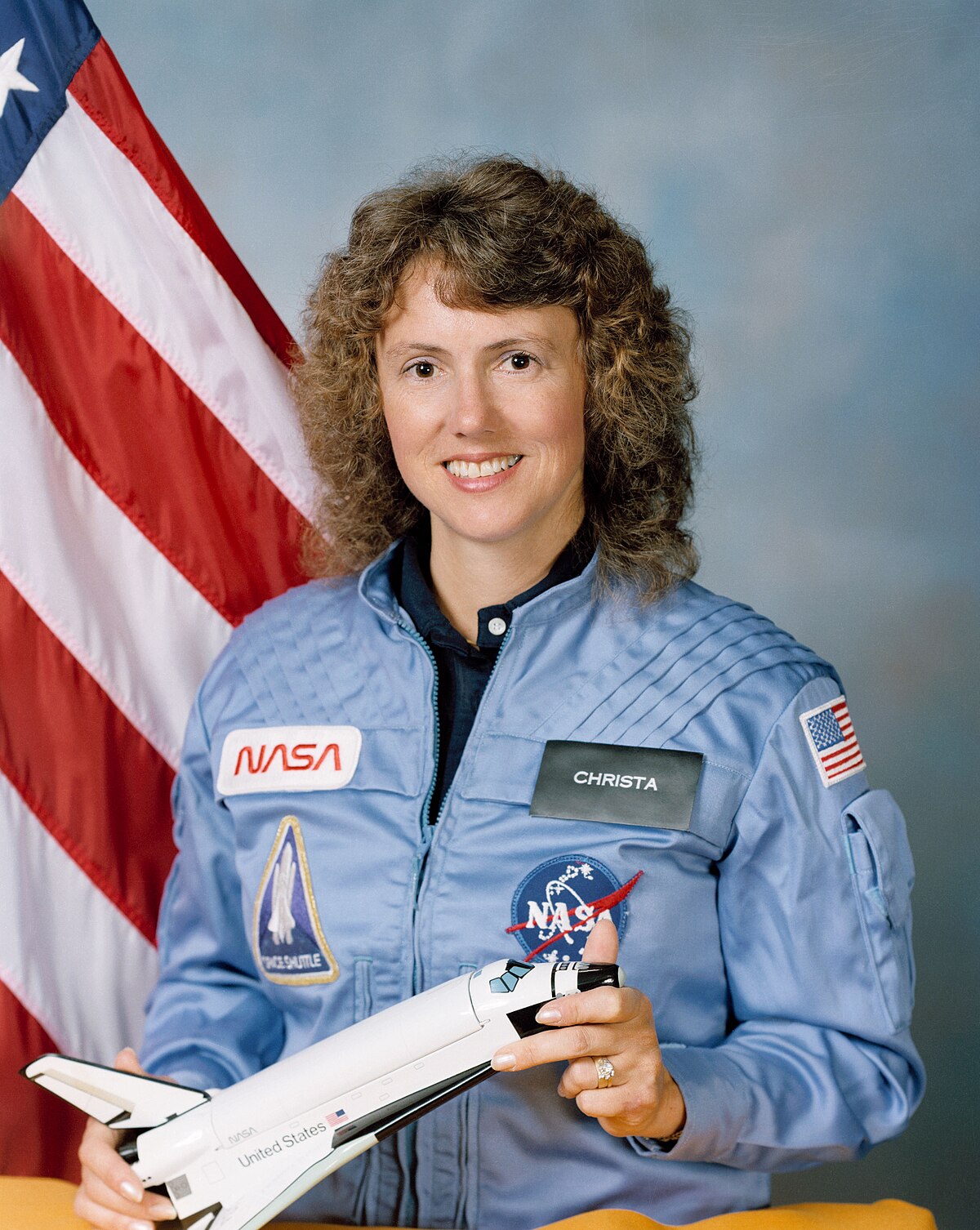
1985 – Christa McAuliffe of New Hampshire was chosen to be the first schoolteacher to ride aboard the space shuttle. She died with six others when the Challenger exploded the following year.


See the source image

Christa McAuliffe was an American teacher, selected from more than 11,000 applicants to be the first teacher in space. Tragically, she died just 73 seconds after liftoff of the space shuttle Challenger, along with six other astronauts.

She is remembered as a heroine by her profession by attempting to touch the future. Beginnings Sharon Christa Corrigan was born in Boston, Massachusetts, on September 2, 1948. Her parents were Edward and Grace Corrigan; she was the eldest of five children. Her family moved to the Boston suburb of Framingham when she was still young. She graduated from Marian High School in 1966. Christa attended Framingham State College, and majored in history. She received her bachelor of arts degree in 1970. Christa married her longtime boyfriend, Steve McAuliffe, a few weeks following her graduation. Shortly after they married, the couple moved to Washington D.C., so Steve could attend law school.

Christa taught until their first child, Scott, was born. She went back to college to earn her master’s degree in school administration from Bowie State College in 1978. Shortly after that, the couple moved to Concord, New Hampshire, where their second child, Caroline, was born. Steve began his law practice, and Christa stayed home with the children.

A celestial opportunity Christa McAuliffe accepted a social studies teaching position at Concord High School in 1982. Two years later, she learned of NASA’s search for a teacher to fly on the space shuttle. NASA was looking specifically for someone who could teach classes while in orbit. McAuliffe could not pass up the opportunity. She filled out the 11-page application, mailed it at the last minute and waited. When she became a finalist, she still did not believe she would be the one picked; some of the other hopefuls also were doctors, authors, and even scholars. On July 19, 1985, however, Christa McAuliffe was selected by NASA to be the first teacher in space. Considered by her students to be an “inspirational human being, a marvelous teacher who made their lessons come alive,” McAuliffe lived up to her nickname, “Field Trip Teacher.” She insisted it was direct experience that made the most effective teaching tool — her upcoming voyage on the Challenger being the “Ultimate Field Trip.” In addition to seeking an innovative teacher, NASA was looking for a regular person to whom regular people could relate; McAuliffe was that person. She would be an ordinary person — to do the extraordinary.

A training regimen In the fall of that year, MacAuliffe took a year’s leave of absence (NASA paid her salary) to train for the 1986 space shuttle mission. She would be a payload specialist on the STS-51-L crew, teach lessons from space, and keep a journal of her experiences. McAuliffe wanted to show the crew that she was not just along for the ride and could work as hard as they did. The other crew members treated her as a part of the team. She trained with them for 114 hours, and when it was time to launch, she was ready.

The worst outcome However, on January 28, 1986, only 73 seconds after lift-off, the space shuttle Challenger exploded, killing all seven astronauts aboard. The entire world watched in horror and disbelief. McAuliffe’s mission to space ended in abrupt tragedy. Her motto was, “I touch the future, I teach”. She continues to teach by example to this day.

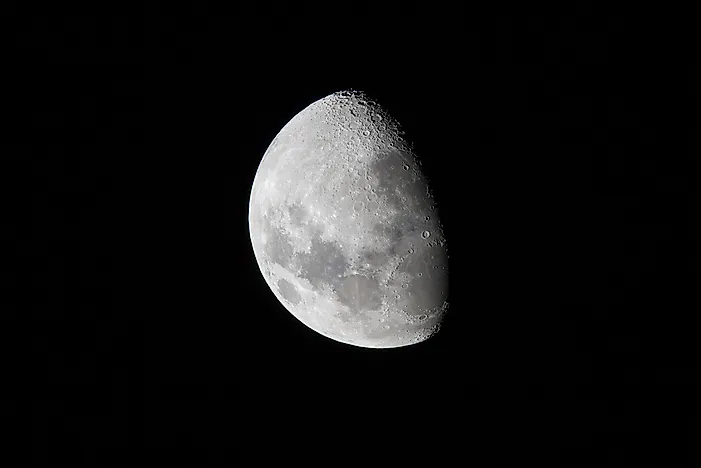
Posthumous honors The young teacher/astronaut has been honored at many events. She was awarded the Congressional Space Medal. The Christa McAuliffe Planetarium in Concord, New Hampshire, and the Christa McAuliffe Space Education Center in Pleasant Grove, Utah, were named in her memory, along with the asteroid 3352 McAuliffe and the McAuliffe moon crater. Numerous schools have been named after her as well.

u-s–history.com

Strike for better wages


600+ union members are on strike for better treatment, benefits, and decent pay raise. People have worked 12’s 7 days a week for months some the past year. We are ready for change to see our family and kids. Help us end Frito-Lays greed and stop them from treating their workers horribly and keeping them away from our family’s. 

1918 Nelson Mandela’s Birthday


Birthday – Nelson Mandela was born the son of a Tembu tribal chieftain on July 18, 1918, at Qunu, near Umtata, in South Africa. He became a lawyer, joined the African National Congress (ANC) in 1944, eventually becoming deputy national president in 1952. In 1964, he was convicted for sabotage as a result of his participation in the struggle against apartheid. He spent the next 28 years in jail, but remained a symbol of hope to South Africa’s non-white majority. Released in 1990, he was elected was elected President of South Africa in 1994 in the first election in which all races participated.

The U.S. Constitution: Preamble


The preamble is an introduction to the highest law of the land; it is not the law. It does not define government powers or individual rights. Establish Justice is the first of five objectives outlined in the 52-word paragraph that the Framers drafted in six weeks during the hot Philadelphia summer of 1787.

The preamble sets the stage for the Constitution (Archives.gov). It clearly communicates the intentions of the framers and the purpose of the document. The preamble is an introduction to the highest law of the land; it is not the law. It does not define government powers or individual rights.

Establish Justice is the first of five objectives outlined in the 52-word paragraph that the Framers drafted in six weeks during the hot Philadelphia summer of 1787. They found a way to agree on the following basic principles:

“We the People of the United States, in Order to form a more perfect Union, establish Justice, insure domestic Tranquility, provide for the common defense, promote the general Welfare, and secure the Blessings of Liberty to ourselves and our Posterity, do ordain and establish this Constitution for the United States of America.”

uscourts.gov

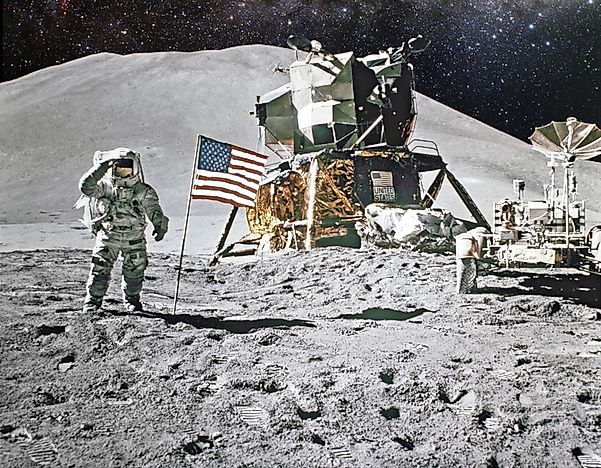
1969 -10 Amazing Facts About The Apollo 11 Moon Landing


Although the first moon landing was an amazing feat within itself, there is also a fascinating amount of trivia that surrounds the landing.

“That’s one small step for (a) man, one giant leap for mankind.” Those were the famous remarks made by astronaut Neil Armstrong as he made the first human footprints on the Moon. The Apollo 11 was the government mission that aimed to have a manned lunar landing which featured the spacecraft “Eagle” launched from the “Saturn V” rocket. The Moon landing was arguably one of the most critical landmarks of human civilization and its significance still resonates today. While the event remains to be hugely popular both in the scientific world as well as in pop culture, several fun facts about the mission still remain relatively unknown.

10. Armstrong carried with him a piece of wood from an airplane that belonged to the Wright brothers.

The first recorded flight was achieved by the Wright Brothers in 1903, 66 years before the first manned lunar mission. Thus, Neil Armstrong saw it fit to take with him pieces of wood from the pioneering Wright plane as well as a piece of fabric from the plane to symbolize the great progress made in aviation. Armstrong held these in his “personal preference kit” (PPK). The Wright Brothers, like Neil, were from the state of Ohio. The artefacts now sit in the Smithsonian museum in Washington, D.C.

9. If Apollo 11 had failed, President Nixon had a speech ready.

Although the Apollo 11 now has a cemented place in world history, at the time of its launch its success was not so certain. The mission had such a large risk of failing, in fact, that President Richard Nixon had a speech at the ready in case of catastrophe. As nobody had ever once landed on the Moon, it was not known whether or not it was even possible to takeoff from the Moon in order to return back to Earth. Thankfully, there was never occasion for the use of the speech, although copies of the text have since surfaced.

8. Armstrong and Aldrin spent almost a full day on the Moon’s surface.

The period spent outside the probe while on the Moon is known as “extravehicular activity”, or EVA, a term that covers any astronaut activity performed beyond the Earth’s atmosphere. Due to the many experiments the astronauts conducted on the Moon as well as placement of the many instruments involved, the total EVA lasted 21 hours and 36 minutes. However, only a few hours of time was spent on the lunar surface itself, as the astronauts took breaks in the probe as well.

7. After returning to earth, the astronauts had to be placed into quarantine.

After landing on Earth, the three astronauts were promptly taken to a quarantine facility where they remained for 21 days. The reason behind this strange action was to prevent contamination of any micro-organisms carried by the crew from the Moon, as the astronauts were returning from very uncharted territory. Nobody in the space program was sure whether or not the lunar surface was sterile. Of course, later studies confirmed the Moon to be void of any forms of life.

6. The astronauts left pictures of human beings and the recordings of many languages on the Moon’s surface.

The astronauts left several items on the surface of the Moon, including pictures of human beings as well as audio recordings of several different languages to represent the global significance of the mission. Medallions bearing names of the three astronauts who perished in Apollo 1 on the launch pad and the two cosmonauts who perished in a similar accident were all left on the surface of the Moon as well.

5. The astronauts declared “moon rock and moon dust samples” to customs when they returned to Earth.

#5 The astronauts declared "moon rock and moon dust samples" to customs when they returned to Earth.

In 2015, Buzz Aldrin tweeted a “travel voucher” that outlined the nature of expenses incurred from his trip out of the atmosphere, just like somebody would for a trip of a more Earthly nature. In addition, he revealed that the astronauts were required to sign customs forms upon their return to Earth, upon which they declared to be carrying “moon rock and moon dust samples”.

4. The astronauts landed with only 25 seconds of fuel to spare.

In vein with the intricate planning of the Apollo 11 mission, a site on the Moon was picked as the landing site that was thought to be a clear choice. However, while the Apollo probe was descending, the two astronauts realized the site was filled with boulders and knew it would be hazardous to attempt their descent. Therefore, Armstrong began to manually navigate the probe which involved skimming over the risky site, a decision which meant more fuel would be consumed while skimming over the location. The probe had a fuel limit set where upon reaching it, automatic abort of the landing would begin. The probe landed 25 seconds before reaching this point. What this means is that if the probe were 25 seconds late on its landing, automatic abortion of the mission would have occurred, forcing them to travel back to the Columbia that was orbiting the Moon.

3. The exact phrase uttered by Armstrong has been disputed.

“That’s one small step for man, one giant leap for mankind” is a phrase familiar to many, but did you know that its accuracy has been disputed by Armstrong himself? The exact quote, Armstrong claimed, is actually “that’s one small step for a man, one giant leap for mankind.” Although many claimed to not hear this subtle variation, linguists have confirmed that Armstong does in fact utter “a”, leading to the quote to most officially be presented with the article in brackets.

2. The landing was watched on television by an estimated 600 million people.

The record-breaking event was seen by millions of viewers around the planet. In the days preceding the mission, media outlets all over spoke extensively of the mission, leading to widespread public anticipation. There was a great amount media coverage of the event in the United States, and it is estimated that over 53 million families watched the mission on television. Global viewership was estimated to be more than 550 million viewers, a world record at the time.

1. Although there were three astronauts sent to the Moon, only two of them actually stepped on it.

Many people who have knowledge of the Apollo mission believe that the probe carried only two astronauts, Neil Armstrong and Buzz Aldrin, with Armstrong being more famous of the two. While it is true that the module that landed on the Moon carried the two astronauts, they were three in total when they left the Kennedy Space Center, Florida on July 16th, 1969. When the Apollo spacecraft approached the Moon, one module was left orbiting around the Moon and was piloted by the third astronaut named Michael Collins. Although Collins did not experience the glory of stepping on the Moon’s surface firsthand, the mission would not have been possible without him.

This page was last updated on April 25, 2017.
     On WorldAtlas.com