

   |
|||||
 |
|||||
 |
|
||||
|
|||||


Republican Health Care Hypocrites
How is this for outrageous hypocrisy?
One incoming House Republican freshman is already complaining that the affordable health care coverage he gets as a Member of Congress — the same coverage that Republicans want to repeal for hardworking families — doesn’t start soon enough!
That’s right. Despite having his own health care paid for by the taxpayers, this incoming House Republican wants to tell hardworking Americans who are struggling to make ends meet that they’re on their own when it comes to affording coverage for their own families.
How many other Republican health care hypocrites do you think there are? Let’s find out.
Our petition is simple. It asks whether House Republicans will stand by their words by refusing the tax-payer funded health care benefits they get before trying to repeal health care reform and make it harder for all Americans to get affordable coverage.
Let’s hold the Republicans’ feet to the fire by exposing all of the health care hypocrites in their ranks. Sign our petition today so we can hold them accountable starting right now.
Thanks,
Jon Vogel
DCCC Executive Director
Share this:


Bankrate.com
| Auto loan rates for Nov. 18, 2010 | 2010-11-19 |
| Here are the average auto loan rates from Bankrate’s weekly survey of large banks and thrifts. |
| 5 surprising stats about credit | 2010-11-19 |
| Think everything you’ve read about credit is true? These statistics may come as a surprise. |
| Home equity loan rates for Nov. 18, 2010 | 2010-11-19 |
| Here are the average home equity rates from Bankrate’s weekly survey of large banks and thrifts. |
| Credit card interest rates for Nov. 18, 2010 | 2010-11-19 |
| Here are the average credit card rates from Bankrate’s weekly survey of large banks and thrifts. |
| CD rates for Nov. 18, 2010 | 2010-11-19 |
| Here are the average CD rates from Bankrate’s weekly survey of large banks and thrifts. |
| National mortgage rates for Nov. 18, 2010 | 2010-11-19 |
| See rates from our survey of CDs, mortgages, home equity products, auto loans and credit cards. |
Share this:

NATIONAL SECURITY: Time For A Vote On New START
Last week, Center for American Progress President and CEO John Podesta explained that the New START treaty was a test for Republicans to see if they were ready to govern. It now appears as if the GOP is prepared to fail that test. In a sign that nothing is above partisan politics, Sen. Jon Kyl (R-AZ), the number two Republican in the Senate shocked the White House this week when he abruptly blew up months of negotiations and dismissed the prospects of a vote during the lame duck period. Republicans are stalling, either hoping to kill the treaty quietly to avoid giving President Obama a perceived victory, or to extort so much pork for the nuclear weapons-industrial complex that it makes further progress in this area impossible. Still, the vast majority of Republicans, including Kyl, refuse to say they actually oppose the treaty. The White House therefore is not backing down, as the New York Times writes today, “Mr. Obama on Thursday escalated ratification of the agreement, the so-called New Start treaty, into a public showdown.” After seven months of consideration in the Senate and more than 20 hearings on the treaty, Senate Republicans have had more than enough time to review the treaty. While back room talks with Kyl appear to be continuing, it is now up to Senate Majority Leader Harry Reid (D-NV) to force Republicans to stop their equivocating by holding a vote on the Senate floor.
ENDANGERING NATIONAL SECURITY: By delaying the treaty, Senate Republicans put U.S. national security at risk. The original treaty expired last December, and it has now been 349 days since Americans have been on the ground in Russia monitoring and inspecting the country’s nuclear facilities — a vital provision that has helped maintain post-Cold War nuclear stability. As Vice President Biden said today, “We’re blind now.” The stakes are high, which is why the treaty has the unanimous support of the U.S. military and of a wide array of Republican foreign policy officials. Delaying a vote into the next senate would require that the treaty ratification process start from scratch. This promises to upset the “reset” with Russia, potentially destroying the careful coalition against Iran, which has seen Russia back sanctions and stop the sale of an anti-aircraft missile to Iran. U.S. troops in Afghanistan are also dependent on sensitive supply routes through Russia, which would also be at risk. More broadly, the delay and presumed defeat of the treaty would weaken Russian President Dmitri Medvedev, who pushed the treaty, and strengthen Prime Minister Vladimir Putin. Perhaps even worse is the impact on stopping states from acquiring nuclear weapons. Ambassador Richard Burt, who negotiated the original START treaty on behalf of President Reagan, said on PBS this week, “There are only two governments in the world that wouldn’t like to see this treaty ratified, the government in Tehran and the government in North Korea.”
PARTY ABOVE COUNTRY: Editorial pages in newspapers throughout the U.S. erupted in anger at news of Kyl’s stunt. He was described as “narrow-minded,” politically “craven,” and as putting forth “lame excuses.” West Virginia’s Charleston Gazzette noted, “What a galling situation. Kyl cares more about playing politics than about protecting America.” The New York Times editorialized, “The world’s nuclear wannabes, starting with Iran, should send a thank you note to Senator Jon Kyl. … [T]he objections from Mr. Kyl — and apparently the whole Republican leadership — are so absurd that the only explanation is their limitless desire to deny President Obama any legislative success.” The San Jose Mercury News summed it up, “If you doubted that Republicans could be so craven as to put their own political interests above national security, the proof was delivered Tuesday: Arizona Sen. Jon Kyl announced he will block New START.” Sen. Richard Lugar (R-IN), the leading nuclear expert in the Senate and treaty backer, unloaded on his Republican colleagues for their dithering this week: “The Republican caucus is tied up in a situation where people don’t want to make choices. … Every senator has an obligation in the national security interest to take a stand, to do his or her duty. Maybe people would prefer not to do his or her duty right now. … There are still thousands of missiles out there. You better get that through your heads.”
FORCE A VOTE: Despite much of the press reporting, Kyl doesn’t run the Senate. Majority Leader Reid does. It is now up to Reid to find the time on the Senate floor to overcome Kyl’s inevitable obstructionism, which will draw out the process taking up considerable senate floor time. Importantly, the vast majority of Republicans, including Kyl, have not said they oppose the treaty. It is time to force them to make a decision. As Podesta explained in Politico yesterday, Reid and the White House have nothing to lose by forcing a vote: “Even if Republicans are actually willing to vote against New START in the lame duck session, why would anyone think they would more cooperative next year? Delay would simply reinforce partisan stalling tactics.” Lugar sent a clear message to Reid and the White House: “I’m advising that the treaty should come on the floor so people will have to vote aye or nay [even if there’s no deal with Kyl]. … I think when it finally comes down to it, we have sufficient number or senators who do have a sense of our national security. This is the time, this is the priority. Do it.” Given that 73 percent of Americans support the New START treaty, according to a just released CNN poll, the stance of Kyl and Senate Republicans is proving incredibly unpopular, and the time to have a vote is now.
Share this:

Protect our streams and mountains
 |
||||||||||
 |
|
|
|
|||||||
|
|
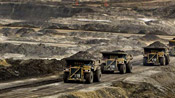
Last spring, the EPA issued strict guidelines on permits for mountaintop removal (MTR) coal mining. These guidelines for “valley fill” permits severely limit the dumping of coal mining debris into valleys and streams. These guidelines have the potential to save the rest of Appalachia‘s mountains from being destroyed and Appalachia’s drinking water from being poisoned. The EPA is now seeking feedback on their new approach to MTR permitting. Public comments are due December 1st. Take action today. Tell the EPA to strengthen their guidance on mountaintop removal mining permits. We know the coal industry is gearing up for a massive outpouring of comments, so we must provide leaders at the EPA the support they need to end mountaintop removal. Ask the EPA to stand up to King Coal and end all valley fills. Thank you for taking action to protect our beautiful streams and mountains.
|
||||||||


You must be logged in to post a comment.