1954 – The first intercollegiate court tennis match was played in the U.S. It was between Yale and Princeton.
1961 – Thirteen civil rights activists, dubbed “Freedom Riders,” began a bus trip through the South.
1964 – “Another World” premiered on NBC-TV.
1970 – The Ohio National Guardsmen opened fire on students during an anti-Vietnam war protest at Kent State University. Four students were killed and nine others were wounded.
1979 – Margaret Thatcher became Britain’s first woman prime minister.
1981 – The Federal Reserve Board raised its discount rate to 14%.
1987 – Live models were used for the first time in Playtex bra ads.
1987 – The First Bank of the United States was listed as a National Historic Landmark.
1994 – Israeli Prime Minister Yitzhak Rabin and PLO leader Yasser Arafat signed a historic accord on Palestinian autonomy that granted self-rule in the Gaza Strip and Jericho.
2000 – The citizens of London elected their mayor for the first time.
2003 – Idaho Gem was born. He was the first member of the horse family to be cloned.
2010 – Pablo Picasso’s “Nude, Green Leaves and Bust” sold for $106.5 million.
2012 – In Las Vegas, NV, Google received the first self-driving vehicle testing license.
These documents were drafted in the heat of dramatic, fast-moving events. They represented a monumental achievement to the nation’s Founders who believed their experiment in self-government held the promise of liberty for all mankind. The principles established in the Charters have bound the nation together through more than two centuries of growth and turmoil. American patriots of every generation have paid in blood to defend these principles.
The documents on display in this gallery chronicle the creation of the Charters and their impact on events in this country and around the world. They reveal the story of earlier generations of Americans who had both the vision to see a better world and the audacity to build it.
The Declaration of Independence expresses the ideals on which the United States was founded and the reasons for separation from Great Britain.
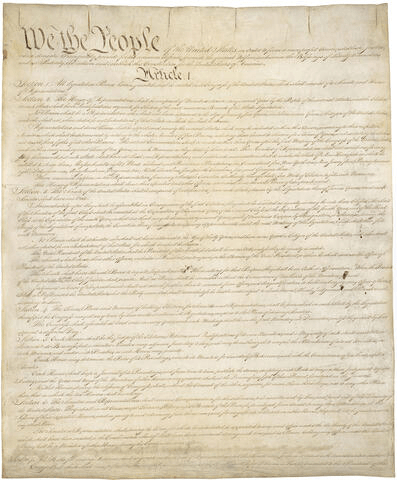
The Constitution defines the framework of the federal government of the United States. The Bill of Rights is the first ten amendments to the Constitution. It defines citizens’ and states’ rights in relation to the government.
** Martinellis Apple Juice; clear/translucent bulbous/round glass bottle with white metal screw top lid; (4 – 10 oz bottles per pack; 6 packs per case) F-0734-2025/Recall Number ~
Italian Food Canada Inc. is recalling Fiorfiore brand Spaghetti and Linguine because of the presence of insects, according to the Canadian Food Inspection Agency (CFIA).
The recalled products were distributed nationally in Canada.
Grain Millers Inc., of Eden Prairie, MN, recalls 20 totes of 1,800 lb. Regular Rolled Oats #5 and 17 totes of 1,600 lb. Quick Rolled Oats #21 because of potential contamination with foreign material, specifically plastic.
Henlong Oriental Gifts & Foods Co. Ltd. is recalling Captain’s Choice brand Shredded Coconut because of possible Salmonella contamination, according to the Canadian Food Inspection Agency (CFIA).
There have been reported illnesses that may be associated with the consumption of this product.
The recalled product was distributed in Alberta, British…Continue Reading
The recall was initiated on Feb. 11, 2025, and remains ongoing, according to…Continue Reading
Harvest NYC Inc. of Brooklyn, NY, is recalling its 200-gram packages of enoki mushrooms because testing showed they are contaminated with Listeria monocytogenes. The recalled enoki mushrooms were distributed nationwide to retail stores. The product comes in a 200-gram, green plastic package marked with UPC Barcode 6975730520101 on the back…Continue Reading
Red Shell Foods, Inc., based in City of Industry, CA, is recalling 981 bottles of its Red Shell brand Teriyaki Sauce because of potential microbial growth, indicated by bubbling and swelling containers.
The recall was initiated on March 17, 2025after the company identified signs of microbial contamination in the shelf-stable…Continue Reading
The U.S. Department of Agriculture’s Food Safety and Inspection Service (FSIS) is issuing a public health alert for various soup and bowl products that may be contaminated with foreign material, specifically wood, in an FDA-regulated ingredient, cilantro.
A company in Canada is recalling ham sandwiches after government testing showed Listeria monocytogenes.
The Canadian Food Inspection Agency reports that Cuisine Fraicheur Urbaine brand Black Forest Ham Sandwiches are subject to the recall. The sandwiches were distributed in Quebec.
The recalled sandwiches can be identified by the following label…Continue Reading
Duda Farm Fresh Foods, Inc., based in Oxnard, CA, is recalling 1,587 cases of its 4 in/1.6 oz Marketside Celery Sticks sold at Walmart stores across 30 states because of potential contamination with Listeria monocytogenes.
The recall was prompted by a random sampling conducted by the Georgia Department of Agriculture…Continue Reading
Blue Ridge Beef is recalling 1,080 pounds of their 2-pound Kitten Mix (Lot # N26 0114) and 1,380 pounds of their 2-pound Puppy Mix (Lot # N25 1230) because of contamination with Salmonella and Listeria monocytogenes. The recall was initiated after a customer reported animal illness, prompting testing that confirmed…Continue Reading
Legally Addictive Foods, of Weaverville, NC, is recalling an unspecified quantity of its “The O.G. Cookies” because of consumer complaints of a rancid taste.
The recall, initiated on Oct. 31, 2024, is classified as a Class II recall, indicating a low risk of serious health consequences, though temporary or reversible…Continue Reading
Foodborne illness typically traces back to contaminated meat or greens, but intentional contamination has a grim legacy that stretches across human history — from ancient poisonings to modern malice.
Deliberate food contamination persists, spanning cases from razor blades in pizza dough — like the 2020 Saco, ME, incident, where a…Continue Reading
Walker’s Wine Juice LLC of Forestville, NY, is recalling its pumpkin juice because it may be contaminated with clostridium botulinum, which can cause botulism poisoning.
The product was distributed via Walker’s Wine Juice retail store in New York. The juice was also distributed directly by Walker’s to a limited number…Continue Reading
FRUSELVA USA of Miami, FL, is recalling 25,600 units of Good & Gather Baby Pea, Zucchini, Kale & Thyme Vegetable Puree because of elevated levels of lead.
The product, distributed by Target Corporation in Minneapolis, MN, is sold nationwide at Target stores.
Tony’s Chocolonely is recalling chocolate from more than 20 countries, including the United States and Canada, because of potential contamination with small stones.
In the U.S., seven lots of Tony’s brand Dark Almond Sea Salt Bar (6.35oz) and Everything Bar (6.35oz) are affected.
Supercan Bulk of Miami, FL, is recalling a single lot of its Supercan Pig Ear Slivers pet treats because of potential Salmonella contamination. The recall involves 500-piece, 15.9-ounce bags of “Supercan Pig Ear Slivers – Thick Cut Piggy Ear Slices” with an expiration date of Nov. 9, 2026, posing risks…Continue Reading
Johnsonville, LLC, a Momence, Ill. establishment, is recalling approximately 22,672 pounds of cheddar bratwurst product that may be contaminated with foreign material, specifically hard plastic.
Craftmark Bakery, LLC, based in Indianapolis, IN, is recalling a combined total of 6,589 cases of cookie dough and ready-to-eat cookies because of potential contamination with foreign material, specifically plastic.
The recalled products include Oatmeal Raisin Cookie Dough, Oatmeal Cranberry Raisin Cookie Dough, and US Foods Premium Monster Cookies distributed…Continue Reading
Cargill Kitchen Solutions, a Lake Odessa, Michigan establishment, is recalling approximately 212,268 pounds of liquid egg products that may contain a cleaning solution with sodium hypochlorite, the U.S. Department of Agriculture’s Food Safety and Inspection Service (FSIS) announced today.
To say that Duke Ellington (April 29, 1899 – May 24, 1974)
Stating that Mr Ellington had a very productive and illustrious career would be a major understatement.
As a composer, arranger, pianist and bandleader, he was a major force for nearly 50 years (1926-74), creating innovations in each area.
He did all that while constantly touring with his orchestra, which, despite major changes in the music world, never broke up during his lifetime.
On April 25, 1967, Colorado became the first state to allow abortion for reasons other than rape or an imminent threat to a woman’s health. The bill passed a Republican-controlled Legislature with bipartisan support and was signed into law by Republican Gov. John Love despite strong objections from many constituents.
On the 50th anniversary (April 25, 2017) of the bill becoming law, the AP is republished a version of its story.
April 25, 1967
Gov. John A. Love said his decision to sign a bill liberalizing Colorado’s abortion laws was “one of the more important and difficult decisions of my experience in office.”
The governor said before signing the bill Tuesday his mail ran to about 5,000 letters and telegrams — “about 2,600 against and about 2,400 for the bill.”
Love said “the bill itself is completely permissive, not requiring any hospital, doctor, nurse, potential mother or any other person to act in any way to terminate a pregnancy at any time.”





You must be logged in to post a comment.