
History … class

CDC says Cyclospora outbreak linked to iceberg lettuce is over

USDA~ FSN ~ FDA ~ September 2026 -Recalls – Food Safety Alerts – Previous Month & last day of prior month update

** California issues public warning about Happy Hens eggs because of link to Salmonella outbreak
** Frozen raspberries recalled because of norovirus; illnesses reported
Alasko brand frozen whole raspberries are being recalled in Canada because of contamination with norovirus. This recall was triggered by findings by the Canadian Food Inspection Agency during its investigation. By News Desk
** Supplier in sprout outbreak recalls seed
The FDA has not named the supplier
/16 Sep 2026
** Vermont farm recalls eggs because of link to Salmonella outbreak By News Desk
** So Delicious frozen dessert product recalled because of foreign objects
Danone USA is recalling of So Delicious Dairy Free Salted Caramel Cluster Non-Dairy Frozen Dessert pints with best-by dates on and before April 3, 2028, because consumers complained. By News Desk
** Fine and charges issued in case involving fish that was unfit to eat
Two men have been charged in Norway for their roles in selling farmed salmon that was unfit for human consumption. The defendants, both men in their 50s, worked in senior By Joe Whitworth
** Sept. 06, 2026 – Prime Line Distributors, Inc., a Fort Lauderdale, Fla., firm, and Ferrarini USA, Inc., a Hoboken, N.J., firm, are recalling approximately 1,513 pounds of imported ready-to-eat (RTE) pork products that may be adulterated with Listeria monocytogenes ( Lm), the U.S. Department…
Impacted Products
• Various weight cardboard cases containing two pieces of individually vacuumed packed “PRIME LINE DISTRIBUTORS, INC. GUANCIALE PORK JOWL PRODUCT OF ITALY” with “LOT: 263311US” and “BEST IF USE BY DATE: 05.16.27” printed on the label.• Various weight individually vacuumed packaged “GUANCIALE PORK JOWL PRODUCT OF ITALY” with “LOT: 263311US” and “BEST IF USE BY: 05.16.27” printed on the label. The product has an additional label with “DOK GUANCIALE” on the packaging.• Various weight cardboard cases containing two pieces of individually vacuumed packed “GUANCIALE PORK JOWL PRODUCT OF ITALY” with “LOT: 263311US” and “BEST IF USE BY DATE: 05.16.27” printed on the label.• Various weight individually vacuumed packaged “FERRARINI GUANCIALE DRY-CURED PORK JOWL” with “LOT: 263311US” and “BEST IF USE BY DATE: 05.16.27” printed on the label.
** Sauce company refuses to comply with cease and desist order issued because of botulism risk
The Connecticut Department of Consumer Protection Food and Standards Division has issued a cease-and-desist order to Phire in the Hole of Monroe, CT, and asked the company to. By News Desk
** Idaho company recalls sprouts linked to Salmonella outbreak
Evergreen Fresh Sprouts LLC of Moyie Springs, ID, is recalling 215 cases of Broccoli Sprouts, because they have been linked to an outbreak of Salmonella infections. The sprouts were delivered
By News Desk
** Vermont farm recalls eggs because of link to Salmonella outbreak
Leaping Bear Farm is recalling eggs after Vermont health and agriculture officials detected Salmonella in eggs and environmental samples from the farm. The recall covers cartons dated between June 1. ByNews Desk
** Peanuts recalled because of Salmonella contamination
PK brand Roasted Lemon N’ Chilli Peanuts are being recalled in Canada because of Salmonella contamination. The peanuts were distributed in Ontario and Quebec, according to the Canadian Food Inspection. By News Desk
** Cheese recalled in Canada because of Listeria contamination
Coaticook brand Aged Cheddar Cheese is being recalled in Canada because of contamination with Listeria monocytogenes. The recall was initiated by the company. By News Desk
** Pork cracklings products recalled because of production in Colombia
El Eden Import Distributor Corp., a Long Island City, NY, firm, is recalling 264 pounds of potato chip products containing chicharrón (pork cracklings) because they were produced in the Republic. By News Desk
** Ready-to-eat pork jowls recalled because of Listeria contamination
Prime Line Distributors Inc. of Fort Lauderdale, FL., and Ferrarini USA Inc. of Hoboken, NJ, are recalling 1,513 pounds of imported ready-to-eat (RTE) pork products that may. By News Desk
** Publisher’s Platform: Hamburger E. coli was 95 percent of my practice until federal inspection ended it. On-farm slaughter would bring it back.
By Bill Marler
** Sprout seed supplier recalled product amid outbreak
The seed supplier behind a multi-state outbreak linked to sprouts may have been named quietly in an obscure FDA report. First reported by Phyllis Entis on eFoodAlert.com, By News Desk
** Another sprout product under recall; seed supplier refuses to issue recall
An unnamed seed company is now under investigation in an outbreak traced to fresh sprouts. And, another product has been added to the recall of implicated sprouts. The outbreak of E. coli and Salmonella infections has previously been linked to alfalfa sprouts grown by Everything Sprouts of Minneapolis, MN. The company recalled its Crunchy Protein Sprout Mix and Zesty Garlic Mix sprouts sold under the Calco and Everything Sprouts brands. By Coral Beach
** Pesto linked to botulism cases in Poland
The company said it was taking all necessary steps to fully clarify the matter By Joe Whitworth
** Evergreen Fresh Sprouts LLC Recalls Broccoli Sprouts Because of Possible Health Risk. Evergreen Fresh Sprouts LLC of Moyie Springs, IDAHO is recalling 215 cases (6/4oz bags per case) of Broccoli Sprouts, because it has the potential to be contaminated with Salmonella. Our company has ceased the production and distribution of broccoli sprouts since 9/04/2026 and is currently conducting a root cause investigation. Consumers who have purchased affected Broccoli Sprouts are urged to immediately discard product. Consumers with questions may contact the company at 1-208-267-4258, Monday-Friday, 7am-2 pm GMT. The Broccoli Sprouts were delivered to three distributors in WA between 8/24/26 and 9/2/26, and product may have been further distributed and sold in retail stores to consumers in ID, MT, and WA. The affected Broccoli Sprouts were packaged in clear plastic 4oz. Zip lock bags, UPC code 8 38796 00105 1, and have the Use By dates of 9/07/26, 9/09/26, 9/11/26, 9/14/26, and 9/16/26.
We were notified that our broccoli sprouts product has been related to a multistate outbreak of Salmonella Bovismorbifican. The outbreak includes 22 cases as of 9/9/2026.
** Made Fresh Salads, Inc. Recalls Ready-to-Eat Deli-Style Salads and Cream Cheese Because of Possible Health Risk. Made Fresh Salads Inc. of Bay Shore, NY is recalling all Ready to Eat Deli Style Salads and cream cheese, because they have the potential to be contaminated with Listeria monocytogenes. The various salads were distributed in Brooklyn, Queens, Bronx and New York City by direct delivery to retail stores and distributors. Products are distributed in 30 lb. and 5 lb. white plastic tubs with a Made Fresh Salads label or a Northside Label and a half-size aluminum pan.
The salads being recalled are as follows: expiration dates from September 3, 2026 through September 18, 2026 printed on the bottom left of the label. Consumers who have purchased Made Fresh Salads are urged to return it to the place of purchase for a full refund. Consumers with questions may contact the company at (718) 765-0082 Monday through Friday 9am to 5 pm ET.
The list is long … take the time to check, and the products may have been repacked by retail locations in deli-style or other retail packaging. Retail packaging and coding will vary based on location of purchase.
** BMC Medical Co., Ltd. Recalls Luna G3 APAP (Model LG3600) with Firmware G3-2.00.76 Due to Firmware Defect. Beijing, China, retrospectively reported to the US Food and Drug Administration (FDA) a recall of 20,160 Luna G3 APAP (Model LG3600) devices distributed in the United States due to firmware defect. This corrective action was not reported to customers. On August 19, 2026, the FDA classified this retrospective recall as a Class I recall (FDA Recall Number: Z-2979-2026).
BMC has identified that firmware version, G3-2.00.76 installed on these Luna G3 APAP (Model LG3600) devices contained a firmware defect. BMC conducted a firmware upgrade of these devices to version G3-2.00.77 for 20,160 affected devices at the U.S. importer’s warehouse from October through December 2024. After reporting the retrospective recall, BMC discovered that potentially up to 196 units did not receive the upgrade and identified that these devices may still contain firmware version G3-2.00.76.
If the affected device(s) operates simultaneously under high pressure, high respiratory rate, and high peak flow an “Error” message on the device display is triggered, followed by automatic shutdown resulting in a failure to deliver therapy. For any inquiries, please contact RH, the U.S. importer of BMC, at telephone number 863-226-6285 or via email at 3B-Recall@reacthealth.com, Monday through Friday, between 8:00 a.m. and 5:00 p.m. Eastern Time (ET). Additionally, BMC may be reached at any time by email at bmc-recall@bmc-medical.com.
** Foods Alive Recalls Organic Moringa Leaf Powder Because of Possible Health Risk. Foods Alive Inc of Angola, IN, is recalling its 8-ounce packages of organic moringa leaf powder because they have the potential to be contaminated with Salmonella, an organism which can cause serious and sometimes fatal infections in young children, frail or elderly people, and others with weakened immune systems. he recalled organic moringa leaf powder was distributed nationwide in retail stores and through online sellers including but not limited to www.foodsalive.comExternal Link Disclaimer.
The product comes in an 8 ounce stand up pouch with a freshest by date of 110127 and the number 02726 below the date, and were shipped between January 27th and August 7th 2026.
No illnesses have been reported to date in connection with this problem. Consumers who have purchased 8 ounce packages of organic moringa leaf powder are urged to return them to the place of purchase for a full refund. Consumers with questions may contact the company at 260-488-4497.
** Frutas y Hortalizas del Sur S.A., San Carlos, Chile expands its July 3, 2026, recall of frozen organic IQF blueberries to include one lot of Great Value frozen Organic Triple Berry Blend 10 OZ because of potential contamination with Escherichia coli O145:H28 (E. coli O145). This recalled product was shipped to select Walmart stores in 16 states including Alabama, Arkansas, Florida, Illinois, Indiana, Kentucky, Louisiana, Minnesota, Mississippi, Missouri, North Carolina, Ohio, Oklahoma, South Carolina, Texas and Wisconsin. Consumers should check their freezers for the affected product.
The affected product is:
- Product: Great Value Organic Triple Berry Blend 10 OZ (Including Strawberries, Blackberries and Blueberries), with UPC: 7874211226
- Package Size: 10 oz
- Lot Code: 6040 01-6 (in front of the package)
- Best If Used By Date: February 9, 2028
Consumers who have Great Value Organic Triple Berry 10 OZ with lot code 6040 01-6 should not consume it. Frutas y Hortalizas del Sur S.A. is working closely with the appropriate regulatory authorities and its customers regarding this recall.
Consumers or customers with questions regarding this recall may contact:
Media Contact: Joshua Weiss
Info.foodsafety@comfrut.com or 336-899-5612.
Monday – Friday 8 AM – 6 PM EST
Hazard:
The recalled products may contain bacteria, including Pseudomonas aeruginosa, which is an environmental organism found widely in soil and water. People with weakened immune systems or external medical devices who are exposed to Pseudomonas aeruginosa face a risk of serious infection that may require medical treatment. The bacteria can enter the body if inhaled, through the eyes, or through a break in the skin. People with healthy immune systems are usually not affected by the bacteria.
Remedy:
Consumers should stop using the recalled cleaners immediately. Consumers will be asked to register at https://mistolinrecall.expertinquiry.com/ and submit a picture of the 12-digit UPC code printed on the label and a picture of the date code printed on the side of the bottle and dispose of the product in its container with household trash. Consumers registering bottles in the affected scents with date codes printed on the bottle beginning with PR01 and followed by a five-digit number between 25091 and 26168 will receive a full refund of the purchase price, with receipt or of the manufacturer’s suggested retail price, without receipt.
Website: http://www.mistolinrecall.com/
Units:
About 6.3 million Phone: (855) 215-5439
** B. Braun Medical Inc. Issues Voluntary Nationwide Recall of 0.9% Sodium Chloride Injection USP, 100 mL, in a 150 mL PAB® Container Due to the Presence of Particulate Matter. Product was distributed Nationwide to hospital and healthcare facilities from February 27, 2026 to August 3, 2026.
B. Braun is notifying its distributors and customers by mail and is arranging for return and replacement of all recalled products. Customers that have the recalled product should return to place of purchase.
Consumers with questions regarding this recall can contact B. Braun by emailing recalls@bbraunusa.com, Monday to Friday 8:00am to 5:00pm EST.
** American Regent, Inc. Issues Voluntary Nationwide Recall of Three Lots of Epinephrine Injection, USP 30 mg/ 30 mL (1 mg/mL) Due to the Presence of Particulate Matter and Lack of Assurance of Sterility. September 3, 2026 – New Albany, OH, American Regent, Inc. is conducting a nationwide voluntary recall of three lots of Epinephrine Injection, USP 30 mg/ 30 mL (1 mg/mL) multidose vials to the consumer level. Customer complaints were received for leaking and cracked vials, resulting in a lack of assurance of sterility. The firm’s investigation also revealed the presence of particulate matter identified as Nylon, Cellulosic, Acrylic, Polyethylene, and Glass. Epinephrine Injection, USP 30 mg/ 30 mL (1 mg/mL) packaged in a multi dose vials, administered intravenously, intramuscularly, or subcutaneously and is to be used by or under the direction of a physician. Epinephrine Injection, USP is indicated for the emergency treatment of allergic reactions (Type I), including anaphylaxis, which may result from insect stings or bites, foods, drugs, sera, diagnostic testing substances, and other allergens, as well as idiopathic anaphylaxis or exercise-induced anaphylaxis. Epinephrine Injection, USP is also indicated to increase mean arterial blood pressure in adult patients with hypotension associated with septic shock. Epinephrine Injection, USP is a clear, colorless, sterile solution available in a 30 mL multiple-dose vial containing 1 mg/mL. The affected Lot Numbers 25128L1C0, 25280L1C0, and 26108L1C0 were distributed nationwide in the United States. Phone: 800-645-1706 (8:00AM-6:00PM
EST, Monday – Thursday, 8:00AM-
4:00PM EST, Friday)American Regent, Inc.
Customer Service
** Frutas y Hortalizas del Sur S.A. Expands Recall to Include One Lot of Great Value Frozen Organic Triple Berry Blend Because of Potential Contamination with Escherichia coli O145:H28 (E. coli O145). This recalled product was shipped to select Walmart stores in 16 states, including Alabama, Arkansas, Florida, Illinois, Indiana, Kentucky, Louisiana, Minnesota, Mississippi, Missouri, North Carolina, Ohio, Oklahoma, South Carolina, Texas, and Wisconsin. Consumers should check their freezers for the affected product.
The affected product is:
- Product: Great Value Organic Triple Berry Blend 10 OZ (Including Strawberries, Blackberries and Blueberries), with UPC: 7874211226
- Package Size: 10 oz
- Lot Code: 6040 01-6 (in front of the package)
- Best If Used By Date: February 9, 2028
Consumers who have Great Value Organic Triple Berry 10 OZ with lot code 6040 01-6 should not consume it.Media Contact: Joshua Weiss
Info.foodsafety@comfrut.com or 336-899-5612.
Monday – Friday 8 AM – 6 PM EST
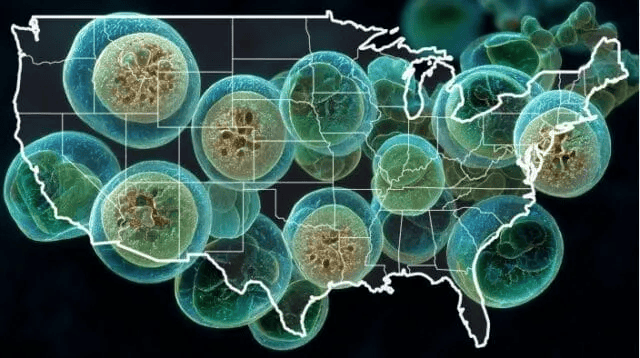
** The Centers for Disease Control and Prevention (CDC) has confirmed 11,485 patients in the current iceberg lettuce-linked Cyclospora outbreak as of Aug. 27. Patients have been confirmed in three more states: Georgia, Tennessee and Texas. The number of deaths related to the outbreak still stands at two. The CDC continues to investigate additional Cyclospora outbreaks across the country.
** Another sprout product under recall; seed supplier refuses to issue recall
An unnamed seed company is now under investigation in an outbreak traced to fresh sprouts. And, another product has been added to the recall of implicated sprouts.
By Coral Beach
** Alert issued by officials in Hong Kong about formaldehyde in rice noodles
Authorities in Hong Kong have issued a warning about a brand of imported rice noodles because of formaldehyde. The Centre for Food Safety (CFS) of the Food and Environmental Hygiene
By News Desk
** LMSI LLC/Kofinas Olive Oil Issues a Voluntary Recall of its Garlic Mediterranean Infused Extra Virgin Olive Oil for Using a Garlic Essential Oil Not Approved for Culinary Use. LMSI LLC/ Kofinas Olive Oil is issuing a voluntary recall of its Garlic Mediterranean infused extra virgin olive oil for using a garlic essential oil not approved for culinary use. The flavored oil was bottled in glass bottles in 500 ml, 250 ml, and 100 ml sizes.
The recalled products were available for sale from August 31, 2025, to August 27, 2026, at the following locations:
Montgomery Store & Infusion Kitchen: 8210 Market Place Ln., Cincinnati, OH 45242
Findlay Market: 1801 Race St., Cincinnati, OH 45202
Online sales directly from www.kofinasoliveoil.comExternal Link Disclaimer.
Share this:

The Balfour Declaration letter was written

On November 2, 1917, Foreign Secretary Arthur James Balfour writes an important letter to Britain’s most illustrious Jewish citizen, Baron Lionel Walter Rothschild, expressing the British government’s support for a Jewish homeland in Palestine. The letter would eventually become known as the Balfour Declaration.
Britain’s support for the Zionist movement came from its concerns regarding the direction of the First World War. Aside from a genuine belief in the righteousness of Zionism, held by Lloyd George among others, Britain’s leaders hoped that a statement supporting Zionism would help gain Jewish support for the Allies.
The influence of the Balfour Declaration on the course of post-war events was immediate: According to the “mandate” system created by the Versailles Treaty of 1919, Britain was entrusted with the administration of Palestine, with the understanding that it would work on behalf of both its Jewish and Arab inhabitants.
Source: history.com
I would say the idea that anyone thought giving Britain or Zionist control in the first place wasn’t offensive seems odd to me, not only because they decided without the Palestinians that Britain would be entrusted with the administration of Palestine, with the understanding that it would work on behalf of both its Jewish and Arab inhabitants. Of course, that didn’t happen, and what could go wrong did go wrong, and decades later, genocide is taking place, and the question remains: Why did they think this mission would stay quiet? That is sarcasm … some always knew a whole lot of people stayed quiet.
How could Americans and NATO look the other way, and why weren’t the Brits held liable or accountable, btw they all could have done the right thing by correcting it all, but it seems as if supremacy and elitism are beyond humanity Nativegrl77. We know every issue can have several sides, but facts are tough to ignore, especially when they are documented.
Share this:

History ~ 1947 ~ The U.N. General Assembly passed a resolution that called for the division of Palestine between Arabs and Jews.
United Nations Resolution 181
Palestinian history
HISTORY
United Nations Resolution 181, a resolution passed by the United Nations (UN) General Assembly in 1947 that called for the partition of Palestine into Arab and Jewish states, with the city of Jerusalem as a corpus separatum (Latin: “separate entity”) to be governed by a special international regime. The resolution, which was considered by the Jewish community in Palestine to be a legal basis for the establishment of Israel, and which was rejected by the Arab community—was succeeded almost immediately by violence.
Palestine had been governed by Great Britain since 1922. Since that time, Jewish immigration to the region increased, and tensions between Arabs and Jews grew. In April 1947, exhausted by World War II and increasingly intent upon withdrawing from the Middle East region, Britain referred the issue of Palestine to the UN. To investigate a suitable course of action, the UN formed the UN Special Committee on Palestine (UNSCOP), an inquiry committee made up of members from 11 countries. Ultimately, UNSCOP delivered two proposals: that of the majority, which recommended two separate states joined economically, and that of the minority, which supported the formation of a single binational state made up of autonomous Jewish and Palestinian areas. The Jewish community approved of the first of these proposals, while the Arabs opposed them both. A counterproposal—including a provision that only those Jews who had arrived before the Balfour Declaration (and their descendants) would be citizens of the state—did not win Jewish favour.
The proposal to partition Palestine, based on a modified version of the UNSCOP majority report, was put to a General Assembly vote on November 29, 1947. The fate of the proposal was initially uncertain, but, after a period of intense lobbying by pro-Jewish groups and individuals, the resolution was passed with 33 votes in favour, 13 against, and 10 abstentions.
britannica.com
This article was most recently revised and updated by Amy McKenna, Senior Editor.
The dominant mood in the Arab world was one of outright rejection.
U.N. votes for partition of Palestine…
And as they say, the rest is, sadly, history! A history very few want to claim and/or accept!
Today, the behavior of the 1900s seems to continue!
What price for the beliefs and actions of Racism and control? It could be me, but it feels like how Native Americans were treated by Settlers. The ultimate goal was to remove or burn people out to gain land, legacy, and squash someone else and their religious beliefs …
Sources: britannica.com

 Be a Seed for Change
You must be logged in to post a comment.