1754 – Kings College opened in New York City. It was renamed Columbia College 30 years later.
1846 – U.S. annexation of California was proclaimed at Monterey after the surrender of a Mexican garrison.
1862 – The first railroad post office was tested on the Hannibal and St. Joseph Railroad in Missouri.
1885 – G. Moore Peters patented the cartridge-loading machine.
1917 – Aleksandr Kerensky formed a provisional government in Russia.
1920 – A device known as the radio compass was used for the first time on a U.S. Navy airplane near Norfolk, VA.
1930 – Construction began on Boulder Dam, later Hoover Dam, on the Colorado River.
1937 – Japanese forces invaded China.
1946 – Mother Frances Xavier Cabrini was canonized as the first American saint.
1950 – The U.N. Security Council authorized military aid for South Korea.
1969 – Canada’s House of Commons gave final approval to a measure that made the French language equal to English throughout the national government.
1981 – U.S. President Reagan announced he was nominating Arizona Judge Sandra Day O’Connor to become the first female justice on the U.S. Supreme Court.
1983 – Eleven-year-old Samantha Smith of Manchester, Maine, left for a visit to the Soviet Union at the personal invitation of Soviet leader Yuri V. Andropov.
1987 – Public testimony at the Iran-Contra hearing began.
1994 – Amazon.com, Inc. was founded in Seattle, Washington under the name “Cadabra.”
1998 – A jury in Santa Monica, CA, convicted Mikail Markhasev of murdering Ennis Cosby, Bill Cosby’s only son, during a roadside robbery.
1999 – In Sierra Leone, President Ahmad Tejan Kabbah and rebel leader Foday Sankoh signed a pact to end the nation’s civil war.
2000 – Cisco Systems Inc. announced that it would buy Netiverse Inc. for $210 million in stock. It was the 13th time Cisco had purchased a company in 2000.
2003 – In Liberia, a team of U.S. military experts arrived at the U.S. embassy compound to assess whether to deploy troops as part of a peacekeeping force in the country.
1945 – Nicaragua became the first nation to formally accept the United Nations Charter.
1947 – “Candid Microphone” began airing on ABC radio.
1948 – Frieda Hennok became the first woman to serve as the commissioner of the Federal Communications Commission.
1957 – Althea Gibson won the Wimbledon women’s singles tennis title. She was the first black athlete to win the event.
1966 – Malawi became a republic within the Commonwealth with Dr. Hastings Banda as its first president.
1967 – The Biafran War erupted. The war lasted two-and-a-half years. About 600,000 people died.
1981 – Former President of Argentina Isabel Peron was freed after five years of house arrest by a federal court.
1981 – The Dupont Company announced an agreement to purchase Conoco, Inc. (Continental Oil Co.) for $7 billion. At the time it was the largest merger in corporate history.
1983 – The U.S. Supreme Court ruled that retirement plans could not pay women smaller monthly payments solely because of their gender.
1983 – Fred Lynn (California Angels) hit the first grand slam in an All-Star game. The American League defeated the National League 13-3.
1985 – Martina Navratilova won her 4th consecutive Wimbledon singles title.
1985 – The submarine Nautilus arrived in Groton, Connecticut. The vessel had been towed from Mare Island Naval Shipyard.
1988 – Several popular beaches were closed in New York City due to medical waste and other debris began washing up on the seashores.
1989 – The U.S. Army destroyed its last Pershing 1-A missiles at an ammunition plant in Karnack, TX. The dismantling was under the terms of the 1987 Intermediate-range Nuclear Forces Treaty.
1996 – Steffi Graf won her seventh Wimbledon title.
1997 – The Mars Pathfinder released Sojourner, a robot rover on the surface of Mars. The spacecraft landed on the red planet on July 4th.
1997 – In Cambodia, Second Prime Minister Hun Sen ousted First Prime Minister Norodom Ranariddh and claimed to have the capital under his control.
1998 – Protestants rioted in many parts of Northern Ireland after British authorities blocked an Orange Order march in Portadown.
2000 – A jury awarded former NHL player Tony Twist $24 million for the unauthorized use of his name in the comic book Spawn and the HBO cartoon series. Co-defendant HBO settled with Twist out of court for an undisclosed amount.
In 1776, the Second Continental Congress, assembled in Philadelphia, formally adopted Richard Henry Lee’s resolution for independence from Great Britain. The vote is unanimous, with only New York abstaining.
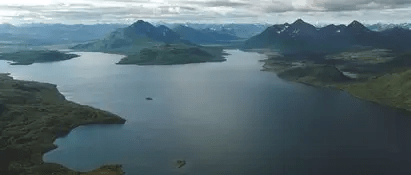
The Bristol Bay Protection Act is a U.S. federal bill introduced in 2024 (H.R. 8193) by Rep. Mary Sattler Peltola (D-AK) to prohibit and restrict certain actions in the Bristol Bay watershed to protect its salmon resources and ecological integrity While the bill has not yet been enacted into law, it is part of the broader legislative and legal fight over the proposed Pebble Mine in Alaska.
Purpose and Scope
The Act:
Prohibits the specification of the Pebble Mine project area as a disposal site under the Clean Water Act.
Restricts actions that could discharge dredged or fill material into waters of the United States, including wetlands, in the Bristol Bay watershed.
Addresses the EPA’s 2023 veto of the Pebble Mine, which cited unacceptable adverse effects on salmon streams, wetlands, and fisheries
Key Environmental Concerns
The bill’s findings highlight:
Loss of ~8.5 miles of documented anadromous fish streams.
Loss of ~91 miles of additional streams supporting salmon.
Loss of ~2,108 acres of wetlands and other waters supporting salmon.
Adverse impacts on ~29 miles of salmon streams from greater than 20% changes in streamflow
Legislative and Legal Context
Introduced: May 1, 2024, in the House, referred to the Committee on Transportation and Infrastructure
Not enacted: As of now, the bill remains in the legislative process and has not passed both chambers or been signed into law
Parallel legal action: The Pebble Mine case (Northern Dynasty Minerals Ltd. v. EPA) is ongoing in federal court, with a major DOJ response deadline in February 2026 and oral arguments in June 2026
Alaska Legislature: In Juneau, lawmakers are also debating the Bristol Bay Forever Act, which aims to provide permanent protections for the watershed
Why It Matters
The Bristol Bay watershed is home to the world’s largest sockeye salmon run and is central to Alaska Native cultures. The Act and related measures seek to prevent irreversible damage from mining-related discharges, which could threaten salmon populations, municipal water supplies, shellfish beds, and subsistence livelihoods
In summary: The Bristol Bay Protection Act of 2026 is not yet law, but it is a key legislative tool in the ongoing battle to protect Bristol Bay’s salmon and ecosystems from the Pebble Mine. Its fate will depend on congressional action, while the federal court case could set a precedent regarding the EPA’s authority to block such projects.
1. The Declaration of Independence wasn’t signed on July 4, 1776.
On July 1, 1776, the Second Continental Congress met in Philadelphia, and on the following day 12 of the 13 colonies voted in favor of Richard Henry Lee’s motion for independence. The delegates then spent the next two days debating and revising the language of a statement drafted by Thomas Jefferson.
On July 4, Congress officially adopted the Declaration of Independence, and as a result the date is celebrated as Independence Day. Nearly a month would go by, however, before the actual signing of the document took place.
First, New York’s delegates didn’t officially give their support until July 9 because their home assembly hadn’t yet authorized them to vote in favor of independence. Next, it took two weeks for the Declaration to be “engrossed”—written on parchment in a clear hand.
Most of the delegates signed on August 2, but several—Elbridge Gerry, Oliver Wolcott, Lewis Morris, Thomas McKean and Matthew Thornton—signed on a later date. (Two others, John Dickinson and Robert R. Livingston, never signed at all.) The signed parchment copy now resides at the National Archives in the Rotunda for the Charters of Freedom, alongside the Constitution and the Bill of Rights.
2. More than one copy exists.
After the adoption of the Declaration of Independence, the “Committee of Five”—Thomas Jefferson, John Adams, Benjamin Franklin, Roger Sherman and Robert R. Livingston—was charged with overseeing the reproduction of the approved text. This was completed at the shop of Philadelphia printer John Dunlap. On July 5, Dunlap’s copies were dispatched across the 13 colonies to newspapers, local officials and the commanders of the Continental troops. These rare documents, known as “Dunlap broadsides,” predate the engrossed version signed by the delegates. Of the hundreds thought to have been printed on the night of July 4, only 26 copies survive. Most are held in museum and library collections, but three are privately owned.
3. When news of the Declaration of Independence reached New York City, it started a riot.
By July 9, 1776, a copy of the Declaration of Independence had reached New York City. With hundreds of British naval ships occupying New York Harbor, revolutionary spirit and military tensions were running high. George Washington, commander of the Continental forces in New York, read the document aloud in front of City Hall. A raucous crowd cheered the inspiring words, and later that day tore down a nearby statue of George III. The statue was subsequently melted down and shaped into more than 42,000 musket balls for the fledgling American army.
4. Eight of the 56 signers of the Declaration of Independence were born in Britain.
While the majority of the members of the Second Continental Congress were native-born Americans, eight of the men voting for independence from Britain were born there. Gwinnett Button and Robert Morris were born in England, Francis Lewis was born in Wales, James Wilson and John Witherspoon were born in Scotland, George Taylor and Matthew Thornton were born in Ireland and James Smith hailed from Northern Ireland.
5. One signer later recanted.
Richard Stockton, a lawyer from Princeton, New Jersey, became the only signer of the Declaration of Independence to recant his support of the revolution. On November 30, 1776, the hapless delegate was captured by the British and thrown in jail. After months of harsh treatment and meager rations, Stockton repudiated his signature on the Declaration of Independence and swore his allegiance to King George III. A broken man when he regained his freedom, he took a new oath of loyalty to the state of New Jersey in December 1777.
6. There was a 44-year age difference between the youngest and oldest signers.
The oldest signer was Benjamin Franklin, 70 years old when he scrawled his name on the parchment. The youngest was Edward Rutledge, a lawyer from South Carolina who was only 26 at the time. Rutledge narrowly beat out fellow South Carolinian Thomas Lynch Jr., just four months his senior, for the title.
7. Two additional copies have been found in the last 25 years.
In 1989, a Philadelphia man found an original Dunlap Broadside hidden in the back of a picture frame he bought at a flea market for $4. One of the few surviving copies from the official first printing of the Declaration, it was in excellent condition and sold for $8.1 million in 2000. A 26th known Dunlap broadside emerged at the British National Archives in 2009, hidden for centuries in a box of papers captured from American colonists during the Revolutionary War. One of three Dunlap broadsides at the National Archives, the copy remains there to this day.
8. The Declaration of Independence spent World War II in Fort Knox.
On December 23, 1941, just over two weeks after the Japanese attack on Pearl Harbor, the signed Declaration, together with the Constitution, was removed from public display and prepared for evacuation out of Washington, D.C. Under the supervision of armed guards, the founding document was packed in a specially designed container, latched with padlocks, sealed with lead and placed in a larger box. All told, 150 pounds of protective gear surrounded the parchment. On December 26 and 27, accompanied by Secret Service agents, it traveled by train to Louisville, Kentucky, where a cavalry troop of the 13th Armored Division escorted it to Fort Knox. The Declaration was returned to Washington, D.C., in 1944.
9. There is something written on the back of the Declaration of Independence.
In the movie “National Treasure,” Nicholas Cage’s character claims that the back of the Declaration contains a treasure map with encrypted instructions from the founding fathers, written in invisible ink. Unfortunately, this is not the case. There is, however, a simpler message, written upside-down across the bottom of the signed document: “Original Declaration of Independence dated 4th July 1776.” No one knows who exactly wrote this or when, but during the Revolutionary War years the parchment was frequently rolled up for transport. It’s thought that the text was added as a label.

 1754 – Kings College opened in New York City. It was renamed Columbia College 30 years later.





You must be logged in to post a comment.