How climate change hurt my community – Cyriac Joseph, Rainforest Action Network


RAN
Below you will find Cyriac’s story: a look into the life of families grappling with climate change in a small Himalayan village called Pangthang and how Rainforest Action Network’s work gives hope for the future. 

When you support Rainforest Action Network, you are addressing the root causes behind climate change and the suffering and hardships experienced by communities and people, like Cyriac. 

At RAN we fight against climate change by stopping the world’s biggest banks from funding the most extreme fossil fuel extraction like fracking, and by demanding that the U.S. government #KeepItInTheGround when it comes to fossil fuels. Climate change is hurting the most vulnerable, poorest people on the planet who are often contributing least to climate change.

Fight climate change. Donate now.


My name is Cyriac, and I want to tell you the story of the small remote village I lived in the Himalayas:

Before I joined RAN, I lived for four years in a small nondescript, but beautiful, village called Pangthang in the north-eastern Himalayas. Pangthang is lush, green and known for orchids and rhododendrons and the breathtaking views it offers of the third highest peak in world Mt.Kanchendzonga. During the months of July through September, Pangthang receives the most torrential rains I have ever seen. But things are changing quickly in this very remote part of the world: as climate change is not waiting until 2100 to affect lives in Pangthang. Climate change’s impact on this idyllic mountain village is already prevalent and devastating.

Himalayan Mountains

The glacial systems of Mt.Kanchendzonga provide drinking water and irrigation to millions of people living downstream in Nepal, India and Bangladesh.

As you know, life in the Himalayas is hard. From fall to summer, while chickens, hogs and cows are busy doing what they do early in the morning, humans break out into frantic activity at exactly 7:30 AM. That is when the government water pipeline sputters to life. The community has just one hour to flush the toilets, the entire previous day’s worth of dishes are washed, meals are readied, and children are given baths — all during the short 60 minutes that the government tap reluctantly offers clean water.

You might wonder why in a place like the Himalayas that water should be a problem — every crook and bend in the mountain should have a babbling brook. Unfortunately, this is no longer true. Over the past few decades, mountain springs in the Himalayas have been drying up resulting in water scarcity that is impacting the health, productivity and living standards of the mountain people.

I joined RAN, because it goes straight to the root causes of these issues and pressures the real power behind this crisis  

  1. Corporate profit-driven destruction of crucial forests and peatswamps that absorb greenhouse gases
  2. Big Banks and Big Oil corporations that profit from keeping us dependent on fossil fuels

On both of these fronts, RAN has scored several victories every year confronting corporations that profit from the destruction of our environment — affecting the poorest and most vulnerable on our planet — be it human, orangutan or orchid. These are the economic forces that drive real human suffering, climate change, deforestation and extinction. While direct relief efforts to send plastic water bottles and dehydrated food packets to people impacted by climate change are commendable, they are inherently short term.

As you celebrate the coming new year with your families and friends, I am writing to urge you to also think of billions of people who are dependent on nature for life giving resources and who are suffering from climate change as you read this. Please consider making a generous tax-deductible gift to RAN for 2016. Your gift can help us take on corporate criminals who profit from the climate chaos they help create. Help vulnerable families across the world make it through this urgent and growing threat.

I wish you and your family the very best for coming year, as much as I do every other family in the world.

In solidarity with all life on our planet,

Cyriac

Cyriac Joseph

Cyriac Joseph
Membership Manager
Rainforest Action Network
http://www.ran.org/

Tell Congress to protect overtime pay for working people ~ Emily Martin


It should be straightforward: if you’re paid hourly and work more than 40 hours a week, you get overtime pay—right?

But some Members of Congress want to allow bosses to steal overtime pay from working women and their families—all under the false pretense of “flexibility.” Let them know you aren’t fooled.

Tell Congress Not to Steal Overtime Pay from Working People

Demand that your Representative reject the misleadingly named “Working Families Flexibility Act.”

TAKE ACTION NOW

Overtime protections allow working people to boost their paychecks while encouraging bosses not to overwork their employees. The so-called “Working Families Flexibility Act” (H.R. 1180) would allow bosses to deny employees overtime pay with the promise of “comp time”—paid time off in the future—instead. But the catch is that employers don’t have to offer any guarantees that employees can use the time off to care for their families or themselves when they need it. Although the politicians behind this bill say it will help working people, we see it for what it really is: a way for bosses to squeeze more hours out of their employees without paying them fairly.

Help us stop this bill in its tracks: tell your Representative to oppose H.R. 1180.

We’ll never stop fighting for policies that promote fair pay and help women balance the demands of work and family—including overtime protections, paid sick days, paid family and medical leave, fair work schedules, strong equal pay laws, and an increased minimum wage. Thank you for fighting with us.

Sincerely,
Emily Martin
General Counsel and Vice President for Workplace Justice
National Women’s Law Center


We the Resistance is our fight to protect our rights and freedoms and to defend the most vulnerable among us through powerful collective action. Every conversation you have with a loved one about the issues important to you, every call you make to Congress, every rally you attend is a part of that resistance. Join us — sign on to the We The Resistance manifesto.

A De Facto Death Sentence for a Father of Four


Robert Greenwald, Brave New Films

Brave New Films

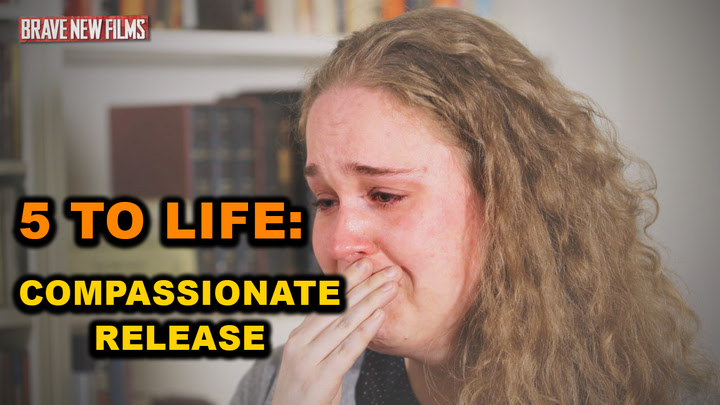
This is the story of Clarence Allen Rice, as told to Brave New Films by his daughter, Allison, and it is a heartbreaking example of a system that doesn’t work. 

Rice was a 64-year-old, church-going, Iowan father of four who owned a leasing business, got into financial trouble and broke the law trying to get out of it. He had no prior record and was a danger to no one, ever. Shortly into a six-year-sentence he was diagnosed with terminal cancer.

He asked for compassionate release, that is, the opportunity to get out of prison before his sentence was fully completed so he could die at home among friends and family. Congress has put into law a system for inmates to petition a judge to reduce their sentence – for compassionate release – if the meet certain criteria including having only a short time left to live. compassionaterelease-thumb2_720.jpg

Despite meeting the criteria for compassionate release, the bureaucrats at the prisons department refused to allow him to petition the judge to go home and die in peace. They made the decision themselves, and he died behind bars.

This is not how it’s supposed to work, legally, or morally. The Federal Sentencing Commission has made this clear: If criteria are met, a judge weighs in, period. After all, the sentencing judge is in possession of all the facts and in the best position to make a decision. Yet in this case, and in others, prison officials are making the call.

Congress should act to prevent this. The rules are clear and no one should be able to get around them.  There are so many ways lately that we are being forced to question what kind of country we truly want to be. Here is one, small way, we can answer.

Robert Greenwald, President
Brave New Films

politics,pollution,petitions,pop culture & purses