The MOVE Bombing … Philly on May 13th – Black History- Actions that cannot be forgotten


Here are 11 things you should know about the MOVE Philadelphia bombing

Police, firemen and workers sort through the rubble resulting from May 13 fire, destroying 61 homes on Osage Avenue in Philadelphia, Penn., on Wednesday, May 16, 1985.
GEORGE WIDMAN / AP

On May 13, 1985, a bomb was dropped on a row house in Philadelphia, unleashing a relentless fire that eventually burned down 61 houses, killed 11 people (including five children), and injured dozens.

The fire department stood by idly. The Philadelphia Police Department did the same. The fire raged on, swallowing up home after home until more than 200 were without shelter.

It’s a shameful part of recent American history that’s somehow been buried under for years and other destructions that have fallen on the city of Philadelphia. NewsOne decided to take a trip back in time to explore what happened the day America bombed its own people.

– The MOVE Organization is a Philadelphia-based Black liberation group that preached revolution and advocated the return to a natural lifestyle. They lived communally and vowed to lead a life uninterrupted by the government, police, or technology. They were passionate supporters of animal rights. Members adopted vegan diets and the surname “Africa.” Often times they would engage in public demonstrations related to issues they deemed important.

– MOVE did, however, have a past with the police. Since its inception in 1972, the group was looked at as a threat to the Philadelphia Police Department.  In 1978, police raided their Powelton Village homes and as a result, one police officer died after being shot in the head. Nine MOVE members were arrested, charged with third-degree murder, and sent to prison. They argued that the police officer was shot in the back of his head on his way into the home, challenging the claim that he was shot by members inside the house. Eventually, the group relocated to their infamous house on 6221 Osage Street.

There are differing reports about the group and how troublesome they actually were. According to the AP, neighbors complained about their house on Osage, which was barricaded with plywood and allegedly contained a multitude of weapons. It has been said that the group built a giant wooden bunker on the roof and used a bullhorn to “scream obscenities at all hours of the night,” angering those living in nearby row houses. Eventually, they turned to city officials for help, which put into motion the events of May 13, 1985.

On that day, armed police, the fire department, and city officials gathered at the house in an attempt to clear it out and arrest MOVE members who had been indicted for crimes like parole violation and illegal possession of firearms. When police tossed tear gas canisters into the home, MOVE members fired back. In turn, the police discharged their guns.

– Eventually, a police helicopter flew over the home and dropped two bombs on the row house. A ferocious blaze followed.

– Witnesses and MOVE members say that when members started to run out of the burning structure to escape a fiery death, police continued to fire their weapons.

– The fire department delayed putting out the flames. After the blaze, they claimed they didn’t want to put their men in harm’s way, because MOVE members were still firing their guns. But MOVE members and witnesses say the wait was deliberate.

– In the end, 11 people, including MOVE’s founder John Africa, were dead. Five children died in the home.

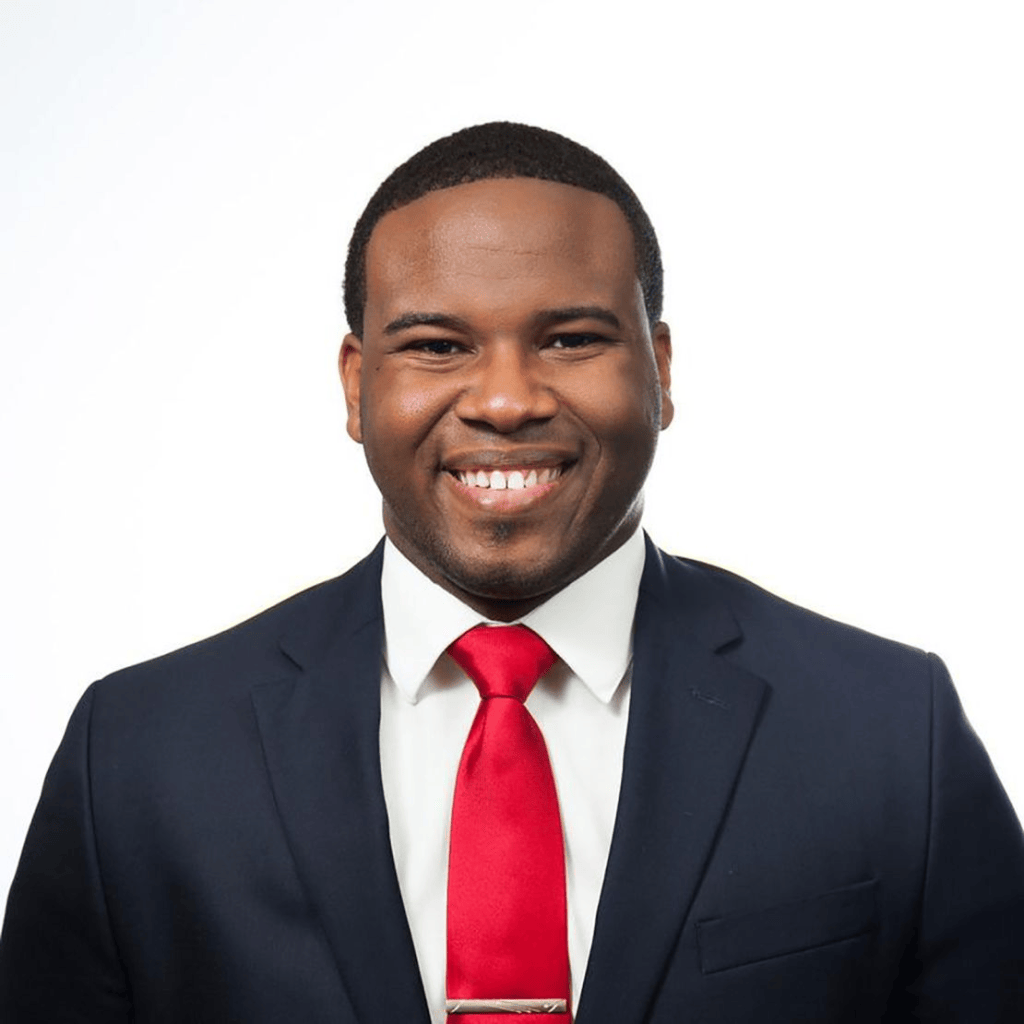
– This is the only child survivor (see picture below). His name is Birdie Africa, but it was later changed to Michael Ward. He ran out of the burning house naked and covered in flames. He survived his third-degree burns and went on to live a normal life, although he was scarred forever by the lifelong burns on his abdomen, arms, and face.

– Michael Ward was found dead on Friday, Sept. 20, 2013 in the jacuzzi aboard a cruise ship in the Caribbean. He was on vacation with his family. Initial autopsy reports say he drowned.

– In the end, no one from the city government was criminally charged.

SOURCE: APPhilly, Independent research | PHOTO CREDIT: Getty

image: AP  and vpr.org

Black History Month

Dalip Singh Saund assumes office as the first Asian American and the first Sikh elected to Congress


On January 3, 1957 Dalip Singh Saund is sworn in as the congressional representative of California’s 29th district. Known to many as “Judge,” and also nicknamed “the Peacemaker,” he is the first Asian, first Indian American, first Sikh and first follower of a non-Abrahamic religion to be elected to the United States Congress.

Born and raised in Punjab while India was under British rule, Saund attended the University of Punjab and was active in the independence movement led by Mohandas Gandhi. He enrolled in the University of California, Berkeley in 1920, earning a PhD in mathematics four years later. He married and moved to a ranch in Westmoreland, California, getting a friend to sign the deed for him in order to circumvent a state law that prohibited Asians from owning land. His time as a farmer, witnessing the struggles of his neighbors during the Great Depression, made him a fan of the New Deal and a lifelong Democrat. Saund organized in favor of allowing Indians to become naturalized American citizens, which Congress finally approved in 1946. Three years later, Saund became a citizen, and the following year he ran for a judgeship. Despite facing persistent racism—one reporter asked him if he would supply turbans to all those who entered his court—he won by 13 votes.

In 1956, Saund ran for his home district’s open congressional seat. Despite a legal challenge from his Democratic primary opponent, who unsuccessfully argued that Saund had not been a citizen long enough to serve in Congress, Saund won the nomination and defeated famous female aviator Jacqueline Cochran Odlum for the seat. He credited his victory to the connections he had made in the district, particularly to small farmers and small business owners. He served three terms in Congress, where he became known as a champion of small farmers and civil rights legislation and worked to improve the United States’ relations with Mexico as well as his native India.

On May 12, 1972, Mexican-American labor organizer and civil rights activist Cesar Chavez begins a hunger strike.


On May 12, 1972, Mexican-American labor organizer and civil rights activist Cesar Chavez begins a hunger strike. The strike, which he undertook in opposition to an Arizona law severely restricting farm workers’ ability to organize, lasted 24 days and drew national attention to the …read more

history… may 12


1588 – King Henry III fled Paris after Henry of Guise triumphantly entered the city.

1780 – Charleston, South Carolina fell to British forces.

1847 – William Clayton invented the odometer.

1870 – Manitoba entered the Confederation as a Canadian province.

1881 – Tunisia, in North Africa became a French protectorate.

1885 – In the Battle of Batoche, French Canadians rebelled against the Canadian government.

1888 – Charles Sherrill of the Yale track team became the first runner to use the crouching start for a fast break in a foot race.

1926 – The airship Norge became the first vessel to fly over the North Pole.

1926 – In Britain, a general strike by trade unions ended. The strike began on May 3, 1926.

1937 – Britain’s King George VI was crowned at Westminster Abbey.

1940 – The Nazi conquest of France began with the German army crossing Muese River.

1942 – The Soviet Army launched its first major offensive of World War II and took Kharkov in the eastern Ukraine from the German army.

1943 – The Axis forces in North Africa surrendered during World War II.

1949 – The Soviet Union announced an end to the Berlin Blockade.

1950 – The American Bowling Congress abolished its white males-only membership restriction after 34 years.

1957 – A.J. Foyt won his first auto racing victory in Kansas City, MO.

1965 – West Germany and Israel exchanged letters establishing diplomatic relations.

1970 – Ernie Banks, of the Chicago Cubs, hit his 500th home run.

1975 – U.S. merchant ship Mayaguez was seized by Cambodian forces in international waters.

1978 – The National Oceanic and Atmospheric Administration announced that they would no longer exclusively name hurricanes after women.

1982 – South Africa unveiled a plan that would give voting rights to citizens of Asian and mixed-race descent, but not to blacks.

1984 – South African prisoner Nelson Mandela saw his wife for the first time in 22 years.

1999 – Russian President Boris Yeltsin dismissed Prime Minister Yevgeny Primakov and named Interior Minister Sergei Stepashin as his successor.

2002 – Former U.S. President Carter arrived in Cuba for a visit with Fidel Castro. It was the first time a U.S. head of state, in or out of office, had gone to the island since Castro’s 1959 revolution.

2003 – In Texas, fifty-nine Democratic lawmakers went into hiding over a dispute with Republican’s over a congressional redistricting plan.

2008 – In the U.S., the price for a one-ounce First-Class stamp increased from 41 to 42 cents.

2015 – It was announced that Verizon would be acquiring AOL.

Source: on-this-day.com

politics,pollution,petitions,pop culture & purses