
|


Bridget Lavington, Everytown for Gun Safety


Abby Witt, BarackObama.com
 |
| Friend — the House voted on immigration. But it wasn’t on an effort to reform our broken system, or on the bipartisan bill the Senate passed more than 500 days ago.Nope. Instead, House leaders held a vote that would make our broken immigration system worse, not better.
Unproductive doesn’t begin to describe it. It’s all part of a pattern of payback politics — lawsuits, talks of impeachment and shutting down the government, all because the President took common-sense action in the face of congressional gridlock to make our nation and families stronger. Even the House bill’s sponsor called it a “symbolic message” — but it’s hardly symbolic to the millions of families who could be torn apart by the bill they considered today. And it’s just one more thing they’ve done with the time they could be using to vote on comprehensive immigration reform. Senator Ted Cruz talked about blocking the President’s executive and judicial nominations as punishment. Another group of lawmakers proposed refusing to permanently extend tax credits for working families, in a move The New York Times described as “payback.” And now, with just a week to go until Congress must vote to fund the government, extreme voices in the House are proposing actions that threaten to shut down the government. That can’t happen. It’s time for us all to stand up and tell leaders in Congress: “No more payback politics!” Add your name right now, and let’s fight: http://my.barackobama.com/Say-No-To-Payback-Politics Thanks — more to come, Abby Abby Witt |
Share this:

the Senate ~~~ CONGRESS 12/5 ~~~ the House: Votes against Immigrants?
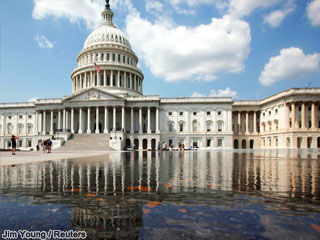
The Senate stands adjourned until 2:00pm on Monday, December 8, 2014.
Following any Leader remarks, the Senate will be in a period of morning business for debate only until 5:30pm.
5:30pm—Up to 3 roll call votes:
- Confirmation of Executive Calendar #1082, Jeffery Martin Baran, to be a Member of the Nuclear Regulatory Commission for the remainder of the term expiring June 30, 2018;
- Confirmation of Executive Calendar #1083, Lauren McGarity McFerran, to be a Member of the National Labor Relations Board for the term of five years expiring December 16, 2019; and
- Confirmation of Executive Calendar #552, Ellen Dudley Williams – to be Director of the Advanced Research Projects Agency-Energy, Department of Energy.
===========================================================
Last Floor Action:11/3
5:34:51 P.M. – The House adjourned pursuant to a previous special order.
The next meeting is scheduled for 12:00 p.m. on December 8, 2014.
================================================
Share this:

The Wall Street journal Agrees …
The Wall Street Journal Finds Trouble for the Middle Class
We know working Americans are in trouble. Today, a new report from the Wall Street Journal shows more evidence of the problem. The central pillars of a middle-class life are slipping away as their costs rise rapidly and incomes stagnate.
Here are a few of the key findings.
- Spending by the middle class “rose by about 2.3% over the six-year period from 2007, even as inflation totaled about 12%. At the same time, income for the group stagnated, rising less than half a percent.”
- While incomes have stagnated, employees paid 40% more for health insurance in 2013 than 2007. This is part of the reason why the Affordable Care Act is so essential, as a CAP study last year found that price competition on the health insurance exchanges would reduce premiums and save $190 billion over the next 10 years.
- And the cost of staying connected with the world has skyrocketed. Paying for cell phones cost almost 50% more while internet access costs 81.3% more. As one family put it, “Because the [cell phone] bill is so expensive, and because it changes month to month, you have to cut back.”
The Wall Street Journal’s findings mirror our own at CAP from our recent report, “The Middle-Class Squeeze.” WSJ and CAP measured the middle class differently, but both found that middle-class income has stagnated while rising middle-class costs have made life more difficult. From 2000 to 2012, CAP found that middle-class household income grew by less than 1 percent, but the cost of middle class essentials like child care, higher education, health care, housing and retirement increased by an estimated $10,600. Meanwhile, the wealthiest Americans have seen wealth accumulate further to the top.
BOTTOM LINE: The Wall Street Journal has keyed in to what we’ve been seeing for a while now: the middle class is in a bind. The essentials to a middle class life and basic 21st century needs like internet access have grown more costly and the middle class has had to stretch meager incomes to keep pace. We need to promote better policies to promote more equitable growth, create good jobs and cut costs for the essentials to build and strengthen our middle class.


You must be logged in to post a comment.