July 12, 1976 | Barbara Jordan Delivers The Keynote Address At The Democratic National Convention


Barbara Jordan

Congresswoman Barbara Jordan Delivers The Keynote Address At The 1976 Democratic ConventionOn July 12, 1976,  Barbara Jordan became the first African American to deliver a Keynote Address at the Democratic National Convention. Jordan also gave a keynote address at the 1992 Democratic Convention.  

Congresswoman Barbara Charline Jordan was the first African American woman elected to the United States House of Representatives from the south in 1972.  Prior to entering national politics, in 1966 Jordan became the first African American elected to the Texas Senate since reconstruction.  Jordan became a professor at the University of Texas at Austin after leaving politics in 1979.  She also served as Chairperson of the U.S. Commission on Immigration Reform from 1994 until 1996.

 Jordan was born on February 21, 1936 in Houston, Texas and died on January 17, 1996 in Austin, Texas at age 59.

1905 Members of the Niagara Movement meet for the first time


Niagara Movement members begin meeting on the Canadian side of the Niagara Falls. This all-African American group of scholars, lawyers and businessmen came together for three days to create what would soon become a powerful post-slavery Black rights organization. Although it only lasted five years, the Niagara Movement was an influential precursor to the mid-20th century civil rights movement.

For the complete article, go to.. history.com

Article Title

Members of the Niagara Movement meet for the first time

AuthorHistory.com Editors

Website Name

HISTORY

URL

https://www.history.com/this-day-in-history/members-of-the-niagara-movement-meet-for-first-time

Access Date

July 10, 2022

Publisher

A&E Television Networks

Last Updated

January 21, 2021

Original Published Date

July 8, 2020

BLACK HISTORY

BY

 HISTORY.COM EDITORS

Discrimination Beyond Marriage


By

Despite Victory At The Supreme Court, Discrimination Remains Beyond Marriage

It has been less than two weeks since the Supreme Court handed down its landmark decision in Obergefell v. Hodges, granting same-sex couples the freedom to marry nationwide. But despite our progress on marriage equality, LGBT discrimination persists. In 28 states, same-sex couples can now be legally married one day, and then legally fired from their jobs, evicted from their homes, denied credit, or refused services or goods simply because of their sexual orientation. Similarly 31 states lack explicit protections from discrimination based on gender identity in employment, housing, credit and public accommodations. Check out this infographic below for more details. To find out more about the need for nationwide, explicit protections from discrimination for LGBT Americans, check out the infographic below and this report from the Center for American Progress.

BOTTOM LINE: The Court’s decision was a huge step forward for LGBT rights, but the fight is not over. All Americans deserve the opportunity to live free from fear of discrimination.

The 14th amendment – Adopted on July 9,1868


The 14th Amendment to the United States Constitution was adopted on July 9, 1868, as one of the Reconstruction Amendments.

Often considered one of the most consequential amendments, it addressed citizenship rights and equal protection under the law and was proposed in response to issues related to former slaves following the American Civil War. The amendment was bitterly contested, particularly by the states of the defeated Confederacy, which were forced to ratify it in order to regain representation in Congress.

The amendment, particularly its first section, is one of the most litigated parts of the Constitution, forming the basis for landmark Supreme Court decisions such as Brown v. Board of Education regarding racial segregation, Roe v. Wade regarding abortion, Bush v. Gore regarding the 2000 presidential election, and Obergefell v. Hodges regarding same-sex marriage. The amendment limits the actions of all state and local officials, and also those acting on behalf of such officials.

Source: Wiki

if you see an error, please advise

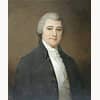
1797 1st US senator (William Blount of Tennessee) expelled by impeachment


William Blount (March 26, 1749 – March 21, 1800) was an American statesman and land speculator who signed the United States Constitution. He was a member of the North Carolina delegation at the Constitutional Convention of 1787 and led the efforts for North Carolina to ratify the Constitution in 1789 at Fayetteville.

He then served as the only governor of the Southwest Territory and played a leading role in helping the territory gain admission to the Union as the State of Tennessee.

He was selected as one of Tennessee’s initial United States Senators in 1796. Born to a prominent North Carolina family, Blount served as a paymaster during the American Revolutionary War. He was elected to the North Carolina legislature in 1781, where he remained in one role or another for most of the decade, except for two terms in the Continental Congress in 1782 and 1786.

Blount pushed efforts in the legislature to open the lands west of the Appalachians to settlement.

As governor of the Southwest Territory, he negotiated the Treaty of Holston in 1791, bringing thousands of acres of Indian lands under U.S. control. An aggressive land speculator, Blount gradually acquired millions of acres in Tennessee and the Trans-Appalachian West. His risky land investments left him in debt, and in the 1790s, he conspired with Great Britain to seize the Spanish-controlled Louisiana in the hope of boosting western land prices.

When the conspiracy was uncovered in 1797, he was expelled from the Senate and became the first federal official to face impeachment. However, Blount remained popular in Tennessee and served in the state senate during the last years of his life.

Source: wiki

if you see an error please comment

politics,pollution,petitions,pop culture & purses