2007 – Don Imus – makes offensive remarks about Rutger’s Women’s Basketball Team


On April 4, 2007, syndicated talk radio host Don Imus ignites a firestorm after making racially disparaging remarks about the Rutgers University women’s basketball team, insulting their appearance and tattoos and, most infamously, calling them “nappy-headed hos.” After a nationwide torrent of criticism, Imus apologized and lost his job but ultimately salvaged his career.

The remarks came during a discussion between Imus, his producer, and a reporter about a game between Rutgers and the University of Tennessee. Activists and journalists began to call for Imus to be fired almost immediately. Imus apologized on his show two days later, calling himself “a good man who did a bad thing,” but numerous sponsors, including General Motors, Staples, and other major companies, pulled their advertising. The Rev. Al Sharpton called for Imus to be “taken off the airwaves,” and Barack Obama, who would become the nation’s first African American president, called Imus’ remarks “divisive, hurtful, and offensive.” MSNBC, which simulcast Imus in the Morning on television, dropped the show on April 11. The following morning, Sharpton and the Rev. Jesse Jackson met with Les Moonves, CEO of CBS, who announced the cancellation of Imus in the Morning that afternoon.

Source: history.com

1996 – An Air Force jetliner carrying Commerce Secretary Ron Brown crashed in Croatia, killing all 35 people aboard.


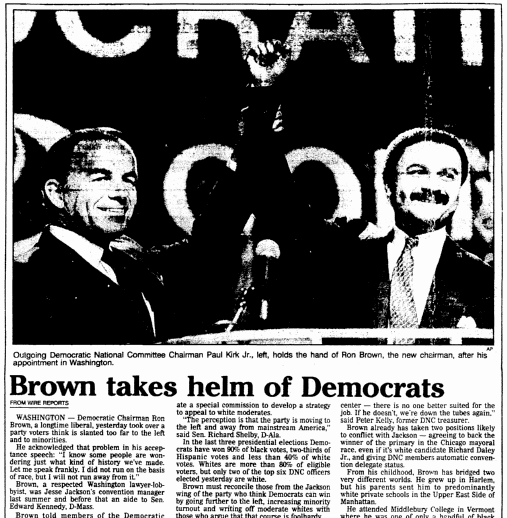
An article about Ronald Harmon “Ron” Brown, Plain Dealer newspaper article 11 February 1989

Ronald Harmon “Ron” Brown achieved a historic first on 10 February 1989 when he was elected chairman of the Democratic Party – the first African American chosen to lead a major political party in the U.S. Brown came to this position with an impressive set of credentials. A respected and successful lawyer, he worked on Massachusetts Senator Edward Kennedy’s 1980 bid for the presidential nomination, and on Jesse Jackson’s 1988 presidential campaign.

Despite his experience and qualifications, there was a great deal of opposition to an African American being elected chairman of the Democratic National Committee – as shown in the following three newspaper articles. The first article is a news account of his election, while the other two explore reaction to Brown’s election in Alabama, a state at the heart of the unrest and violence of the Civil Rights Movement in the 1950s and 1960s.

Despite these reservations and objections, Brown skillfully played important roles in running the 1992 Democratic National Convention and in Bill Clinton’s successful presidential campaign that same year. President Clinton nominated Brown to be Secretary of Commerce in 1993 – the first African American to hold that position as well – and it was in that capacity that Brown’s life came to a tragic end when he was killed on 3 April 1996 in a plane crash in Croatia while on a trade mission. He was 54 years old.

For more of this story go to  blog.genealogy

1870 – The 15th amendment, guaranteeing the right to vote regardless of race, was passed by the U.S. Congress


Following its ratification by the requisite three-fourths of the states, the 15th Amendment, granting African American men the right to vote, is formally adopted into the U.S. Constitution. Passed by Congress the year before, the amendment reads, “the right of citizens of the 

read more

TO: Congress


Pass the Equal Rights Amendment NOW!

Campaign by ALIYA – MOVE ON

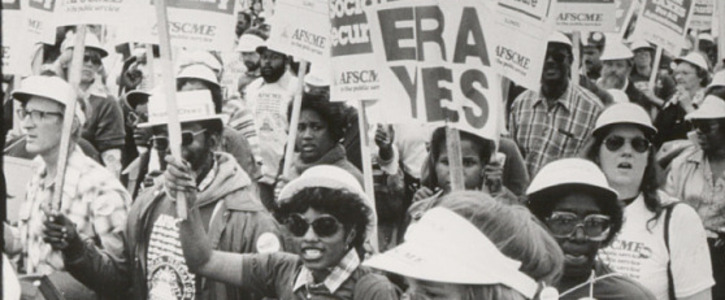
It’s been over 100 years since the Equal Rights Amendment (ERA) was introduced in Congress, which would prohibit discrimination based on sex. It’s been over 50 years since it was passed by Congress. And it’s been over four years since Virginia ratified the ERA, pushing it over the required three-quarters state ratification needed for amendments to take effect.

“We the people” in the Constitution should include all of us. Honor the century-worth of women and gender-diverse activists who have pushed the ERA forward. Sign the petition to demand Congress recognize the ERA NOW!

Why is this important?

Section 1: Equality of rights under the law shall not be denied or abridged by the United States or by any state on account of sex.
Section 2: The Congress shall have the power to enforce, by appropriate legislation, the provisions of this article.
Section 3: This amendment shall take effect two years after the date of ratification.

The Equal Rights Amendment passed Congress in 1972 and since 2020 has met the three-quarters state ratification requirement necessary for it to go into effect. But because it was not ratified by states within a specific window of time, Republicans in Congress are blocking it from going into effect.

Champions in Congress, including Representatives Ayanna Pressley and Cori Bush, founded the historic Congressional Equal Rights Amendment Caucus and are working to pass the ERA and have it enshrined into our Constitution. They introduced a joint resolution between the Senate and the House that would affirm the ratification of the ERA, but with Congressional Republicans blocking its passage, we need to show the overwhelming public support for the ERA and demand it be passed THIS YEAR.

The ERA would not have gotten to where it is today if it weren’t for the tireless efforts of everyday people over the past century—and we have to keep up the fight to demand Congress do its job and recognize the ERA as the 28th Amendment.

Source: MoveOn.org

1834 – The U.S. Senate voted to censure President Jackson for the removal of federal deposits from the Bank of the United States.


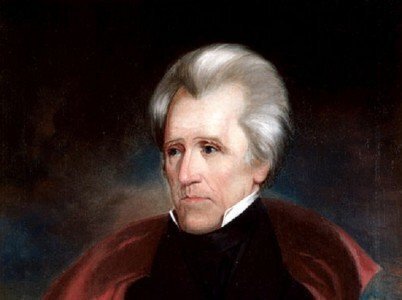
On March 28, 1834, the U.S. Senate censured President Andrew Jackson in a tug-of-war that had questionable constitutional roots but important political overtones.

andrew-jackson

Congressional censure motions against a sitting President have always been controversial. In addition to Jackson, John Tyler and James Polk faced censure resolutions. Abraham Lincoln faced a censure problem during the Civil War, which was ironic, since Representative Lincoln led the censure movement against President Polk.

In modern years, censure motions were introduced against Richard Nixon and Bill Clinton, but not pursued. 

Censure motions are subject to votes in either the House of Representatives or the Senate, and their sharply worded language is essentially a public shaming of government officials.

The most-famous censure motion in congressional history happened in 1954, when the Senate passed a censure motion against Joseph McCarthy, who was a key figure in the post-World War II Communist Red Scare era.

The motion said that McCarthy “acted contrary to senatorial ethics and tended to bring the Senate into dishonor and disrepute, to obstruct the constitutional processes of the Senate, and to impair its dignity; and such conduct is hereby condemned.”

The effective punishment came against McCarthy in a separate motion, where he lost a key committee chairmanship.

The constitutional precedent for the censure motion comes from Article 1, Section 5, Clause 2, which says that “each House may determine the Rules of its Proceedings, punish its Members for disorderly behavior, and, with the Concurrence of two thirds, expel a Member.”

For the complete article go to : constitutioncenter.org

politics,pollution,petitions,pop culture & purses