The outrage about “unpaid workers” or “mismanagement” doesn’t match any verified reporting


I’ve been seeing a lot of confusion online about the Obama Presidential Center, so I checked multiple sources — including AI summaries of publicly available reporting — to make sure I understood the facts clearly. The uproar created a moment to compare and contrast how some people are treating the White House construction to the Obama Center.

The Center’s $850M construction cost is privately funded, and the separate $470M operations endowment is a long-term commitment that foundations typically finalize after the building goes through its first full weather cycle. That’s standard practice for museums and cultural institutions.

What feels inconsistent is the sudden outrage about “unpaid workers” or “mismanagement,” especially when there’s no verified reporting showing unpaid labor at the Obama site.

Meanwhile, the White House itself has required extensive repairs and restoration in recent years, with multiple news outlets documenting issues ranging from structural wear to interior damage. Those repairs are part of maintaining a historic building, and they’re publicly funded as required by law.

There is a long public record — lawsuits, contractor complaints, court filings — showing that trump has a history of not paying contractors, vendors, and workers on his private projects

So the contrast is less about personalities and more about how narratives form online: – A privately funded cultural project is treated like a scandal. – A publicly maintained historic building needing repairs is treated like a footnote.

It’s fair to ask questions about transparency and public costs — that’s part of civic responsibility. Voters need to keep asking questions … where are the actual documents regarding the White House, or any project that any admin is engaged in, and not take what’s on social media as fact

We should assume the Center will include event and community spaces, which is standard for presidential libraries and cultural institutions.

Rentals generate revenue and help support long‑term operations.

Nativegrl77

Sources: fakta.co , foxnews, yahoo.com

Happy Dad’s Day – Began on June 19, 1910, and a history of the Art of Manliness


Father’s Day is coming up, so in honor of dear old Dad, the Art of Manliness is presenting a series of father-themed posts.

Today, we look into the history of Father’s Day. Sadly, retailers and marketers, in an effort to make a quick buck, have bastardized the original meaning of Father’s Day. A holiday that was supposed to honor Dad and enumerate his special qualities now is used to sell chili pepper ties and shop vacs. Hopefully, by understanding why the concept of Father’s Day was created, we can better celebrate and honor the fathers who raised us into men.

The History of Father’s Day in the United States

There are two stories of when the first Father’s Day was celebrated.

According to some accounts, the first Father’s Day was celebrated in Washington State on June 19, 1910.

A woman by the name of Sonora Smart Dodd came up with the idea of honoring and celebrating her father while listening to a Mother’s Day sermon at church in 1909. She felt as though mothers were getting all the acclaim, while fathers were equally deserving of a day of praise (She would probably be displeased that Mother’s Day still gets the lion’s share of attention).

Sonora’s dad was quite a man. William Smart, a veteran of the Civil War, was left a widower when his wife died while giving birth to their sixth child. He went on to raise the six children by himself on their small farm in Washington. To show her appreciation for all the hard work and love William gave to her and her siblings, Sonora thought there should be a day to pay homage to him and other dads like him. She initially suggested June 5th, the anniversary of her father’s death to be the designated day to celebrate Father’s Day, but due to some bad planning, the celebration in Spokane, Washington was deferred to the third Sunday in June.

The other story of the first Father’s Day in America happened all the way on the other side of the country in Fairmont, West Virginia on July 5, 1908. Grace Golden Clayton suggested to the minister of the local Methodist church that they hold services to celebrate fathers after a deadly mine explosion killed 361 men.

While Father’s Day was celebrated locally in several communities across the country, unofficial support to make the celebration a national holiday began almost immediately. William Jennings Bryant was one of its staunchest proponents. In 1924, President Calvin “Silent Cal” Coolidge recommended that Father’s Day become a national holiday. But no official action was taken.

In 1966, Lyndon B. Johnson, through an executive order, designated the third Sunday in June as the official day to celebrate Father’s Day. However, it wasn’t until 1972, during the Nixon administration, that Father’s Day was officially recognized as a national holiday.

Father’s Day Around The World

Other countries also picked up on the idea of Father’s Day. While many followed suit by celebrating it on the third Sunday in June, some decided to honor Dad on different dates. So, to make sure you know when to pay your respects to dear old dad wherever you may be, here’s a list of the dates

Father’s Day is celebrated across the world.

  • March 14– Iran
  • March 19– Bolivia, Honduras, Italy, Lichtenstein, Portugal, Spain
  • May 8– South Korea
  • First Sunday in June– Lithuania
  • Second Sunday in June– Austria, Ecuador, Belgium
  • Third Sunday in June– Antigua, Bahamas, Bangladesh, Bulgaria, Canada, Chile, Columbia, Costa Rica, Cuba, Cyprus, Czech Republic, France, Greece, Guyana, Hong Kong, India, Ireland, Jamaica, Japan, Malaysia, Malta, Mauritius, Mexico, Netherlands, Pakistan, Panama, Paraguay, Peru, Philippines, Puerto Rico, Saint Vincent, Singapore, Slovakia, South Africa, Sri Lanka, Switzerland, Trinidad, Turkey, United Kingdom, Venezuela, Zimbabwe
  • June 17– El Salvador, Guatemala
  • June 23– Nicaragua, Poland, Uganda
  • Second Sunday in July– Uruguay
  • Last Sunday in July– Dominican Republic
  • Second Sunday in August– Brazil
  • August 8– Taiwan, China
  • August 24– Argentina
  • First Sunday in September– Australia, New Zealand
  • New Moon of September– Nepal
  • First Sunday in October– Luxembourg
  • Second Sunday in November– Estonia, Finland, Norway, Sweden
  • December 5– Thailand

This Father’s Day, don’t just buy your Pops a crappy “World’s Best Dad” mug. Write him a card expressing some of the things you love and admire about him. Nothing mushy. Just tell him that you’re glad to be his son.


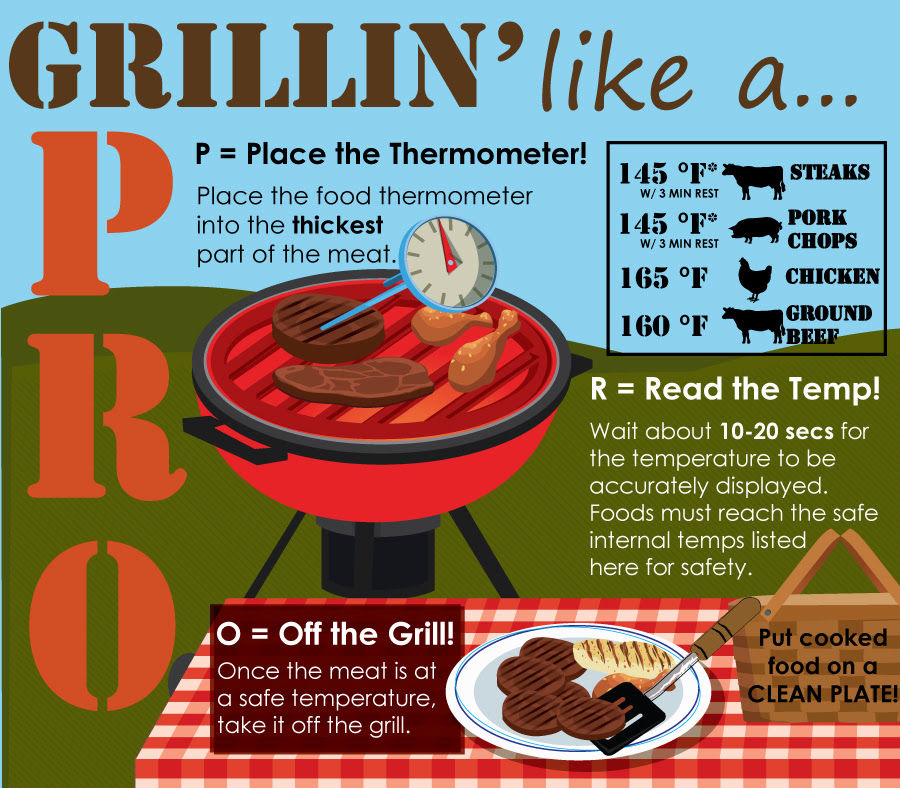
Make Food Safety Part of Your Father’s Day


FoodSafety.gov
Infographic

Still looking for a Father’s Day gift? Consider getting a food thermometer, perfect for safe grilling during the warm months.

When using a food thermometer, remember these three easy steps to cook like a PRO:

1. Place the thermometer

2. Read the temperature

3. Off the Grill!

Read more about how to cook like a PRO.

=======================================================================================

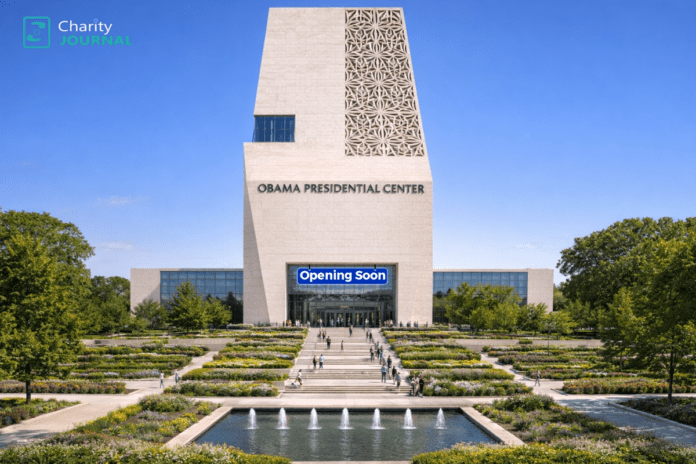
The Obama Presidential Center ~ is about to open its doors … wow


The Obama Presidential Center is set to open its doors soon, and it’s an exciting development!

The main museum tower of the Obama Presidential Center is intentionally designed to resemble four hands coming together in an upward motion. This design reflects President Obama’s themes of collaboration, civic participation, unity, collective action, and community strength.

It looks so solid and windowless

  • The lack of windows is intentional: sunlight damages historical documents, textiles, and artifacts.
  • The building’s granite exterior protects the presidential archives and museum materials.
  • The tower rises 225 feet and includes the “Sky Room” at the top.

Multiple sources confirm the construction of the Center itself is funded entirely by private fundraising through the Obama Foundation. This includes donations from:

  • philanthropists
  • foundations
  • private individuals
  • major donors (e.g., Jeff Bezos, per reporting)

No municipal, state, or federal tax dollars are used for the building.

Sources: newsmeaww.com , fakta.com

7 Summer Solstice Facts


Let’s get on with some fun facts about the June solstice:

The kind of energy the Sun emits most strongly is not ultraviolet, gamma rays, or even visible light—it’s actually infrared. That’s the Sun’s strongest emission, which is the kind we feel as heat.

As for the Sun’s visible emissions, its strongest is the green light. That’s why our eyes are maximally sensitive to that color.

With all that, most people only care about one single solstice fact:

  1. “Solstice” comes from the Latin words sol (sun) and sistere (to stand still). On the summer solstice, the Sun’s path stops advancing northward each day and appears to stop in the sky before going back the other way.
  2. On the solstice, the Sun reaches its northernmost position, reaching the Tropic of Cancer and standing still before reversing direction and starting to move south again. (See illustration above.) In fact, that’s how the Tropic of Cancer got its name. A few thousand years ago, the solstice happened when the Sun was in the constellation of Cancer the Crab.
  3. On the summer solstice, you may observe that the Sun’s path across the sky is curved—NOT a straight line. It appears to rise and keeps veering to the right as it passes high overhead. This is quite different from the laser-straight path the Sun moves along in late March and late September, near the equinoxes.
  4. You may also observe that the midday Sun is highest up in the sky (or, lowest if you live in the Southern Hemisphere). But did you know that the Sun’s highest point is getting lower and lower over time? That’s because Earth’s tilt is slowly decreasing.
  5. It may be the “longest day,” but it’s not the latest sunset or the earliest sunrise! The earliest sunrises happen before the summer solstice, and the latest sunsets happen after the summer solstice. See it for yourself wherever you live.
  6. In India, the summer solstice ends the 6-month period when spiritual growth is supposedly easiest. Better hurry—you only have a few days left!
  7. On this day, the Sun rises farthest left on the horizon and sets at its rightmost possible spot. Sunlight strikes places in your home that are illuminated at no other time.
Sun and clouds

Source: almanac.com

politics,pollution,petitions,pop culture & purses