

1777- Articles of Confederation submitted to the states

On November 17, 1777, Congress submits the Articles of Confederation to the states for ratification.
The Articles had been signed by Congress two days earlier, after 16 months of debate. Bickering over land claims between Virginia and Maryland delayed final ratification for almost four more years. Maryland became the last state to approve the Articles on March 1, 1781, affirming them as the outline of the official government of the United States. The nation was guided by the document until the implementation of the current U.S. Constitution in 1789.
The critical distinction between the Articles of Confederation and the U.S. Constitution–the primacy of the states under the Articles–is best understood by comparing the following lines.
The Articles of Confederation begin:
“To all to whom these Present shall come, we the undersigned Delegates of the States…”
By contrast, the Constitution begins:
“We the People of the United States…do ordain and establish this Constitution for the United States of America.”
The predominance of the states under the Articles of Confederation is made even more explicit by the claims of Article II:
“Each state retains its sovereignty, freedom, and independence, and every power, jurisdiction, and right, which is not by this Confederation expressly delegated to the United States, in Congress assembled.”
Less than five years after the ratification of the Articles of Confederation, enough leading Americans decided that the system was inadequate to the task of governance that they peacefully overthrew their second government in just over 20 years. The difference between a collection of sovereign states forming a confederation and a federal government created by a sovereign people lay at the heart of the debate as the new American people decided what form their government would take.
For the complete article, go to history.com
Share this:

1968 – Nixon insists that he is “not a crook”
In the midst of the Watergate scandal that eventually ended his presidency, President Richard Nixon tells a group of newspaper editors gathered at Walt Disney World in Orlando, Florida, that he is “not a crook.” Nixon made the now-famous declaration during a televised …read more
Source: history.com
Share this:

Rep. Josh Gottheimer (D-NJ) has stood in the way of the most popular parts of President Biden’s agenda,
We’re running this mobile billboard in Rep. Josh Gottheimer’s North Jersey district:
If not for Rep. Gottheimer’s obstruction, Medicare prescription drug negotiation would already be the law of the land.
We need to keep this truck on the road in Rep. Gottheimer’s district until the Build Back Better Act passes later this week. Can you chip in today to keep the pressure on corporate Democrats like Josh Gottheimer?
For all the information, please go to their website

socialsecurityworks.org
Share this:
Thanksgiving (Re)Writing Contest – submit your entry by November 21, 2021 for a chance to Win $$$$$
Please go to Facebook for all the information
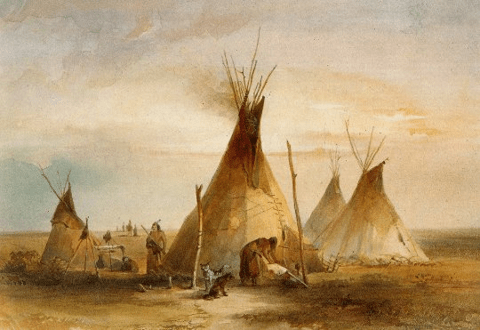
Every year for Thanksgiving, the Wall Street Journal features a passage from a pilgrim detailing what colonists perceived when they arrived in the “New World.” The passage is full of disdain and racism towards indigenous people, and petition starter Randy, an indigenous activist, thinks it’s time to stop publishing this story.
But what should one of the nation’s most widely-read newspapers publish on Thanksgiving? How can we as a nation stop telling the false story behind the holiday and instead tell a story of our nation that honors indigenous people? We want to read something which positions the descendants of the U.S.’ original inhabitants and settlers as modern day accomplices in the fight for a more just nation – and we’re willing to pay for it.
Change.org is looking for an essay that does just that, and we want you to submit your writing. Randy and our staff will join together to determine the winner, and to submit the winning essay to the WSJ.
change.org


You must be logged in to post a comment.