Tag Archives: Arizona

Get Set for a Healthy Winter Season


While contagious viruses are active year-round, fall and winter are when we’re most vulnerable to them. This is due in large part to people spending more time indoors with others when the weather gets cold.

Most respiratory bugs come and go within a few days, with no lasting effects. However, some cause serious health problems. People who use tobacco or who are exposed to secondhand smoke are more prone to respiratory illnesses and more severe complications than nonsmokers.

Colds usually cause stuffy or runny nose and sneezing. Other symptoms include coughing, a scratchy throat, and watery eyes. There is no vaccine against colds, which come on gradually and often spread through contact with infected mucus.

Flu comes on suddenly and lasts longer than colds. Flu symptoms include fever, headache, chills, dry cough, body aches, fatigue, and general misery. Like colds, flu can cause a stuffy or runny nose, sneezing, and watery eyes. Young children may also experience nausea and vomiting with the flu. Flu viruses spread mainly by droplets made when people with flu cough, sneeze or talk. A person might also get flu by touching a surface or object that has flu virus on it.

Flu season in the United States may begin as early as October and can last as late as May, and generally peaks between December and February. According to the Centers for Disease Control and Prevention (CDC):

  • More than 200,000 people in the United States are hospitalized from flu-related complications each year, including 20,000 children younger than age 5.
  • Between 1976 and 2006, the estimated number of flu-related deaths every year ranged from about 3,000 to about 49,000.
  • In the 2013 – 2014 season, there were in the U.S. 35.4 million influenza-associated illnesses, 14.6 medically attended flu illnesses, and 314,000 flu hospitalizations.
  • Prevention Tips

Get vaccinated against flu.

With rare exceptions, everyone 6 months of age and older should be vaccinated against flu. Flu vaccination, available as a shot or a nasal spray, can reduce flu illnesses, doctors’ visits, missed work and school, and prevent flu-related hospitalizations and deaths.

It’s ideal to be vaccinated by October, although vaccination into January and beyond can still offer protection. Annual vaccination is needed because flu viruses are constantly changing, flu vaccines may need to be updated, and because a person’s immune protection from the vaccine declines over time. Annual vaccination is especially important for people at high risk for developing serious complications from flu. These people include:

  • young children under 5 years, but especially those younger than 2.
  • pregnant women
  • people with certain chronic health conditions (like asthma, diabetes, or heart and lung disease)
  • people age 65 years and older

Vaccination also is especially important for health care workers, and others who live with or care for people at high risk for serious flu-related complications. Since babies under 6 months of age are too young to get a flu vaccine, their mother should get a flu shot during her pregnancy to protect them throughout pregnancy and up to 6 months after birth. Additionally, all of the baby’s caregivers and close contacts should be vaccinated as well.

Wash your hands often. Teach children to do the same. Both colds and flu can be passed through contaminated surfaces, including the hands. FDA says that while soap and water are best for hand hygiene, alcohol-based hand rubs may also be used. However, dirt or blood on hands can render the hand rubs unable to kill bacteria.

Try to limit exposure to infected people. Keep infants away from crowds for the first few months of life.

Practice healthy habits.

  • Eat a balanced diet.
  • Get enough sleep.
  • Exercise.
  • Do your best to keep stress in check.

Already Sick?

Usually, colds have to run their course. Gargling with salt water may relieve a sore throat. And a cool-mist humidifier may help relieve stuffy noses.

Here are other steps to consider:

  • Call your health care professional. Start the treatment early.
  • Limit your exposure to other people. Cover your mouth with a tissue when you cough or sneeze.
  • Stay hydrated and rested. Avoid alcohol and caffeinated products which may dehydrate you.
  • Talk to your health care professional to find out what will work best for you.

In addition to over-the-counter (OTC) medicines, there are FDA-approved prescription medications for treating flu. Cold and flu complications may include bacterial infections (e.g., bronchitis, sinusitis, ear infections, and pneumonia) that could require antibiotics.

Taking OTC Products

Read medicine labels carefully and follow the directions. People with certain health conditions, such as high blood pressure, should check with a health care professional or pharmacist before taking a new cough and cold medicine.

Choose OTC medicines appropriate for your symptoms. To unclog a stuffy nose, use nasal decongestants. Cough suppressants quiet coughs; expectorants loosen mucus; antihistamines help stop a runny nose and sneezing; and pain relievers can ease fever, headaches, and minor aches.

Check the medicine’s side effects. Medications can cause drowsiness and interact with food, alcohol, dietary supplements, and each other. It’s best to tell your health care professional and pharmacist about every medical product and supplement you are taking.

Check with a health care professional before giving medicine to children.

See a health care professional if you aren’t getting any better. With children, be alert for high fevers and for abnormal behavior such as unusual drowsiness, refusal to eat, crying a lot, holding the ears or stomach, and wheezing.

Signs of trouble for all people can include

  • a cough that disrupts sleep
  • a fever that won’t respond to treatment
  • increased shortness of breath
  • face pain caused by a sinus infection
  • high fever, chest pain, or a difference in the mucus you’re producing, after feeling better for a short time.

This article appears on FDA’s Consumer Updates page, which features the latest on all FDA-regulated products.

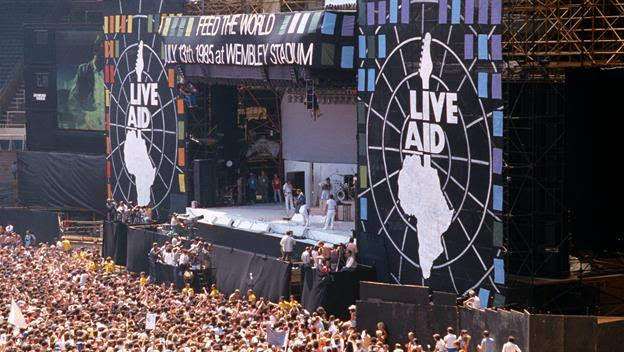
1985 ~On this day ~ Live Aid


On July 13, 1985, at Wembley Stadium in London, Prince Charles and Princess Diana officially open Live Aid, a worldwide rock concert organized to raise money for the relief of famine-stricken Africans. Continued at JFK Stadium in Philadelphia and at other arenas around the world, the 16-hour… read more »

Congress enacts the Northwest Ordinance »

Rockefeller announces new peace proposal »

Live Aid is held simultaneously in London and Philadelphia and broadcast live throughout the world »

1967 ~ The Lovings ~On June 12th, 1967, the Court’s ruling declared all laws against interracial marriage in the United States to be unconstitutional – possibly on a future ballot? In Memory


 visit Loving Day’s website.

================

The Loving Story:

Richard P. Loving, and his wife Mildred, shown in this January 26, 1965 photograph, will file a suit at Federal Court in Richmond, Va., asking for permission to live as husband and wife in Virginia. Both are from Carolin County, south of Fredericksburg, Va., and were married in Washington in 1958. Upon their return the interracial couple was convicted under the state’s miscegenation law that bans mixed marriages. They received a suspended sentence on the condition they leave the state, but they now want to return to Virginia. (AP Photo)

With fight for same-sex marriage such a regular point of conflict today, it’s easy to forget about the first fight for marriage equality: interracial marriage. But while anti-miscegenation laws may seem like a relic of the past, it wasn’t until 2000 that Alabama became the last state to adapt its constitutional laws on interracial marriage.

In 1967, the United States Supreme Court put an end to the prohibition of interracial marriage in the monumental case of Loving v. Virginia.

The case was sparked by Mildred Loving, née Jeter, who after discovering she was pregnant traveled with boyfriend Richard Loving and from their home in Virginia to Washington, D.C. They made the move to evade Virginia’s Racial Integrity Act of 1924, which prohibited them from marrying John was a white male while Mildred was black and Native American.

Five weeks after their nuptials, they returned to Virginia. An anonymous tip led to a police raid. Instead of finding them having sex, which was another criminal offense at the time, they caught them sleeping in their marital bed. The couple was taken to jail after Mildred pointed out their D.C. marriage certificate. It was used as evidence of “cohabiting as man and wife, against the peace and dignity of the Commonwealth.”

The Lovings were sentenced to one year in prison, but it was suspended on the condition that the couple leaves Virginia and not return together for 25 years.

Initially they did just that, but by 1963, Mildred had enough and decided to write to Attorney General Robert F. Kennedy. The letter inspired Kennedy to connect her with the ACLU, which took the case to the U.S. Supreme Court.

On June 12th, 1967, the Court’s ruling declared all laws against interracial marriage in the United States to be unconstitutional.

While cases like Brown v. Board of Education or Rosa Parks’ stand against segregation are taught regularly in schools, the Loving case gets less attention. Thirty-six years after the trial, Ken Tanabe first learned of the case as a grad student and founded the Loving Day Project to commemorate the anniversary. He, like many others, discovered it by accident.

“I realized that I might not be alive today (along with millions of other Americans) if it wasn’t for this case and those that came before it,” Tanabe, who is mixed race, told AOL via email.

The project has since expanded from its humble roots in New York City across the nation and even around the world.

According to a recent Gallup poll, 11 percent of Americans do not interracial marriage. When the Lovings were arrested the numbers, disapproval ratings were 94 percent. The falling disapprove numbers may appear to be a victory, but Tanabe says they are still worth worrying about.

“When Barack Obama was elected president, some people thought that racism was ‘over.’ While his election was an important sign of progress, it’s dangerous to believe we can stop being vigilant and proactive,” Tanabe explained. “The stories surrounding Trayvon Martin, Michael Brown, and so many others are some well-known examples. Racism also affects interracial couples and multiracial people every day.”

Rather than remain mutually exclusive, Loving Day embraced, and been embraced, by the LGBTQ community. On the 40th anniversary of the Supreme Court ruling, Mrs. Loving urged that gay men and lesbians should be allowed to marry. A march has been planned for this year’s Loving Day in Abilene, TX by Parents, Families and Friends of Lesbians and Gays (PFLAG).

“We see Loving Day as an educational resource for everyone to learn more about the history of marriage and understanding it as a civil rights issue,” said Tenebe.

National attention turned to Loving v. Virginia in 2011 when ‘The Loving Story’ premiered at the Tribeca Film Festival and was purchased by HBO. This year, Jeff Nichols, writer and director of the Matthew McCounghey flick ‘Mud,’ announced he will direct a new Hollywood “Loving” film starring Ruth Negga and Joel Edgerton.

===============================================================

Black History is American History

On This Day …. Cesar Estrada Chavez 4/23/93


by UFW

The Story of Cesar Chavez
THE BEGINNING

The story of Cesar Estrada Chavez begins near Yuma, Arizona. Cesar was born on March 31, 1927.

He was named after his grandfather, Cesario. Regrettably, the story of Cesar Estrada Chavez also ends near Yuma, Arizona. He passed away on April 23, 1993, in San Luis, a small village near Yuma, Arizona.

He learned about justice or rather injustice early in his life. Cesar grew up in Arizona; the small adobe home, where Cesar was born was swindled from them by dishonest Anglos. Cesar’s father agreed to clear eighty acres of land and in exchange he would receive the deed to forty acres of land that adjoined the home. The agreement was broken and the land sold to a man named Justus Jackson. Cesar’s dad went to a lawyer who advised him to borrow money and buy the land.  Later when Cesar’s father could not pay the interest on the  loan the lawyer bought back the land and sold it to the original owner. Cesar learned a lesson about injustice that he would never forget. Later, he would say, The love for justice that  is in us is not only the best part of our being but it is also the most true to our nature.

            In 1938 he and his family moved to California. He lived in La Colonia Barrio in Oxnard for a short period, returning to Arizona several months later. They returned to California in June 1939 and this time settled in San Jose. They lived in the barrio called Sal Si Puedes -“Get Out If You Can.” Cesar thought the only way to get out of the circle of poverty was to work his way up and send the kids to college.  He and his family worked in the fields of California from Brawley to Oxnard, Atascadero, Gonzales, King City, Salinas, McFarland, Delano Wasco, Selma, Kingsburg, and Mendota.

He did not like school as a child, probably because he spoke only Spanish at home. The teachers were mostly Anglo and only spoke English. Spanish was forbidden in school. He remembers being punished with a ruler to his knuckles for violating the rule. He also remembers that some schools were segregated and he felt that in the integrated schools he was like a monkey in a cage. He remembers having to listen to a lot of racist remarks. He remembers seeing signs that read whites only. He and his brother, Richard, attended thirty-seven  schools. He felt that education had nothing to do with his farm worker/migrant way of life. In 1942 he graduated from the eighth grade. Because his father, Librado, had been in an accident and because he did not want his mother, Juana, to work in the fields, he could not to go to high school, and instead became a migrant farm worker.

While his childhood school education was not the best, later in life, education was his passion. The walls of his office in La Paz (United Farm Worker Headquarters ) are lined with hundreds of books ranging from philosophy, economics, cooperatives, and unions, to biographies on Gandhi and the Kennedys’. He believed that, “The end of all education should surely be service to others,” a belief that he practiced until his untimely death.

He joined the U.S. Navy, which was then segregated, in 1946, at the age of 19, and served for two years.

In 1948 Cesar married Helen Fabela. They honeymooned in California by visiting all the California Missions from Sonoma to San Diego (again the influence of education). They settled in Delano and started their family. First Fernando, then Sylvia, then Linda, and five  more children were to follow.

Cesar returned to San Jose where he met and was influenced by Father Donald McDonnell. They talked about farm workers and strikes. Cesar began reading about St. Francis and Gandhi and nonviolence. After Father McDonnell came another very influential person, Fred Ross.

Cesar became an organizer for Ross’ organization, the Community Service Organization – CSO. His first task was voter registration.

THE UNITED FARM WORKERS IS BORN

In 1962 Cesar founded the National Farm Workers Association, later to become the United Farm Workers – the UFW. He was joined by Dolores Huerta and the union was born. That same year Richard Chavez designed the UFW Eagle and Cesar chose the black and red colors. Cesar told the story of the birth of the eagle. He asked Richard to design the flag, but Richard could not make an eagle that he liked. Finally he sketched one on a piece of brown wrapping paper. He then squared off the wing edges so that the eagle would be easier for union members to draw on the handmade red flags that would give courage to the farm workers with their own powerful symbol. Cesar made reference to the flag by stating, “A symbol is an important thing. That is why we chose an Aztec eagle. It gives pride . . . When people see it they know it means dignity.”

For a long time in 1962, there were very few union dues paying members.  By 1970 the UFW got grape growers to accept union contracts and had             effectively organized most of that industry, at one point in time claiming 50,000 dues paying members. The reason was Cesar Chavez’s  tireless leadership and nonviolent tactics that included the Delano  grape strike, his fasts that focused national attention on farm workers  problems, and the 340-mile march from Delano to Sacramento in 1966.  The farm workers and supporters carried banners with the black eagle  with HUELGA (strike) and VIVA LA CAUSA (Long live our cause). The  marchers wanted the state government to pass laws which would permit farm workers to organize into a union and allow collective bargaining  agreements. Cesar made people aware of the struggles of farm workers  for better pay and safer working conditions. He succeeded through             nonviolent tactics (boycotts, pickets, and strikes). Cesar Chavez  and the union sought recognition of the importance and dignity of  all farm workers.

It was the beginning of La Causa a cause that was supported by  organized labor, religious groups, minorities, and students. Cesar Chavez had the foresight to train his union workers and then to  send many of them into the cities where they were to use the boycott and picket as their weapon.

Cesar was willing to sacrifice his own life so that the union would  continue and that violence was not used. Cesar fasted many times.  In 1968 Cesar went on a water only, 25 day fast. He repeated the  fast in 1972 for 24 days, and again in 1988, this time for 36 days.  What motivated him to do this? He said, Farm workers everywhere  are angry and worried that we cannot win without violence. We have proved it before through persistence, hard work, faith and willingness  to sacrifice. We can win and keep our own self-respect and build  a great union that will secure the spirit of all people if we do  it through a rededication and recommitment to the struggle for justice  through nonviolence.

THE FAST

Many events precipitated the fast, especially the terrible suffering of the farm workers and their children,                     the crushing of farm worker rights, the dangers of pesticides,  and the denial of fair and free elections.

Cesar said about the fast, ” A fast is first and foremost personal. It is a fast for the purification of my own body, mind, and soul. The fast is also a heartfelt prayer for purification and strengthening for all those who work beside me in the farm worker movement. The fast is also an act of penance for those in positions of moral authority and for all men and women activists who know what is right and just, who know that they could and should do more. The fast is finally a declaration of non-cooperation with supermarkets who promote and sell and profit from California table grapes. During the past few years I have been studying the plague of pesticides on our land and our food,” Cesar continued “The evil is far greater than even I had thought it to be, it threatens to choke out the life of our people and also the life system that supports us all. This solution to this deadly crisis will not be found in the arrogance of the powerful, but in  solidarity with the weak and helpless. I pray to God that this fast will be a preparation for a multitude of simple deeds for justice. Carried out by men and women whose hearts  are focused on the suffering of the poor and who yearn, with us, for a better world. Together, all things are possible.”

Cesar Chavez completed his 36-day Fast for Life on August 21, 1988. The Reverend Jesse Jackson took up where Cesar left off, fasting on water for three days before passing on the fast to celebrities  and leaders. The fast was passed to Martin Sheen, actor; the Reverend  J. Lowery, President SCLC; Edward Olmos, actor; Emilio Estevez,  actor; Kerry Kennedy, daughter of Robert Kennedy, Peter Chacon,  legislator, Julie Carmen, actress; Danny Glover, actor; Carly Simon,  singer; and Whoopi Goldberg, actress.

THE DEATH OF CESAR CHAVEZ

Cesar Estrada Chavez died peacefully in his sleep on April 23, 1993 near Yuma, Arizona, a short distance from the small family farm in the Gila River Valley where he was born more than 66 years before.The founder and president of the United Farm Workers of America, AFL-CIO was in Yuma helping UFW attorneys defend the union against a lawsuit brought by Bruce Church Inc., a giant Salinas,  Calif.-based lettuce and vegetable producer. Church demanded that the farm workers pay millions of dollars in damages resulting  from a UFW boycott of its lettuce during the 1980’s. Rather than bring the legal action in a state where the boycott actually  took place, such as California or New York, Church “shopped around” for a friendly court in conservative, agribusiness-dominated Arizona-where there had been no boycott activity.

“Cesar gave his last ounce of strength defending the farm workers  in this case,” stated his successor, UFW President Arturo Rodriguez,  who was with him in Arizona during the trial. He died standing up  for their First Amendment right to speak out for themselves. He believed in his heart that the farm workers were right in boycotting Bruce Church Inc. lettuce during the l980’s and he was determined  to prove that in court.” (When the second multimillion dollar judgment  for Church was later thrown out by an appeal’s court, the company  signed a UFW contract in May 1996.

After the trial recessed at about 3 p.m. on Thursday, April 22,  Cesar spent part of the afternoon driving through Latino neighborhoods  in Yuma that he knew as a child. Many Chavezes still live in the area.

He arrived about 6 p.m. in San Luis, Arizona-about 20 miles from Yuma, at the modest concrete-block home of Dofla Maria Hau, a former  farm worker and longtime friend. Cesar and eight other UFW leaders  and staff were staying at her house in a poor farm worker neighborhood not far from the Mexican border.

Cesar ate dinner at around 9 p.m. and presided over a brief meeting  to review the day’s events. He had just finished two days of often grueling examination by attorneys for Bruce Church Inc.

He talked to his colleagues about taking care of themselves-a recent  recurring theme with Cesar because he was well aware of the long hours required from him and other union officers and staff. Still,  he was in good spirits despite being exhausted after prolonged questioning on the witness stand; he complained about feeling some weakness  when doing his evening exercises.

The UFW founder went to bed at about 10 or 10:30 p.m. A union staff  member said he later saw a reading light shining from Cesar’s room.

The light was still on at 6 a.m. the next morning. That was not  seen as unusual. Cesar usually woke up in the early hours of the  morning well before dawn to read, write or meditate.

When he had not come out by 9 a.m., his colleagues entered his  bedroom found that Cesar had died apparently, according to authorities,  at night in his sleep.

He was found lying on his back with his head turned to the left. His shoes were off and he still wore his clothes from the day before. In his right hand was a book on Native American crafts. There was  a peaceful smile on his face.

THE LAST MARCH WITH CESAR CHAVEZ

On April 29, 1993, Cesar Estrada  Chavez was honored in death by those he led in life. More than  50,000 mourners came to honor the charismatic labor leader at the site of his first public fast in 1968 and his last in 1988, the United Farm Workers Delano Field Office at “Forty Acres.”It was the largest funeral of any labor leader in the history of the U.S. They came in caravans from Florida to California to pay respect to a man whose strength was in his simplicity.Farm workers, family members, friends and union staff took turns standing vigil over the plain pine coffin which held the body of Cesar Chavez. Among the honor guard were many                     celebrities who had supported Chavez throughout his years  of struggle to better the lot of farmworkers throughout America.

Many of the mourners had marched side by side with Chavez during his tumultuous years in the vineyards and farms of America. For  the last time, they came to march by the side of the man who had taught them to stand up for their rights, through nonviolent protest and collective bargaining.

Cardinal Roger M. Mahoney, who celebrated the funeral mass, called  Chavez “a special prophet for the worlds’ farm workers.” Pall bearers,   including crews of these workers, Chavez children and grandchildren,  then carried their fallen leader, resting at last, from the Memorial  Park to Forty Acres.

The death of Chavez marked an era of dramatic changes in American agriculture. His contributions would be eroded, and others would have to shoulder the burden of his work. But, Cesar Chavez, who insisted that those who labor in the earth were entitled to share fairly in the rewards of their toil, would never be forgotten.

As Luis Valdez said, “Cesar, we have come to plant your heart like a seed . . . the farm workers shall harvest in the seed of your  memory.”
              FINAL RESTING PLACE/FINAL RECOGNITION

The body of Cesar Chavez was taken to La Paz, the UFW’s California headquarters, by his family and UFW leadership. He was laid to rest near a bed of roses, in front of his office.On August 8, 1994, at a White House ceremony, Helen Chavez, Cesar’s widow, accepted the Medal of Freedom for her late  husband from President Clinton. In the citation accompanying America’s highest civilian honor which was awarded posthumously, the President lauded Chavez for having “faced formidable,often violent opposition with dignity and nonviolence.And he was victorious. Cesar Chavez left our world better  than he found it, and his legacy inspires us still. He was for his own people a Moses figure,” the President declared. “The farm workers who labored in the fields and yearned for  respect and self-sufficiency pinned their hopes on this remarkable  man who, with faith and discipline, soft spoken humility and amazing inner strength, led a very courageous life”

The citation accompanying the award noted how Chavez was a farm worker from childhood who “possessed a deep personal understanding  of the plight of migrant workers, and he labored all his years to lift their lives.” During his lifetime, Chavez never earned more   than $5,000 a year. The late Senator Robert Kennedy called him “one of the heroic figures of our time.”

Chavez’s successor, UFW President Arturo Rodriguez, thanked the president on behalf of the United Farm Workers and said, “Every day in California and in other states where farm workers are organizing,  Cesar Chavez lives in their hearts. Cesar lives wherever Americans’ he inspired work nonviolently for social change.”

Feminism …


by The Thinker-Writer, January 31, 2010
 The belief that women are and should be treated as potential intellectual equals and social equals to men. These people can be male or female human beings, although the ideology is commonly (and perhaps falsely) associated mainly with women. The basic idea of Feminism revolves around the principle that just because human bodies are designed to perform certain procreative functions, biological elements need not dictate intellectual and social functions, capabilities, and rights. Feminism also, by its nature, embraces the belief that all people are entitled to freedom and liberty within reason–including equal civil rights–and that discrimination should not be made based on gender, sexual orientation, skin color, ethnicity, religion, culture, or lifestyle. Feminists–and all persons interested in civil equality and intellectuality–are dedicated to fighting the ignorance that says people are controlled by and limited to their biology.
Feminism is the belief that people are entitled to the same civil rights and liberties and can be intellectual equals regardless of gender. However, you should still hold the door for a feminist; this is known as respect or politeness and need have nothing whatever to do with gender discrimination.
By The Thinker-Writer, January 31, 2010
***********************************************************

So, why did I go to the urban dictionary for a definition of Feminism?

I saw the article above and thought, nah, that wasn’t what I was taught as a young child…

Then

beaseedforchangestickersGREENI got my Cosmo in the mail and while the fashions are fun, some gaudy, others worthy of a second look or two, but most are out of my price and age range, but when I see hair and beauty products, well now, that is a whole different response entirely. As I was thumbing through one of many magazines, which is another bad habit, an article about feminism popped up and yes folks are questioning Beyoncé among others with headlines such as, “can you be Sexy and a Feminist? ” or as Cosmo asks,

“Can you be a Sexy Feminist? It was a quick read and in all honesty, I don’t spend a lot of my time dissecting labels, but I will say that being a feminist used to be defined as a woman who didn’t appreciate men, some said, they despised them.  Honestly, there was a time when Women were advised not to question the gender roles of men & women, and when that barrier fell, women realized it was time to demand equal access to education. While so-called hardcore feminists suggested being a companion, forget about being happily married, lest we acquiesce simply because we are women. I don’t subscribe to hating on men, I like men on several levels, that includes my dad, my kid’s father, my son, a couple of teachers, and a couple of bosses who happened to be male.

As a side note on a political level, current Republican men are the bane of our (women) existence in my opinion.

  So, getting back to Feminism, when it comes to being an active participant in what seemingly is the opposite side of equality and justice for everyone.  I have to admit, I have danced to fabulous music that had one or more negatives like sexual assault, and misogynistic and chauvinistic words. It’s definitely not something I ever used to think about while dancing, and as an adult, I found it upsetting when what was being said became clear; generally, this kind of talk would get a whole different response if these words were being exchanged through a conversation at work, a bar or one on one. In this 21st Century, we hear more Women with edgy lyrics and to find out that a story or two based on reality inadvertently comes to light … so, the choice to listen and buy is up to you.

   However, it does appear that the word feminism or being a feminist in this 21st century society is ever-changing and ever-evolving to bring about a belief in equality and the rights for everyone in all its forms and genders. I see the urban dictionary as a place run not only by a younger group of folks, but who use it, research it, and discuss the “stuff” they post. I admit to not referring to the urban dictionary that much, but I found the post in the process of searching out what younger folks felt about the comments on who is or can be a feminist, it caught my eye.  As you read on, Cosmo asked stars like Lady Gaga, Lana Del Rey, and Taylor Swift just to name a few, but when Pharrell was asked he stated, “I don’t think it’s possible for me to be (a feminist). I’m a man, but I do support feminists.”

Anyway, an article worth reading in Cosmo in September 2014

~~ Nativegrl77

What do you think?

Is being a feminist gender-specific?

The answer is yes, in the 1800s, as the root of feminism they used to define women, was fem, being that of the female feminine persuasion, so Pharrell among others probably used the definitions as their guide … though in this 21st Century like and while we are coming out of the nightmare that was the era of trump … The dictionary defines a Feminist as a person who believes in Equal Rights for Women. We need more 21st Century thoughts and people action.