Tag Archives: black people

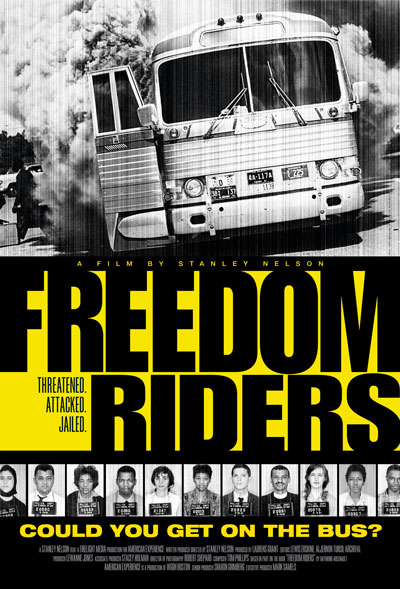
FREEDOM RIDERS : A Stanley Nelson Film : American Experience – In memory


  Get Inspired

 The World Premiere: In 2010 at Sundance Film Festival, US

 A Documentary Competition

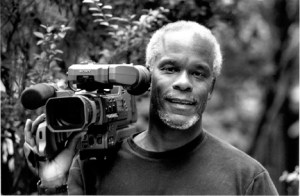
Award-winning filmmaker Stanley Nelson (Wounded Knee, Jonestown: The Life and Death of Peoples Temple, The Murder of Emmett Till) returns to the Sundance Film Festival with his latest documentary FREEDOM RIDERS, the powerful, harrowing and ultimately inspirational story of six months in 1961 that changed America forever. From May until November 1961, more than 400 black and white Americans risked their lives—and many endured savage beatings and imprisonment—for simply traveling together on buses and trains as they journeyed through the Deep South. Deliberately violating Jim Crow laws, the Freedom Riders’ belief in non-violent activism was sorely tested as mob violence and bitter racism greeted them along the way.

FREEDOM RIDERS features testimony from a fascinating cast of central characters: the Riders themselves, state and federal government officials, and journalists who witnessed the rides firsthand.

“I got up one morning in May and I said to my folks at home, I won’t be back today because I’m a Freedom Rider. It was like a wave or a wind that you didn’t know where it was coming from or where it was going, but you knew you were supposed to be there.” — Pauline Knight-Ofuso, Freedom Rider

Despite two earlier Supreme Court decisions that mandated the desegregation of interstate travel facilities, black Americans in 1961 continued to endure hostility and racism while traveling through the South. The newly inaugurated Kennedy administration, embroiled in the Cold War and worried about the nuclear threat, did little to address domestic Civil Rights.See the source image

“It became clear that the Civil Rights leaders had to do something desperate, something dramatic to get Kennedy’s attention. That was the idea behind the Freedom Rides—to dare the federal government to do what it was supposed to do, and see if their constitutional rights would be protected by the Kennedy administration,” explains Raymond Arsenault, author of Freedom Riders: 1961 and the Struggle for Racial Justice, on which the film is partially based.

Organized by the Congress of Racial Equality (CORE), the self-proclaimed “Freedom Riders” came from all strata of American society—black and white, young and old, male and female, Northern and Southern. They embarked on the Rides knowing the danger but firmly committed to the ideals of non-violent protest, aware that their actions could provoke a savage response but willing to put their lives on the line for the cause of justice.

Each time the Freedom Rides met violence and the campaign seemed doomed, new ways were found to sustain and even expand the movement. After Klansmen in Alabama set fire to the original Freedom Ride bus, student activists from Nashville organized a ride of their own. “We were past fear. If we were going to die, we were gonna die, but we can’t stop,” recalls Rider Joan Trumpauer-Mulholland. “If one person falls, others take their place.”

Later, Mississippi officials locked up more than 300 Riders in the notorious Parchman State Penitentiary. Rather than weaken the Riders’ resolve, the move only strengthened their determination. None of the obstacles placed in their path would weaken their commitment.

The Riders’ journey was front-page news and the world was watching. After nearly five months of fighting, the federal government capitulated. On September 22, the Interstate Commerce Commission issued its order to end the segregation in bus and rail stations that had been in place for generations. “This was the first unambiguous victory in the long history of the Civil Rights Movement. It finally said, ‘We can do this.’ And it raised expectations across the board for greater victories in the future,” says Arsenault.

“The people that took a seat on these buses, that went to jail in Jackson, that went to Parchman, they were never the same. We had moments there to learn, to teach each other the way of nonviolence, the way of love, the way of peace. The Freedom Ride created an unbelievable sense: Yes, we will make it. Yes, we will survive. And that nothing, but nothing, was going to stop this movement,” recalls Congressman John Lewis, one of the original Riders.

Says Stanley Nelson, “The lesson of the Freedom Rides is that great change can come from a few small steps taken by courageous people. And that sometimes to do any great thing, it’s important that we step out alone.”

CREDITS
A Stanley Nelson Film
A Firelight Media Production for AMERICAN EXPERIENCE

Produced, Written and Directed by
Stanley Nelson

Produced by
Laurens Grant

Edited by
Lewis Erskine, Aljernon Tunsil

Archival Producer
Lewanne Jones

Associate Producer
Stacey HolmanDirector of Photography
Robert Shepard

Composer
Tom Phillips

Music Supervisor
Rena Kosersky

Based in part on the book Freedom Riders by
Raymond Arsenault

AMERICAN EXPERIENCE is a production of WGBH Boston.
Senior producer
Sharon Grimberg

Executive producer
Mark Samels

In the Library … “Injustices” by Ian Millhiser


ThinkProgress

Injustices: The Supreme Court’s History of Comforting The Comfortable And Afflicting The Afflicted

InjusticesThey won’t be selling Injustices at the Supreme Court gift shop. Ian Millhiser’s scathing, exuberant indictment of the many misdeeds of the nation’s highest court is a necessary, and highly entertaining, corrective to the mythology that has always surrounded the work of the Justices.”

~Jeffrey Toobin,
Author of The Oath and The Nine

by: ThinkProgress Justice Editor, Ian MillhiserOrder now: Amazon, Barnes and Noble, Indie Bound

Dear ThinkProgress Reader:

For the last five years, I’ve covered the Supreme Court for ThinkProgress. I’ve chronicled the justices’ decision to open the floodgates to corporate election spending, and I’ve reported on the rash of voter suppression laws that followed after the Court gutted the Voting Rights Act. I’ve shared your bewilderment when the Court held that a woman’s choice whether to use birth control could be given to her boss, and I’ve shared your terror at the prospect that the justices could rip health care away from millions of Americans.

Yet, as I explain in Injustices: The Supreme Court’s History of Comforting the Comfortable and Afflicting the Afflicted, these cases are hardly anomalies in the Supreme Court’s history. To the contrary, the justices of the Supreme Court shaped a nation where children toiled in coal mines, where Americans could be forced into camps because of their race, and where a woman could be sterilized against her will by state officials. The Court was the midwife of Jim Crow, the right hand of union busters, and the dead hand of the Confederacy.

Injustices tells the history of the Supreme Court through the eyes of the people that it has hurt the most — the young people stripped of their childhoods, the freedmen forced into peonage, the men and women who will die needlessly if the Supreme Court guts Obamacare. In my coverage of the Court over at ThinkProgress, I’ve strived to provide clarity on what the law provides and how the justices should decide their cases in accordance with that law, but I’ve also strived to reach beyond arcane legal arguments to show how the Court’s decisions shape the lives of millions of Americans. I bring that same ethic to over 150 years of Supreme Court history in Injustices. I urge you to check it out.

Sincerely,
Ian Millhiser

Get It Here:
Amazon BarnesNoble IndieBound

* * *

“More than just an indictment of the Supreme Court, Injustices offers a stirring defense of the role government plays in bettering people’s lives-and a heartbreaking window into the lives that are ruined when the justices place their own agenda above the law.”

~Ted Strickland,
Former Ohio Governor and US Representative
Former President, Center for American Progress Action Fund

“A powerful critique of the Supreme Court, which shows that it has largely failed through American history to enforce the Constitution and to protect our rights. With great clarity and poignant human stories throughout, Ian Millhiser has written a book that all who are interested in American government and our legal system – which should be all of us – must read.”

~Erwin Chemerinsky,
Founding Dean & Distinguished Professor, UC Irving Law School

“Ian Millhiser’s Injustices is a powerful reminder that for most of its history, the Supreme Court has erred on the side of protecting the privilege and powers of America’s elites-and that it has so often done so by reading the Constitution upside-down. Millhiser has crafted an indictment of the Court’s treatment of workers, minorities, women, voters, and powerless groups, with a deeply researched grounding in history and the law. His dispiriting conclusion is a powerful reminder of how much the Court matters, and how much more it could be.”

~Dahlia Lithwick,
Senior Editor, Slate

Langston Hughes’ 114th Birthday Google Doodle


a google doodle worth reposting … google

Jefferson Thomas and the courage of Children ~ Black History


Jefferson Thomas and the Courage of Children

by Marian Wright Edelman

In 1957, Jefferson Thomas and eight fellow black students known as the Little Rock Nine stood up to institutionalized segregation in America‘s education system and helped our nation live up to the promise of Brown v. Board of Education. Thomas passed away, but Change.org Changemaker Marian Wright Edelman writes that his legacy will live on in all who fight for equality.

for the complete article … use the link below

https://www.huffingtonpost.com/marian-wright-edelman/jefferson-thomas-and-the_b_714390.html?ncid=engmodushpmg00000004 via huffingtonpost.com


A Picture Worth a Thousand More …Lonnie G. Bunch at The NMAAHC- Black History


a repost … 2011

Lonnie Bunch, museum director, historian, lecturer, and author, is proud to present A Page from Our American Story, a regular on-line series for Museum supporters. It will showcase individuals and events in the African American experience, placing these stories in the context of a larger story — our American story

Few things date history as readily as fashion. The caveat “that was the fashion of the times” can be applied to everything from bustles and corsets to micro-mini skirts and polyester pants suits — fashions at the turn of the twentieth century and styles created during the 1960s-’70s.

While designs have changed over the years, one thing remained the same: from department store catalogs to high-end fashion magazines, the models dressed in the latest fashions were white.

So it was a major event when Katiti Kironde appeared in the August 1968 issue of Glamour College, the first African American to appear on a American fashion magazine’s cover. Six years later, in August 1974, Beverly Johnson became the first African American woman featured on the cover of Vogue magazine — the industry’s supreme publication. It was another landmark.

Like virtually everything else on the path to equal opportunity for African Americans, progress was slow and came in steps, not leaps. So when an African American woman first appeared in one of the fashion industry’s premier magazines, it was not on a cover or with a huge, multi-page layout.

Instead, seven years before Kironde’s Glamour cover, a coed at the University of California at Los Angeles (UCLA), Willette Murphy, quietly appeared on the pages of the August 1961 issue of another hugely popular magazine, Mademoiselle.

Murphy, now Willette Klausner, was pictured wearing a simple skirt, top and jacket, and walking on the UCLA campus. Initially, she viewed the moment as “just another thing I’d done.”

Far from it: Willette Murphy’s appearance in the magazine was not merely “just another thing.” Her Mademoiselle photograph was groundbreaking. Yet, Murphy was unaware of her place in history, until a New York Times’ reporter contacted her family. “I guess my sister found out when the New York Times called my parents,” Klausner said in a published interview.

Her family was used to Willette achieving things African Americans rarely experienced at that time — she was UCLA’s first black senior class president, for example — but the call from the Times made the family realize that their daughter had made history.

For decades, in high powered fashion magazines like Vogue, Glamour and Mademoiselle, to the Sears and Roebuck and other mail order catalogs, to models walking runways in Paris and New York, the face of fashion had been white.

Images of African Americans were scarce even in popular, mainstream American magazines. Many white Americans were shocked when Dorothy Dandridge became the first African American female to appear on the cover of LIFE in November, 1954. It would be nearly four years later before another black American, boxer Sugar Ray Robinson, would find his way onto that magazine’s front page. Another African American female celebrity would not grace LIFE’s cover again until the December 8, 1967 issue which featured Pearl Bailey.

Imagine growing up black and female and seeing dress after dress, swimsuit after swimsuit, shoe after shoe — all pictured only on white women. Along with every other message sent to African Americans, this underscored the sense that African Americans were, to a great degree, nonexistent — even when it came to buying clothes.

Today fashion marketers, like marketers from every other industry, recognize that the face of America is as diverse as its people. They also recognize that African Americans’ buying power was estimated at $913 billion in 2009. A University of Georgia economics study projects that figure will rise to $1.2 trillion in 2013 — nearly 9% of the country’s estimated purchasing strength.

Today the power of the African American pocketbook is reflected on the covers of countless magazines — fashion, entertainment, and political publications which routinely feature black models, entertainers, authors, politicians and more.

Willette Murphy Klausner
Photo Courtesy of Ms. Klausner

Today, it is no longer shocking to walk into a supermarket and find an African American on a magazine cover. In March 2009, First Lady Michelle Obama appeared on the cover of Vogue, only the second first lady to do so. In recent years Vogue has seen a number of black women grace its cover.

Sometimes history is made in giant leaps. More often, however, it is made in smaller, sometimes unexpected steps. Willette Murphy Klausner would become the first black merchandising executive at Bloomingdale’s, later the first female corporate vice president at MCA Universal Studios and, together with Julia Child and Robert Mondavi, the co-founder of the American Institute of Wine and Food in 1981. Today, she is a successful theater producer.

It is her photo in Mademoiselle that we celebrate today. A picture that would launch thousands more.

Lonnie Bunch, Director

All the best,
Lonnie Bunch
Director
P.S. We can only reach our $250 million goal with your help. I hope you will consider making a donation or becoming a Charter Member today.