Tag Archives: cable tv

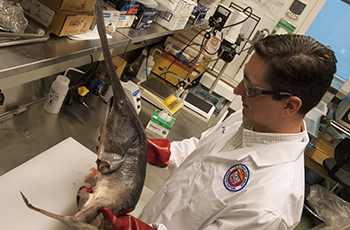
Keep Supporting Jonathan Deeds, Ph.D., ~is working to assure that U.S. seafood is both safe and accurately labeled


WordPressWhatFishIsThat
04/21/2014 01:00 PM EDT
Using some of the technology used in mapping the human genome, FDA scientists are working to create DNA barcodes for fish.
The high-tech effort is aimed to preventing fraud, including the substitution of a cheap fish for an expensive one, and preventing illness.

FDA Logo

Plastic bag bans … Is your state doing it? it’s 2018 and i see plastic bags everywhere


  • SeattlebansplasticbagsSo, today 7/7/2017 Q13 reported that Tacoma, Wa the plastic bag ordinance starts on 7/12/2017
  • Customers will be charged 5cents for paper bags
  • Anyone with EBT/WIC/TANF/ benefits will not have to pay the charge on paper bags

************************************************************************

Reports are that Chicago is the next city to implement a ban on plastic,sort of http://go.wgntv.com/1JVU7b3 via @WGNNews

==================================================

Alameda County, California Bans Plastic Bags

As of January 1st, 2013, packaged food retailers will be prohibited from distributing single-use plastic carryout bags in Alameda County, California.

==================================================

Hawaii County, Hawaii

Adopts Plastic Bag Ban Bill

Hawaii Plastic Bag Detrimental To Environment The County Council of Hawaii County has adopted a Bill to regulate the use of plastic bags on the Big Island. After several attempts to regulate plastic bags, Bill 17 was finally passed on December 21st, 2011 by a vote of 5-3. In the Bill,…

————————————————

Australian Capital Territory

Australia, BANS Ban Effective November 1st, 2011 Australian Capital Territory (ACT) began its plastic bag ban on November 1st. All retailers, not just supermarkets, are prohibited from distributing single-use plastic shopping bags.(1) In 2009, a plastic bags community consultation was conducted by the ACT Department of the Environment, Climate Change, Energy and…

—————————————————

Mukilteo, Washington

Washington Ban Effective January 1st, 2013 January 15, 2012 – On December 12th, 2011, the City Council of the City of Mukilteo approved The Solid Waste and Plastic Bag Reduction Ordinance. Known as Ordinance 1294, retailers will not be permitted to provide a single-use plastic bag to a customer at checkout.…

The ban or reduction of plastic bags was implemented on July 1 of 2012 in Seattle, WA.

——————————————————

Monterey, California

California At its regular meeting on November 1st, 2011, the City Council of Monterey, California passed an ordinance to print to ban the use of plastic single-use carry-out bags. Passed unanimously, the ordinance also prohibits the free distribution of recycled paper bags by retailers. The ordinance is intended to: Eliminate the…

—————————————————

Rye, NY

New York The City Council of Rye, New York passed an ordinance banning retail plastic shopping bags this month. The Council assured merchants that the ordinance applied only to retail shopping bags at the point of sale. The City Council based the ordinance on Westport, Connecticut’s ban which was passed in September,…

————————————————–

Las Pinas, Philippines

Philippines Plastic-Free City Las Piñas, one of the largest cities in the Philippines with a population of just over 500,000(1), will prohibit the use and distribution of plastic bags. The ‘Plastic Bag Regulation Ordinance’ was passed on September 15, 2011. The ordinance also bans the usage of polystyrene foam. Section 3…

—————————————————

Aspen, Colorado

Colorado, Roaring Fork Valley The City of Aspen, Colorado, USA has banned plastic bags and placed a fee on paper bags. After three years of studying and debating the issue of regulating plastic bags, Aspen’s City Council finally took action at its regular meeting Tuesday, October 11. City Council members approved an ordinance regulating…

all of the posts  … by Ted Duboise

The Middle Class and Unions … a repost


By CAP Action War Room

With The Middle Class At Risk, We Need Unions Now More Than Ever

We’ll be taking a welcome day off next Monday, and we hope all of you can do the same. But celebrating Labor Day is about more than just a three-day weekend. It’s a chance to reflect on the importance of unions and remember that we need them now more than ever.

Unions have been at the center of some of America’s most important fights for fair labor standards. Unions helped end child labor: the very first American Federation of Labor (AFL) national convention passed a resolution calling on states to “ban children under 14 from all gainful employment.” Labor unions negotiated for and won employer-provided health insurance coverage, one of the first great expansions of health care to all Americans. And unions didn’t just give us this Labor Day long weekend – they fought for labor standards that gave us ALL weekends.

Unions are central in providing good jobs and middle-class security to America workers. As unions go, so goes the middle class. The chart below spells that out pretty clearly: as union membership has declined, the middle-class share of income has also dropped:


Nowadays, union membership is under attack from many who are either ignoring history and economic data, or only have the wealthiest Americans’ interests in mind. Anti-union policy groups and lawmakers in states across the country are attacking an already weakened labor movement by advancing so-called “right-to-work” laws, which inhibit workers from collectively bargaining for better wages, benefits and protections, under the guise of ‘choice.’ These laws allow some workers to get the advantages of a union contract—such as higher wages, benefits, and protection against arbitrary discipline—without paying any fee associated with negotiating on these matters. This doesn’t result in more freedom, it results in lower incomes.

Wisconsin became the latest state to adopt a “right-to-work” law and take its working families in the wrong direction. Estimates by Marquette University economist Abdur Chowdhury suggest that Wisconsin workers and families will lose between $3.89 and $4.82 billion in direct income annually due to effects of the law. Recently, Missouri Gov. Jay Nixon (D) vetoed a bill passed by the Missouri legislature to enact a similar policy there.

The numbers are clear. The typical worker in a “right-to-work” state makes about $1,560 less per year than she would in a state without such a law. According to new research, women in union jobs earn $212 per week, or 30.9%, more than women in non-union jobs; men in union jobs earn $173 more per week than their non-union counterparts. Union women also face a smaller gender wage gap: They earn 88.7 cents for every dollar a man makes, compared to 78 cents across all workers.

BOTTOM LINE: If you care about a strong middle class in America, you should care about unions. The organizers that have been at the heart of many important labor reforms in the past have a vital role to play for America’s economy now and in the future, too. It’s on us to take every opportunity we can to remind people that unions work. So have a great long weekend, and make sure you remind your friends and loved ones: Enjoying your labor day weekend? Thank a union.

Make Food Safety Part of Your Father’s Day


FoodSafety.gov

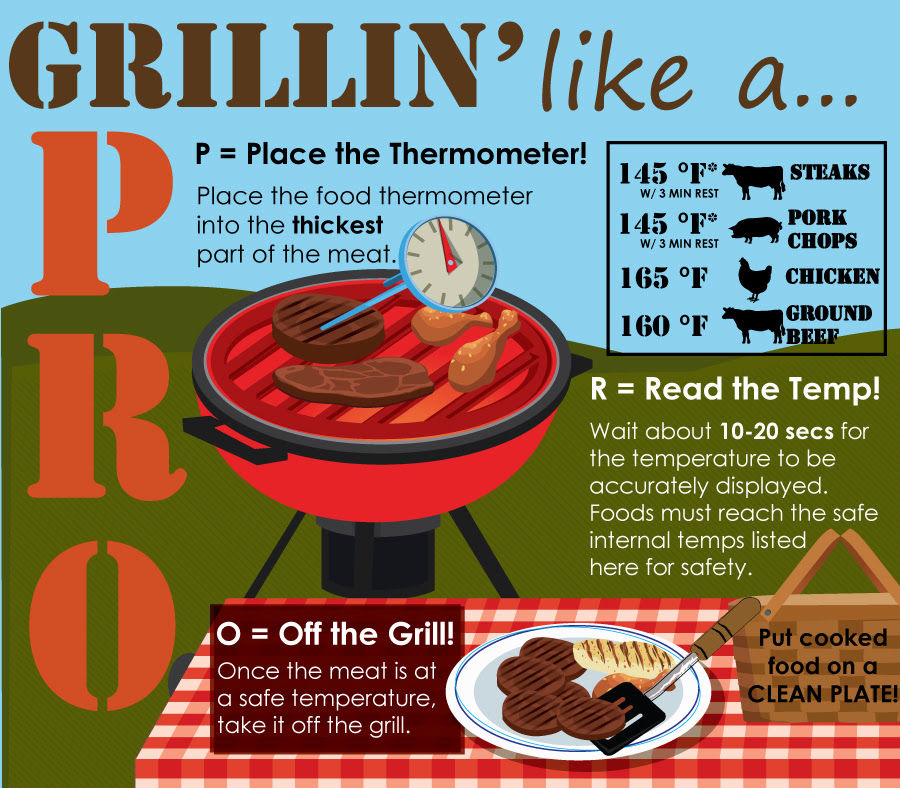
Still looking for a Father’s Day gift? Consider getting a food thermometer, perfect for safe grilling during the warm months.

When using a food thermometer, remember these three easy steps to cook like a PRO:

1. Place the thermometer

2. Read the temperature

3. Off the Grill!

Read more about how to cook like a PRO.

=======================================================================================

Infographic

Separate but Equal ?


” O, yes,
I say it plain,
America never was America to me,
And yet I swear this oath ~
America will be! “

 From:  Let America Be America Again

by Langston Hughes

[banner]

Separate Is Not Equal: Brown v. Board of Education

The U.S. Supreme Court’s decision in Brown v. Board of Education marked a turning point in the history of race relations in the United States. On May 17, 1954, the Court stripped away constitutional sanctions for segregation by race, and made equal opportunity in education the law of the land.

Brown v. Board of Education reached the Supreme Court through the fearless efforts of lawyers, community activists, parents, and students. Their struggle to fulfill the American dream set in motion sweeping changes in American society, and redefined the nation’s ideals.

Segregated America

The end of the Civil War had promised racial equality, but by 1900 new laws and old customs created a segregated society that condemned Americans of color to second-class citizenship.

The Battleground

As African Americans and other minority groups began the struggle for civil rights, they strengthened their own schools and fought against segregated education.

Legal Campaign

Beginning in the 1930s, African American lawyers from Howard University law school and the National Association for the Advancement of Colored People campaigned to dismantle constitutionally-sanctioned segregation.

Five Communities

In the early 1950s, African Americans from five different communities across the country bravely turned to the courts to demand better educational opportunities for their children.

The Decision

In 1954, under the leadership of Chief Justice Earl Warren, the Supreme Court produced a unanimous decision to overturn Plessy vs. Ferguson and changed the course of American history.

Legacy

Today, thanks in part to the victorious struggle in the Brown case, most Americans believe that a racially integrated, ethnically diverse society and educational system is a worthy goal, though they may disagree deeply about how to achieve it.

From:   http://americanhistory.si.edu