PAN ROASTED RED SNAPPER WITH GRILLED ONIONS,SWEET MELON AND FETA SALADBy Chef Fabio Viviani
![]() Ingredients:
Directions:
Recipe courtesy of Fabio Viviani, owner and Executive Chef of Cafe Firenze in Moorpark, California and Firenze Osteria Italian Restaurant and Martini Bar in Toluca Lake, California. |
||
Tag Archives: civil rights
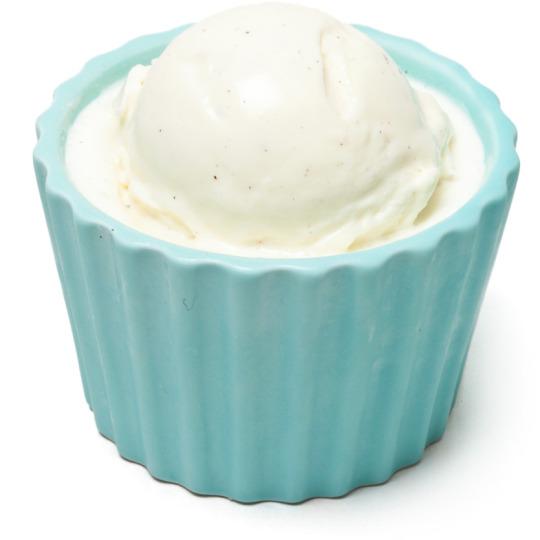
The One Thing You Need to Know When Buying Vanilla Ice Cream
We devoured pint after pint to get the scoop on vanilla ice cream — and uncovered the best-tasting brand along the way.

Go to the freezer section of your local supermarket and you’re bound to find a number of brands peddling vanilla ice cream. Sounds fine, right? However, there’s a problem lurking among the labels: Brands that print phrases like “natural vanilla” on their packages may actually be pushing products that contain anything but.
RELATED: Want to make your own ice cream? Arm yourself with the best recipes and detailed video tutorials (try it for free).
In our America’s Test Kitchen TV taste test segment for supermarket vanilla ice cream, Jack Bishop explains that counterfeit vanilla is a bigger problem than one might think, and implores smart shoppers to read labels before buying a pint of the stuff.

“Vanilla extract is the key to buying ice cream with good vanilla flavor,” says Bishop. “If it doesn’t say vanilla extract, walk on by.”
Bishop explains to co-host Christopher Kimball that shoppers might see the words “natural vanilla flavor” printed on ice cream cartons. “Sounds pretty good, right? It’s actually imitation extract made from wood pulp.”
RELATED: Not sure if a Vitamix is worth it? Read our review of blenders. Shopping for a new skillet? We have you covered.
Vanilla flavoring was all over the map in the 8 ice creams we included in our taste test, ranging from barely detectable in some to overpowering in others. We looked on the back of the cartons and noticed that each brand seemed to list vanilla in a different way—as Bishop explained—from the wordy and virtuous “fair-traded certified vanilla extract” to “natural vanilla flavor” to simply “vanilla.” Dairy expert Scott Rankin, a professor of food science at the University of Wisconsin-Madison, explained that the different wordings on the labels amount to an industry shorthand for specific kinds of natural or artificial flavorings. As he helped us break the code, we looked at our favorite (and not-so-favorite) ice creams according to the type of vanilla.
First, a little background: The flavor in vanilla beans is predominantly due to the presence of a compound known as vanillin. Vanillin is produced three ways: from vanilla beans, from wood, and from resins. The first two types are considered natural, while the vanillin from resins is synthetic. Not surprisingly, our top three top-ranked brands all contained the real deal—“vanilla extract”—natural vanillin extracted from vanilla beans, just like the real vanilla extract in your pantry. Less favored brands were made with vanillin extracted from wood (“natural vanilla flavor”), which is chemically identical to the synthetic vanillin found in artificial vanilla extract. Simple “vanilla” turned out to be code for a combination of synthetic and natural vanillin, while “natural flavors” (with no mention of vanilla at all) indicates just a trace of natural vanilla (there’s no required level) and other flavorings such as nutmeg that merely trigger an association.
Bottom line: Our tasters strongly preferred brands containing real vanilla extract.
Deodorant Ingredients to Avoid
photo ~John Foxx/Getty DCL
With ingredients that have been linked to breast cancer, Alzheimer’s, hormonal imbalance and neurological issues, I think it’s time we start looking a little more closely at what’s going into our deodorant. I’m pretty horrified at the information I dredged up on the topic. I know this isn’t a glamorous topic, but it’s an important one. So important, in fact, that I’m going to try a natural deodorant recipe out this week. But before I get to the recipe, let’s talk about what we’re applying to our armpits on a daily basis.
THE ALUMINUM-ALZHEIMER’S CONNECTION
Yeah, we’ll start off with a big one. Aluminum—as in the metal—is used to block pores from releasing sweat. The problem is, aluminum has been linked to breast cancer in women, prostate cancer in men and an increased chance of Alzheimer’s. Now to be fair, the Food and Drug Administration has never said it’s a carcinogen, but there is definitely a case for drawing a correlation between the two. It might be something to look out for.
POTENT PARABENS
Parabens are synthetic preservatives that are sometimes present in health and beauty products. There are two interesting bits of information that I’d like for us to consider with regards to this ingredient. The first is that the Centers for Disease Control conducted a study to see how many of us have parabens in our system. Of 100 subjects tested, 100 percent—each and every one of them—showed paraben presence in their urine. This research told scientists a lot about how easily chemicals enter our body via the skin. The other bit of information is that parabens have been linked to hormonal imbalance in early puberty. Food for thought.
OH GEEZ, PROPYLENE GLYCOL
The petroleum-based ingredient propylene glycol is present in many antiperspirants and deodorants. It’s the ingredient that gives deodorant a slick consistency so we can slather it on our skin. Bad news is that in large quantities it can do damage to the central nervous system, the heart and the liver. To be fair, this is like saying that broccoli in large doses is lethal, but no one would ever eat that much anyway, so it’s a moot point. The amount of propylene glycol used in the average stick of deodorant is probably completely safe, but it’s worth mentioning.
FUNKY PHTHALATES
Phthalates help ingredients to dissolve, and because of this they are sometimes found in deodorant. Unfortunately, phthalates are also linked to birth defects and the disruption of hormone receptors in the body. Yuck!
TRICKY TRICLOSAN
After finding out that triclosan was classified as a pesticide by the FDA and as a probable carcinogen by the Environmental Protection Agency, most companies that produce deodorants and antiperspirants have removed this ingredient from their formulas. It’s still a good idea to read the product label just to make sure triclosan isn’t hiding inside.
A DIY NATURAL ALTERNATIVE
I did some research to see if I could talk about some great mainstream companies that have eliminated these ingredients from their products, but with the exception of Old Spice, none of the companies I investigated even go so far as to display the ingredients for their deodorants online.
There are a few all-natural deodorants on the market, but I found a couple of homemade recipes via Wellness Mama that are supposed to be amazing, assuming the above information doesn’t sit well with you either. Using coconut oil, baking soda, shea butter, and some optional arrowroot and essential oils, you can make your own quite easily. Simply melt the coconut oil and shea butter in a double boiler and add the other ingredients to create an all-natural alternative that really works. Another option is to combine coconut oil, baking soda and cornstarch in a small glass jar. Neither recipe requires refrigeration, which is nice.

B betta have my money!
Re: Tell President Obama: No More Public Lands and Waters Giveaways
![]() |
| I wanted to make sure you’d seen this, from Monday. It’s been five years since BP’s Deepwater Horizon disaster, but the Gulf Coast is still suffering. President Obama can help ensure there are no more Gulf oil spills — and establish his climate legacy at the same time.We’ve already had a great response from thousands of RAN supporters. Will you join them by adding your voice?
Tell President Obama: no more oil, coal and gas leases in coastal waters and on public lands. |
Five years ago today, BP’s Deepwater Horizon drilling rig exploded, killing eleven people and sending some 210 million barrels of oil flooding into the Gulf of Mexico. President Obama called it “the worst environmental disaster America has ever faced”.1
Never again. The president can help ensure there are no more disasters like the Deepwater Horizon — and establish his climate legacy at the same time. Call on President Obama to stop leasing our public lands and waters to the fossil fuel industry.
The Gulf Coast is still suffering. The 170,000 workers who cleaned up the spill are at greater risk for cancer, and kidney and liver disease.2 Last year, dolphins and whales off the Louisiana coast died at four times the usual rates.3 And 10 million gallons of oil sit on the Gulf floor in a congealed “bath mat” the size of Rhode Island.4
BP controls more of the deepwater Gulf than any other oil company, with an outrageous 600 leases.5 In the case of the Deepwater Horizon disaster, a U.S. judge found BP’s conduct to be “grossly negligent”.6 But — to be clear — when it comes to the fossil fuel industry, gross negligence is business as usual.
So we’re joining our friends at CREDO Action to say: No more Gulf oil spills. No more giving away our public lands and waters to rapacious fossil fuel companies that care only about their profits. Tell President Obama to issue an executive order now.
President Obama wants to be remembered as a climate leader. But he has a huge climate blindspot. While the president has pushed for international agreements to limit carbon pollution, he’s also presided over a massive drilling boom on our public lands and in our coastal waters.
That explosive growth is killing the climate. Emissions from federally managed lands and waters cause approximately 24 percent of U.S. energy-related greenhouse gas emissions annually — mostly from coal, oil and gas.7
The solution is simple. If President Obama wants to establish a real climate legacy, he should issue an executive order instructing federal agencies to stop granting new and expanded leases to extract fossil fuels from public lands.
To avoid catastrophic climate change, scientists say we must keep between 67% and 80% of the world’s remaining fossil fuels in the ground.8 One quarter of U.S. fossil fuel production happens on federally-managed lands and waters. The president can take a huge step towards stopping climate change — and preventing future Gulf oil spills. Urge him to issue an executive order today.
For our lands and our waters, our communities and our climate,
![]() |
Amanda Starbuck Climate and Energy Program Director Rainforest Action Network |
P.S. Bridge the Gulf, Louisiana Bucket Brigade, and Idle No More Gulf Coast are among the many organizations fighting for justice and accountability in the aftermath of the Deepwater Horizon oil spill. On this fifth anniversary of the BP disaster, support them today.
Sources:
1. “Remarks by the President to the Nation on the BP Oil Spill”, White House Office of the Press Secretary, June 15, 2010
2. “BP Oil Spill Cleanup Workers Are At Higher Risk Of Sickness, Cancer”, ThinkProgress, Sep. 17, 2013
3. “Science Links Dolphin Deaths to BP Oil Spill – Again”, National Wildlife Federation, Feb. 13, 2015
4. “Scientists have found a 10 million gallon ‘bath mat’ of oil on the floor of the Gulf of Mexico”, Business Insider, Feb. 4, 2015
5. “Deepwater Gulf of Mexico”, BP
6. “U.S. judge upholds BP ‘gross negligence’ Gulf spill ruling”, Reuters, Nov. 13, 2014
7. “Greenhouse Gas Emissions from Fossil Energy Extracted from Federal Lands and Waters: An Update”, Stratus Consulting, prepared for The Wilderness Society, Dec. 23, 2014
8. “Unburnable Carbon 2013: Wasted capital and stranded assets”, Carbon Tracker Initiative & Grantham Research Institute on Climate Change and the Environment, 2013; “Climate Change 2014: Synthesis Report”, Intergovernmental Panel on Climate Change, 2014.

Made with


You must be logged in to post a comment.