Tag Archives: Food & Water Watch

#TalkPoverty a repost from 5/14


By

Real People. Real Stories. Real Solutions For Poverty.

In America, too many of us fall into the trap of thinking: “Poverty is terrible but there’s nothing we can do about it.”

Today, the Half in Ten Education Fund — dedicated to cutting poverty in half in 10 years — introduced a new project called talkpoverty.org dedicated to demonstrating that exactly the opposite is true: we know how to dramatically reduce poverty. The website is a hub where people can learn about poverty in America and what we can do to reduce it.

It also serves to unite and strengthen the antipoverty community, bridging the gap between local and national voices, between grassroots activism and policy work, and between those who are struggling and those who are more economically secure. At the site, you can find basic data and interactive maps about poverty in America; hear from people living in poverty and people dedicated to the fight against poverty; and get involved with local, state and national organizations to take action.

Celebrity chef, food activist, and head judge on Bravo’s Top Chef Tom Colicchio helps kick off the site with one of it’s first posts: “It’s time to #VOTEFOOD.” He traces his history as a chef: from not thinking about hunger and poverty, to attempting to offer food “at a more democratic price point” than his fancy restaurants, to raising money for organizations combating hunger, to finally starting the activist network Food Policy Action. He writes:

As soon as one legislator loses their job over the way they vote on food issues, it will send a clear message to Congress: We’re organized. We’re strong. Yes, we have a food movement, and it’s coming for you.

Former governor Ted Strickland (D-OH), the President of CAP Action, recalls his own personal story of growing up in poverty and always remembering those less fortunate than himself. “It’s un-American, frankly, that you can work and work and work and not get out of poverty,” he concludes.

National figures aren’t the only voices, however. Another featured post is by Sherita Mouzon, a member of Witnesses to Hunger and a Peer Mentor for the Salvation Army in Philadelphia. She writes:

My scars run long and deep—they will always be there. The long lasting effects of trauma stick with you. But I refuse to let my past dictate my future. My memories keep me humble. I’m shaped not by the commonly accepted “fact” that since I grew up in poverty I have to live in poverty now. Instead, I’m shaped by the idea that while you can’t change the past, you can change the future.

Talkpoverty.org melds these activists’ voices with an extensive data set of poverty indicators and demographic data, as well as interactive maps like the one below:

talkpov

CREDIT: Talkpoverty.org

In addition to blog content and data, the website will include:

  • Updates on local, state, and national anti-poverty campaigns and how to get involved
  • Features on anti-poverty victories and lessons learned
  • Alerts for anti-poverty actions and events
  • Synopses and links to the latest research, articles, videos, television programs, and
    other media

Head over and check it out now!

BOTTOM LINE: 46 million Americans live in poverty, including more than one in five children. We need to have an informed conversation about how to dramatically reduce poverty in this country, and low-income people themselves should play a leading role. By listening to those who are living in poverty and those who are fighting poverty every day, we can grow the movement we truly need to ensure that all Americans have a fair shot at economic prosperity.

Not Lovin’It


By

Scenes From Yesterday’s Worldwide Fast Food Strikes

Yesterday we wrote about how fast food workers united to participate in the most widespread strike in the history of the fast food industry. Employees of fast food restaurants across the United States and around the world took the risk of walking off the job to demand higher pay, better treatment at work, and the opportunity for those who work hard to get ahead. All told, there were strikes in 230 cities, in 33 countries, on 6 continents around the world — including 150 cities in the United States.

Take a look at some of pictures from this worldwide event, and find more by following the twitter hashtag #FastFoodGlobal.

New York, NY:

fast_nyc

CREDIT: @occupywallst

Tokyo, Japan:

fast_tokyo

CREDIT: @akaill

Aukland, New Zealand:

fast_aukland

CREDIT: @LowPayIsNotOK

Chicago, IL:

fast_chicago

CREDIT: @seiulocal1

Golas, Brazil:

fast_brazil

CREDIT: @LowPayIsNotOK

London, England:

fast_london

CREDIT: @NSSN_AntiCuts

Oakland, CA:

fast_oakland

CREDIT: @juliacarriew

Bangkok, Thailand:

fast_thailand

CREDIT: @nickrudikoff

Seoul, South Korea:

fast1

CREDIT: #FastFoodGlobal

Tell Walmart: Say no to GMO


Who wants genetically engineered (GE) sweet corn in our grocery stores?Surely Walmart doesn’t want it…right? Our friends at Food & Water Watch have waged a campaign to stop genetically engineered sweet corn from making it to the stores and your dinner table with tremendous success from a number of food suppliers, but Walmart has yet to reply.

Whole Foods, Trader Joe’s and General Mills have all pledged to not use it, why hasn’t Walmart done the same?
Take action with our friends at Food & Water Watch and tell Walmart to reject GE sweet corn!
Thanks, your friends at Greenpeace _____________________________

Ask Walmart to Reject Genetically Engineered Sweet Corn
Sign the Petition to Tell Walmart You Won’t Buy GE Sweet Corn
                 Dear friend,
Genetically engineered Monsanto sweet corn is approved and could be on your plate this year. Monsanto’s sweet corn could be planted this spring, but Walmart can refuse to accept it, protecting consumers from this untested and unlabeled product. Can you sign our petition asking Walmart to reject genetically engineered sweet corn?              Why should you ask Walmart to reject Monsanto’s Genetically Engineered (GE) Sweet Corn?
1) Whether you shop at Walmart or not, they are the largest U.S. food retailer, and if they won’t sell genetically engineered sweet corn, it’s likely that farmers won’t plant it.
2) Genetically engineered sweet corn will not be labeled, so you won’t know what you’re buying.
3) Monsanto’s GE sweet corn hasn’t been tested for human safety, and it contains three different genetically engineered traits that haven’t been used in food eaten directly by people.
Trader Joe’s, Whole Foods, and General Mills have already agreed not to use GE sweet corn in any of their products, but we need other stores to follow their lead to end the market for this untested sweet corn.
As you already know, genetically engineered foods are not required to be   labeled, so we have no way of knowing if a food contains GE ingredients. We believe labeling should  be  required so that people can choose whether or not they want to eat GE   foods. Unfortunately GE sweet corn, will not be labeled, and doesn’t   look any different from regular sweet corn.
Help make sure GE Sweet Corn is not sold by signing our petition to Walmart.  We’ll be delivering this petition to Walmart next month in an attempt to stop GE Sweet Corn from reaching your  plate.
Thanks for taking action,
Wenonah Hauter

About 3,000 Americans die from food-borne illnesses each year.


The USDA wants to cut corners and risk putting unsafe chicken on the market and on your kitchen table with their new “dirty chicken” rule—all to save a quick buck. Meanwhile, billionaires and corporations are getting tax breaks. It’s shocking.

Click here now to sign the petition against the “dirty chicken” rule.

I hope you don’t mind a little salmonella and E. coli in your chicken. Because if the U.S. Department of Agriculture (USDA) gets its way, chicken contaminated with disease, feathers and other really disgusting stuff could be on its way to your dinner plate within the year.

We count on USDA inspectors to help us keep our families safe and healthy. But the USDA wants to save money by throwing about 1,000 of them out of work.

Hurry: Sign our petition against the “dirty chicken” rule today, and tell the USDA inspectors they can count on us, too.

About 3,000 Americans die from food-borne illnesses each year. But instead of doing more to protect our families, the USDA is taking budget cuts out on the inspectors we need. Not only would about 1,000 get the boot—the inspectors who keep their jobs would be told to inspect 175 chickens per minute. That’s more than three chickens per second!

Working people like us, and like USDA inspectors, take pride in our work. We work hard and make a difference. USDA’s “dirty chicken” rule would take that away while endangering our families.

Sign the petition against the “dirty chicken” rule TODAY.

This week, food inspection workers (members of the AFGE) rallied outside the
USDA to oppose this frightening measure—but a rally alone won’t stop this plan. We need massive public pressure.

This new inspection system for poultry slaughter plants is another example of attacks on everyday working people while billionaires and corporations are getting tax breaks. And this time, it’s putting our kids and families at risk while taking jobs away from people we count on. It’s shocking.

Tell the USDA you won’t settle for dirty chicken. Sign the petition today.

Only by standing together can we save the jobs of hundreds of federal workers who we count on to protect our families.

Thanks for the work you do.

In solidarity,

Manny Herrmann
Online Mobilization Coordinator, AFL-CIO

P.S. In his new book, Rebuild the Dream, Van Jones, a former Obama White House adviser on green jobs and an award-winning human rights activist, maps out how to turn Dr. Martin Luther King Jr.’s and the American Dream into reality.

Click here to learn more and order your copy.

Your Water Might Be Flammable … CREDO


Did you know that oil and gas companies are allowed to pump secret, toxic fluids, through our drinking water – and the EPA is currently powerless to do anything about it?

High Pressure Hydraulic Fracturing (or fracking) is a method of drilling for natural gas by pumping a mixture of water and chemicals, including known toxics and carcinogens, deep underground, and it’s responsible for poisoning water in states across the country.

Fracking wells are spreading at an alarming rate. But even more alarming, thanks to the work of Dick Cheney and his infamous energy policy, frackers don’t have to disclose the chemicals used in their fluid to the EPA, and the process is totally exempt from regulation under the Safe Drinking Water Act.

The FRAC Act, a bill that has been in the Senate since 2009, would correct both these problems. As public concern over fracking has grown, the bill has gained some momentum, but we still need more senators actively working to pass it. Will you urge your senators to support the bill?

Tell your senators: Co-sponsor the FRAC Act to protect our water from dangerous fracking.

Fracking a single gas well uses as much as millions of gallons of water, and hundreds of tons of chemicals. While the exact contents of the fluid remains largely undisclosed, scientific examination reveals that it can contain diesel fuel, which includes benzene, as well as dozens of chemicals including methanol, formaldehyde and hydrochloric acid.

The fluid is injected thousands of feet underground at extremely high pressure, literally cracking the rock to release trapped gas. Unfortunately, it must pass through our water table, where the fluids, along with methane gas, can leak through well casings into our drinking water.

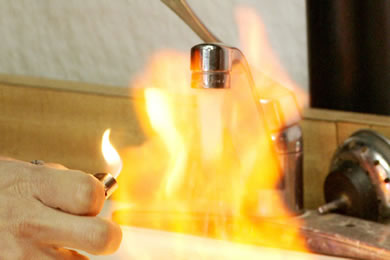
If you’ve ever seen the picture of the man lighting his tap water on fire from the recent documentary Gasland, that was because of nearby fracking.

Yet somehow, the EPA has been handcuffed from regulating fracking to keep our water clean since 2005, in what has become known as “the Halliburton loophole.” Halliburton, where Dick Cheney was CEO before becoming Vice President, patented fracking in the 1940’s and remains the third largest producer of fracking fluids. And in trademark Bush administration style, Halliburton staff were actively involved in a 2004 EPA report on fracking safety.

The “Halliburton loophole” remains a dangerous legacy of the Bush Administration and if we’re going to protect our water, we need to close it.

Tell your senators: Co-sponsor the FRAC Act to protect our water from dangerous fracking.  http://us.greenpeace.org/site/R?i=eowykN6lXhtd7eIVIF3Kdw..

The oil and gas industry is the only industry in America that is allowed by EPA to inject known hazardous materials — unchecked — directly into or adjacent to underground drinking water supplies.

Thanks in no small part to the continued resistance of industry to disclose the poisons involved in fracking, the risks of this practice are only beginning to be realized. However, an important investigative series by the New York Times recently concluded that “the dangers to the environment and health are greater than previously understood.”

In addition to below ground leaks, fracking also poses serious threats to our rivers and streams from insufficiently treated, and often radioactive, waste water. What’s more, above ground spills of toxic fracking fluids are becoming increasingly common. A large spill this April in Pennsylvania dumped thousands of gallons into fields and streams, eerily, on the one year anniversary of the Deep Water Horizon oil spill.

Fracking is currently underway in 36 states. And while some state regulations do exist, they vary widely. But water contamination isn’t constrained by state boundaries, and we need a baseline national standard to make sure fracking chemicals are publicly disclosed, and to prevent this practice from putting our nation’s drinking water at risk.

Tell your senators: Co-sponsor the FRAC Act to protect our water from dangerous fracking.http://us.greenpeace.org/site/R?i=eowykN6lXhtd7eIVIF3Kdw..

Thanks for fighting the unchecked oil and gas influence threatening our water.

Elijah Zarlin, Campaign Manager
CREDO Action from Working Assets

1. Fracking,” Food and Water Watch.
2. Hydraulic Fracturing 101,” EARTHWORKS.
3. Burning Tap Water and More: GASLAND Exposes the Natural Gas Industry,” Treehugger, June 25, 2010.
4. Regulation Lax as Gas Wells‘ Tainted Water Hits Rivers,” New York Times, February 26, 2011