Tag Archives: Greenpeace

Victory for Sumatran Tigers: Kroger Pulls APP Products


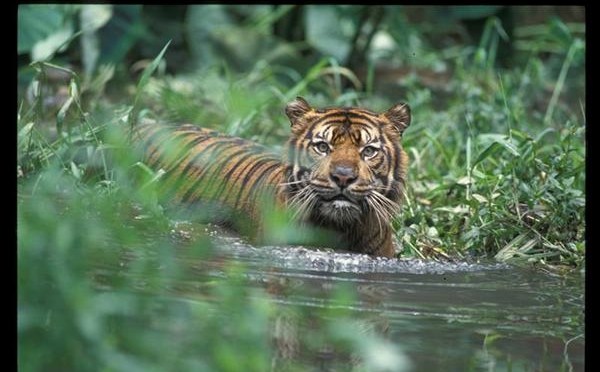
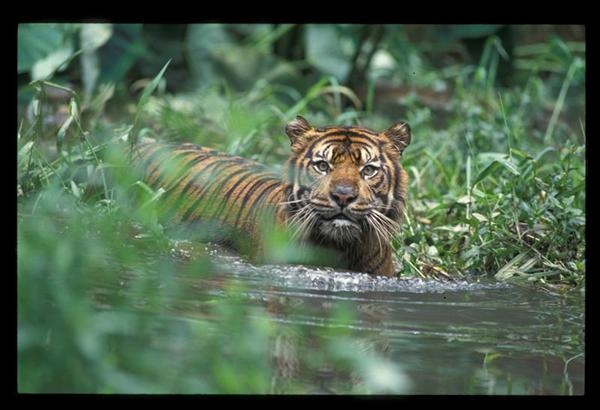
Great news. We’ve won another huge victory for Sumatran tigers and the Indonesian rainforest they call home.

Thanks to your hard work, Kroger — which was previously the largest seller of Asia Pulp & Paper (APP) consumer tissue products in the US — has put out a public statement saying it will stop sourcing from APP. We only launched this campaign in October and within five days over 50,000 people like you took action. It’s clear that Kroger got the message.

The bad news is that APP still wants to sell tissue linked to rainforest destruction here in the US. Even after losing its largest US customer, APP is still refusing to take the simple steps needed to solve this problem. And, there are still major retailers in this country selling APP products. Kmart is one of the largest.

Our campaign is clearly working. Help us keep up the momentum and tell Kmart to follow Kroger’s lead by removing APP’s tissue products from its shelves until APP cleans up its act.

Rainforest destruction wrapped up in the form of throw-away tissue products is starting to pop up all over the US. Often stores selling the products don’t even know it. Together we can change that, harnessing the power of the marketplace to save forests in Indonesia.

Now is the time to keep the pressure up. That is why it is so important that you take a minute now to tell Kmart that there shouldn’t be any space for rainforest-destroying toilet paper on its store shelves.

With only 400 Sumatran tigers left, we can’t stop now. Now is the time to re-double our efforts, stand tall, and tell retailers not to buy APP tissue products until it ends its deforestation habit for good.

For the forests,

Rolf Skar
Greenpeace Senior Forest Campaigner

P.S. If we want to get Kmart to do the right thing, we need to spread the word far and wide. After you take action, please be sure to forward this email to friends and family who you think would also like to help out. The last 400 Sumatran tigers — and their rainforest home — are depending on us.

GREENPEACE …Philip Radford, Greenpeace


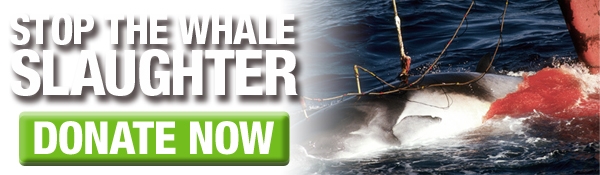
Killing whales is not science. Donate Now!Please join Greenpeace now with your end-of-year gift to stop the slaughter of whales and protect our planet.

Japanese whaling ships are closing in on whales in the Southern Ocean right now. They call their mission “science,” but no valid science is gathered from their hunts — it’s just a cover for their bloody activities.
It’s not science, it’s senseless killing, and it must end.

Make an urgent gift today to protect whales, the oceans, and our planet.  – will you step up and join Greenpeace now in fighting to stop this slaughter?

We’re only two days away from December 31 and so close to reaching our $125,000 goal. We need just 7 more donations from Washington to reach it and have the resources we need to save whales in the new year.
Whales are smart creatures — they know where they are and who they are. They feel loss and pain. They “talk” to each other. A growing body of evidence shows that whales are very similar to humans in intelligence and self-awareness. There is nothing scientific about killing nearly every whale you encounter and selling the meat for profit.
Commercial hunts by any name must end.
Please donate now to stop the killing and save whales from this deadly “science.”
With your help we’ll mobilize public support, run newspaper ads, lead a coalition of NGOs and pressure the Obama administration and the International Whaling Commission to close these deadly loopholes and put an end to commercial whaling once and for all.
We’ve already been successful in dramatically reducing the market for whale meat to the point where the industry is shutting down. But operations like Japan’s are being propped up by government subsidies.
Right now is the time to tip the scales and completely end commercial whaling. Now’s our chance, and Carmen, there’s not much time left — please join us in the fight to save whales.


For the whales,
Philip Radford Greenpeace
P.S. Please donate now through our secure website or at 1-800-722-6995 to help us reach our $125,000 year-end goal and save the lives of these magnificent whales — we need just 7 more supporters like you from Washington.

Chicken of the Sea’s Recipe for Disaster … Casson Trenor, Greenpeace


Take a random floating object, attach a radio beacon to it, and drop it in the ocean. Let it soak for a few weeks, then come back with a giant net and scoop up everything in sight.

That’s how Chicken of the Sea catches tuna — a deadly combination of fish aggregating devices (FADs) and massive seine nets. This indiscriminate practice is causing tremendous harm to our oceans, including the needless deaths of tens of thousands of sharks, rays, and baby tuna every year.

We launched our campaign to get Chicken of the Sea to clean up their act back in August with a video by Pulitzer Prize winning cartoonist Mark Fiore. That video received such a strong response from the company and the rest of the tuna industry that we decided to make another. This time, we’re taking a closer look at their destructive practices, and offering indisputable evidence of their activities: actual footage of FAD-driven carnage on the high seas.

Help us keep the pressure on and check it out. Our goal is to hit 25,000 views in the first 48 hours.Simply click on the image below to watch the video and be sure to share it on Facebook and Twitter after you’ve watched it…

Chicken of the Sea's Recipe for Disaster

Chicken of the Sea and the entire tuna industry is scared. They’re scared that the public is going to find out the truth about what they are doing. So they’ve spent the last couple of months and untold amounts of money hiring expensive PR firms to attack Greenpeace, hoping that this will distract the public and confuse the issue.

But each and every person who watches this video and becomes aware of our campaign makes it a little bit harder for them to hide the truth. Take a moment and watch it yourself and then pass it along on Facebook and Twitter.

For the oceans,

Casson Trenor
Greenpeace Senior Markets Campaigner

P.S. One of the fastest and easiest ways to get people to watch the video is to forward this email to the people in your email address book.

A small fish with a big problem


Menhaden. It’s a small fish that makes its home along the Atlantic coast and that other fish love to eat. Unfortunately, humans love it too.

Help us collect 40,000 comments before the Nov. 2nd deadline by taking action now.

We like to grind it up, put in pet food and stick it in fish oil supplements. So much so, that this once abundant fish is in serious trouble. If something isn’t done soon to stop the overfishing of menhaden, the entire Atlantic coastal ecosystem could be in danger.

That’s why right now the Atlantic States Marine Fisheries Commission (ASMFC) is considering changing the way they manage menhaden. As part of the process, they have opened up public comments. They don’t often hear from the public on this issue. Which is why we are hoping to overwhelm them with support by generating 40,000 comments before the deadline.

This is our chance to show broad public support for ending the overfishing of menhaden and preserving the Atlantic ecosystem. But the comment period closes in just 48 hours.Greenpeace


Tell the ASMFC to protect the menhaden and protect the Atlantic ecosystem by taking action right now.  WWW.GREENPEACEUSA.ORG

Menhaden have been called “the most important fish in the sea.” They are critical to the Atlantic marine ecosystem as prey for other fish and wildlife such as striped bass and ospreys. Millions of recreational anglers depend on a healthy coastal ecosystem to support the populations of striped bass, bluefish, and other species recreational fishermen love to catch. Without menhaden the Atlantic fishing industry—and the 63,000 jobs it supports—could collapse.

Unfortunately, that’s a real possibility. Overfishing of Atlantic menhaden has been going on for over 25 years and the population is on the brink. Scientists estimate that only 8% of the original menhaden population exists today. We have to act now to protect the menhaden and the entire Atlantic ecosystem.

Don’t wait. There are just 48 hours left to submit a comment to the ASMFC and protect the Atlantic ecosystem.

Greenpeace

Greenpeace has been working on overfishing around the globe for twenty years, and we’ve been working on protecting the menhaden now for almost a decade. I attended a public hearing in Virginia this month, and delivered my comment in person. The hearings are stacked with industry insiders, so your voice is crucial for us to successfully reform menhaden management.

This is our chance to finally protect the species once and for all. If the menhaden population collapses, our entire Atlantic ecosystem and the fish and birds of prey that depend up on it will collapse as well. We can’t let that happen.

Submit your comments now before it is too late.

For the Oceans,

Phil Kline

Phil Kline
Greenpeace Senior Oceans Campaigner

P.S. Forward this email to anyone in your address book who cares about the fate of the world’s oceans. The more comments we can generate in the next 48 hours, the better the chance we can protect the menhaden and the entire Atlantic ecosystem.

You did it! Mattel cuts ties with rainforest destructio​n! …Rolf Skar


Thank you.GP02E74 sumatran.JPG

Because of you, we’re one step closer to protecting the last Sumatran tigers.

Our campaign to get Mattel, the world’s biggest toy company, to stop doing business with Asia Pulp & Paper (APP) has ended in a resounding victory. This is great news for Indonesian rainforests and the communities and wildlife that depend on them. But there’s more.

Mattel has not only instructed its suppliers to avoid wood and paper from companies involved in controversial forest destruction like APP, but also to increase the amount of recycled paper and wood certified by the Forest Stewardship Council (FSC) in their packaging.

APP has been driving the destruction of rainforests in Indonesia for years, including the forest homes of the last 400 Sumatran tigers. Despite expensive ad campaigns claiming they are environmentally responsible, Greenpeace has shown they are continuing to drive the destruction of tiger habitat.

That’s why Greenpeace launched an international campaign to go after their customers, knowing that, once the company’s true colors were exposed, companies would drop them and help protect Indonesia’s forests. That campaign is working.

In June we launched a report calling out leading toy makers for wrapping their toys in packaging made from rainforest destruction. Within a month, Lego agreed to drop companies involved in deforestation, including APP. Now we can celebrate Mattel adding to that progress, dropping APP and releasing a global paper buying policy.

I’m so proud of what we’ve done together. The news today is a big win for Indonesian rainforests, Sumatran tigers and our planet. But our work isn’t done. APP is still destroying Indonesian rainforests, and there are still companies doing business with them. We need to keep the pressure on until APP finally learns that rainforest destruction is bad for business and cleans up its act. There is no time to waste if we want to protect the last Sumatran tigers and the rainforests they call home.

With your support, I know we will succeed.

For the forests,

Rolf Skar Forest

Rolf Skar
Greenpeace Senior Forest Campaigner

P.S. This work is only possible because of your support. Greenpeace doesn’t take a cent from corporations or governments. Help us protect the last Sumatran tiger and the world’s rainforests.