Tag Archives: Iraq

Pentagon report says gays should serve. Tell Congress to act!


Human Rights Campaign


Breaking news: Pentagon report finds NO REASON to bar open service by lesbians and gays.

But the Senate won’t be in session long – so we need to act now. Tell the Senate:

As of this afternoon, there is absolutely no excuse to delay the repeal of “Don’t Ask, Don’t Tell.” Now it’s time to act.

The Department of Defense has released its landmark study, 9 months in the making. It came to the same conclusion as numerous experts’ reports and 25 other countries.

They all agree on one simple, inescapable truth: Lesbians and gays should serve openly in the U.S. military.

My fellow troops have spoken. Generals have spoken. Think tanks have spoken. The American people have spoken.

From this point forward, any delay is nothing more than discrimination and partisan politics. It needs to end. The Senate is holding critical hearings this week and won’t be in session long – so we must act now.

I was the first American wounded in Iraq. I lost my leg. I almost lost my life. When I returned home, I came out – and spoke out against a policy that forced me to hide who I was.

I’ve talked to elected officials on both sides of the debate. They all need to hear from us today. The ones with the courage to fight for equal rights still need to hear that voters want them to make it a priority. And the ones who have supported discrimination can still be convinced by the facts highlighted in this new report. I’ve seen it happen.

The evidence is on our side. “Don’t Ask, Don’t Tell” has always been wrong. But now, it’s not just me or you saying it – it’s the Pentagon’s own study.

We’re on the brink of ending injustice – but we all must stand together, right now.

Let’s make this happen – for my brothers and sisters in arms who put themselves on the line to defend us, and for the good of this nation we all love.

In solidarity,

Eric Alva
Eric Alva
Retired Marine Staff Sergeant

P.S. If you have a minute, we need you to make two quick calls. Call (202) 224-3121 right now, ask to be connected to your senators’ offices, and tell them to repeal “Don’t Ask, Don’t Tell” before they leave for the holidays. Be sure to make two calls, one for each senator in your state. Then report your calls. Thank you!

Google …official blog


Trip report: Google and YouTube in Iraq

Posted: 26 Oct 2010 08:06 AM PDT

(Cross-posted from the YouTube Blog)

Earlier this month, a small team from Google and YouTube spent a week in Iraq on a trip arranged by the Department of Defense’s Task Force for Business and Stability Operations (TFBSO). Our goals were to explore opportunities for Google in Iraq, to understand the landscape of Internet access and connectivity in the country during this critical transition period and to bring top-voted questions from YouTube to Iraqi leaders in a series of interviews. We met with students, private sector companies, NGOs and Iraqi leadership in the Kurdish city of Erbil in the north, and in Baghdad.

Pictures taken by the Google/YouTube team in Iraq: Harry Wingo (Policy), Carrie Farrell (Google.org), Debu Purkayastha (Corp Dev), Olivia Ma (YouTube), Mary Himinkool (Business Development) and Steve Grove (YouTube).

Regardless of your feelings about the Iraq War, it’s immediately evident upon arrival just how completely the country missed the Internet boom during Saddam Hussein’s regime. Internet penetration rates in Iraq are among the lowest in the Middle East—somewhere between one and eight percent. Only 15 percent of Iraqis say they use the web, and the largest percentage of them live in Baghdad. There are no commercial data centers in Iraq and much more fiber connectivity is needed to meet consumer needs. Most connections are via satellite, and those who do have connections pay dearly for it—we heard estimates of up to $150 U.S. dollars per month for a 512kb connection. To incentivize and enable private companies to lay more fiber in Iraq, a complex set of roadblocks must be addressed—from security concerns to regulatory frameworks to licensing structures. As the country is still struggling to form a government more than seven months after its last election, much of this progress has been stalled.

There are signs of progress, however. Mobile penetration has skyrocketed in Iraq in the past seven years, from effectively zero percent in 2003 to over 70% today. And the Iraqi people are highly educated. We met with dozens of computer science students at Salahaddin University in Erbil and at Baghdad University, and though they lack equipment and resources, they’re highly motivated to innovate and believe the web is a critical component of their economy’s future.

Many young people in Iraq and around the world submitted questions in Arabic and English for three interviews we conducted in partnership with Middle Eastern news agency Al Arabiya. Google Translate enabled anyone to vote on their favorite questions regardless of language, and we brought the top five questions to current Iraqi Prime Minister Nouri al-Maliki, the Prime Minister of the Kurdish Regional Government in Erbil, Dr. Barham Salih and Iraqi politician and once the interim Prime Minister of Iraq, Ayad Allawi. Here is the television special that Al Arabiya produced showcasing their answers:

The Iraqis we met consistently expressed their desire for increased access to the web and for more access to content and tools in both Kurdish and Arabic. We believe access to information and high-speed connectivity to the cloud will be key to the future of the country. The power of the web to change people’s lives grows the further one gets from Silicon Valley, and we look forward to continuing our work with companies, governments and citizens in Iraq and other countries in transition.

Posted by Mary Himinkool, New Business Development, and Olivia Ma, YouTube News & Politics

IRAQ: WikiLeaks’ Releases Iraq War Logs


On Friday, the international organization WikiLeaks release

The Iraq War Logs, a “huge trove of secret field reports” — 391,832 documents in all — from the U.S. military in Iraq. The archive is the second such cache obtained by WikiLeaks and made available to news organizations. The first, released in July, was a trove of 77,000 reports covering six years of the U.S.-led war in Afghanistan. National Security Network’s Heather Hurlburt described the reports as “add[ing] a numbing amount of new, awful detail to what we already knew about the Iraq war.” The documents suggest that violence was reduced from 2007 “not only because the American military committed to more troops and a new strategy, but because Iraqis themselves, exhausted by years of bloody war, were ready for it.” According to the New York Times, the deaths of Iraqi civilians also “appear to be greater than the numbers made public by the United States during the Bush administration.”

ABUSE OF IRAQIS BY IRAQIS: While the newly released documents “offer few glimpses of what was happening inside American detention facilities, they do contain indelible details of abuse carried out by Iraq’s army and police.” The Guardian reports that the documents reveal that “U.S. authorities failed to investigate hundreds of reports of abuse, torture, rape and even murder by Iraqi police and soldiers whose conduct appears to be systematic and normally unpunished.” Britain’s Deputy Prime Minister Nick Clegg “said the allegations of killings, torture and abuse were ‘extremely serious’ and ‘needed to be looked at.'” Joel Wing noted that “Iraq’s political parties were quick to put [the Iraqi police] to work in their internal struggle to form a new Iraqi government,” with Iyad Allawi’s Iraqi National Movement saying “that the documents gave proof that Prime Minister Nouri al-Maliki should not stay in office.”

IRAN IN IRAQ: The reports “underscore the seriousness with which Iran’s role [in Iraq] has been seen by the American military.” According to the documents, Iran’s military “intervened aggressively in support of Shiite combatants, offering weapons, training and sanctuary and in a few instances directly engaging American troops.” Robert Farley, an Associate Professor of International Relations at the University of Kentucky, wrote that it is “utterly unsurprising” that Iran intervened in Iraq. “Attempting to manage the political situation in a neighboring country, while simultaneously weakening a potential enemy, is something that countries do.” Iran’s involvement in Iraq has not primarily been military, but rather political and economic. As Center for American Progress analysts Brian Katulis and Matthew Duss wrote in April 2008, depictions of Iran’s role in Iraq as purely military “ignore an inconvenient truth: The leaders in Iraq’s current government are closely aligned with Tehran and represent some of Iran’s closest allies in Iraq.” Iran has been similarly politically involved in neighboring Afghanistan. Afghan President Hamid Karzai “said Monday that his government receives as much as $1 million at least once or twice a year from Iran,” just as he said Washington doles out “bags of money” to his office.

COSTS AND CONSEQUENCES: While the documents reveal that coalition forces found traces of past Iraqi weapons programs, Wired Magazine reported that, the “war logs don’t reveal evidence of some massive WMD program by the Saddam Hussein regime,” as the Bush administration had claimed existed, but that “remnants of Saddam’s toxic arsenal, largely destroyed after the Gulf War, remained.” There are no earth-shattering revelations in the new cache, but they do deepen our understanding of the war’s disastrous consequences, both for the U.S. and for the region, particularly in regard to the wide-scale inter-community violence and sectarian cleansing that gripped the country in 2006-7. The violence led to the displacement of over 4.5 million Iraqis, both within and without the country, the vast majority of whom have been unable to return home, remaining displaced either inside Iraq or in neighboring countries. A February 2010 Center for American Progress report, The Iraq War Ledger, examined the costs and benefits of the Iraq intervention, and concluded “there is simply no conceivable calculus by which Operation Iraqi Freedom can be judged to have been a successful or worthwhile policy. The war was intended to show the extent of America’s power. It succeeded only in showing its limits.”

NATIONAL SECURITY: GOP Divided On Foreign Policy


Last week, the House Republican leadership released their “Pledge to America” in an attempt to outline the Republican plan for governing. Yet, despite being 45 pages long and having an entire section devoted to national security, “the Pledge” almost completely ignores the wars in Afghanistan and Iraq. In fact, the words “Iraq” and “Afghanistan” are mentioned only once and that was only in reference to Iran. The failure of the Pledge to address the wars exposes both a shocking disregard for those fighting and dying on the part of Republican-initiated wars, as well as a clear absence of any of the ideas about how to bring these conflicts to an end. It also demonstrates that the Republican Party is now completely divided on foreign policy. The emergence of the Tea Party movement may have energized the right-wing base, but it also has exposed a sharp split over foreign policy between nativist-isolationists and war-seeking interventionist neoconservatives. The only thing that seemingly unites the diverging groups is Islamophobia. The traditional Republican foreign policy establishment of national security realists, once the counter-balancing force to both these strains, have seen their influence in the party rapidly shrink. Much of the disarray is a result of the disastrous Bush years, which has seen national security increasingly emerge as a political strength for progressives, especially after progressives campaigned successfully against the war in Iraq in 2006 and 2008 and with President Obama polling higher on his handling of national security than on other issues. This poses a real challenge for the right. As the Center for American Progress’ Brian Katulis concludes, “The Bush administration’s ‘global war on terror’ and overall reckless approach to foreign policy may end up doing to Republicans what the Vietnam War did to Democrats for many years: leave them stuck in the past as they refight defense policies, internally divided and searching for a coherent message on national security.”

WHAT WARS?: The Pledge’s failure to address the wars in Iraq and Afghanistan is striking considering that just a few years after, Bush declared himself a “war president” and Republicans were more trusted on national security than Democrats. There now appears to be no unified GOP position on Iraq or Afghanistan, defense spending, or global engagement. The emergence of the Tea Party movement has exposed a split in which limited government libertarian conservatives clash with those seeking to expand the power and reach of the national security apparatus of the state both at home and abroad. The New York Times‘ Peter Baker writes in Foreign Policy, “When it comes to foreign policy, the unity of the Tea Party stops at the water’s edge. Its leaders are hopelessly divided over everything from the war in Afghanistan and counterterrorism policies to free trade and the promotion of democracy abroad. And with the Tea Party increasingly serving as the Republican Party’s driving force, the schism underscores the emerging foreign-policy debate on the American right. So recently united behind President George W. Bush‘s war on terror, Republicans now find themselves splintering into familiar interventionist and isolationist factions, with the Dick Cheney side of the party eager to reshape the world versus the economic populists more concerned about cutting taxes at home than spending them on adventures abroad.” Katulis notes, “The last time Republicans were so sharply at odds was the party’s debate with its isolationist wing before World War II.” He adds that “dissension in the Republican ranks was on full display in the conservative reactions to the Obama administration’s National Security Strategy this spring. Conservative foreign policy analysts couldn’t decide whether to accuse the Obama administration of plagiarism or treason. Some praised the strategy as a continuation of the Bush administration’s approach; others condemned it as a recipe for weakness and an appeasement of America’s enemies.” The split was also evident when Republican Party Chairman Michael Steele was ferociously repudiated by neoconservative torch-bearers after advocating not to “engage in a land war in Afghanistan.” Yet, as Baker notes, “when nearly half a million Tea Party supporters voted online to define their campaign agenda, not a single one of the 10 planks they agreed on had anything to do with the world beyond America’s borders.”

ISLAMOPHOBIA UNITES: In the eight points put forward in the Pledge’s national security section, there is no plan or concept for how to engage the world. Instead, the one area that appears to unite Republicans is nativist bigotry toward Muslims and Hispanics. Five of the eight points within the Republican plan on foreign policy actually have more to do with immigration policy and keeping people out of America. It is no coincidence that this past summer, right-wing Islamophobic protests emerged across the country, ginned up by a combination of Tea Partiers and neoconservatives. Groups like “Keep America Safe,” led by Elizabeth Cheney and the Weekly Standard’s Bill Kristol, sought to stoke fear and hate of Muslims over the Islamic community center in New York and other neoconservatives like Frank Gaffney at the Center for Security Studies claim that Sharia law is threatening to take over the U.S. As CAP’s Matt Duss assesses, “in order to reposition themselves to retake the reins of power, the Cheneys must rescue the ‘global war on terror’ from the ash heap of history, and they’re doing this by playing the one card they’ve got: fear. Their larger goal, then, is to resuscitate the neocons’ post-September 11 vision of a world in which the United States, unbound by rules or reality, imposes its will on friend and enemy alike.” These claims also play well off the conspiratorial fears of Tea Partiers who believe that President Obama is a Muslim who wasn’t born in the United States and of those that believe “their country” is being taken away from them by immigrants.

SHRINKING OLD GUARD: One group that is rapidly loosing sway within the Republican Party is the former old guard made up of traditional foreign policy realists. This group includes conservative stalwarts and the Secretaries of State of every Republican President in the last 40 years, including Henry Kissinger, George Schultz, James Baker, and Colin Powell. While skeptical of international entanglements, they also understand the need for America’s global engagement. Perhaps no other issue exposes how far much of the Republican party has moved to the right than the debate over the New START treaty with Russia. The treaty updates and extends a treaty that was negotiated by President Reagan and ratified under President George H.W. Bush by a senate vote of 93-6. After months of review, it is now likely that the New START treaty will be ratified if brought to a vote. Since the recent Senate Foreign Relations Committee vote which saw three Republicans Richard Lugar, Bob Corker, and Johnny Isakson vote for the treaty, it should have the support of enough Republicans to reach the 67 votes needed for ratification. While the committee vote on New START was seen as a shocking level of bipartisanship, the mere fact that the treaty has not moved more rapidly through the senate and the level of disagreement on the right is a sign of the declining influence of the Republican foreign policy establishment, which has almost unanimously come out in support of the treaty. New START has the support of Henry Kissinger, George Schultz, Colin Powell, James Baker James Schlesinger, Stephen Hadley, and the unanimous backing of the top brass of the U.S. military. Yet the Republican leadership in the Senate have yet to support it, and the Heritage Foundation,GOP Sens. James Inhofe (OK) and Jim DeMint (SC), and Mitt Romney have all opposed the treaty.

A Promise kept …


Organizing for America

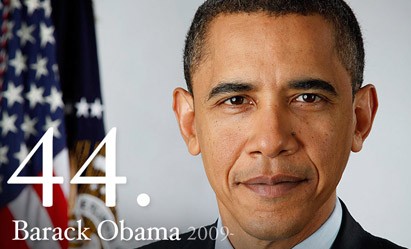
Last night President Obama marked the end of Operation Iraqi Freedom.

As the President said, the struggle for peace is not over, but the progress we’ve made is undeniable.

This moment also represents a promise kept. As a candidate, President Obama laid out a vision for this country — and bringing our troops home from Iraq was a defining part of that vision. It was one of the reasons that all of us knocked on doors, made phone calls, and voted.

Keeping that promise is important, not only for our brave women and men in uniform, but also for their loved ones, and for all Americans who have hoped and prayed for a resolution to this war.

Please take a moment to watch the President’s speech if you missed it last night:

Watch the President's address.

Watch the President’s Oval Office address:

http://my.barackobama.com/IraqAddress

Thanks,

Mitch Stewart
Director