
Tag Archives: Middle East

Official Google blog …


YouTube Highlights 3/3/2011

Posted: 03 Mar 2011 02:57 PM PST

This is the latest in our series of YouTube highlights. Every couple of weeks, we bring you regular updates on new product features, interesting programs to watch, and tips you can use to grow your audience on YouTube. Just look for the label “YouTube Highlights” and subscribe to the series. – Ed.

In past weeks, we’ve featured two more YouTube interviews with leaders through the World View program and seen more footage come in from across the Middle East as unrest there continues.

David Cameron and John Boehner on YouTube

In YouTube World View’s second interview, YouTube and Al Jazeera English sat down with British Prime Minister David Cameron. Ten thousand people submitted questions, and in the interview, the Prime Minister shared his thoughts on what should be done in Libya, and talked about increased taxes for banks in the U.K. and Britain’s role in Afghanistan.

And as the budget debate rages on the U.S. Capitol Hill, we asked viewers from across the U.S. and around the world to submit questions to Speaker of the House John Boehner (R-OH). The final interview will be posted to YouTube on Friday, March 4.

We’ll have another interview in the coming weeks—check YouTube World View for more details soon.

Join us on YouTube for Carnaval in Brazil

An estimated 100 million people travel to Brazil each year to experience Carnaval, the iconic celebration on the streets of Salvador, Bahia. This year, you can join the festivities on the Carnaval YouTube channel via computer or mobile phone. Watch live feeds of Salvador’s multi-day street fest from Thursday, March 3 through Tuesday, March 8. If you’re lucky enough to be there in person, find out how to buy a pass to Google’s street-side camarote (cabin) at the celebration at http://www.youtube.com/carnaval.

February’s “On The Rise” winner

After tens of thousands of votes, D-trix from theDOMINICshow has been named February’s “On The Rise” contest winner. He beat out tornado chasers, graphic artists and pop stars for the honor. When D-trix isn’t spoofing Justin Bieber, he’s dancing or teaching people how to rap. Congratulations!

Making YouTube seven times faster

To help you better enjoy all the great content that’s uploaded to YouTube every minute, we recently increased speed for uploads and playback. Google’s cloud computing capabilities help us process videos in chunks on different machines—making our video-processing seven times faster than in 2008.

Ad Blitz winner

Super Bowl ads are always a big draw of the game. This year, we added Super Bowl spots to the Ad Blitz gallery so you could vote for your favorites. More than 2.7 million votes were cast, and 3.5 million views took place on mobile devices. This year’s winner, Chrysler, was featured on the YouTube masthead for the Saturday following the game.

This week’s trends on YouTube

Here are a few recent highlights from YouTube Trends:

Britney Spears built up anticipation for her latest music video.


Dramatic footage poured in from across the Middle East: Libya, Iran, Algeria and Yemen.


A funny moment from “Family Feud” got “passed around.”


We’ll have another update for you in a couple of weeks. Until then, visit us at the YouTube Blog.

Posted by Serena Satyasai, Marketing Manager, The YouTube Team

mashup Monday …&some News


The World is watching …

As more and more uprisings and demands for freedom break out all over the Middle East. Unfortunately in some cases a lot of violence against the Protesters …We see the people have not only had enough, they made an independent choice to speak up out, demand freedom, fair wages and an opportunity to vote for those who truly represent them.

To those people I say remember that there is always strength in numbers

People dying for wanting to be heard, for wanting to be participants in their own futures is not new … mothers with children, older men and women and college students are coming out in droves to let the current dictators know it’s time for a change –

I just want people to know that 30 years of rule will be a hard thing to change given the Army and it’s police were paid well to keep the peace. The question for them and other parts of the middle east will be can they give up some of their power and money in exchange for a democratic society?

We see numerous countries and or regions in possible transition, definitely a movement against a dictatorship run by clerics, the military, or those who are in line to have control without a vote. The votes of millions have gone uncounted for decades… the demand to be heard is great but to get the change they need and want, means the fear of authority is not an option… and the possibility of death imminent.

In Iran the supreme leader tried to cut off all connections to the outside world, stated the US meddled in the process to divert responsibility and was definitely willing to use extreme force —other parts of the Middle East are also choosing to crack down starting with shutting access to the social networks. We all know that Mubarak tried to keep the truth from the world by shutting down TV and the social networks but as we, all saw, it was just something that the protesters worked around and obviously were able to beat.

Those of us in countries who have the freedom to express personal opinions, against or for our government, vote freely, have relatively good wages, and live where we want. We all wonder why the police and or military in countries under rulers choose not to rise up against oppression. We ask out loud –why don’t they want personal freedom too … a change from the old ways to a more positive way of life … human rights, a chance for a better economy and a chance to be heard, to participant in the process of life. Unfortunately, reality is that the trickle down financial idea stops at those who help keep the peace whether that is by words and mostly with force.

Iran had a dictator/supreme ruler making threats and a militia shooting/ killing their own for non-violent protest the last time the World watched in horror as people protested against tyranny and of course, the response was shameful to watch. The 18-day effort to topple the dictatorship in

Cairo, Egypt; done with somewhat peaceful protests the demand for freedom was not easy. It took millions to decide that there was strength in numbers; it also could be a road map to how others can achieve such a historic opportunity –for freedom.

The journey toward freedom is sometimes paved with danger

I pray for all those involved in the change they want to believe in and want and if we do have Americans living in places engaging in uprisings for freedom – hope they are safe.

Other News …

**Egypt is a work in progress while other parts of the region protest for freedom

**Obama defends budget priorities

**US state dept starts Farsi twitter feed

**Sony announces new PlayStation smartphone

**Oil prices jump as unrest becomes the norm

**Nintendo hacker gets arrested 

**Boeing unveils intercontinental plane

**Italy alert over Tunisian influx of immigrants

CSPAN …

President’s Budget for Fiscal Year 2012 http://www.whitehouse.gov/omb/budget/Overview

OMB on President”s Budget (Today) http://c-span.com/Events/President-Submits-37T-Budget-for-FY-2012/10737419543-1/

Pres. Obama’s Remarks on the Budget (Today) http://c-span.com/Events/President-Submits-37T-Budget-for-FY-2012/10737419543-2/

Egypt …


“We stand with the people of Egypt in their demand for freedom and basic rights, an end to the crackdown and internet blackout, and immediate democratic reform. We call on our governments to join us in our solidarity with the Egyptian people.”

Massive pro-democracy protests are spreading quickly across Egypt. Protesters are bravely speaking out against a repressive regime that has ruled the country for more than 30 years. The protesters are demanding the right to free speech, an end to government corruption and brutality, and free and fair elections.1

Today we’re joining an international grassroots movement to send a message of solidarity via radio and television to the people of Egypt and the Arab world.

So far, the protests have been overwhelmingly non-violent but the Egyptian government is cracking down hard. They have already arrested nearly a thousand protesters, declared a nationwide curfew, and cut off the internet.2 The regional media is one of our last ways to reach out to the people of Egypt.

So we’re joining with our friends at Avaaz.org—an international MoveOn-style organization—to build a massive wave of support from people around the world to stand in solidarity with non-violent protesters in Egypt.

Avaaz will be spreading the statement of solidarity via radio and television across North Africa and the Middle East, where the Egyptian people can hear it

You can join by signing the solidarity statement here: http://pol.moveon.org/

We enjoy the rights to free speech and peaceful assembly in this country, and we ought to use them to support others who hope for the same freedoms.

We must support those in Egypt who are choosing to stand up for democracy. The response by the Egyptian government has been needlessly brutal so far. Security forces are firing at protesters with live ammunition, beating people on the streets, and cutting off nearly every means of communication in an effort to maintain control and suppress the calls for democracy.

The situation on the ground is volatile and our hope is to support those in Egypt who are choosing peaceful protest as the means by which to push for change.

Our show of support could help not only bring newfound freedom to Egypt but possibly catalyze a chain reaction of reform across the Middle East unlike anything we’ve seen since the fall of the Berlin Wall.

Last week the people of Tunisia peacefully deposed a long-ruling dictator, inspiring the people of Egypt to stand up. Now, calls for reform are spreading to other countries including Yemen, Jordan, and Lebanon.

Right now our voices, in a show of unwavering solidarity with people non-violently calling for change, could potentially help bring fundamental human rights and democracy to millions of people. Add your name to the global statement of solidarity to be broadcast by radio here:

http://pol.moveon.org/

Thanks for all you do.

–Justin, Robin, Duncan, Peter, and the rest of the team

Sources:

1.”Egyptians’ Fury Has Smoldered Beneath the Surface for Decades,” The New York Times, January 28, 2011

http://www.moveon.org/r?r=205899&id=25944-17809870-tD9p82x&t=5

2. “Egyptian military deploys in Cairo under curfew,” MSNBC, January 28, 2010

http://www.moveon.org/r?r=205898&id=25944-17809870-tD9p82x&t=6

Google …official blog


Trip report: Google and YouTube in Iraq

Posted: 26 Oct 2010 08:06 AM PDT

(Cross-posted from the YouTube Blog)

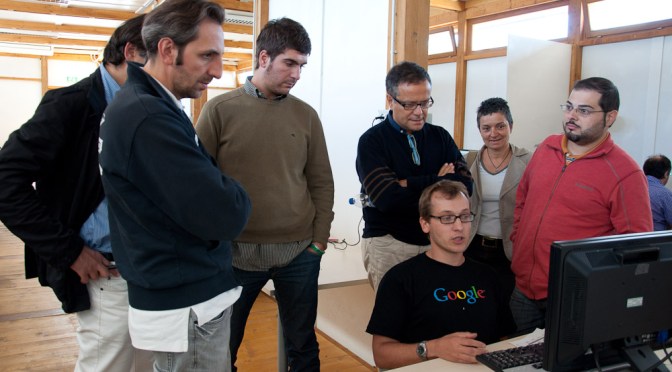
Earlier this month, a small team from Google and YouTube spent a week in Iraq on a trip arranged by the Department of Defense’s Task Force for Business and Stability Operations (TFBSO). Our goals were to explore opportunities for Google in Iraq, to understand the landscape of Internet access and connectivity in the country during this critical transition period and to bring top-voted questions from YouTube to Iraqi leaders in a series of interviews. We met with students, private sector companies, NGOs and Iraqi leadership in the Kurdish city of Erbil in the north, and in Baghdad.

Pictures taken by the Google/YouTube team in Iraq: Harry Wingo (Policy), Carrie Farrell (Google.org), Debu Purkayastha (Corp Dev), Olivia Ma (YouTube), Mary Himinkool (Business Development) and Steve Grove (YouTube).

Regardless of your feelings about the Iraq War, it’s immediately evident upon arrival just how completely the country missed the Internet boom during Saddam Hussein’s regime. Internet penetration rates in Iraq are among the lowest in the Middle East—somewhere between one and eight percent. Only 15 percent of Iraqis say they use the web, and the largest percentage of them live in Baghdad. There are no commercial data centers in Iraq and much more fiber connectivity is needed to meet consumer needs. Most connections are via satellite, and those who do have connections pay dearly for it—we heard estimates of up to $150 U.S. dollars per month for a 512kb connection. To incentivize and enable private companies to lay more fiber in Iraq, a complex set of roadblocks must be addressed—from security concerns to regulatory frameworks to licensing structures. As the country is still struggling to form a government more than seven months after its last election, much of this progress has been stalled.

There are signs of progress, however. Mobile penetration has skyrocketed in Iraq in the past seven years, from effectively zero percent in 2003 to over 70% today. And the Iraqi people are highly educated. We met with dozens of computer science students at Salahaddin University in Erbil and at Baghdad University, and though they lack equipment and resources, they’re highly motivated to innovate and believe the web is a critical component of their economy’s future.

Many young people in Iraq and around the world submitted questions in Arabic and English for three interviews we conducted in partnership with Middle Eastern news agency Al Arabiya. Google Translate enabled anyone to vote on their favorite questions regardless of language, and we brought the top five questions to current Iraqi Prime Minister Nouri al-Maliki, the Prime Minister of the Kurdish Regional Government in Erbil, Dr. Barham Salih and Iraqi politician and once the interim Prime Minister of Iraq, Ayad Allawi. Here is the television special that Al Arabiya produced showcasing their answers:

The Iraqis we met consistently expressed their desire for increased access to the web and for more access to content and tools in both Kurdish and Arabic. We believe access to information and high-speed connectivity to the cloud will be key to the future of the country. The power of the web to change people’s lives grows the further one gets from Silicon Valley, and we look forward to continuing our work with companies, governments and citizens in Iraq and other countries in transition.

Posted by Mary Himinkool, New Business Development, and Olivia Ma, YouTube News & Politics

Save the girls …


Change.org
Nearly three million young girls are at risk of female genital cutting this year. Stop this human rights abuse now.

Sign the Petition

Across parts of Africa, the Middle East and Asia, the following scene is replayed over and over: A girl, often between 4 and 12 years old, is held down by three or four women while all or part of her external and internal genitalia is cut off.

Complications from this brutal procedure can include severe hemorrhaging, infection, long-term difficulties with intercourse and childbirth, and even death.

Female genital cutting (FGC) reflects deep-rooted inequality between the sexes, and is recognized internationally as a violation of the human rights of girls and women.

Urge Secretary of State Hillary Clinton to do all she can to encourage the governments of the countries where this practice takes place to put a stop to it >

More than 100 million women and girls worldwide are affected by different forms of cutting. Infibulation is the most severe form, where some or all of the external genitalia are cut, leaving only a very small opening for urination and menstruation.

The practice of female genital cutting is hard to talk about. But ignoring it only guarantees more suffering, and leadership from the United States would go a long way in urging the countries where FGC occurs to end this human rights abuse.

Nearly three million young girls are at risk of female genital cutting this year alone. Please take action and help save these girls from a lifetime of pain and suffering >

Thank you for taking action,

The Change.org Team