
Tag Archives: republicans

Has Congress embarrassed Americans … hmmmm the hyde amendment 40yrs


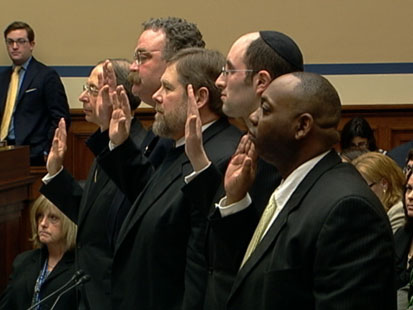
all_male_panel_congressmenABCjust another rant  …

So, over 50% voted to keep President Barack Obama for a 2nd term. In my opinion, republicans are still acting as if they had  carpets pulled out from under them as they professed right up to the day we were informed that PBO won both the electoral and popular vote that Romney had won. Now, in this 2016 year, the 114th Congress is even worse than we could have all imagined as they meet less, seemingly vote against their constituents in every session and refuse to let President Barack Obama govern every chance they get. I need, want constituents to wake up and wonder how some of these folks got away with making millions to  consider them as carpetbaggers now. Today, we must all be as patient as those who stood in line for hours to vote, be ready to fight back, stand up and speak out against Republicans members of the 114th Congress in Campaign2016 while they manage to continue to hold Americans hostage.

If you listen to FOX, they seem to be whipping up the notion to take hostages, Senator Cruz cost Americans $24 Billion so do not be surprised.  I have major issues with FOX being considered a news program when they are actually a Republican station spreading the GOP word, so any use of them as a resource is just a distraction as they say oh we believe in progress while voting NO on the floor of Congress least we talk about what legislation republican Governors are signing.  I get that POTUS negative numbers are media worthy but voters are starting to tune in. I am particularly concerned about a woman’s right to choose as some Republican Governors continue to pass unacceptable legislation to make abortion or contraceptives hard to get while screaming about their religious freedoms being violated. It is in all our best interests, as Women and as voters who care about equal rights to keep the image of the all-male panel in mind that not only refused to listen to Sandra fluke, they denied Eleanor Holmes Norton a seat at the table as well.

I don’t know about you but I was pissed, scared and determined not to let a group of men turn back the clock on women who fought and suffered from a lack of Equality in all its forms so that women of the future may have the right to choose maybe experience some respect and freedom. Yet, we all saw heard and watched gasping. I am still asking , are these men were serious and di they think women are too stupid to make their own health care decisions or is there another reason for the sudden need to ban birth control possibly trash roe V wade altogether. I know Women’s suffrage was about whole lot more than reproductive rights, we all must remember how long it took Congress to pass VAMA among many other legislation to help women.  They(Republicans) continue to stall or filibuster bills that will help main street, single women with children and the poor while Congress, specifically republicans have decided, no business is good business for their future Elections, but as VP Joe Biden stated in his 2012 debate, roe V wade is only as safe as the Supreme Court justices allowed to sit on the court are objective.
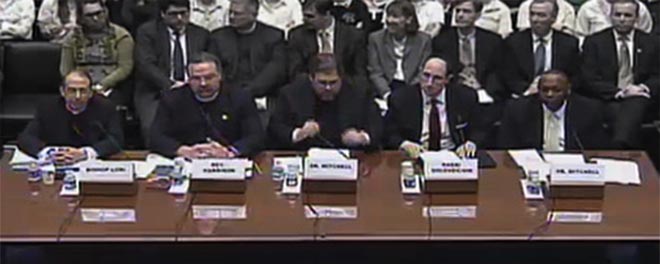
 

5manpanelonBControl

In my opinion, The Hyde amendment was a knee jerk reaction from a man or group of men who believed they had the right to invade a Woman’s personal space, health care choice and their right to choose while demanding their religious freedom. Such hypocrisy by Republicans maybe a few Conservadems definitely needs more airtime.

Unfortunately, in the end it became a law.

Resources: Taken from the Center for American Progress :

The History of the Hyde Amendment – Click on the link below for more information

 Click on link for the full story … below

  Unhappy Birthday to the Amendment That Started the War on Women

We can thank former Rep. Henry Hyde (R.-Ill.) for setting us on this path. The attacks on contraceptive coverage can be traced back to an amendment of his that turns 36 years old today. The Hyde Amendment…

By Jessica Arons | Monday, October 1, 2012

  • Introduction: 30 Years is Long Enough, by Jessica Arons
  • Part One: Hyde Amendment History, by Marlene Gerber Fried
  • Part Two: Dignity and Justice for Some?, by Sarah Horsley
  • Part Three: Does the Hyde Amendment Violate Human Rights?, by Patty Skuster and Jamie D. Brooks
  • Part Four: Expanding Reproductive Choice, by Susan Jenkins
  • Part Five: The Future of Hyde, by Toni M. Bond Leonard

Donald Trump … Él no es tu amigo


A Historic Meeting … Cuba


whitehouselogoa repost

President Obama met with Cuban President Raul Castro in Panama City  — marking the first full meeting between the leaders of the two countries since we announced a new diplomatic path with Cuba.

The two presidents discussed our shared histories, significant policy changes, and the positive response in both countries to this thaw in relations. “This is obviously a historic meeting,” said President Obama — who was in Central America for the seventh Summit of the Americas, a tradition that brings together the leaders of North and South America to discuss issues that impact the region.

Watch the President’s remarks at the Summit and learn more about his trip.

The President speaks at the Summit of the Americas.

Weekly Address: Tuition-Free Community College

In this week’s address, the Vice President laid out his and the President’s plan to make two years of community college free for responsible students. A better-educated citizenry is necessary to ensure that the United States continues to out-compete the rest of the world. Making two years of community college free is good for workers, good for companies, and good for our economy.

READ MORE

Why Conversion Therapy Hurts All of Us

More than 120,000 people signed a petition calling for a ban on the dangerous and unacceptable practice of conversion therapy — and on Wednesday, we responded. The overwhelming scientific evidence demonstrates that conversion therapy is neither medically or ethically appropriate and can cause substantial harm. That’s why the Obama administration supports efforts to ban the use of conversion therapy for minors.

READ MORE

West Wing Week: “A Good Deal”

Last week, the President made an important announcement about preventing Iran from obtaining a nuclear weapon, traveled west to champion high-tech jobs in Louisville and clean energy jobs in Salt Lake City, had some fun at the 137th-annual White House Easter Egg Roll, and flew to Jamaica for a meeting with leaders of Caribbean nations.

READ MORE

New thinking about the Caribbean


June 14, 2015

In North America and Europe there are from time to time international conferences that quietly enable new thinking. It is mostly an unseen process whereby governments, foundations or think tanks facilitate conversations, in ways that variously attempt to address intractable problems such as those in the Middle East, form a consensus on future policy, or enable the participants to look over the horizon.

These events allow invited participants to escape from their day-to-day responsibilities and usually in a group of 50 or less, debate and explore new ideas or solutions in private. The value is not just in the dialogue and the outcome, but in the freedom to say what you think knowing that no one will quote you, in the personal contacts made in the margins, and the associated trust that develops which can last throughout a career.

Such events rarely focus on the Caribbean, but a little over a week ago about sixty invited guests from the Caribbean as a whole, the UK and North America met at Wilton Park in the English countryside.

The objective of ‘Caribbean 2030: new thinking for a new generation’ was to bring together a mix of voices, young and more experienced, to consider what the region might look like fifteen years from now, and to hear in particular how younger participants from politics, government, the private sector, academia and civil society see the Caribbean’s future and how they might play a role in taking it there.

The conference, which was developed in conjunction with the Caribbean Policy Research Institute (CaPRI) and Britain’s Foreign and Commonwealth Office, was wide-ranging in its scope, but a number of general themes emerged which suggest a different Caribbean in fifteen years time.

One of the more significant discussions that ran throughout the conference was whether the future fortunes of the region lay in economic convergence between complementary economies. It was suggested that rather than politically-led solutions, it was trade, investment and financial services between networked groups of nations that would create future growth and integration. One consequence was that participants from the northern Caribbean, and in particular from Jamaica and the Dominican Republic, argued that there was greater value in Jamaica, Cuba, and the Dominican Republic having a stronger economic relationship that might also involve Cayman as a financial hub. The view of some was that such an approach would enable the Caribbean to escape being defined through its colonial past.

This was not to say that in terms of foreign relations and on issues of international or thematic importance that the region should not act through Caricom, nor for most was it to suggest that Caricom should be set aside; but many participants felt there were better opportunities for growth through a more rational approach to economic integration linked to improved infrastructure. The suggestion was that this thinking ought to drive policy across the region.

FYI: Caricom members include

 Antigua and Barbuda 4 July 1974
 Bahamas 4 July 1983 Not part of customs union
 Barbados 1 August 1973
 Belize 1 May 1974
 Dominica 1 May 1974
 Grenada 1 May 1974
 Guyana
 Haiti 2 July 2002 Provisional membership on 4 July 1998
 Jamaica 1 August 1973
 Montserrat 1 May 1974 British overseas territory
 Saint Kitts and Nevis 26 July 1974 Joined as Saint Christopher-Nevis-Anguilla
 Saint Lucia 1 May 1974
 Saint Vincent and the Grenadines 1 May 1974
 Suriname 4 July 1995
 Trinidad and Tobago 1 August 1973 Founder of the Organization before handing over to Guyana
Associate  Anguilla July 1999 British overseas territory
 Bermuda 2 July 2003 British overseas territory
 British Virgin Islands July 1991 British overseas territory
 Cayman Islands 16 May 2002 British overseas territory
 Turks and Caicos Islands July 1991 British overseas territory
Observer  Aruba Country of the Kingdom of the Netherlands
 Colombia
 Curaçao Country of the Kingdom of the Netherlands
 Dominican Republic
 Mexico
 Puerto Rico Commonwealth of the USA
 Sint Maarten Country of the Kingdom of the Netherlands
 Venezuela

There were of course dissenting voices, particularly in some of the working groups. Some in particular from the Eastern Caribbean and from academia objected and declared themselves all but wedded to making what the region already had work, though when it came to the detail there was little to demonstrate how this might take the Caribbean beyond where it is today.

A second prevailing theme was that of the new economy and the growing irrelevance of borders.

These thoughts came especially from some of the younger participants involved in information technology, new media, tourism and the private sector more generally, who made clear that what they were doing made traditional geographic concepts and the size of the Caribbean irrelevant.

The conference was also notable for leaping the language and cultural divide with participants from the Dominican Republic being able to demonstrate in a neutral setting how their experience in many areas from alternative energy to tourism had relevance to most of the region. It also allowed them to set out the country’s thinking in terms of how it might be better connected with and work more closely with the nations of Caricom.

As you might expect there were detailed exchanges on energy security, the environment, and education which all agreed was a development priority if the region was to succeed. There were interesting mentions of the blue economy − the region’s largely unrealised offshore resource − and important exchanges on governance and security about which more in a future column.

There was not a stand-off between the politicians and the private sector. In fact there was a surprising degree of consensus that both needed one another and that the region had to end this false dichotomy if growth were to be achieved. It was suggested that as the generations changed this may no longer be so much of an issue. However, for some, the balance between the competing interests of social equity and the role of the market in Caribbean development needed to be resolved if the region was ever to experience significant economic growth.

For some of the younger participants the real problem that the region has to face in the next fifteen years was to escape from the dead hand of the region’s public sector. In a rarely voiced opinion it was suggested that it is the public sector and those who work with it who have a vested interest in ensuring that thinking and their influence remain the same.

The suggestion was that this was holding the region back.

Strikingly the relationship with the UK, Europe and the US was little mentioned by the younger participants. It was as if the Caribbean had moved on and had a much more balanced view of when and on what issues it wished to relate to a much broader range of external partners. In this context it was unclear whether China’s presence in the region was a threat, an opportunity, or both.

The downside of the meeting was that there was no authentic Cuban voice able to discuss the way it saw the region, the way in which detente with the US may change the Caribbean’s political and economic centre of gravity.

These are of course personal observations, and in due course there will be a report with suggested actions.

The value, however, of this quite different conference will only be known if the synergies, new thinking and the relationships established begin to change the Caribbean for the better.

Previous columns can be found at www. caribbean-council.org

One Caribbean or several different faces of ~ Caribbean Island Countries ~


RTX1H6EIHaitian migrants and Dominicans of Haitian descent yell slogans during a protest in Santo Domingo June 18, 2015. People took to the streets to demonstrate against the risk of deportation from the Dominican Republic due to a deadline of a national immigration law.  Reuters

just another rantRTR4YTSMHaitian Rolando Joshept (R), 19, sits near a Dominican soldier on a bus of the National Migration Office in Santo Domingo June 24, 2015. Joshept is returning to Haiti voluntarily after a new Dominican migration law requires hundreds of thousands of Haitians and people of Haitian descent to show identity documents or register for a so-called “regularization” program.  Reuters

Just another rant …

In 2011, Officials of the Dominican Republic warned DR nationals and after many changes to the rules, they seem determined to deport at least onehundred thousand Haitians.   According to the media, approximately 250K applied for residency but only about 10k had the proper paper work.  This means that DR Officials might implement the papers please rule as the U.S. state of Arizona tried.

It has gotten worse.

There are reports that the Dominican Republic seems to be engaging in what some consider ethnic cleansing.  The idea that DR officials decided they needed to deport DR nationals without due process is disturbing. When In fact, some are of DR descent, others  are undocumented most have worked and lived there for all their lives to only have a few weeks before being “rounded up” as stated by DR officials.  So far, approximately 26K undocumented DR nationals have left voluntarily.  Is it possible that Dominican elites want to regain their privileged lives at the expense of families, possibly family ties as well?

Why is this bothering me? The last time I asked folks to boycott, there were reports of fights about who looks more Dominican or not and in the wake of men women and children being assaulted based on their looks and skin colour dealing with a papers please law is beyond my understanding. I know this is not a new problem, but in this 21st Century, one would think the Caribbean Community would come together and implement solutions.  The problem seems to be an archaic caste system that needs to end.

Where is the CARICOM community and what side are they on?

Thing is, the Caribbean and i use that to cover a wide range of territory …beyond being a beautiful, a paradise, a tourist destination, sadly it is reported as having corrupt government police and always under constant threats of natural disasters so these issues of color, land, looks, legacy religion seem petty when some serious money can be made … but the government needs to be legitimate …the soul of the Caribbean kept intact

the question: Is the government and police both corrupt?

There is a Common Wealth of and a Republic of, yet both are a part of the Caribbean Community.

Folks are suffering victims of crime, corruption, and a huge debt due to economic austerity. While some visitors choose to ignore it others conveniently bring up the label given to differentiate the face of one Caribbean Community member from another.  I have read it so many times and though I roll my eyes at the clichés “ they are very very serious about making sure folks “are not confused with” or “pronounced as”. The fact remains, the Dominica and all the islands on that coast are still apart of the sum total called the Caribbean Community, and more often than not; “the not to be confused” locales are groomed island destinations for the rich.  I know, not all rich folks are, but a whole lot are buying land, usually white and from the UK, France and now so are folks from the US, making it a place that is or once was 86% to 95% black (Caribbean) now a  place that provides low wages for resort bartenders,  house cleaners, ethnic-entertainers while being another place beaten used and eaten up by eco-tourism. Studies show that when tourism flounders so does the economy …duh. so, alternative sustainable options need to be considered.

Most of us would say eco-tourism is not bad as it mostly helps protect against deforestation, but nowadays you need to ask what are the locals getting out of it. We need to think about all the Caribbean islands or similar hard to get to places with extraordinary weather, climate, food, mountains, rainforests, freshwater lakes, hot springs, waterfalls, and diving spots that tourists tend to trample or buy up.  The waterfronts are now home to cruise liners that not only take up space, it has resulted in a loss of land,  some fishing rights, and reports are that cruise ships have been quietly dumping environmental waste into what used to be pristine waterways. In the end, like so many destinations of paradise or eco-tourist friendly places succumb to new developments and or modernization of facilities now have fewer visitors, even with all the tax perks which happens to negatively affects the locals and their overall economy in far too many cases.

There is a difference between the Commonwealth and a Republic in my opinion.   If you read the news, the commonwealth is far more likely to be groomed for “the people” most are hard to get to.  That means a whole lot of tourists and definitely user friendly; the other is usually a little more urban, rugged a lot less likely to have many tourists.  The leaders in a commonwealth are more likely and able to make a deal with countries like the US, UK or France while the people of a Republic probably choose to talk with China or any other resource seeking nation.  The fact remains that fifteen CARICOM members include the Dominican Republican, as well as Dominica, are all in this crisis, all members need to step up.

In a letter to CARICOM, chair Bahamian Prime Minister Perry Christie, the organization expressed shock that the regional body has not commented on the issue.  “We are shocked but not surprised about CARICOM’s silence during this period when the Chair has fallen to the Prime Minister of The Bahamas”.

In the image to the left, a Haitian man is pulled back toward the Haitian side of the border by Dominican soldiers, at the Jimani border crossing, in the Dominican Republic last Wednesday. The man was later allowed to pass. Authorities are prepared to resume deporting non-citizens without legal residency in the Dominican Republic after largely putting the practice on hold for a year, the head of the country’s immigration agency said. For decades, the Dominican Republic has deported non-citizens, the vast majority of whom come from neighbouring Haiti to work in low-wage jobs. (PHOTO: AP)

I don’t know the answers … though I think Caribbean island nations and those that have, like the Republic of Madagascar similar weather, lakes, waterfalls,  forests and amazons want to export what they make not have folks come in and take it, promise or build massive structures making the indigenous people’s give up land, fishing rights only to get a small amount of return or actual help then it ends with a series of broken promises.  Some thinking they are doing well, talk about having jobs like being tour guides, cultural dancers are helping them or giving them an opportunity because they had nothing before … this is such bs! We need to help our fellow man with income inequality, demand not only human rights, see actual humanitarian acts completed, and a legit government. We must always try to prevent or stop the slashing, burning, and deforestation because it is one of many things that will prevent the next generation from thriving not to mention trying to keep the next generation healthy

These nations, regions or countries considered islands of paradise ultimate vacay destination is home to people that should not be poor … We need to ask who what where and why this is happening!

Resources:

jamaicaobserver.com

wiki

ft.com

Barbados today

12newsnow.com

Jamaica-gleaner.com

ibtimes.org

A Case of Mistaken Identity: Antihaitianismo in Dominican Culture By Ernesto Sagás

started June 18