Tag Archives: senate spot

Help Keep Trash Out of Our Oceans … repost


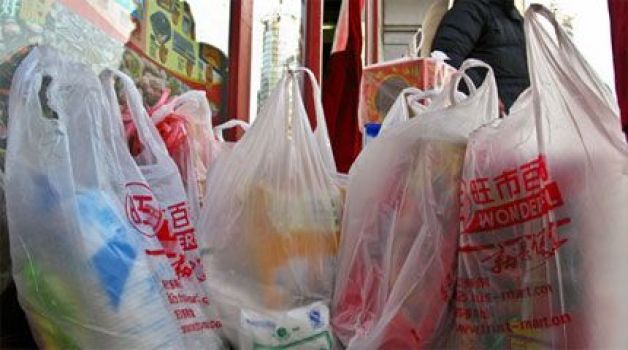
Each year, countless marine animals and sea birds are endangered by the flow of trash into our oceans. The fact is, Sea turtles are entangled and choked by plastic and discarded nets. Whales mistake trash bags for food and perish. And, let’s not forget the harmful impact contaminated marine environments have on human beings. Plastic also attracts and concentrates other pollutants from surrounding seawater, posing a contamination risk to those species that then eat it. Scientists are studying the impacts of that contamination on fish and shellfish.

From plankton to whales, animals across ocean ecosystems have been contaminated by plastic. Plastic has been found in 59% of sea birds like albatross and pelicans, in 100% of sea turtle species, and more than 25% of fish sampled from seafood markets around the world.

Marine debris isn’t an ocean problem—it’s a people problem. That means people are the solution. Ocean Conservancy is committed to keeping our beaches and ocean trash free. For more than 30 years we have organized the International Coastal Cleanup, where nearly 12 million volunteers from 153 countries have worked together to collect more than 220 million pounds of trash. And we’re not the only ones who care about ocean trash: Every day, all over the world, concerned people take the problem into their own hands by cleaning up their local waterways.

Tackling the problem of plastic in the ocean begins on land. Reduction in plastics use, especially of single-use disposable products, and the collection and recycling of plastics in developing countries can help to reduce the amount of plastic waste that enters the ocean.

At our International Coastal Cleanups, volunteers have picked up more than half a million straws and stirrers, making straws one of the top ten items on our annual list. Straws pose a real danger to animals like sea turtles, albatross and fish who can eat them. Take action today: #SKIPtheSTRAW !

Add your voice to the sea of people taking a stand for the ocean. Sign the pledge now and when offered a straw, simply say ‘no thanks.’

We can’t afford to trash our planet – so let’s do something about it.

Trash Travels – even if you do not live near the ocean, you can take action in your community to make sure litter does not end up in our waters.

Please Teach your kids to recycle properly … Save our Planet

resource: Earth Day Network, Ocean Conservancy

Soccer coach: Could artificial turf be causing cancer? 2yrs ago


By Gaard Swanson Published: May 19, 2014 at 10:54 PM PDT Last Updated: May 20, 2014 at 6:30 AM PDT

a repost

Soccer coach: Could artificial turf be causing cancer?

SEATTLE — A local soccer coach is raising serious questions about the material used tomakeartificialathleticfieldsCrumbrubberis made fromshreddedtiresandis used in soccer fields all over the country. The turf is especially popular in Seattle because the tires get recycled and the reliable surface can stand up to soggy weather.But one local coach sees a troubling connection between the turf and cancer among soccer players.Soccer runs in the blood of University of Washington assistant coach Amy Griffin. She started playing goalie as a child, and now helps UW goalies stay fit and improve their skills.Griffin’s always searching for new talent and keeps a list of top players. But one list of names isn’t about recruiting. On it are 13 players from Washington who have all been diagnosed with rare types of cancer.Of those 13, 11 come from an even smaller pool of players: Goal keepers.

“Everyone says it’s just a coincidence and kind of walks away, but the ratio of goal keepers to field players is 15 to 1, 16 to 2, and I know plenty of goal keepers that have cancers and I don’t know many field players,” Griffin said.

Griffin said she can’t walk away from what she’s discovered, and she’s not alone. Former professional goalie and reality TV star Ethan Zohn, who has twice beaten non-Hodgkins lymphoma, had been keeping his own list, which he has now handed over to Griffin.

Combined, the lists name 27 players with cancer, and 22 of them are goal keepers.

Griffin can’t say why goalies are getting cancer, but she wonders if it’s the field turf and the crumb rubber used to make it. She said goalies spend a lot of time on the ground diving for balls, blocking shots and sometimes ingesting the small rubber pellets.

“I lived in the stuff,” former UW goal keeper Jorden Alerding said of the turf. “Four to five times a week I was on it for hours — bleeding sweating, everything. Looking back now I wonder could that have been the cause.”

Griffin’s first brush with the unproven connection between cancer and the pellets came when she visited Alerding, who was being treated for cancer.

“She said, ‘I just think it’s something with the field turf. I don’t know what it is, but I think there’s something in those black dots,'” Griffin said.

The former Husky was diagnosed with non-Hodgkins lymphoma during her freshman year of college when doctors discovered a large, deadly tumor.

“It was about the size, a little bigger than a softball, right in the center of my chest,” Alerding said.

Alerding is now cancer free, but she still questions the health effects of crumb rubber and the lack of further research.

“If this can be prevented, I don’t know why there isn’t more effort being made to do the research and find out,” she said.

The pain is still fresh for June Leahy. Her daughter, Austen Everett, a star goalie for Seattle’s Blanchet High School and later the University of Miami, died a year and a half ago.

By the time Everett lost her second battle with non-Hodgkins lymphoma, Leahy was raising questions about the use of crumb rubber on soccer fields.

“I feel like there is a strong correlation with the turf,” she said.

This isn’t the first time people have raised concerns about the turf, either. In 2008, a goal keeper at Tacoma’s Stadium High School battled Hodgkins lymphoma. Back then, Luke Beardemphl and his family wondered if crumb rubber had played a part in his cancer.

“I’ll catch it. It’ll stop the ball but not the pellets. They’ll go into my face, go into my eyes, my mouth,” Beardemphl said in 2008.

Earlier that year, the US Consumer Product Safety Commission tested some blades of grass used in synthetic turf for lead. The commission found they did not contain enough of it to put children at risk.

The agency later stated that its “exposure assessment did not include chemical or other toxic metals, beyond lead.”

Tires do contain metals and chemicals that have been ruled too toxic to burn in Washington state. The average athletic field uses 27,000 of them.

So, can prolonged exposure to the fields make people sick? The Synthetic Turf Council says no.

The president of the trade organization was unavailable to talk about this story, but the group directed us to a statement on its website.

“For 40 years, under EPA oversight and OSHA- regulated manufacturing, not one person has ever reported ill effects related to any materials associated with synthetic turf,” the statement reads.

Those statements and tests cannot shake loose the feeling Griffin gets every time she learns the name of another goal keeper with cancer.

She also knows that feelings and suspicion do not equal evidence.

The team’s head physician, Dr. John O’Kane, says the concern is valid and has talked with Griffin about the need for scientific and medical research on the effects of crumb rubber.

He said Griffin’s list is only a starting point.

“The question you would need to ask is over that same time period, how many goalies are there that haven’t gotten cancer?” O’Kane said. “And until you understand that number, you really can’t interpret that there’s anything particularly dangerous about being a goalie when it comes to cancer.”

O’Kane said that kind of research could take years. Griffin hopes someone is willing to take on the work to provide her with an answer. She said any answer will do.

“I would love for it to be disproven or for someone to grab me by the throat and say,’These are the facts. This is why it could never be this. This is just happenstance.’ That would be great,” she said.

One former Husky — Alerding — is on Griffin’s list.

Recycling ::: 5 Million Tons ::: Holidays


In 2009 it was reported that the amount above was the amount of trash produced by Americans between Thanksgiving and New Year’s Day, according to the Environmental Protection Agency.  That is 25 percent more than we generate in a typical five or six-week period during the rest of the year … Consider what the numbers are today

**Reuse packaging material, some UPS stores accept clean peanuts for reuse

**Find eco-friendly places to recycle your Christmas Tree

**Use less envelopes.. more ecards or postcards for the Holidays

**Ecyclewashington.org … Washington State and is free for residents & small businesses. They will take 3 items per day…computers, tv, monitors

Do Something to Help Heal our Environment !

Be a Seed for Change

Essentials in 2018 … about the same


Shirts Hanging on Clothes RackMy own twist on Essentials … that can move from summer to Winter and back again

 Jeans – I prefer skinnies but  do not forget to include Levis’ (boyfriend jeans ~ buy 501’s) my fav since forever

Tights(dance) for winter or Jeggings they are thick 

Black Velvet cigarette and Tuxedo pants

my fav LBD is by Ann Taylor

Skirts of all lengths

Pumps, Flats, Sneaks and Boots

 Scarfs ,Hats, leather gloves

Basic Black Pants –High Waist, Fitted & Trousers

Outerwear: Trench(s) Cardigan(s), Parka and Leather in a colour of your choice, get a Moto&bomber  & Blazers

A dress shirt/blouse:Crisp White, Black , a soft Beige &Boat Neck tops and denim Shirts – tunics are it

Camisoles & Chunky Sweaters, Turtle Necks

  Your closet of Dress(s) should include some colourful Sheaths you can also wear over a  fitted blouse or top and sweater

 i love cross body bags …but having a big bag is good as well

The not so plain White T when teamed up with so many things! like: under a Suit, tops off  Cut Offs and or a high Waist Skirts or Pants

oh and a great lipcolour /balm – my favourite is Neutrogena – anything by Neutrogena

     First posted in 2012

Keep Supporting Jonathan Deeds, Ph.D., ~is working to assure that U.S. seafood is both safe and accurately labeled


WordPressWhatFishIsThat
04/21/2014 01:00 PM EDT
Using some of the technology used in mapping the human genome, FDA scientists are working to create DNA barcodes for fish.
The high-tech effort is aimed to preventing fraud, including the substitution of a cheap fish for an expensive one, and preventing illness.

FDA Logo