
click on link below for video
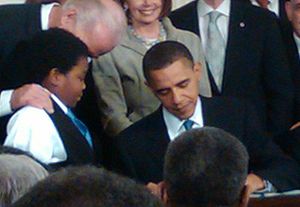
President Obama urges Congress to act on the “To Do List,” specifically highlighting the need to invest in clean energy by extending and expanding tax credits that support clean energy manufacturing. May 24, 2012.More

click on link below for video

 |
||||
|
||||
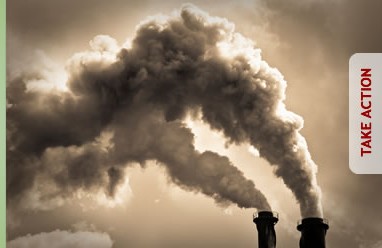 The Fisk and Crawford coal plants, owned by Midwest Generation, are located right in the heart of Chicago. Combined these two ancient plants have been spewing pollution directly into the Windy City‘s bustling neighborhoods for over 150 years.
“Every class I teach has four to seven students who suffer from horrifying respiratory illness,” says Chicago public school teacher Gloria Fallon. “I can no longer sit back and watch my students and my community being sacrificed for dirty coal.”
The asthma hospitalization rate in Chicago is nearly double the U.S. national average. In some neighborhoods, over 25% of the children under twelve suffer from asthma.
Midwest Generation must be stopped.
Tell Bank of America, Citi, and Chase to pull funding from Midwest Generation, so these coal plants will finally be shut down.
Little Village Environmental Justice Organization (LVEJO) and the Pilsen Environmental Rights and Reform Organization (PERRO) have been working for many years to demand that Midwest Generation stop poisoning their communities with 45,000 tons of pollution every year. Join them.
Stand with LVEJO and PERRO for environmental justice. Wake up the financial institutions that fuel U.S. polluters today.
Air pollution from Fisk and Crawford causes more than 40 deaths, 66 heart attacks and 720 asthma attacks every year. Big banks enable devastating coal projects like these to continue hurting communities in Chicago and all across the United States.
Enough is enough. Americans deserve clean air and healthy communities. It’s time for U.S. financial institutions to take responsibility for their actions, pull financing from dirty fossil fuel projects and start banking on clean, sustainable energy.
Demand that Bank of America, Citi, and Chase support clean energy projects instead of dirty, deadly ones.
For a clean energy future,
Amanda Starbuck
Energy & Finance Program Director
Twitter: @DirtyEnergy
 Posted: 28 Jun 2011 04:00 AM PDT
At Google, we’re committed to using technology to solve one of the greatest challenges we face as a country: building a clean energy future. That’s why we’ve worked hard to be carbon neutral as a company, launched our renewable energy cheaper than coal initiative and have invested in several clean energy companies and projects around the world.
But what if we knew the value of innovation in clean energy technologies? How much could new technologies contribute to our economic growth, enhance our energy security or reduce greenhouse gas (GHG) emissions? Robust data can help us understand these important questions, and the role innovation in clean energy could play in addressing our future economic, security and climate challenges.
Through Google.org, our energy team set out to answer some of these questions. Using McKinsey’s Low Carbon Economics Tool (LCET), we assessed the long-term economic impacts for the U.S. assuming breakthroughs were made in several different clean energy technologies, like wind, geothermal and electric vehicles. McKinsey’s LCET is a neutral, analytic set of interlinked models that estimates the potential economic and technology implications of various policy and technology assumptions.
The analysis is based on a model and includes assumptions and conclusions that Google.org developed, so it isn’t a prediction of the future. We’ve decided to make the analysis and associated data available everywhere because we believe it could provide a new perspective on the economic value of public and private investment in energy innovation. Here are just some of the most compelling findings:
Energy innovation pays off big: We compared “business as usual” (BAU) to scenarios with breakthroughs in clean energy technologies. On top of those, we layered a series of possible clean energy policies (more details in the report). We found that by 2030, when compared to BAU, breakthroughs could help the U.S.:
Grow GDP by over $155 billion/year ($244 billion in our Clean Policy scenario)
Create over 1.1 million new full-time jobs/year (1.9 million with Clean Policy)
Reduce household energy costs by over $942/year ($995 with Clean Policy)
Reduce U.S. oil consumption by over 1.1 billion barrels/year
Reduce U.S. total carbon emissions by 13% in 2030 (21% with Clean Policy)
Speed matters and delay is costly: Our model found a mere five year delay (2010-2015) in accelerating technology innovation led to $2.3-3.2 trillion in unrealized GDP, an aggregate 1.2-1.4 million net unrealized jobs and 8-28 more gigatons of potential GHG emissions by 2050.
Policy and innovation can enhance each other: Combining clean energy policies with technological breakthroughs increased the economic, security and pollution benefits for either innovation or policy alone. Take GHG emissions: the model showed that combining policy and innovation led to 59% GHG reductions by 2050 (vs. 2005 levels), while maintaining economic growth.
This analysis assumed that breakthroughs in clean energy happened and that policies were put in place, and then tried to understand the impact. The data here allows us to imagine a world in which the U.S. captures the potential benefits of some clean energy technologies: economic growth, job generation and a reduction in harmful emissions. We haven’t developed the roadmap, and getting there will take the right mix of policies, sustained investment in technological innovation by public and private institutions and mobilization of the private sector’s entrepreneurial energies. We hope this analysis encourages further discussion and debate on these important issues.
Posted by Bill Weihl, Green Energy Czar, and Charles Baron, Google.org, Clean Energy Team
Official Google blog
Posted: 14 Jun 2011 09:16 AM PDT
(Cross-posted from the Green Blog)
Imagine sitting on your patio watching the sun’s rays pass overhead, knowing that they power your home with clean energy—at a cost that’s less that what you would have paid using just the grid. That’s what my colleague, engineer Michael Flaster, has been doing at his home in Menlo Park, Calif. since March of this year. He did it with the help of a company called SolarCity, which enables homeowners and businesses to begin using solar energy to power their homes and buildings.
Today, we’re announcing that we’ve investing $280 million to create a fund that will help SolarCity finance more solar installations across the country. This is our largest clean energy project investment to date and brings our total invested in the clean energy sector to more than $680 million. We’ve also launched a partnership to offer SolarCity services to Googlers at a discount.
In SolarCity’s innovative financing model, the company covers installation and maintenance of the system over the life of the lease. You can prepay, or pay nothing upfront after which you make monthly solar lease payments. All told, Michael will save $100 per month on his energy bills this year, and more than $16,000 over his 15 year lease, after factoring in his lease payment and lower energy bills.
We believe the world needs a wide range of clean energy options in the future, each serving different needs. We’ve already invested in several large-scale renewable energy projects, so we’re excited that this new partnership with SolarCity helps people power their homes directly with solar energy, too. We think “distributed” renewable energy (generated and used right at home) is a smart way to use solar photovoltaic (PV) technology to improve our power system since it helps avoid or alleviate distribution constraints on the traditional electricity grid.
Our investment is a quadruple-win for Google, SolarCity, its new customers and the environment. We continue to look for other renewable energy investments that make business sense and help develop and deploy cleaner sources of energy. Whether harnessing the sun on rooftops like Michael’s or in the desert sands of the Mojave, it’s all part of building a clean energy future.
Posted by Rick Needham, Director of Green Business Operations




 Be a Seed for Change
You must be logged in to post a comment.