Tag Archives: United States Fish and Wildlife Service

9/27/62~In the Library ~ Silent Spring, by Rachel Carson ~ Women’s History


repost

Rachel Carson’s book “Silent Spring“, an early voice for our environment in 1962 Rachel Carson’s watershed work Silent Spring was first published on September 27, 1962. Originally serialized in The New Yorker magazine, the book shed light on the damage that man-made pesticides inflict on the environment. Its publication is often viewed as the beginning of the modern environmentalist movement in America.

Silent Spring

 See why Carson’s analysis is more relevant now than ever.Buy Silent Spring at Amazon.com     

Rachel Carson, writer, scientist, and ecologist, grew up simply in the rural river town of Springdale, Pennsylvania. Her mother bequeathed to her a life-long love of nature and the living world that Rachel expressed first as a writer and, later, as a student of marine biology. Carson graduated from Pennsylvania College for Women (now Chatham College) in 1929, studied at the Woods Hole Marine Biological Laboratory, and received her MA in zoology from Johns Hopkins University in 1932.

She was hired by the U.S. Bureau of Fisheries to write radio scripts during the Depression, and supplemented her income writing feature articles on natural history for the Baltimore Sun. She began a fifteen-year career in the federal service as a scientist and editor in 1936 and rose to become Editor-in-Chief of all publications for the U. S. Fish and Wildlife Service.

Not only that, but she wrote pamphlets on conservation and natural resources and edited scientific articles, but in her free time, she turned her government research into lyric prose, first as an article “Undersea” (1937, for the Atlantic Monthly), and then in a book, Under the Sea-wind (1941).

In 1952, she published her prize-winning study of the ocean, The surrounding Sea, which was followed by The Edge of the Sea in 1955. These books constituted a biography of the ocean and made Carson famous as a naturalist and science writer for the public. Carson resigned from government service in 1952 to devote herself to her writing.

She wrote several other articles designed to teach people about the wonder and beauty of the living world, including “Help Your Child to Wonder,” (1956) and “Our Ever-Changing Shore” (1957), and planned another book on the ecology of life. Embedded within all of Carson’s writing was the view that human beings were, but one part of nature distinguished primarily by their power to alter it, in some cases irreversibly.

Disturbed by the profligate use of synthetic chemical pesticides after World War II, Carson reluctantly changed her focus in order to warn the public about the long term effects of misusing pesticides. In Silent Spring (1962) she challenged the practices of agricultural scientists and the government, and called for a change in the way humankind viewed the natural world.

Carson was attacked by the chemical industry and some in government as an alarmist, but courageously reminded us that we are a vulnerable part of the natural world, subject to the same damage as the rest of the ecosystem. Testifying before Congress in 1963, Carson called for new policies to protect human health and the environment.

Rachel Carson died in 1964 after a long battle against breast cancer. Her witness for the beauty and integrity of life continues to inspire new generations to protect the living world and all its creatures.

Sources: history.com

Protect All the Critical Habitat Necessary for the Jaguar’s Recovery


Center for Biological Diversity


JaguarJaguars are returning to the Southwest, part of their native range since time immemorial. While we celebrate the homecoming of these beautiful animals, their future is far from secure: The U.S. Fish and Wildlife Service has proposed to designate only a portion of their potential habitat as protected “critical habitat.” 

We must protect the canyons and forests where jaguars can thrive from being destroyed by devastating mines, sprawling subdivisions and the draining of rivers and streams. Endangered animals with protected critical habitat are more than twice as likely to be recovering as those without.

Please take action now to tell the Service to protect all of the habitat the jaguars need to recover in the Southwest and give them a real welcome home.

Click here to find out more and take action.

If you have trouble following the link, go to http://action.biologicaldiversity.org/p/dia/action3/common/public/?action_KEY=11765

Sustainable living with Wildlife


just another rant …

One day while I was minding my own business, I received an email from the fish and wildlife department. I signed up to get them but not out of malice or some secret plan to track the actions but I gotta say reading it gave me chills sadness and great disappointment… and that was my first reaction then it made me remember the elk kill that happened in 12/11; for a little background. I was reading local online news when I saw an article about an elk kill that was going to happen the following Monday. It went on to say that there was a golf course built in the area and after two years the course was suffering from damage so a request for containment was obviously put in and approved. This story just gets worse as the silly and ugly of it all becomes known and the obnoxious takes over; I read for more information. The article says about 30 Elk are encroaching and that a schedule of Elk Kills would happen on Mondays…I am becoming more upset and decided it is time to call. The contact person was great but he said that there were only about three making life miserable for the owner of the golf corse owner. The dept. had arranged with the Owners of the golf course and between you and me, it did not sound kosher because it had not been announced so that the community might know and the area’s tribes seemed to be left out as well. I am not against sport fishing or hunting but this is not the definition of it…more like legalized poaching, which is wrong on so many levels.  My dad hunted and fished, but in the good way. Anyway, I decided to put the original article and my entry out into the airwaves to see what would happen. Thank goodness some in the community heard about the upcoming kill, demanded the kill be stopped. The area’s tribe stated they did not know about the kill, they also stated some of the land where the kills would take place were on sacred land, which made me relax unless or until a mutual agreement is made the Elk may just be safe. If they needed the meat, far be it from me to obstruct as long as the tribe and that area’s food banks are filled for the local communities. I cannot say that was on their minds though as one of the employee’s stated if they had just kept it quiet the commotion would be less…   the Elk kill was delayed and the story obviously is not over.

Now, in a different part of the Pacific NW, not only are they hiring to help with an elk kill they have a wait list of volunteers and paid for helpers to “round” up the elk which is sickening . Why? Because not too long ago the  Elk were reduced to questionable numbers and five years later WA state decides to thin them out again. My inquiry is below:

Hello:

I just had to respond to an email, which I guess I subscribed to on a regular basis. First, I want to state that I have nothing against hunting but I really do not understand why these elk kills not hunts are put on if the elk are truly not harming anyone. If someone could explain to the public who decides the kills are needed why how many and what could be done other than the every 5yrplan or so. I have to ask because the available habitat seems to be shrinking. At one point, the number of elk was very low with humans building roads and or homes in wildlife land, I assure you that I am not the only Washington resident that misunderstands, and some object to the kills. I am no expert but who is invading whom. I received an email looking for volunteers, who included the following:  “The department’s management plan calls for reducing the herd size to bring the number of animals into balance with available habitat,” Jonker said.  This seems like a legal poach and bringing the number in balance with the available habitat is only as big as the next golf course or family center or housing development. I just do not understand who gets the meat, hopefully to ALL Native American Tribes … who, should be the “hunters” by the way or the areas food banks but the whole”Volunteers” needed to facilitate access for elk hunts” sounds the opposite of what hunting is all about.

Their response:

Thank you for contacting the Department of Fish and Wildlife. I am forwarding your e-mail to our Wildlife Management Program, so they can address your concerns.

If you have, any questions please feel free to contact us at360-902-2464 or email us at licensing@dfw.wa.gov.

N.

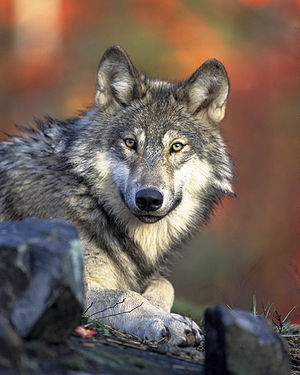
Like I said, I have nothing against hunting and fishing, but what we have is nothing close and poaching on wildlife that already is dealing with humans that have decided to spread out at whatever cost just is wrong.  If that wasn’t enough, let us talk about the Puget Sound’s Orca. I know even less about them scientifically, but grew up hearing one side of the story of Namu’s capture and Ted Griffith and the stories aren’t good. Consequently, I have a lot opinions thougthts and feelings.  I feel that our Navy should cease and desist with all the sonar or at least tell the public what are the sonars being used against and why the grey whales washed up on our beaches. The organized elk kill, taking whales off the endangered list are all beyond sad but to hear that Wyoming has planned a massive wolf kill has us all gasping … Why? Because there is no announcement no explanation and leaves some of us wondering what new development is about to shrink the habitat even more.

To Be Continued … Hey, call your states Fishing & Wildlife dept.  and Ask Questions!

The Great Dismal Swamp


Dismal Town historical sign. Credit: USFWS             
Dismal Town historical sign, which reads: "Washington and company used this spot as their dismal swamp headquarters. The town was built prior to the nimmo survey of 1763 on Riddick 402 acre patent.

Human occupation of the Great Dismal Swamp began nearly  13,000 years ago. By 1650, few native Americans remained in the area, and European settlers showed little interest in the swamp. In 1665, William Drummond, a governor of North Carolina, discovered the lake which now bears his name. William Byrd II led a surveying party into the swamp to draw a dividing line between Virginia and North Carolina in 1728. George Washington first visited the swamp in  1763 and organized the Dismal Swamp Land Company that was involved in draining and logging portions of the swamp. A five-mile ditch on the west side of the refuge still bears his name.

Logging of the swamp proved to be a successful commercial activity, with regular logging operations continuing as late as 1976. The entire swamp has been logged at least once, and many areas have been burned by periodic wildfires.

The Great Dismal Swamp has been drastically altered by  humans over the past two centuries. Agricultural, commercial, and residential development destroyed much of the swamp, so that the remaining portion within and around the refuge represents less than half of the original size of the swamp. Before the refuge was established, over 140 miles of roads were constructed to provide access to the timber. These roads severely disrupted the swamp’s  natural hydrology, as the ditches which were dug to provide soil for the road beds drained water from the swamp. The roads also blocked the flow of water across the swamp’s surface, flooding some areas of the swamp with stagnant water. The logging operations removed natural stands of cypress and Atlantic white-cedar that were replaced by other forest types, particularly red  maple. A drier swamp and the suppression  of wildfires, which once cleared the land for seed germination, created  environmental conditions that were less favorable to the survival of cypress and cedar stands. As a result, plant and  animal diversity decreased.

The swamp is also an integral part of the cultural history  of the region and remains a place of refuge for wildlife and people. The dense forests of the Great Dismal Swamp provided refuge to runaway slaves, resulting  in the refuge becoming the first National Wildlife Refuge to be officially designated as a link in the “Underground Railroad Network to Freedom” in 2003.  For more information click here.

Establishment of the refuge began in 1973 when the Union  Camp Corporation donated 49,100 acres of land to The Nature Conservancy. This land was then conveyed to the Department of the Interior, and the refuge was  officially established through The Dismal Swamp Act of 1974.

Last updated:   January 14, 2010

Protect the Arctic Refuge as a new National Monument


If last week’s election results are any indicator, we’re about to see some big changes in Congress — and not for the better. Ask Obama to protect the critical Arctic Refuge as a National Monument before new oil-hungry Reps can attack it with drills. 


Don Hazen
Executive Editor, AlterNet.org


Dear friend of Alaska wilderness, 

Congress has some crazy ideas for the Arctic Refuge, but we’re keeping it wild!

Tell President Obama to declare the Arctic Refuge a National Monument!

Election night confirmed it: The U.S. Congress is about to change dramatically.

To the new extremists in power, the tragic oil spill in the Gulf of Mexico is long forgotten. Don’t think for an instant that “Drill, baby, drill” isn’t on the tip of their tongues – or at the top of their agendas. The attacks on the Arctic National Wildlife Refuge will begin immediately. They will be brutal and constant.

But what if I told you that we could protect the Arctic Refuge before Congress ever bangs a gavel next year?

Click here now: Tell President Obama to protect the Arctic Refuge as a new National Monument!

Congress sure has some crazy ideas for the Refuge, but we’re keeping it wild! Today, we’re launching a massive online effort called “Keeping It Wild!” to convince President Obama to declare the Arctic Refuge our newest National Monument. It’s both a stepping stone to future protections and a maneuver to help shield the Refuge from congressional attacks.

The Arctic is one of our last refuges for wildlife – invaluable, iconic and alive! Big mammals still roam this land and millions of the world’s birds feed and nest on the plains. They come here each year, seeking refuge from a world of encroaching hazards to receive their most sacred needs: sustenance and safe harbor for bearing their young. For 50 years, this cycle has remained unhindered by human development, so life in the Arctic Refuge has continued to thrive. As Americans, we have a moral and civic duty to ensure that this cycle is not broken – not on our watch.

The time for action is now: with Congress poised to change significantly and the Refuge’s 50th anniversary only weeks away, President Obama can make a real statement that America will not submit its greatest treasures to the follies of the past or the whims of the present.

Tell the President: Protect the Arctic Refuge as a National Monument!

Alaska Wilderness League is the first line of defense for the Arctic Refuge. We’re keeping it wild – but we can’t do it alone.

Thank you for all that you do,

Cindy Shogan
Executive Director
Alaska Wilderness League