Tag Archives: United States

1985 ~On this day ~ Live Aid


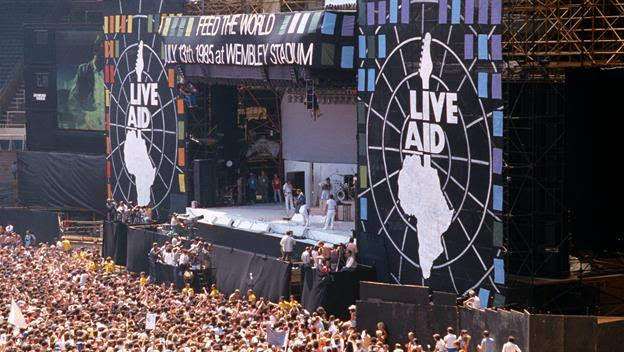
On July 13, 1985, at Wembley Stadium in London, Prince Charles and Princess Diana officially open Live Aid, a worldwide rock concert organized to raise money for the relief of famine-stricken Africans. Continued at JFK Stadium in Philadelphia and at other arenas around the world, the 16-hour… read more »

Congress enacts the Northwest Ordinance »

Rockefeller announces new peace proposal »

Live Aid is held simultaneously in London and Philadelphia and broadcast live throughout the world »

July 5, 1852 – What to the American slave is your Fourth of July? in memory


repost – in memory

NMAAHCLonnie Bunch, museum director, historian, lecturer, and author, is proud to present A Page from Our American Story, a regular on-line series for Museum supporters. It will showcase individuals and events in the African American experience, placing these stories in the context of a larger story — our American story.

A Page From Our American Story

On July 5, 1852 approximately 3.5 million African Americans were enslaved — roughly 14% of the total population of the United States. That was the state of the nation when Frederick Douglass was asked to deliver a keynote address at an Independence Day celebration.

He accepted and, on a day white Americans celebrated their independence and freedom from the oppression of the British crown, Douglass delivered his now-famous speech What to the Slave is the Fourth of July. In it, Douglass offered one of the most thought provoking and powerful testaments to the hypocrisy, bigotry and inhumanity of slavery ever given.

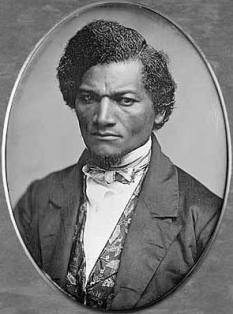
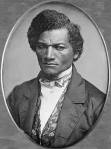
Daguerreotype of Frederick Douglass
(1847-1852) by Samuel J. Miller.
The Art Institute of Chicago

Douglass told the crowd that the arguments against slavery were well understood. What was needed was “fire” not light on the subject; “thunder” not a gentle “shower” of reason. Douglass would tell the audience:
The feeling of the nation must be quickened; the conscience of the nation must be roused; the propriety of the nation must be startled; the hypocrisy of the nation must be exposed; and its crimes against God and man must be denounced.

Frederick Douglass was born into slavery, most likely in February 1818 — birth dates of slaves were rarely recorded. He was put to work full-time at age six, and his life as a young man was a litany of savage beatings and whippings. At age twenty, he successfully escaped to the North. In Massachusetts he became known as a voice against slavery, but that also brought to light his status as an escaped slave. Fearing capture and re-enslavement, Douglass went to England and continued speaking out against slavery.

He eventually raised enough money to buy his freedom and returned to America. He settled in Rochester, New York in 1847 and began to champion equality and freedom for slaves in earnest. By then, his renown extended far beyond America’s boundaries. He had become a man of international stature.

One suspects that Rochester city leaders had Douglass’ fame and reputation as a brilliant orator in mind when they approached him to speak at their Independence Day festivities. But with his opening words, Douglass’ intent became clear — decry the hypocrisy of the day as it played out in the lives of the slaves:

Fellow citizens, pardon me, and allow me to ask, why am I called upon to speak here today? What have I or those I represent to do with your national independence? Are the great principles of political freedom and of natural justice, embodied in that Declaration of Independence, extended to us? And am I, therefore, called upon to bring our humble offering to the national altar, and to confess the benefits, and express devout gratitude for the blessings resulting from your independence to us?

You can easily imagine the wave of unease that settled over his audience. The speech was long, as was the fashion of the day. A link to the entire address can be found at the end of this Our American Story. When you read it you will discover that, to his credit, Douglass was uncompromising and truthful:

This Fourth of July is yours, not mine. You may rejoice, I must mourn … What to the American slave is your Fourth of July? … a day that reveals to him more than all other days of the year, the gross injustice and cruelty to which he is the constant victim. To him your celebration is a sham … your shouts of liberty and equality, hollow mock; your prayers and hymns, your sermons and thanksgivings … hypocrisy — a thin veil to cover up crimes which would disgrace a nation of savages.

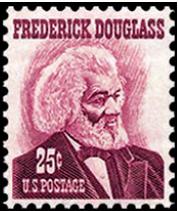
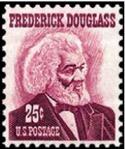
US Stamp honoring
Frederick Douglass, 1967.
US Postal Service

Reaction to the speech was strong, but mixed. Some were angered, others appreciative. What I’ve always thought most impressive about Douglass’ speech that day was the discussion it provoked immediately and in the weeks and months that followed.
Certainly much has changed since Douglass’ speech. Yet the opportunity to discuss and debate the important impact of America’s racial history is very much a part of the National Museum of African American History and Culture. Douglass’ words remind us that many have struggled to ensure that the promise of liberty be applied equally to all Americans — regardless of race, gender or ethnicity. And that the struggle for equality is never over.

So, as we gather together at picnics, parades, and fireworks to celebrate the 4th of July, let us remember those, like Frederick Douglass, who fought and sacrificed to help America live up to its ideals of equality, fair play and justice.

Frederick Douglass’ life and words have left us a powerful legacy. His story, and the African American story, is part of us all.

To you and your family, have a joyous and safe Fourth of July and thank you for your interest in the National Museum of African American History and Culture.

All the best,

Lonnie Bunch
Director

P.S. To read the full text Frederick Douglass’ speech of July 5, 1852, click here: http://teachingamericanhistory.org/library/index.asp?document=162

We

hope you will consider making a contribution to the Museum. Thank you for your support.

5 Things You May Not Know About Lincoln, Slavery and Emancipation – Sarah Pruitt


slavery29.8MillionSeptember 22 marks the 150th anniversary of Abraham Lincoln’s preliminary Emancipation Proclamation, in which he declared that as of January 1, 1863, all slaves in states in rebellion against the Union “shall be then, thenceforward, and forever free.”
To commemorate the occasion, we invite you to consider some surprising facts about Lincoln’s views on slavery, and the complex process that led him to issue the document he later called “the central act of my administration, and the greatest event of the 19th century.
Depiction by Francis Bicknell Carpenter of Abraham Lincoln’s first reading of the Emancipation Proclamation, in July 1862. It hangs in the U.S. Capitol.

1. Lincoln wasn’t an abolitionist.  Lincoln did believe that slavery was morally wrong, but there was one big problem: It was sanctioned by the highest law in the land, the Constitution. The nation’s founding fathers, who also struggled with how to address slavery, did not explicitly write the word “slavery” in the Constitution, but they did include key clauses protecting the institution, including a fugitive slave clause and the three-fifths clause, which allowed Southern states to count slaves for the purposes of representation in the federal government. In a three-hour speech in Peoria, Illinois, in the fall of 1854, Lincoln presented more clearly than ever his moral, legal and economic opposition to slavery—and then admitted he didn’t know exactly what should be done about it within the current political system.

Abolitionists, by contrast, knew exactly what should be done about it: Slavery should be immediately abolished, and freed slaves should be incorporated as equal members of society. They didn’t care about working within the existing political system, or under the Constitution, which they saw as unjustly protecting slavery and slave owners. Leading abolitionist William Lloyd Garrison called the Constitution “a covenant with death and an agreement with Hell,” and went so far as to burn a copy at a Massachusetts rally in 1854. Though Lincoln saw himself as working alongside the abolitionists on behalf of a common anti-slavery cause, he did not count himself among them. Only with emancipation, and with his support of the eventual 13th Amendment, would Lincoln finally win over the most committed abolitionists.

2. Lincoln didn’t believe blacks should have the same rights as whites. Though Lincoln argued that the founding fathers’ phrase “All men are created equal” applied to blacks and whites alike, this did not mean he thought they should have the same social and political rights. His views became clear during an 1858 series of debates with his opponent in the Illinois race for U.S. Senate, Stephen Douglas, who had accused him of supporting “negro equality.” In their fourth debate, at Charleston, Illinois, on September 18, 1858, Lincoln made his position clear. “I will say then that I am not, nor ever have been, in favor of bringing about in any way the social and political equality of the white and black races,” he began, going on to say that he opposed blacks having the right to vote, to serve on juries, to hold office and to intermarry with whites. What he did believe was that, like all men, blacks had the right to improve their condition in society and to enjoy the fruits of their labor. In this way they were equal to white men, and for this reason slavery was inherently unjust.

Like his views on emancipation, Lincoln’s position on social and political equality for African-Americans would evolve over the course of his presidency. In the last speech of his life, delivered on April 11, 1865, he argued for limited black suffrage, saying that any black man who had served the Union during the Civil War should have the right to vote.

3. Lincoln thought colonization could resolve the issue of slavery.  For much of his career, Lincoln believed that colonization—or the idea that a majority of the African-American population should leave the United States and settle in Africa or Central America—was the best way to confront the problem of slavery. His two great political heroes, Henry Clay and Thomas Jefferson, had both favored colonization; both were slave owners who took issue with aspects of slavery but saw no way that blacks and whites could live together peaceably. Lincoln first publicly advocated for colonization in 1852, and in 1854 said that his first instinct would be “to free all the slaves, and send them to Liberia” (the African state founded by the American Colonization Society in 1821).

Nearly a decade later, even as he edited the draft of the preliminary Emancipation Proclamation in August of 1862, Lincoln hosted a delegation of freed slaves at the White House in the hopes of getting their support on a plan for colonization in Central America. Given the “differences” between the two races and the hostile attitudes of whites towards blacks, Lincoln argued, it would be “better for us both, therefore, to be separated.” Lincoln’s support of colonization provoked great anger among black leaders and abolitionists, who argued that African-Americans were as much natives of the country as whites, and thus deserved the same rights. After he issued the preliminary Emancipation Proclamation, Lincoln never again publicly mentioned colonization, and a mention of it in an earlier draft was deleted by the time the final proclamation was issued in January 1863.

4. Emancipation was a military policy.  As much as he hated the institution of slavery, Lincoln didn’t see the Civil War as a struggle to free the nation’s 4 million slaves from bondage. Emancipation, when it came, would have to be gradual, and the important thing to do was to prevent the Southern rebellion from severing the Union permanently in two. But as the Civil War entered its second summer in 1862, thousands of slaves had fled Southern plantations to Union lines, and the federal government didn’t have a clear policy on how to deal with them. Emancipation, Lincoln saw, would further undermine the Confederacy while providing the Union with a new source of manpower to crush the rebellion.

In July 1862 the president presented his draft of the preliminary Emancipation Proclamation to his cabinet. Secretary of State William Seward urged him to wait until things were going better for the Union on the field of battle, or emancipation might look like the last gasp of a nation on the brink of defeat. Lincoln agreed and returned to edit the draft over the summer. On September 17 the bloody Battle of Antietam gave Lincoln the opportunity he needed. He issued the preliminary proclamation to his cabinet on September 22, and it was published the following day. As a cheering crowd gathered at the White House, Lincoln addressed them from a balcony: “I can only trust in God I have made no mistake … It is now for the country and the world to pass judgment on it.”

5. The Emancipation Proclamation didn’t actually free all of the slaves. Since Lincoln issued the Emancipation Proclamation as a military measure, it didn’t apply to border slave states like Delaware, Maryland, Kentucky and Missouri, all of which had remained loyal to the Union. Lincoln also exempted selected areas of the Confederacy that had already come under Union control in hopes of gaining the loyalty of whites in those states. In practice, then, the Emancipation Proclamation didn’t immediately free a single slave, as the only places it applied were places where the federal government had no control—the Southern states currently fighting against the Union.

Despite its limitations, Lincoln’s proclamation marked a crucial turning point in the evolution of Lincoln’s views of slavery, as well as a turning point in the Civil War itself. By war’s end, some 200,000 black men would serve in the Union Army and Navy, striking a mortal blow against the institution of slavery and paving the way for its eventual abolition by the 13th Amendment.

Black History Month

Quote of the Day …


081205_rainier_cloud_03

“Just because you think the path that’s right for you might be lonelier, longer, or less destined for traditional success than paths taken by others, don’t be afraid to take it. If you choose your means well, you will end up in the right place.”