Tag Archives: United States

Pursuing transformative technology with the Google Impact Challenge: Disabilities ~ a repost


GOOGLeWhen Laura Palmaro was 10 years old, she woke one morning to find that the central vision in her left eye had all but disappeared. She was not ill and had no genetic issues—it was completely out of the blue. When she was 14, the same rare condition struck her right eye, and she began her freshman year of high school legally blind. Suddenly she was forced to depend on other people to read everything aloud, from school assignments to menus. The toughest part, according to Laura, was losing her sense of independence—and not knowing when or how she would get it back.

Laura has since adopted technological solutions to her vision challenges, using a combination of screen-readers and magnification software to read, work and more. Now a program manager at Google, she is following her passion, helping Chrome and Chrome OS teams make their products more accessible. “Technology has truly transformed my life,” she says. “Assistive technology can tear down boundaries, and empower people to find their independence and fulfill their dreams.”

We agree with Laura about the power of technology to change lives. And in order to support more people like her—people who see obstacles as opportunities—we’re launching the Google Impact Challenge: Disabilities. We’re putting $20 million in Google.org grants behind nonprofits using emerging technologies to increase independence for people living with disabilities, and today we’re issuing an open call to identify new areas of opportunity at g.co/ImpactChallengeDisability.

We’re kicking things off with support for two remarkable organizations. Each of these organizations is using technology to dramatically reduce the cost of and access to prosthetic limbs and auditory therapy, respectively—which could be transformative for hundreds of millions of people.

  • The Enable community connects people who want prosthetics with volunteers who use 3D printers to design, print, assemble, and fit them, for free. This dramatically cuts costs, increases speed of distribution, and meets unmet needs. We’ll support the Enable Community Foundation’s efforts with a $600,000 grant to advance the design, distribution and delivery of open-source 3D-printed upper-limb prosthetics.
  • Diagnosing auditory challenges can be a struggle in low income communities—the equipment is expensive, bulky and unrealistic, particularly in the developing world. With our support, and a $500,000 grant, World Wide Hearing will develop, prototype and test an extremely low cost tool kit for hearing loss using smartphone technology that’s widely available—and affordable—in the developing world.

The Google Impact Challenge: Disabilities will seek out nonprofits and help them find new solutions to some serious “what ifs” for the disabled community. We will choose the best of these ideas and help them to scale by investing in their vision, by rallying our people and by mobilizing our resources in support of their missions.

But of course, we realize there’s always room to improve our products as well. We have a team committed to monitoring the accessibility of Google tools; and we provide engineering teams with training to incorporate accessibility principles into products and services. That doesn’t just mean improving existing Google tools, it means developing new ones as well. For example, Liftware is a stabilizing utensil designed to help people with hand tremors eat more easily, and self-driving cars could one day transform mobility for everyone.

Historically, people living with disabilities have relied on technologies that were often bulky, expensive, and limited to assisting with one or two specific tasks. But that’s beginning to change. Thanks to groups like Enable and World Wide Hearing, and with tools like Liftware, we’re starting to see the potential for technologies that can profoundly and affordably impact millions. But we’ll all get there sooner if we make it a team effort—which is why we’re launching Google Impact Challenge: Disabilities today. Together, we can create a better world, faster.

Posted by Jacquelline Fuller, Director, Google.org

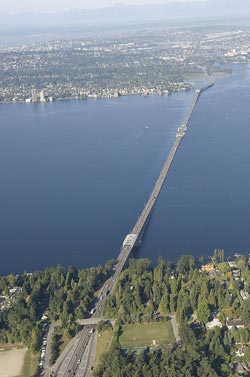
Washington transit system: Our roads got a grade of D , light rail reduced and now our bridges


520bridge

Dear Washingtonians

Below is a snippet of an article and petition you should sign from the Washington Chapter of the Sierra Club. I put it in a separate post.

Senator Curtis King, Co-Chair of the Senate Transportation Committee, is promoting a new transportation funding proposal that will set us back
decades. This new budget proposal fails to fund over $900 million worth of projects that are necessary to operate our transit system, provide
street improvements for bikes and pedestrians, and address polluted water runoff associated with roads.

Our bridges are literally crumbling around us. Workers can’t get to jobs because their bus service has been cut. The new road “mega-projects”
being considered in the transportation funding proposal would dramatically increase climate changing pollution and increase sprawl.
The Senate transportation funding proposal is simply unacceptable.

The reason I attached it to my old write up from 2012 is because Washingtonians need to ask … what did our savings of $2 million with the elimination of the “Free Zone” do for our transportation when our bus services are still being cut !!!

TO: Seattle City Council

I wrote about The “ride free zone” ending way before the September 29th deadline hoping they would rescind the order to end it. Today, the local media showed and interviewed the people who have suffered from the new change and not in a good way. The thing that struck me most aside from the obvious was the comment about “a one time set-aside for bus tickets,” of $250,000 in emergency money for homeless people to ride Metro.

Below is a video and article that is heartbreaking

Homeless hopes public helps with discounted Metro bus tickets … click on the link below for the video and article !

http://www.king5.com/news/cities/seattle/Homeless-council-member-ask-for–174292691.html

It was a nice surprise to hear that people are still protesting the elimination of the “Ride Free Zone”  giving full exposure to the real reasons why the Seattle King Council voted to eliminate the “Ride Free Zone.”  Yes, we all know about that 2million dollar savings but the mission to make the downtown and the transit look and smell beautiful by leaving the homeless, disabled and those needing services out in the cold, which btw are all located on or near the “Ride Free Zone.”

In 2011, king county hit its residents with a two-year vehicle license fee that was supposed to help keep metro alive. Now, Metro Bus Riders find out that a deal done with Republicans will eliminate the “Ride Free Zone,” a Merchant straight away and beautiful feature of the City of Seattle – free for over 35 years.

The facts are; that more than 10 million boarding’s are logged each year inside the Ride Free Area; another 9,000 rides are taken each day without fare. There are reports that without the compromise reductions in Metro would have affected 80% of all bus riders including the poor. Unfortunately, balancing budgets off the backs of the middle and poor has been a Republican mission since 2010. It is with great sadness to think and or believe all that King County Officials seemed to have forgotten or sacrificed for that 2 million “Ride Free Zone” cost savings per year. This includes tourists, people commuting home from across the water, downtown workers accustomed to hopping on the bus to grab a quick bite, or get some dry cleaning, pop into a store all within an hour and low-income folks who, if you ride in the zone now; know they use it to get around daily.

King County Officials say the “Ride Free Zone” will end after Sept. 29; tell them that making deals with Republicans to phase out an urban mainstay for so many, is bad for Seattle.

If, this new mega-projects monstrosity is real yet will create an environment for more pollution and increase sprawl …

We must say NO

challenge who was in charge of spending

demand accountability


Roadless forests under attack–help stop new coal mining on roadless lands!


Give today!

Our roadless forests are under attack!

A thicket of aspen in the Sunset Roadless Area. (Ted Zukoski / Earthjustice)

Arch Coal just got the go-ahead to bulldoze for dirty coal in one of our pristine roadless national forest areas.
Help us fight back!

Arch Coal is at it again.

On April 6, the Forest Service announced it was paving the way for the second-largest coal company in the United States to bulldoze across thousands acres of pristine roadless forests in order to mine up to 350 million tons of coal.

When final, this deal will allow Arch Coal to reap huge profits while adding hundreds of millions of tons of climate pollution to our atmosphere—all at the expense of thousands of acres of beautiful, wild and public roadless forest.

I’m furious. And today, I’m asking for your help.

We’ve successfully stopped Arch Coal in the past. We can do it again.

Will you help us stand up to dirty industry with a gift of $5 or more?

As someone who has hiked in the Sunset Roadless Area for over a decade, I can tell you that this land is beautiful, and it provides important habitat for wildlife such as black bears and rare lynx in addition to beaver ponds, aspen stands, and giant spruce.

But unless we fight back and win, Arch Coal will soon turn this special place into an industrial zone of drill pads and roads—destroying wildlife habitat and valued recreation and hunting areas—all to benefit a single corporation.

Additionally, burning the 350 million tons of coal the company would extract would dramatically undercut efforts to slow the pace of climate change.

My team and I are determined to protect this critical habitat and ensure vital long-term protections for our other national forests…but we need your urgent gift today to see this and other difficult legal battles through.

For decades, Earthjustice has taken the lead to fight dirty energy and protect roadless forests across the country, but today we need your help.

We’ve stopped Arch Coal before. Help us win once again.

Thank you,

Staff photo

Ted Zukoski
Attorney
Earthjustice, Rocky Mountains Office

Coming To Their Senses


By

More Conservative States Are Closing The Coverage Gap

The Supreme Court’s resounding 6-3 decision in King v. Burwell last month demonstrated that serious legal threats to the Affordable Care Act are over and the health care law is here to stay. Next up: Getting all 50 states to close the coverage gap and expand health care to low-income working people. Elected officials in the conservative states that have not expanded Medicaid may have been hoping the high court would strike a blow to the law, but now they are back to facing reality: they have no good reason to refuse federal funding to cover thousands of residents and add millions of dollars to their state economies.

Sure enough, previous holdouts are beginning to take the steps to put patients over politics. In the last few days, Alaska and Utah have announced steps toward expansion.

On Thursday, Alaska Gov. Bill Walker (I) announced he will use executive action to extend coverage to an estimated 40,000 low-income Alaskans. Walker — a former Republican who has since become an Independent — has been advocating for Medicaid expansion for over a year. Nonetheless, Republican lawmakers have repeatedly blocked efforts to approve the expansion. Now, Walker has had enough and will move forward with Medicaid expansion even without the legislature’s approval. “This is the final option for me — I’ve tried everything else,” Walker said.

On Friday, GOP leaders in Utah reached an agreement of their own to close the coverage gap. A group of six state legislative leaders have continued to meet since the end of the 2015 General Legislative Session to formulate a plan. Now, it will meet with policy makers and other stakeholders to create a formal draft in the coming weeks.

Long story short: on the map below, Alaska and Utah are bringing the number of holdout states down to just 19.

Which state will be next?

BOTTOM LINE: There has never been any moral or economic reason for conservative states to refuse to close to the coverage gap. But after King v. Burwell, conservative state officials have less and less of a political reason to hold out. Alaska and Utah have become the first states since the Supreme Court decision to put patients over politics, and it’s only a matter of time until the other holdouts come to their senses and make the right choice too.