King assassination suspect arrested
Hannibal by Thomas Harris hits bookstores »
FBI report names Hollywood figures as communists »
| Tropical Storm Allison wreaks havoc » |


by Justin Gammill
After all of the research that has gone into the food articles I’ve been writing, I have to admit that there are more things on my “List of Stuff to Never Put in my Mouth” than there has ever been. Razor blades, small woodland creatures, marbles, and burning embers are now joined by anything from McDonalds, Subway, Burger King, or Arby’s. Admittedly, that’s probably a good thing, but one such item that got added to the list recently really hurt.
See, out there in the food universe, there is a fun little ingredient called Castoreum. A seemingly innocent enough looking word since there is no questionable “-izine” at the end of it. “Hey can you pass the Castoreum?” sounds perfectly normal. Well, take it from me, you don’t want to pass the Castoreum, you want to throw it out the nearest window … possibly after lighting it on fire.
Castoreum is literally a secretion from the anal glands of a mature North American beaver. For the sake of conversation, we’ll just go ahead and call it Beaver Butt Juice, because that makes me giggle. I wish I was making this up, because the idea of putting beaver butt juice on anything other than a beaver recliner or beaver toilet paper is pretty disgusting. Unfortunately it’s a common ingredient whose most common use is for vanilla flavoring. Normally you’d expect people to try to prevent the anal secretions from a beaver from getting into your food, but not in this case. Beaver butt juice is FDA approved, and is listed as “natural flavoring” on most food labels. I can respect that, “natural flavoring” sounds better than “exudate from the castor sacs of the mature North American Beaver”. But wait, my beloved Blue Bell has “Natural flavoring” listed in its ingredients … Have I been Beaver Butt Juiced? I’ll never know!
Well, It’s official Blue Bell Ice Cream, you’ve broken my heart…
I guess I shouldn’t single you out Blue Bell, you might not be the only one. Those crazy creamers Ben and Jerry might use it. Those silly Danish-sounding guys over at Häagen-Dazs might use it. Heck, even the weirdo’s over at Breyers might be slinging beaver butt juice around like Columbian drug lords. But I thought we had something special Blue Bell. You were always there in my childhood; at birthdays, holidays, school functions, everything. You covered my brownie. You accompanied my cake. You cooled me on hot days. Only for me to discover that after all these years you may have been beaver butt juiced up.
This is one of those rare chances in life where I will take the synthetic man-made alternative, Vanillin in this case, over the “All Natural” approach. Even with this being said, I guarantee you that there is some hippy out there that will read this and say “Wow, I’m only eating Blue Bell now because it’s all natural”. Have at it, buddy, the Vegans and I will pass. Well, the vegan is going to pass no matter what unless it’s soy ice cream; because heaven forbid we torture the poor cows by milking them. I don’t know if the beavers enjoy being “juiced”, I haven’t heard back from their press agent, but the vegans usually don’t think anything is good. Ever. And I’m pretty sure they hate puppies, freedom, and roller coasters too.
Random Side Note: Next time you think you hate your job, at that very moment there is a guy squeezing juice out of a beaver’s butt so that your ice cream is extra vanilla-y. All the sudden being the head cashier at the Dollar Store isn’t so bad…
Remember the Beaver Butt Juice? Don’t Shoot the Messenger… Again.
Writer Justin Gammill recently spilled the beans (not the vanilla kind) on where some of your “natural flavorings” for say, vanilla ice cream, may come from. This is round two of the findings and let’s just say, you may be surprised to know what may be included in your favorite Easter treats.
for complete article …click on graphic
We devoured pint after pint to get the scoop on vanilla ice cream — and uncovered the best-tasting brand along the way.
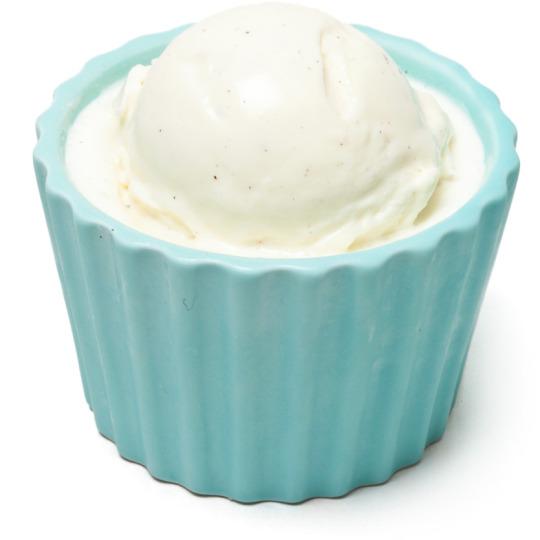
Go to the freezer section of your local supermarket and you’re bound to find a number of brands peddling vanilla ice cream. Sounds fine, right? However, there’s a problem lurking among the labels: Brands that print phrases like “natural vanilla” on their packages may actually be pushing products that contain anything but.
RELATED: Want to make your own ice cream? Arm yourself with the best recipes and detailed video tutorials (try it for free).
In our America’s Test Kitchen TV taste test segment for supermarket vanilla ice cream, Jack Bishop explains that counterfeit vanilla is a bigger problem than one might think, and implores smart shoppers to read labels before buying a pint of the stuff.

“Vanilla extract is the key to buying ice cream with good vanilla flavor,” says Bishop. “If it doesn’t say vanilla extract, walk on by.”
Bishop explains to co-host Christopher Kimball that shoppers might see the words “natural vanilla flavor” printed on ice cream cartons. “Sounds pretty good, right? It’s actually imitation extract made from wood pulp.”
RELATED: Not sure if a Vitamix is worth it? Read our review of blenders. Shopping for a new skillet? We have you covered.
Vanilla flavoring was all over the map in the 8 ice creams we included in our taste test, ranging from barely detectable in some to overpowering in others. We looked on the back of the cartons and noticed that each brand seemed to list vanilla in a different way—as Bishop explained—from the wordy and virtuous “fair-traded certified vanilla extract” to “natural vanilla flavor” to simply “vanilla.” Dairy expert Scott Rankin, a professor of food science at the University of Wisconsin-Madison, explained that the different wordings on the labels amount to an industry shorthand for specific kinds of natural or artificial flavorings. As he helped us break the code, we looked at our favorite (and not-so-favorite) ice creams according to the type of vanilla.
First, a little background: The flavor in vanilla beans is predominantly due to the presence of a compound known as vanillin. Vanillin is produced three ways: from vanilla beans, from wood, and from resins. The first two types are considered natural, while the vanillin from resins is synthetic. Not surprisingly, our top three top-ranked brands all contained the real deal—“vanilla extract”—natural vanillin extracted from vanilla beans, just like the real vanilla extract in your pantry. Less favored brands were made with vanillin extracted from wood (“natural vanilla flavor”), which is chemically identical to the synthetic vanillin found in artificial vanilla extract. Simple “vanilla” turned out to be code for a combination of synthetic and natural vanillin, while “natural flavors” (with no mention of vanilla at all) indicates just a trace of natural vanilla (there’s no required level) and other flavorings such as nutmeg that merely trigger an association.
Bottom line: Our tasters strongly preferred brands containing real vanilla extract.

photo ~John Foxx/Getty DCL
With ingredients that have been linked to breast cancer, Alzheimer’s, hormonal imbalance and neurological issues, I think it’s time we start looking a little more closely at what’s going into our deodorant. I’m pretty horrified at the information I dredged up on the topic. I know this isn’t a glamorous topic, but it’s an important one. So important, in fact, that I’m going to try a natural deodorant recipe out this week. But before I get to the recipe, let’s talk about what we’re applying to our armpits on a daily basis.
THE ALUMINUM-ALZHEIMER’S CONNECTION
Yeah, we’ll start off with a big one. Aluminum—as in the metal—is used to block pores from releasing sweat. The problem is, aluminum has been linked to breast cancer in women, prostate cancer in men and an increased chance of Alzheimer’s. Now to be fair, the Food and Drug Administration has never said it’s a carcinogen, but there is definitely a case for drawing a correlation between the two. It might be something to look out for.
POTENT PARABENS
Parabens are synthetic preservatives that are sometimes present in health and beauty products. There are two interesting bits of information that I’d like for us to consider with regards to this ingredient. The first is that the Centers for Disease Control conducted a study to see how many of us have parabens in our system. Of 100 subjects tested, 100 percent—each and every one of them—showed paraben presence in their urine. This research told scientists a lot about how easily chemicals enter our body via the skin. The other bit of information is that parabens have been linked to hormonal imbalance in early puberty. Food for thought.
OH GEEZ, PROPYLENE GLYCOL
The petroleum-based ingredient propylene glycol is present in many antiperspirants and deodorants. It’s the ingredient that gives deodorant a slick consistency so we can slather it on our skin. Bad news is that in large quantities it can do damage to the central nervous system, the heart and the liver. To be fair, this is like saying that broccoli in large doses is lethal, but no one would ever eat that much anyway, so it’s a moot point. The amount of propylene glycol used in the average stick of deodorant is probably completely safe, but it’s worth mentioning.
FUNKY PHTHALATES
Phthalates help ingredients to dissolve, and because of this they are sometimes found in deodorant. Unfortunately, phthalates are also linked to birth defects and the disruption of hormone receptors in the body. Yuck!
TRICKY TRICLOSAN
After finding out that triclosan was classified as a pesticide by the FDA and as a probable carcinogen by the Environmental Protection Agency, most companies that produce deodorants and antiperspirants have removed this ingredient from their formulas. It’s still a good idea to read the product label just to make sure triclosan isn’t hiding inside.
A DIY NATURAL ALTERNATIVE
I did some research to see if I could talk about some great mainstream companies that have eliminated these ingredients from their products, but with the exception of Old Spice, none of the companies I investigated even go so far as to display the ingredients for their deodorants online.
There are a few all-natural deodorants on the market, but I found a couple of homemade recipes via Wellness Mama that are supposed to be amazing, assuming the above information doesn’t sit well with you either. Using coconut oil, baking soda, shea butter, and some optional arrowroot and essential oils, you can make your own quite easily. Simply melt the coconut oil and shea butter in a double boiler and add the other ingredients to create an all-natural alternative that really works. Another option is to combine coconut oil, baking soda and cornstarch in a small glass jar. Neither recipe requires refrigeration, which is nice.


 Be a Seed for Change
You must be logged in to post a comment.