
Has your state implemented a ban or reduction plan for Plastic Bags? 2014


   It’s now 2019 and bag bans and or plastic bans are being implemented again or changed to reflect upon current issues at hand but still, there’s a big problem knowing exactly how to recycle … straws, tetra paks making sure the stuff you put in the bin are actually clean and dry 
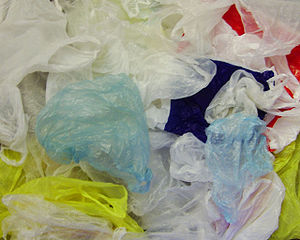
More shopping means more plastic … unless your State is going green

So, if you live in LA remember to BYO .. reusable bag! because plastic is banned and paper bags will cost you. ..  10cents. After seeing the latest move made by Governor Brown who would like to implement the ban quickly, it’s apparent the people of Cali need some recycle classes, better information and some enlightenment.  As ugly, as the reusable bags are to you and the notion that Plastic bags are more convenient is possibly true, but to say that they double as garbage bags is disturbing. The environment needs help which in turn keep us healthy, a lifestyle that younger folks need to take up and a battle that will be ongoing while cities need to provide containers that help consumers sort out their garbage with little or no confusion and keeps the smell to a minimum … thanks

   Poly-bags are made from petroleum, are non-biodegradable and manufacturing paper bags requires large quantities of wood. The problem and question is whether the attempt to clean up our act state by state has a great department where folks are determined to regulate the use of these environmental killers properly so that our next generation has a chance.

Do you know how many states are banning plastic bags ?

The ban or reduction of plastic bags was implemented on July 1 of 2012 in Seattle, WA.

 It’s now 2017 and as spring& summer weather begins, folks start shopping.  I get it, it is not lucrative to ask for reusable bags or to inform the public about the .5 to .10 cent charge for each bag, but given the idea that we all should be concerned about the environment; I do expect a little more effort to push reusable bags.  Some states have implemented their Ban or Reduction plans, but not much information is available about who will or is enforcing the new rules or how they are measuring the reduction rate, if at all.

The struggle to clean up our environment should not be this complicated or hard and hopefully our city councils will keep at it with great zeal as the plastic’s industry has big $$ incentives to stall or stop it …

a repost from 4/2013 and will continue to

~ Nativegrl77

ALS ~Allow people access to the drug “CuATSM” under FDA Compassionate Use -SIGN The Petition!


MICHAEL H started this petition to Collaborative Medicinal

Development and 1 other

IMMEDIATE MEDICAL BREAKTHROUGH ALERT:

“ALS” (aka Amytrophic Lateral Sclerosis, aka “Lou Gherig’s Disease”) is a terminal, progressive, and utterly devastating disease that eventually causes death in 100% of diagnosed cases, occurring on average between 3 to 5 years after diagnosis. About 6 in every 100,000 people contract the disease across the world.

ALS causes the motor neurons in the human body to fail completely, thus leaving sufferers 100% paralyzed, unable to care for themselves, and immobile until death. For the first time in history, a compound exists that has shown “remarkable” progress in halting progression of this evil, insidious disease.

In 2014, a currently available drug that has already been proven to be safe in humans, and which is already FDA approved and used as a “contrast dye” in PET scans called “CuATSM” was theorized for use as a treatment in ALS by amateur biologist Dr. Joseph Beckman from the Linus Pauling Institue (LPI).

The reason that CuATSM works so well to treat ALS is because it has the unique ability to pass the “blood brain barrier” in several minutes, which heretofore had been the major obstacle in treating ALS and other neurological disorders. “CuATSM” delivers a missing copper molecule directly to misfolded proteins right where the help is needed- in the spinal canal and the brain.

More recently, and after further investigations over the last 3 years, a company in Australia just completed a traditional, devastatingly slow “double blind placebo” Phase one “safety study” on CuATSM as a treatment for ALS in humans, and to determine appropriate dosing levels. Needless to say, these results were labeled as a “remarkable breakthrough” by everybody involved with the compound.

In fact, the compound CuATSM worked so well in this first study that it was able to demonstrate a remarkable 70% reduction in the speed of progression of ALS symptoms. Needless to say, this potential result is BEYOND incredible, and represents the first time in history that any drug or treatment for ALS has shown such promise.

Therefore:

We the people afflicted with ALS hereby request immediate access to the currently available drug “CuATSM”, within the guidelines of current FDA “compassionate use” laws. We the people who are suffering from ALS will not stand idly by and die quietly for two more years while irreplaceable time is wasted by more unethical, cruel, “placebo”based trials that employ human beings like test animals – when a drug exists right now that could literally change the world!

There is simply no time to waste. We must force people with access to the drug to do the right thing. People currently afflicted with ALS are already “terminal” in nature, have nothing to lose, are in VAST agreement in this effort, and the fact that a currently FDA approved drug that IS ALREADY AVAILABLE IN THE USA means that people in dire need of help could slow down the progression of their disease- TODAY.

PLEASE JOIN ME IN THIS CRUCIAL FIGHT. For the very first time in history, a drug exists that has shown a REMARKABLE ability to slow ALS. It also holds great promise for Parkinson’s, Alzheimers, and other “incurable” neurological conditions.

WE DEMAND THE RIGHT TO TRY THIS DRUG IMMEDIATELY, WITHOUT DELAY.

change.org

Help Keep Trash Out of Our Oceans … repost


Each year, countless marine animals and sea birds are endangered by the flow of trash into our oceans. The fact is, Sea turtles are entangled and choked by plastic and discarded nets. Whales mistake trash bags for food and perish. And, let’s not forget the harmful impact contaminated marine environments have on human beings. Plastic also attracts and concentrates other pollutants from surrounding seawater, posing a contamination risk to those species that then eat it. Scientists are studying the impacts of that contamination on fish and shellfish.

From plankton to whales, animals across ocean ecosystems have been contaminated by plastic. Plastic has been found in 59% of sea birds like albatross and pelicans, in 100% of sea turtle species, and more than 25% of fish sampled from seafood markets around the world.

Marine debris isn’t an ocean problem—it’s a people problem. That means people are the solution. Ocean Conservancy is committed to keeping our beaches and ocean trash free. For more than 30 years we have organized the International Coastal Cleanup, where nearly 12 million volunteers from 153 countries have worked together to collect more than 220 million pounds of trash. And we’re not the only ones who care about ocean trash: Every day, all over the world, concerned people take the problem into their own hands by cleaning up their local waterways.

Tackling the problem of plastic in the ocean begins on land. Reduction in plastics use, especially of single-use disposable products, and the collection and recycling of plastics in developing countries can help to reduce the amount of plastic waste that enters the ocean.

At our International Coastal Cleanups, volunteers have picked up more than half a million straws and stirrers, making straws one of the top ten items on our annual list. Straws pose a real danger to animals like sea turtles, albatross and fish who can eat them. Take action today: #SKIPtheSTRAW !

Add your voice to the sea of people taking a stand for the ocean. Sign the pledge now and when offered a straw, simply say ‘no thanks.’

We can’t afford to trash our planet – so let’s do something about it.

Trash Travels – even if you do not live near the ocean, you can take action in your community to make sure litter does not end up in our waters.

Please Teach your kids to recycle properly … Save our Planet

resource: Earth Day Network, Ocean Conservancy