1950- Chuck Cooper becomes the first African American selected in the NBA Draft


On April 25, 1950, the Boston Celtics make Chuck Cooper, an All-American forward from Duquesne University, the first African American picked in NBA draft. With the selection, the first pick in the second round, Cooper breaks the NBA’s color barrier and changes the league for the …read more

Immigration


In 2012, a post from the War Room of ThinkProgress popped up in my email. The info probably needs an update but damn if it wasn’t enlightening for at least some of us! The repost is below!

ThinkProgress’ Amanda Beadle rounds up the top 10 reasons why the U.S. needs comprehensive immigration reform:

1. Legalizing the 11 million undocumented immigrants in the United States would boost the nation’s economy. It would add a cumulative $1.5 trillion to the U.S. gross domestic product—the largest measure of economic growth—over 10 years. That’s because immigration reform that puts all workers on a level playing field would create a virtuous cycle in which legal status and labor rights exert upward pressure on the wages of both American and immigrant workers. Higher wages and even better jobs would translate into increased consumer purchasing power, which would benefit the U.S. economy as a whole.

2. Tax revenues would increase. The federal government would accrue $4.5 billion to $5.4 billion in additional net tax revenue over just three years if the 11 million undocumented immigrants were legalized. And states would benefit. Texas, for example, would see a $4.1 billion gain in tax revenue and the creation of 193,000 new jobs if its approximately 1.6 million undocumented immigrants were legalized.

3. Harmful state immigration laws are damaging state economies. States that have passed stringent immigration measures in an effort to curb the number of undocumented immigrants living in the state have hurt some of their key industries, which are held back due to inadequate access to qualified workers. A farmer in Alabama, where the state legislature passed the anti-immigration law HB 56 in 2011, for example, estimated that he lost up to $300,000 in produce in 2011 because the undocumented farmworkers who had skillfully picked tomatoes from his vines in years prior had been forced to flee the state.

4. A path to citizenship would help families access health care. About a quarter of families where at least one parent is an undocumented immigrant are uninsured, but undocumented immigrants do not qualify for coverage under the Affordable Care Act, leaving them dependent on so-called safety net hospitals that will see their funding reduced as health care reforms are implemented. Without being able to apply for legal status and gain health care coverage, the health care options for undocumented immigrants and their families will shrink.

5. U.S. employers need a legalized workforce. Nearly half of agricultural workers, 17 percent of construction workers, and 12 percent of food preparation workers nationwide lacking legal immigration status. But business owners—from farmers to hotel chain owners—benefit from reliable and skilled laborers, and a legalization program would ensure that they have them.

6. In 2011, immigrant entrepreneurs were responsible for more than one in four new U.S. businesses. Additionally, immigrant businesses employ one in every 10 people working for private companies. Immigrants and their children founded 40 percent of Fortune 500 companies, which collectively generated $4.2 trillion in revenue in 2010—more than the GDP of every country in the world except the United States, China, and Japan. Reforms that enhance legal immigration channels for high-skilled immigrants and entrepreneurs while protecting American workers and placing all high-skilled workers on a level playing field will promote economic growth, innovation, and workforce stability in the United States.

7. Letting undocumented immigrants gain legal status would keep families together. More than 5,100 children whose parents are undocumented immigrants are in the U.S. foster care system, according to a 2011 report, because their parents have either been detained by immigration officials or deported and unable to reunite with their children. If undocumented immigrants continue to be deported without a path to citizenship enabling them to remain in the U.S. with their families, up to 15,000 children could be in the foster care system by 2016 because their parents were deported, and most child welfare departments do not have the resources to handle this increase.

8. Young undocumented immigrants would add billions to the economy if they gained legal status. Passing the DREAM Act—legislation that proposes to create a roadmap to citizenship for immigrants who came to the United States as children—would put 2.1 million young people on a pathway to legal status, adding $329 billion to the American economy over the next two decades.

9. And DREAMers would boost employment and wages. Legal status and the pursuit of higher education would create an aggregate 19 percent increase in earnings for young undocumented immigrants who would benefit from the DREAM Act by 2030. The ripple effects of these increased wages would create$181 billion in induced economic impact, 1.4 million new jobs, and $10 billionin increased federal revenue.

10. Significant reform of the high-skilled immigration system would benefit certain industries that require high-skilled workers. Immigrants make up 23 percent of the labor force in high-tech manufacturing and information technology industries, and immigrants more highly educated, on average, than the native-born Americans working in these industries. For every immigrant who earns an advanced degree in one of these fields at a U.S. university, 2.62 American jobs are created.

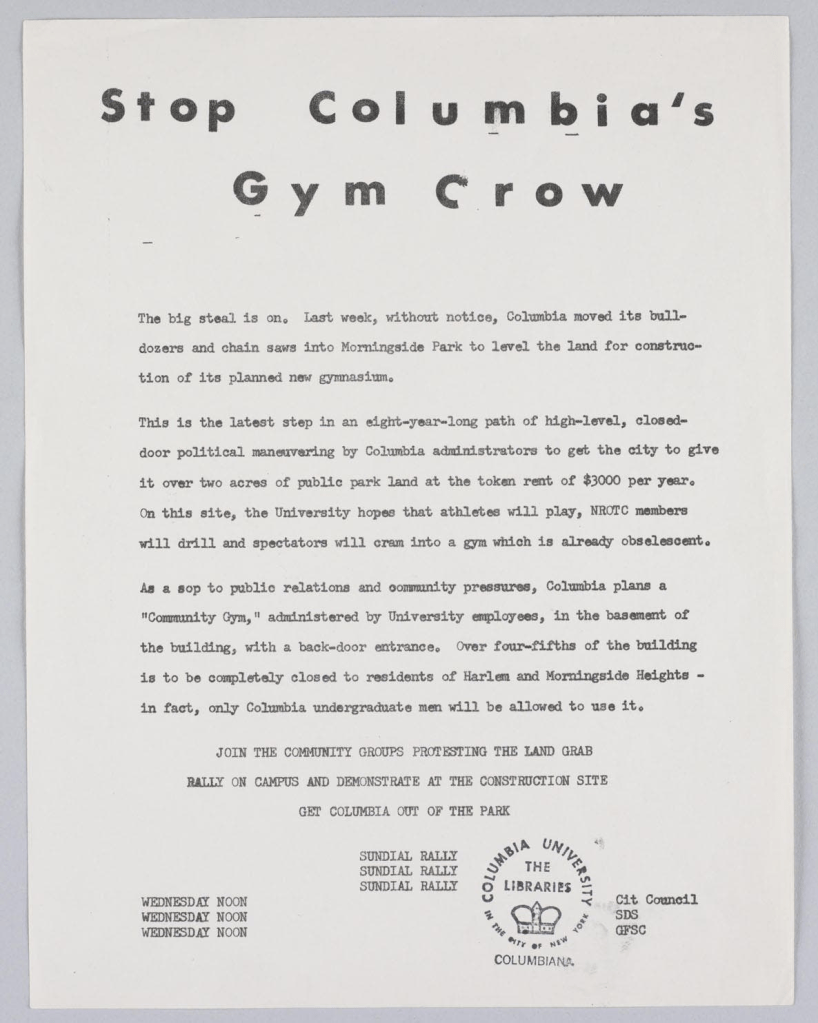
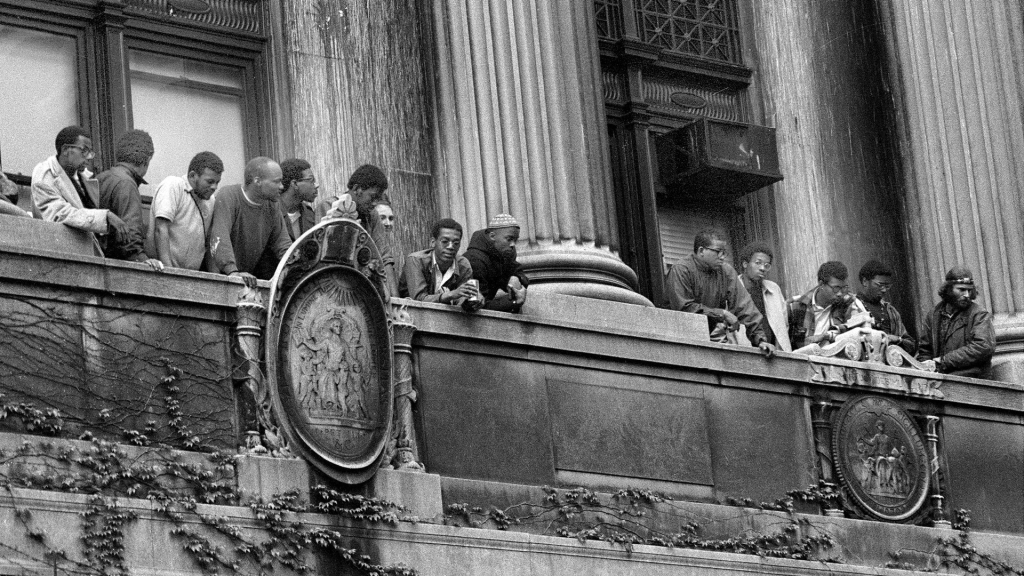
1969- The Gym Crow Controversy:


In 1968, Columbia University witnessed a momentous uprising fueled by a contentious issue: a segregated gymnasium. Let’s delve into the events that unfolded:

The Gym Crow Controversy:

  • Columbia University planned to construct a monumental concrete gym in Morningside Park, which was owned by New York City.
  • However, only 12% of the gym would be accessible to the public, while the remaining 88% would be reserved for Columbia’s use.
  • Harlem residents, many of whom were African-American, resented this appropriation of precious recreation space.
  • The gym’s community entrance at the bottom, juxtaposed with Columbia students entering from the top, symbolized Ivy imperialism and drew ire.
  • It was mockingly referred to as the “g-y-m crow door.”

The Student Uprising:

  • In April 1968, students distributed typewritten flyers inviting others to join a campus protest against Columbia’s land acquisition from nearby Harlem.
  • Soon, nearly 1,000 protesters occupied five university buildings, including Hamilton Hall.
  • The Student Afro-American Society (SAS), representing African-Americans’ concerns, played a pivotal role.
  • The SAS, along with the Students for a Democratic Society (SDS), initiated a nonviolent occupation of campus buildings that lasted nearly a week.
  • In a stunning twist, SAS students demanded that SDS students leave, citing ideological and tactical differences123.

Hamilton Hall Renamed:

This historic uprising became a symbol of struggle between a prestigious university and its broader community, leaving an indelible mark on Columbia’s history123.

Did you know… reports in 2013 were alarming what are they now?


Plasticbagsrecycle

Did you know … reports in 2013 state the following

7.3 Pounds of plastic… Mostly pvc is in artificial trees

20,  Is the number of years … We must reuse artificial trees before it lowers the carbon footprint, equal to a real tree

There are 4000 Recycle centers nationwideplease find out where you can dispose of your Xmas tree this year for compost, woodchips for gardens and or  hiking trails.

600,00 Homes …Could be powered by energy used from Xmas tree lights every year, go to holidayleds.com and find out how to recycle your incandescent lights.

A 20% reduction in meat consumption would have the same impact as switching from a standard sedan to an ultra-efficient fuel car.

5000 gallons of water … Is the amount it would take to produce 1lb of wheat.

20%  of the worlds’ population…  Could be fed with the grain and soybeans used to feed US cattle.

4.5% … Is the number of greenhouse gases produced worldwide by animal farming than by transportation.

1500 miles … Is the average amount it takes to get food on our tables, the road trip takes tons of energy, the gas used to commute pollutes, buy, use and support your local farmer’s markets and community gardens

660 gallons… Is about how much water it takes to grow cotton for one T-shirt.if the shirt is coloured, a lrg amt of dye rinses off into factory wastewater,ends up in rivers and some dyes have carcinogens.

just more good info from LYBL and Eatingwell.com

Henrietta Lacks: another hidden story of history on c-cpan 2010


A c-span(video 2010) story that we cannot continue to ignore, deny or shove under the rug, c-span interviews the author of a book about Henrietta Lacks, Rebecca Skloot; 2010 .

An update needs to be included as the Lacks family, after years of litigation, did receive an agreement

NIH makes privacy agreement with Henrietta Lacks’ family http://usat.ly/1esA2JK via @usatoday ~ 2013

Henrietta’s story starts in 1920 her birth and ends sometime in the early fifties, this story seems only to be coming into the light of day and while i cried again while watching this, it is sad, might be unacceptable by some, even after several children, after years of reports, publicity and whatnot the Lacks family seems to be the only one who didn’t benefit from the story of this woman whose cells were used to create a cell line for medical research but got nothing in return.   I first heard about the Lacks story in 2010 while in a coffee shop, then we all heard Oprah and some associates decided to make a movie…hopefully some of the revenue will be given to the family.

It is a story that makes you gasp, gets you upset, mad and it will make you cry and wonder how the science community got away with not paying Henrietta Lacks and or her family for her contribution.   If I understood the interviewer the Lacks family has recently gotten more PR about their Mother’s story but it’s unclear if anyone paid money for all the stories and or tv programs about her. It is a story that  appears on the surface a story of unintentional theft of her cells then used by a scientist who did not tell her or her family even after it was evident that the cells were unusual, that they were used and what effect they would eventually have on science today.

I understand that back then, technology may not have been as advanced but it did advance and still if the reports are correct, the science community gave Henrietta nothing or her family. It happened in a time when minorities were treated very poorly and even if the reports state that standard procedure was this that and the other .. .the 70″s gave way to new ways to handle science technologies; it’s time to pay Henrietta Lacks and her family back.

Just some things to remember … 4/22/2017 Premieres on HBO at 8pm