1969- The Gym Crow Controversy:


In 1968, Columbia University witnessed a momentous uprising fueled by a contentious issue: a segregated gymnasium. Let’s delve into the events that unfolded:

The Gym Crow Controversy:

  • Columbia University planned to construct a monumental concrete gym in Morningside Park, which was owned by New York City.
  • However, only 12% of the gym would be accessible to the public, while the remaining 88% would be reserved for Columbia’s use.
  • Harlem residents, many of whom were African-American, resented this appropriation of precious recreation space.
  • The gym’s community entrance at the bottom, juxtaposed with Columbia students entering from the top, symbolized Ivy imperialism and drew ire.
  • It was mockingly referred to as the “g-y-m crow door.”

The Student Uprising:

  • In April 1968, students distributed typewritten flyers inviting others to join a campus protest against Columbia’s land acquisition from nearby Harlem.
  • Soon, nearly 1,000 protesters occupied five university buildings, including Hamilton Hall.
  • The Student Afro-American Society (SAS), representing African-Americans’ concerns, played a pivotal role.
  • The SAS, along with the Students for a Democratic Society (SDS), initiated a nonviolent occupation of campus buildings that lasted nearly a week.
  • In a stunning twist, SAS students demanded that SDS students leave, citing ideological and tactical differences123.

Hamilton Hall Renamed:

This historic uprising became a symbol of struggle between a prestigious university and its broader community, leaving an indelible mark on Columbia’s history123.

Did you know… reports in 2013 were alarming what are they now?


Plasticbagsrecycle

Did you know … reports in 2013 state the following

7.3 Pounds of plastic… Mostly pvc is in artificial trees

20,  Is the number of years … We must reuse artificial trees before it lowers the carbon footprint, equal to a real tree

There are 4000 Recycle centers nationwideplease find out where you can dispose of your Xmas tree this year for compost, woodchips for gardens and or  hiking trails.

600,00 Homes …Could be powered by energy used from Xmas tree lights every year, go to holidayleds.com and find out how to recycle your incandescent lights.

A 20% reduction in meat consumption would have the same impact as switching from a standard sedan to an ultra-efficient fuel car.

5000 gallons of water … Is the amount it would take to produce 1lb of wheat.

20%  of the worlds’ population…  Could be fed with the grain and soybeans used to feed US cattle.

4.5% … Is the number of greenhouse gases produced worldwide by animal farming than by transportation.

1500 miles … Is the average amount it takes to get food on our tables, the road trip takes tons of energy, the gas used to commute pollutes, buy, use and support your local farmer’s markets and community gardens

660 gallons… Is about how much water it takes to grow cotton for one T-shirt.if the shirt is coloured, a lrg amt of dye rinses off into factory wastewater,ends up in rivers and some dyes have carcinogens.

just more good info from LYBL and Eatingwell.com

Henrietta Lacks: another hidden story of history on c-cpan 2010


A c-span(video 2010) story that we cannot continue to ignore, deny or shove under the rug, c-span interviews the author of a book about Henrietta Lacks, Rebecca Skloot; 2010 .

An update needs to be included as the Lacks family, after years of litigation, did receive an agreement

NIH makes privacy agreement with Henrietta Lacks’ family http://usat.ly/1esA2JK via @usatoday ~ 2013

Henrietta’s story starts in 1920 her birth and ends sometime in the early fifties, this story seems only to be coming into the light of day and while i cried again while watching this, it is sad, might be unacceptable by some, even after several children, after years of reports, publicity and whatnot the Lacks family seems to be the only one who didn’t benefit from the story of this woman whose cells were used to create a cell line for medical research but got nothing in return.   I first heard about the Lacks story in 2010 while in a coffee shop, then we all heard Oprah and some associates decided to make a movie…hopefully some of the revenue will be given to the family.

It is a story that makes you gasp, gets you upset, mad and it will make you cry and wonder how the science community got away with not paying Henrietta Lacks and or her family for her contribution.   If I understood the interviewer the Lacks family has recently gotten more PR about their Mother’s story but it’s unclear if anyone paid money for all the stories and or tv programs about her. It is a story that  appears on the surface a story of unintentional theft of her cells then used by a scientist who did not tell her or her family even after it was evident that the cells were unusual, that they were used and what effect they would eventually have on science today.

I understand that back then, technology may not have been as advanced but it did advance and still if the reports are correct, the science community gave Henrietta nothing or her family. It happened in a time when minorities were treated very poorly and even if the reports state that standard procedure was this that and the other .. .the 70″s gave way to new ways to handle science technologies; it’s time to pay Henrietta Lacks and her family back.

Just some things to remember … 4/22/2017 Premieres on HBO at 8pm

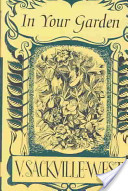
In the Library : In Your Garden by Vita Sackville-West


by Vita Sackville-West

From 1946, the poet and novelist Vita Sackville-West wrote a gardening column in the Observer. The columns were later collected into a set of books published between 1951 and 1958. Vita’s extensive gardening knowledge, her intense passion for her subject and her lively literary flair make these classics of garden writing essential for any serious gardener’s bookshelf. Volume 1 in a series of four anthologies reproducing the lively gardening columns by Vita Sackville-West. This volume covers 1946–1950.

1982 – NASA named Guion S. Bluford Jr. as the first African-American astronaut.


Guion Stewart Bluford Jr. is an American aerospace engineer, retired U.S. Air Force officer and fighter pilot, and former NASA astronaut, who is the first African American and the second person of African descent to go to space. Before becoming an astronaut, he was an officer in the U.S. Air Force, where he remained while assigned to NASA, rising to the rank of colonel. He participated in four Space Shuttle flights between 1983 and 1992. In 1983, as a member of the crew of the Orbiter Challenger on the mission STS-8, he became the first African American in space as well as the second person of African ancestry in space, after Cuban cosmonaut Arnaldo Tamayo Méndez.

Source: wiki

astroreality.com