Tag Archives: Arizona

At least 4,000 were lynched – a repost … reminder


A group documenting lynchings is trying to erect markers at the sites, but expects local opposition.

Nearly 4,000 African Americans were victims of “racial terror lynchings” in the South between 1877 and 1950, according to a new report by the Equal Justice Initiative.

The report, released today, is the result of some five years of research by the organization. It has found that racial terror lynching was much more prevalent than previously reported. The researchers documented several hundred more lynchings than had been identified in the past. They did so by reviewing local newspapers, historical archives and court records. They also conducted interviews with local historians, and the families and descendants of the victims.

In all, EJI documented 3,959 lynchings of black people in twelve Southern states, which is at least 700 more lynchings in these states than previously reported. More than half of the lynching victims were killed under accusation of committing murder or rape against white victims. The EJI says that racial hostility fed suspicion that the perpetrators of the crimes were black and the accusations were seldom scrutinized. “Of the hundreds of black people lynched under accusation of rape and murder, nearly all were killed without being legally convicted,” says the report.

Some states and regions were particularly terrifying for African Americans, with dramatically higher rates of lynchings compared to the rest of the South. These areas included Florida, Mississippi, Arkansas and Louisiana. Counties that were particularly terrifying were Hernando, Taylor, Lafayette, and Citrus counties in Florida; Early and Oconee counties in Georgia; Fulton County, Kentucky; and Moore County, Tennessee, which had the highest rates of lynchings. Phillips County, Arkansas, and Lafourche and Tensas parishes in Louisiana were regions of mass killings of African Americans that make them historically notorious. Georgia and Mississippi had the highest number of lynchings of all the Southern states.

In conversations with survivors of those that had been lynched, EJI found that lynching played an integral role in the migration of millions of African Americans away from Southern states.

EJI also found that there was an astonishing lack of effort to acknowledge, discuss or address lynching in Southern states and communities. According to the report, many of these communities tried to veil this violent past by erecting monuments memorializing the Confederacy and the Civil War instead, while hiding the violence and terror used against African Americans.

The report says that there are currently few memorials that address the legacy of lynching, and that most communities do not actively  recognize how their race relations were shaped by terror lynching.

Bryan Stevenson of EJI told the New York Times that his group wants to force people to reckon with the country’s violent and racist past by erecting the memorials. He said the EJI hopes to select some of the lynching sites and erect markers there. This will involve a significant amount of fundraising by the non-profit group. EJI is also bracing for controversies and objections as it tries to erect these markers.

“Lynching and the terror era shaped the geography, politics, economics and social characteristics of being black in America during the 20th century,” said Stevenson.

The report by EJI is part of a larger project that also involves the recognition of slave markets in the South and the erection of markers on those sites, particularly in Montgomery, AL. Stevenson said that  regional and state governments have not been receptive to such markers although there are plenty of Civil War memorials in Montgomery, as well as some Civil Rights movement markers.

Get Set for a Healthy Winter Season


While contagious viruses are active year-round, fall and winter are when we’re most vulnerable to them. This is due in large part to people spending more time indoors with others when the weather gets cold.

Most respiratory bugs come and go within a few days, with no lasting effects. However, some cause serious health problems. People who use tobacco or who are exposed to secondhand smoke are more prone to respiratory illnesses and more severe complications than nonsmokers.

Colds usually cause stuffy or runny nose and sneezing. Other symptoms include coughing, a scratchy throat, and watery eyes. There is no vaccine against colds, which come on gradually and often spread through contact with infected mucus.

Flu comes on suddenly and lasts longer than colds. Flu symptoms include fever, headache, chills, dry cough, body aches, fatigue, and general misery. Like colds, flu can cause a stuffy or runny nose, sneezing, and watery eyes. Young children may also experience nausea and vomiting with the flu. Flu viruses spread mainly by droplets made when people with flu cough, sneeze or talk. A person might also get flu by touching a surface or object that has flu virus on it.

Flu season in the United States may begin as early as October and can last as late as May, and generally peaks between December and February. According to the Centers for Disease Control and Prevention (CDC):

  • More than 200,000 people in the United States are hospitalized from flu-related complications each year, including 20,000 children younger than age 5.
  • Between 1976 and 2006, the estimated number of flu-related deaths every year ranged from about 3,000 to about 49,000.
  • In the 2013 – 2014 season, there were in the U.S. 35.4 million influenza-associated illnesses, 14.6 medically attended flu illnesses, and 314,000 flu hospitalizations.
  • Prevention Tips

Get vaccinated against flu.

With rare exceptions, everyone 6 months of age and older should be vaccinated against flu. Flu vaccination, available as a shot or a nasal spray, can reduce flu illnesses, doctors’ visits, missed work and school, and prevent flu-related hospitalizations and deaths.

It’s ideal to be vaccinated by October, although vaccination into January and beyond can still offer protection. Annual vaccination is needed because flu viruses are constantly changing, flu vaccines may need to be updated, and because a person’s immune protection from the vaccine declines over time. Annual vaccination is especially important for people at high risk for developing serious complications from flu. These people include:

  • young children under 5 years, but especially those younger than 2.
  • pregnant women
  • people with certain chronic health conditions (like asthma, diabetes, or heart and lung disease)
  • people age 65 years and older

Vaccination also is especially important for health care workers, and others who live with or care for people at high risk for serious flu-related complications. Since babies under 6 months of age are too young to get a flu vaccine, their mother should get a flu shot during her pregnancy to protect them throughout pregnancy and up to 6 months after birth. Additionally, all of the baby’s caregivers and close contacts should be vaccinated as well.

Wash your hands often. Teach children to do the same. Both colds and flu can be passed through contaminated surfaces, including the hands. FDA says that while soap and water are best for hand hygiene, alcohol-based hand rubs may also be used. However, dirt or blood on hands can render the hand rubs unable to kill bacteria.

Try to limit exposure to infected people. Keep infants away from crowds for the first few months of life.

Practice healthy habits.

  • Eat a balanced diet.
  • Get enough sleep.
  • Exercise.
  • Do your best to keep stress in check.

Already Sick?

Usually, colds have to run their course. Gargling with salt water may relieve a sore throat. And a cool-mist humidifier may help relieve stuffy noses.

Here are other steps to consider:

  • Call your health care professional. Start the treatment early.
  • Limit your exposure to other people. Cover your mouth with a tissue when you cough or sneeze.
  • Stay hydrated and rested. Avoid alcohol and caffeinated products which may dehydrate you.
  • Talk to your health care professional to find out what will work best for you.

In addition to over-the-counter (OTC) medicines, there are FDA-approved prescription medications for treating flu. Cold and flu complications may include bacterial infections (e.g., bronchitis, sinusitis, ear infections, and pneumonia) that could require antibiotics.

Taking OTC Products

Read medicine labels carefully and follow the directions. People with certain health conditions, such as high blood pressure, should check with a health care professional or pharmacist before taking a new cough and cold medicine.

Choose OTC medicines appropriate for your symptoms. To unclog a stuffy nose, use nasal decongestants. Cough suppressants quiet coughs; expectorants loosen mucus; antihistamines help stop a runny nose and sneezing; and pain relievers can ease fever, headaches, and minor aches.

Check the medicine’s side effects. Medications can cause drowsiness and interact with food, alcohol, dietary supplements, and each other. It’s best to tell your health care professional and pharmacist about every medical product and supplement you are taking.

Check with a health care professional before giving medicine to children.

See a health care professional if you aren’t getting any better. With children, be alert for high fevers and for abnormal behavior such as unusual drowsiness, refusal to eat, crying a lot, holding the ears or stomach, and wheezing.

Signs of trouble for all people can include

  • a cough that disrupts sleep
  • a fever that won’t respond to treatment
  • increased shortness of breath
  • face pain caused by a sinus infection
  • high fever, chest pain, or a difference in the mucus you’re producing, after feeling better for a short time.

This article appears on FDA’s Consumer Updates page, which features the latest on all FDA-regulated products.


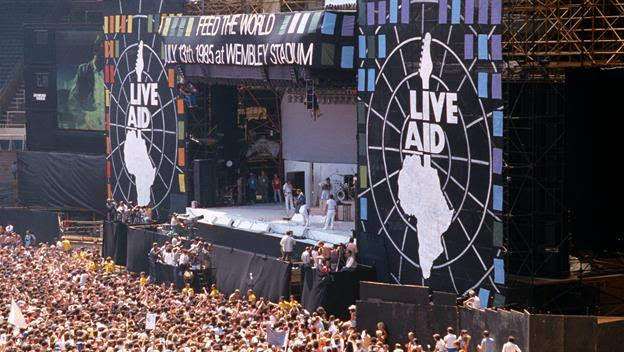
1985 ~On this day ~ Live Aid


On July 13, 1985, at Wembley Stadium in London, Prince Charles and Princess Diana officially open Live Aid, a worldwide rock concert organized to raise money for the relief of famine-stricken Africans. Continued at JFK Stadium in Philadelphia and at other arenas around the world, the 16-hour… read more »

Congress enacts the Northwest Ordinance »

Rockefeller announces new peace proposal »

Live Aid is held simultaneously in London and Philadelphia and broadcast live throughout the world »

1967 ~ The Lovings ~On June 12th, 1967, the Court’s ruling declared all laws against interracial marriage in the United States to be unconstitutional – possibly on a future ballot? In Memory


 visit Loving Day’s website.

================

The Loving Story:

Richard P. Loving, and his wife Mildred, shown in this January 26, 1965 photograph, will file a suit at Federal Court in Richmond, Va., asking for permission to live as husband and wife in Virginia. Both are from Carolin County, south of Fredericksburg, Va., and were married in Washington in 1958. Upon their return the interracial couple was convicted under the state’s miscegenation law that bans mixed marriages. They received a suspended sentence on the condition they leave the state, but they now want to return to Virginia. (AP Photo)

With fight for same-sex marriage such a regular point of conflict today, it’s easy to forget about the first fight for marriage equality: interracial marriage. But while anti-miscegenation laws may seem like a relic of the past, it wasn’t until 2000 that Alabama became the last state to adapt its constitutional laws on interracial marriage.

In 1967, the United States Supreme Court put an end to the prohibition of interracial marriage in the monumental case of Loving v. Virginia.

The case was sparked by Mildred Loving, née Jeter, who after discovering she was pregnant traveled with boyfriend Richard Loving and from their home in Virginia to Washington, D.C. They made the move to evade Virginia’s Racial Integrity Act of 1924, which prohibited them from marrying John was a white male while Mildred was black and Native American.

Five weeks after their nuptials, they returned to Virginia. An anonymous tip led to a police raid. Instead of finding them having sex, which was another criminal offense at the time, they caught them sleeping in their marital bed. The couple was taken to jail after Mildred pointed out their D.C. marriage certificate. It was used as evidence of “cohabiting as man and wife, against the peace and dignity of the Commonwealth.”

The Lovings were sentenced to one year in prison, but it was suspended on the condition that the couple leaves Virginia and not return together for 25 years.

Initially they did just that, but by 1963, Mildred had enough and decided to write to Attorney General Robert F. Kennedy. The letter inspired Kennedy to connect her with the ACLU, which took the case to the U.S. Supreme Court.

On June 12th, 1967, the Court’s ruling declared all laws against interracial marriage in the United States to be unconstitutional.

While cases like Brown v. Board of Education or Rosa Parks’ stand against segregation are taught regularly in schools, the Loving case gets less attention. Thirty-six years after the trial, Ken Tanabe first learned of the case as a grad student and founded the Loving Day Project to commemorate the anniversary. He, like many others, discovered it by accident.

“I realized that I might not be alive today (along with millions of other Americans) if it wasn’t for this case and those that came before it,” Tanabe, who is mixed race, told AOL via email.

The project has since expanded from its humble roots in New York City across the nation and even around the world.

According to a recent Gallup poll, 11 percent of Americans do not interracial marriage. When the Lovings were arrested the numbers, disapproval ratings were 94 percent. The falling disapprove numbers may appear to be a victory, but Tanabe says they are still worth worrying about.

“When Barack Obama was elected president, some people thought that racism was ‘over.’ While his election was an important sign of progress, it’s dangerous to believe we can stop being vigilant and proactive,” Tanabe explained. “The stories surrounding Trayvon Martin, Michael Brown, and so many others are some well-known examples. Racism also affects interracial couples and multiracial people every day.”

Rather than remain mutually exclusive, Loving Day embraced, and been embraced, by the LGBTQ community. On the 40th anniversary of the Supreme Court ruling, Mrs. Loving urged that gay men and lesbians should be allowed to marry. A march has been planned for this year’s Loving Day in Abilene, TX by Parents, Families and Friends of Lesbians and Gays (PFLAG).

“We see Loving Day as an educational resource for everyone to learn more about the history of marriage and understanding it as a civil rights issue,” said Tenebe.

National attention turned to Loving v. Virginia in 2011 when ‘The Loving Story’ premiered at the Tribeca Film Festival and was purchased by HBO. This year, Jeff Nichols, writer and director of the Matthew McCounghey flick ‘Mud,’ announced he will direct a new Hollywood “Loving” film starring Ruth Negga and Joel Edgerton.

===============================================================

Black History is American History