All posts by Nativegrl77

1962 – U.S. President John F. Kennedy nationalized the Mississippi National guard in response to city officials defying federal court orders. The orders had been to enroll James Meredith at the University of Mississippi. 


JAMES MEREDITH: INTEGRATED THE UNIVERSITY OF MISSISSIPPI IN 1962

Who Is James Meredith?

James Meredith is an American civil rights activist, writer, and Air Force veteran.  A Mississippi-native, Meredith joined the military after high school and attended an all-Black college before becoming the first African American student to attend the University of Mississippi in 1962. After he graduated, Meredith earned a law degree and became involved in politics.

Early Life

Born in Kosciusko, Mississippi, on June 25, 1933, James Howard Meredith was raised on a farm with nine brothers and sisters, largely insulated from the racism of the time. His first experience with institutionalized racism occurred while he was riding a train from Chicago with his brother. When the train arrived in Memphis, Tennessee, Meredith was ordered to give up his seat and move to the crowded Black section of the train, where he had to stand for the rest of his trip home. He vowed then that he would dedicate his life to ensuring equal treatment for African Americans.

for more info blackthen&now

biography.com

USDA~ FSN ~ FDA ~ September 2025 -Recalls – Food Safety Alerts – Previous Month & last day of prior month updates


** The Hillshire Brands Company Recalls Corn Dog and Sausage On A Stick Products Due To Possible Extraneous Matter Contamination
The Hillshire Brands Company
Active
Sat, 09/27/2025 – Current
Nationwide

WASHINGTON, September 27, 2025 – The Hillshire Brands Company, a Haltom City, Tex. establishment, is recalling approximately 58,000,000 pounds of corn dog and sausage on a stick products that may be contaminated with extraneous material, specifically pieces of wood embedded in the batter, the U.S…

** Details of this public health alert were updated on September 26, 2025, to reflect an additional affected product and corresponding labels. WASHINGTON, September 25, 2025 – The U.S. Department of Agriculture’s Food Safety and Inspection Service (FSIS) is issuing a public health alert…

Impacted Products

12-oz. clear plastic tray packages labeled “MARKETSIDE LINGUINE WITH BEEF MEATBALLS & MARINARA SAUCE” with “best if used by” dates SEP 22, 2025; SEP 24, 2025; SEP 25, 2025; SEP 29, 2025; SEP 30, 2025; and OCT 01, 2025.16-oz. plastic tray packages labeled “TRADER JOE’S CAJUN STYLE BLACKENED CHICKEN BREAST FETTUCINE ALFREDO” with “best if used by” dates 9/20/2025, 9/24/2025, or 9/27/2025 printed on the front label of the packaging. The product bears establishment number

** Cinnamon recalled because of high lead content

** Goot Essa recalls cheese after testing shows Listeria contamination

** USDA issues public warning about Walmart pasta meals because of deadly outbreak

** FDA warns Blue Forest Farms over adulterated Amanita muscaria products

By News Desk 

As part of its enforcement activities, the Food and Drug Administration sends warning letters to entities under its jurisdiction. Some letters are not posted for public view until weeks or months after they are sent. Business owners have 15 days to respond to FDA warning letters. Warning letters often are…Continue Reading

** The U.S. Department of Agriculture’s Food Safety and Inspection Service (FSIS) is issuing a public health alert for a ready-to-eat (RTE) turkey wrap product due to concerns that the product may be contaminated with Listeria monocytogenes. A recall was not requested because the affected product is no longer available for purchase.

The RTE turkey wrap product was produced on September 10, 2025. The following product is subject to the public health alert [view sample labels]:

  • 10-oz. clear plastic clamshell packages containing “TRADER JOE’S TURKEY GOBBLER WRAP” with “BEST BY SEP 16, 2025.”

The product bears establishment number “P-1644” inside the USDA mark of inspection. This item was shipped to Trader Joe’s retail locations nationwide.

The problem was discovered when the establishment notified FSIS that food contact surface samples associated with this product tested positive for Listeria monocytogenes.

There have been no confirmed reports of adverse reactions due to consumption of this product. Anyone concerned about an illness should contact a health care provider.

** Sep 20

Aquastar (USA) Corp Recalls Kroger Frozen Raw EZ Peel, Kroger Mercado Frozen Cooked Shrimp, and Aquastar Raw Shrimp Skewers Because of Possible Health Risk

** Salmonella and Campylobacter rise triggers FSA action

By Joe Whitworth on September 22, 2025

The Food Standards Agency (FSA) has raised concerns about the increasing number of Salmonella and Campylobacter infections.

The FSA said recent data has confirmed suspected threshold breaches for Salmonella and Campylobacter. Investigations to identify contributing causes are underway.  

As part of monitoring foodborne disease in the UK, the FSA has…Continue Reading

** The U.S. Department of Agriculture’s Food Safety and Inspection Service (FSIS) is issuing a public health alert for raw sirloin beef tip product due to misbranding and undeclared allergens. The product contains sesame and wheat, known allergens, which are not…

Impacted Products

1-lb. vacuum-packed packages containing “Bianco & Sons SWEET HEAT SIRLOIN BEEF TIPS” on the front package label with “USE OR FREEZE BY:10/01/2025” on the back package label.

** Haifa Smoked Fish recalls products after testing shows Listeria contamination

** Sprout Organics recalls pouches of fruit and vegetables because of lead contamination

** Sep 16 – Sprout Organics Voluntarily Recalls One Lot of Sweet Potato Apple and Spinach Due to Possible Health Risk

** Sep 10 – Chetak LLC Group Expands Voluntary Product Recall to Include Additional Frozen Vegetable and Fruit Products Due to Possible Health Risk

**  The U.S. Department of Agriculture’s Food Safety and Inspection Service (FSIS) is issuing a public health alert for raw sirloin beef tip product due to misbranding and undeclared allergens. The product contains sesame and wheat, known allergens, which are not declared on the product label. FSIS is issuing this public health alert to ensure that consumers with allergies to sesame and wheat are aware that these products should not be consumed. A recall was not requested because the affected products are no longer available for purchase.

The raw sirloin beef tip product was produced on September 2, 2025. The following product is subject to the public health alert [view labels]:

  • 1-lb. vacuum-packed packages containing “Bianco & Sons SWEET HEAT SIRLOIN BEEF TIPS” on the front package label with “USE OR FREEZE BY:10/01/2025” on the back package label.

The products bear the establishment number “EST. 4033” inside the USDA mark of inspection. These items were shipped to Roche Bros. Supermarkets retail locations in Massachusetts.

The problem was discovered by a retailer that identified “Sweet Heat Sirloin Beef Tips” bearing the correct front label but incorrect back label for “Garlic and Ginger Sirloin Beef Tips.” The retailer reported the issue to the producing establishment, and the establishment notified FSIS. 

There have been no confirmed reports of adverse reactions due to consumption of these products. Anyone concerned about an illness should contact a health care provider.  Consumers with food safety questions can call the toll-free USDA Meat and Poultry Hotline at 888-MPHotline (888-674-6854) or send a question via email to MPHotline@usda.gov. For consumers that need to report a problem with a meat, poultry, or egg product, the online Electronic Consumer Complaint Monitoring System can be accessed 24 hours a day at https://foodcomplaint.fsis.usda.gov/eCCF/.

** September 15, 2025 – Quality Poultry & Seafood, Inc., a Biloxi, Miss., establishment, is recalling approximately 98,916 pounds of catfish fillet products that were produced without the benefit of federal inspection, the U.S. Department of Agriculture’s Food Safety and Inspection Service (FSIS) announced today.

The catfish fillet items were produced from September 2, 2024, through September 5, 2025, and bear various labels with establishment names that have no connection to the cause of the recall.  The following products are subject to recall [view labels]:

  • Translucent plastic bag packages containing various pieces of frozen catfish fillet products labeled “VARIED CATFISH MISCUT FILLETS, FARMED RAISED CATFISH PRODUCT OF USA”, and Net Wt. 5#.
  • Cardboard boxes containing three translucent plastic bag packages containing various pieces of frozen catfish fillet products labeled “VARIED CATFISH MISCUT FILLETS, FARMED RAISED CATFISH PRODUCT OF USA”, and Net Wt. 15#.
  • Translucent plastic bag packages containing various pieces of frozen catfish fillet products labeled “IRREGULAR CATFISH SHANK FILLET, FARMED RAISED CATFISH PRODUCT OF USA”, and Net Wt. 5#.
  • Translucent plastic bag packages containing various pieces of frozen catfish fillet products labeled “IRREGULAR CATFISH RANDOM FILLET, FARMED RAISED CATFISH PRODUCT OF USA”, and Net Wt. 5#.
  • Cardboard boxes containing three translucent plastic bag packages containing various catfish fillet products labeled “IRREGULAR CATFISH RANDOM FILLET, FARMED RAISED CATFISH PRODUCT OF USA”, and Net Wt. 15#.
  • Vacuum sealed translucent packages containing a catfish fillet stuffed with crabmeat dressing,  labeled “CATFISH FILLET STUFT W/ CRABMEAT DRESSING”, and Net Weight 9oz.
  • Vacuum sealed translucent packages containing a catfish fillet stuffed with crabmeat dressing, labeled “STUFFED CATFISH”.
  • Consumers and members of the media with questions about the recall can contact Fernando Mejia, Director of Finance and Operations, Quality Poultry & Seafood, Inc. at fernando@qpsbiloxi.com.
  • Consumers with food safety questions can call the toll-free USDA Meat and Poultry Hotline at 888-MPHotline (888-674-6854) or send a question via email to MPHotline@usda.gov. For consumers that need to report a problem with a meat, poultry, or egg product, the online Electronic Consumer Complaint Monitoring System can be accessed 24 hours a day at https://foodcomplaint.fsis.usda.gov/eCCF/.

These items were shipped to restaurants and retail locations in Alabama, Mississippi, and Louisiana, and from the establishment’s retail store.                                 

** FDA updates import alerts for cheese, seafood, mushrooms and more

By News Desk on

 September 1, 2025

The Food and Drug Administration uses import alerts to enforce U.S. food safety regulations for food from foreign countries. The agency updates and modifies the alerts as needed.

Recent modifications to FDA’s import alerts, as posted by the agency, are listed below.

Click here to go to the FDA page with links to details on specific alerts.

** USDA issues public alert for Trader Joe’s frozen pizza

** More shrimp recalled because of radioactive concerns; Kroger affected The affected shrimp was sold at Baker’s, Gerbes, Jay C, Kroger, Mariano’s, Metro Market, Pay Less Supermarkets, and Pick ‘n Save in AL, AR, GA, IL, IN, KS, KY, MI, MO, MS, NE, OH, SC, TN, VA, WI, WV between July 24, 2025 and August 11, 2025.

The recalled Kroger shrimp is packaged in clear plastic bags and has a white label with green stripes on top of each bag and has the following codes:

  • UPC 011110626196, Lot code 10662 5139, Best Before 11/19/2027
  • UPC 011110626196, Lot code 10662 5140, Best Before 11/20/2027

The FDA is actively investigating reports of Cesium-137 (Cs-137) contamination in shipping containers and frozen shrimp products processed by PT. Bahari Makmur Sejati (doing business as BMS Foods) of Indonesia. No illnesses have been reported to date. As noted in the FDA statement issued on 8/19/25: “At this time, no product that has tested positive or alerted for Cesium-137 (Cs-137) has entered the U.S. commerce.”

** Updated codes reported for eggs linked to Salmonella outbreak

** Aug 29 Updated Release: Southwind Foods, LLC Recalls Frozen Shrimp Because of Possible Health Risk

** Aug 28 Aquastar (USA) Corp Recalls Cocktail Shrimp 6oz Because of Possible Health Risk

**

Happy National Coffee Day !


Image result for Coffee beans

What is National Coffee Day?

Coffee Day began in Japan in 1983 and made its way stateside not long after. National Coffee Day is exactly what it sounds like: A celebration of that magical bean that wakes and warms us up. But it goes beyond just a celebration of java itself, encouraging us to honor those who farm, produce and distribute coffee using fair-trade practices.

There’s also International Coffee Day, which takes place in October. This year, International Coffee Day is on Sunday, Oct. 1, 2023.

Sources:

Check out all the info for free coffee below

parade.com

image from consumerist.com

Slave trading past still haunts Norway


Norway’s participation in the trans-Atlantic slave trade is back to haunt the country, as an alliance of Caribbean nations seeks slavery reparations. Norway was a territory state under the Danish crown at that time, but Norwegians were strongly represented at all levels in the Danish-Norwegian slave trade from 1660 to 1806, according to a Norwegian doctoral candidate.

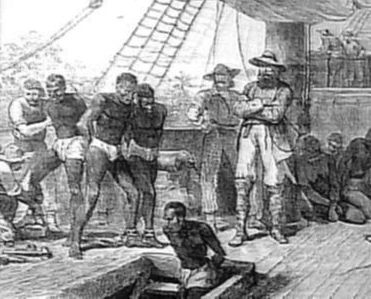
Life on the slave ships, many of them owned and crewed by Danes and Norwegians, was brutal, as was life in the slave ports. PHOTO: Wikipedia

Life on the slave ships, many of them owned and crewed by Danes and Norwegians, was brutal, as was life in the slave ports. PHOTO: Wikipedia

The center of the Danish-Norwegian slave trade, according to Fredrik Hyrum Svensli at the Norwegian University of Science and Technology (NTNU) in Trondheim,  was on the Gold Coast (Ghana) in Africa. Ghana’s relationship with the Caribbean dates back over 400 years and is inexplicably linked with slave trading.

Norwegians made up around 10 percent of the total crew serving on slave ships at any one time, wrote Svensli in newspaper Aftenposten recently. Hyrum Svensli’s PhD project explores the slave trade rivalry between Denmark-Norway, England and the Netherlands in Ghana in the 1600s and 1700s. That’s when Norwegians took part in what’s been called the “triangle of trade” on Norwegian and Danish ships like the Fredensborg, found wrecked off Arendal in 1974. Norwegians staffed slave forts on the African coast, sailed on the slave ships and carried goods produced by slaves back to Norway and the rest of Europe. The “triangle” went mostly from Norway and Denmark to Ghana, then to Caribbean ports such as St Croix and St Thomas and back to Scandinavia.

Those Norwegians who served at the slave posts on the Gold Coast came from various backgrounds such as soldiers, gunsmiths, artisans and even clergymen. They shared one thing in common in that they were for the most part “incompetent and reckless adventurers,” Hyrum Svensli told Aftenposten.

Caribbean nations are seeking reparations for the after-effects of slavery, but are unlikely to prevail. Norway can blame is domination by Denmark at the time. PHOTO: Wikipedia

Caribbean nations are seeking reparations for the after-effects of slavery, but are unlikely to prevail. Norway can blame is domination by Denmark at the time. PHOTO: Wikipedia

Fortress life was marked by chaos and a lack of discipline but some notable individuals stand out from the rest. One such exception was Cornelius Pettersøn from Bergen, a soldier and later a sergeant at the main fort at Christiansborg from 1729 to 1745. He was involved in everything from slave trading to political intrigue and in 1744 took part in a mutiny which led to complete chaos at the fort. Fortunately for Pettersøn, he was able to avoid the death penalty as he was married to an African woman (as were many Norwegians serving on the Gold Coast) and therefore was able to gain crucial support from his wife’s powerful African family and wider network.

Another Norwegian, Andreas Wellemsen, was governor at Christiansborg during the Akwamu war (1727-1730), one of the bloodiest conflicts in the Gold Coast’s history. Using diplomatic prowess he managed to secure Danish-Norwegian trade interests by both keeping them out of the war and in the process was able to secure a high number of slaves as African prisoners of war were transported from the African interior to coastal fortifications.

Søren Schielderup also served as governor at the fort at Christiansborg (1735 -1736) and in the 10 short months he was there, helped to establish one of the largest slave trade developments in Africa at the Fredensborg fort. The fort was important for the expansion of Danish-Norwegian enterprise, which was moving eastwards on the Gold Coast in the second half of the 1700s. Under Schielderup’s administration, trade was so profitable that the competing Dutch slave traders awarded a significant bounty to have him killed.

Doctoral candidate Fredrik Hyrum Svensli has been researching life at the slave forts in Africa at NTNU in Trondheim. PHOTO: NTNU

Doctoral candidate Fredrik Hyrum Svensli has been researching life at the slave forts in Africa at NTNU in Trondheim. PHOTO: NTNU

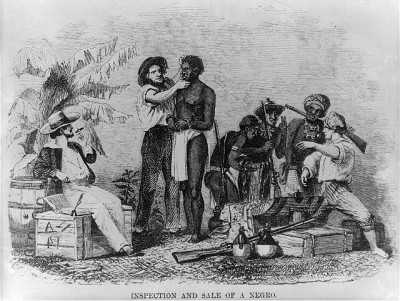
Schielderup, Wellemsen and Pettersøn were all part of a slave-processing system whereby slaves were moved, aided by African sellers, to the Danish-Norwegian slave forts on the coast where they were examined and branded like cattle with the initials “CB” for Christiansborg. They were then herded into slave barracks and ferried over the Atlantic in cramped slave ships. In total, Denmark-Norway was responsible for the shipment of more than 85,000 African slaves in the period from 1660 to 1806 (over 150 years).

Now, hundreds of years later, the heads of state of 15 Caribbean nations are demanding reparations from several European countries for the enduring suffering inflicted by the trans-Atlantic slave trade. Newspapers including The Guardian have reported that they plan to first seek “dialogue” with former slave-trading nations including the UK, France, Spain, Portugal, the Netherlands, Norway, Sweden and Denmark.  The claim is rooted in an alleged cycle of poverty and degradation from which many descendants of slaves still suffer.

The Caribbean nations claim they’re not just seeking financial reparations, but diplomatic aid to help persuade countries like Ghana and Ethiopia to offer citizenship to the children of people from the Caribbean who “return” to Africa. They want help in improving the lives of poor communities in the Caribbean that they claim are still suffering from the after-effects of slavery, aid for literacy drives and, not least, an apology for their role in shipping millions of men, women and children from Africa to the Caribbean and America in the 17th and 18th centuries. It’s unlikely the European nations will accept the claims, given the time that’s passed and, in the Norwegians’ case, the fact that their participation was carried out through Denmark since Norway was not a sovereign nation at the time.

While the inhumane and exploitative suffering of African slaves is beyond comparison, Norwegian researcher Hyrum Svensli notes that life was hard for those serving at the forts as well. The priest’s son Schielderup described it as a “veritable Sodom” where there was an abject lack of respect for authority.  Disease was also rampant and death rates were extraordinarily high. Those who died ended up in “white man’s graves” after succumbing to diseases such as malaria, pox and dysentery. The few Norwegians who returned to Norway alive were often blighted by their former lives in Africa, according to Hyrum Svensli’s project (external link to NTNU’s research synopsis).

newsinenglish.no/Audrey Andersen

first posted 9/28/2014

Bill Barr’s Very Strange Memo on Obstruction of Justice ~ Things to Remember


Attorney General Bill Barr and Vice President Dan Quayle with President George H. W. Bush. (Source: George Bush Presidential Library and Museum)

By Mikhaila Fogel, Benjamin Wittes Thursday, December 20, 2018, 7:04 PM

The memo on obstruction of justice by Bill Barr, the once and future attorney general, is a bizarre document—particularly so for a man who would supervise the investigation it criticizes.

As the Wall Street Journal first reported, Barr, whom the president has nominated to succeed Jeff Sessions as attorney general, sent the unsolicited memo—dated June 8, 2018—to Deputy Attorney General Rod Rosenstein to offer his view of Special Counsel Robert Mueller’s investigation into possible obstruction of justice by the president. The document elicited questions over whether Barr would need to recuse himself from overseeing the investigation as attorney general, along with outrage from congressional Democrats: both Senate Minority Leader Chuck Schumer and Sen. Mark Warner, the ranking member on the Senate intelligence committee, have demanded that Trump withdraw Barr’s nomination. Sen. Dianne Feinstein of the Senate Committee on the Judiciary described the memo as “troubling.”

But the legal quality of the memo itself is a different question. Over at Just Security, Marty Lederman has what he describes as a “first take” on Barr’s memo, which is to say a detailed critique of it on both constitutional and statutory grounds. On National Review’s website, by contrast, Andrew McCarthy declares the memo a “commendable piece of lawyering” and “exactly what we need and should want in an attorney general of the United States.”

Whatever Barr’s memo is, it is not that. Because whether one agrees with his view of the law (as does McCarthy) or recoils at it (as does Lederman), one thing attorneys general of the United States should certainly not do is make up facts. And ironically for a memo laying out the argument that Bob Mueller has made up a crime to investigate, the document is based entirely on made-up facts. Lederman mentions this point at the outset of his analysis:
The first huge and striking problem with Barr’s memo is that he unjustifiably makes countless assumptions about what Mueller is doing; about Mueller’s purported “theory” of presidential criminal culpability; about Mueller’s “sweeping” and “all-encompassing” “interpretation” of the statute and Constitution; about “Mueller’s core premise[s]”; . . . about “unprecedented” steps Mueller is proposing to take; about “Mueller’s proposed regime”; about “Mueller’s immediate target”; about Mueller’s presumed failure to “provide a standard” for what constitutes “corruptly” trying to impede proceedings; about Mueller’s “demands” that the President submit to interrogation; etc.

To read this memo, you’d think Barr were replying to a legal brief that Mueller had submitted in support of a prosecution of the President for obstruction of a federal proceeding. Yet as Barr concedes at the outset, he was “in the dark about many facts.” Indeed, he presumably was “in the dark” about virtually everything he wrote about. From all that appears, Barr was simply conjuring from whole cloth a preposterously long set of assumptions about how Special Counsel Mueller was adopting extreme and unprecedented-within-DOJ views about every pertinent question and investigatory decision—and that Deputy Attorney General Rosenstein was allowing him to do so, despite the fact that Mueller is required to “comply with the rules, regulations, procedures, practices and policies of the Department of Justice” and to “consult with appropriate offices within the Department for guidance with respect to established practices, policies and procedures of the Department.”

Indeed, it is not an exaggeration to say that Barr’s entire memo is predicated on two broad assumptions: first, that he knows Mueller’s legal theory, and second, that he understands the fact pattern Mueller is investigating. “It appears Mueller’s team is investigating a possible case of ‘obstruction’ by the President predicated substantially on his expression of hope that the Comey [sic] could eventually ‘let … go’ of its investigation of Flynn and his action in firing Comey,” Barr writes in his second paragraph.

Neither assumption is, in our judgment, warranted. Unlike Barr, we don’t purport to know what Mueller’s obstruction theory is. It’s a subject about which one of us has been puzzling over a long period of time and in a number of articles. We also don’t purport to know what fact patterns Mueller is focusing on. But here’s a limb onto which we are prepared to venture: the reality is more complicated than the facts Barr has “assumed” for purposes of predicating nearly 20 pages of legal analysis. In fact, it’s a lot more complicated.
Barr assumes for the purpose of his memo that Mueller is only interested in presidential conduct sanctioned by Article II, specifically that his investigation revolves around Trump’s actions toward Comey. “As I understand the theory,” he writes, Mueller’s team has built their case on a novel and, in his view, unsupported interpretation of 18 U.S.C. § 1512(c)(2), the “residual clause” of § 1512, which prohibits witness tampering. § 1512(c)(2) holds that, “Whoever corruptly … otherwise obstructs, influences, or impedes any official proceeding, or attempts to do so [is guilty of the crime of obstruction”—and Barr is concerned that Mueller is interpreting it to sanction an overly broad range of behavior.

Moreover, Barr takes the view that a facially lawful action taken by the president under his Article II authority cannot constitute obstruction as a matter of constitutional law. He expresses concern that allowing this interpretation to proceed could have “disastrous implications” for the executive branch and the presidency, potentially opening the door to criminal investigations of “all exercises of prosecutorial discretion.” He also writes, “if a [Justice Department] investigation is going to take down a democratically-elected president it is imperative… that any claim of wrongdoing is solidly based on a real crime—not a debatable one.” (All emphases in original).

It’s not clear why Barr adopts such a simplistic understanding of Mueller’s operating theory, but the sequence of events leading up to his submitting the memo in early June may offer some insight. At some point, probably in March or April of this year, the president’s legal team received a list of subjects that the special counsel’s office wanted to discuss with Trump in an interview. In late April 2018, the New York Times published a condensed list of those questions.
Several weeks later, on June 2, the Times published a letter from Trump’s then-lawyer, John Dowd, to Mueller, in which Dowd responded to Mueller’s request to question the president regarding 16 areas of interest—which essentially mirrored the reported list of questions. In that letter, Dowd explained to the special counsel why he is advising against the president granting the interview, including that he does not believe there is a cognizable offense for an obstruction investigation under 18 U.S.C. § 1505, which prohibits tampering with evidence and impeding legal “proceedings.” Dowd argued both that the president’s actions were authorized by Article II of the Constitution and that an FBI investigation does not count as a “proceeding.” His letter was mocked by a number of commentators on this latter point; Charlie Savage at the Times pointed out that by citing § 1505, instead of § 1512, Dowd was making things easy for himself. § 1512, unlike the statute Dowd cited, does not require that a proceeding be pending.

The Dowd letter, despite its flaws, sparked a certain amount of speculation in conservative media that Mueller lacked an actual crime to investigate—at least as to the obstruction cone of his investigation. A few days after the Times published the Dowd letter, for example, the National Review stated in an editorial that “The letter implies that these two events [the request to Comey regarding Flynn and his subsequent firing] remain the gravamen of the special counsel’s obstruction probe. If that is so, there is no obstruction case.” The editorial goes on to say that, “a prosecutor may not charge obstruction based on the president’s exercise of his constitutional prerogatives.” And it asserts that, in both instances, the president was acting within his constitutional authority:
In short, unless there is a smoking gun against the president that is lurking unseen even in the private jousting between Trump’s team and Mueller, the special prosecutor should be wrapping up the obstruction aspect of his probe rather than extending it via a court fight over the president’s testimony.

In was against this backdrop, on June 8, that Barr sent his memo to Rosenstein and Assistant Attorney General for the Office of Legal Counsel Steven Engel, a memo that shifts the discussion from § 1505 to § 1512 but also adopts the working understanding of the obstruction theory from Dowd’s letter.
The problem is that the facts are almost certainly more complicated than that.

Looking back at the New York Times list of subjects Mueller sought to discuss with Trump, many of those topics go well beyond core Article II-authorized management of the executive branch. For example, Mueller wanted to ask about what Trump knew “about phone calls that Mr. Flynn made with the Russian ambassador, Sergey I. Kislyak, in late December 2016.” Why Flynn lied about his communications with Kislyak is one of the key questions at issue in the case. And Barr himself makes clear that if a president induces someone to lie, that’s not an act protected by Article II.
Analysis of Trump’s inducing Flynn to lie would, of course, involve facts not in evidence, and it would almost certainly involve a different statute. But that’s precisely the point. How does Barr know what conduct Mueller is focused on or under what law?
There are other such examples—a number of them, in fact. Mueller wants to discuss “efforts . . . made to reach out to Mr. Flynn about seeking immunity or possible pardon.” That sounds more like a witness tampering investigation than a broad theory of obstruction under § 1512(c)(2). Mueller appears to want to discuss Trump’s efforts to get intelligence community leaders to lean on Comey to drop the Flynn matter and his “reaction to the news that [Mueller] was speaking to” those leaders. He’s also interested in the public bullying of Sessions and FBI Deputy Director Andrew McCabe, both fired. Again, why is Barr so sure this is all a broad “residual” § 1512 theory of obstruction?

It may well be that Mueller’s theory of the case involves a narrower conception of what Article II permits the president to do than that which Barr holds. But our suspicion is that Mueller is looking not narrowly at the specific acts on which Dowd and Barr focused, but on a broader pattern of activity, some but not all of which involves facially valid exercises of Article II powers.

At a press conference today, Rosenstein declared that the Mueller investigation “is being handled appropriately.” When asked to weigh in on the memo, Rosenstein said that, “Bill Barr was an excellent attorney general during the approximately 14 months that he served in 1991 to 1993” and he predicted that he “will be an outstanding attorney general when he is confirmed next year.” But he added that the department’s handling of the obstruction matter has been “informed by our knowledge of the actual facts of the case, which Mr. Barr didn’t have.”

We suspect those “actual facts” will complicate the Article II analysis—both the facts under investigative scrutiny and the facts as to the range of statutes against which that evidence is being considered.
Editor’s note: This piece has been edited to clarify the description of Barr’s argument.