40 Mayors pushing data‑center growth are ignoring the lack of water, utilities, land, and eminent domain, which will create negative impacts. ~ Nativegrl77
Oregon (The Dalles & Hillsboro) — water secrecy + farmland loss
Google fought to keep water usage confidential.
Residents sued for transparency.
Farmland rezoned for industrial server farms.
Local aquifers under stress during heat waves.
Oregon data center water
4. Washington State (Quincy, Wenatchee, Seattle region) — grid strain + moratorium
Quincy has multiple hyperscale centers next to residential neighborhoods.
Seattle passed a 1‑year moratorium on mega‑data‑center construction due to grid capacity concerns.
Chelan and Douglas PUDs warned about massive electricity draw.
Seattle moratorium
Phoenix Metro (AZ) — water depletion + moratorium
Dozens of data centers approved despite long‑term drought.
Some suburbs paused new centers due to water stress.
Local officials warned that each facility can use 1–5 million gallons/day for cooling.
Residents protested new land takings for industrial zoning.
Phoenix water strain
2. Northern Virginia (“Data Center Alley”) — grid overload + eminent domain
Loudoun County hosts the world’s largest cluster of data centers.
Dominion Energy proposed new high‑voltage lines through residential areas.
Eminent domain was used or threatened for transmission corridors.
Noise, diesel generators, and land conversion are major complaints.
Northern Virginia impacts
South Carolina & Georgia — coastal water + forest loss
New data‑center corridors proposed near wetlands and coastal aquifers.
Forest clearing for multi‑building campuses.
Local officials raised concerns about hurricane‑season resilience.
Southeast data centers
Iowa (Altoona, Council Bluffs) — energy consumption + land use
Meta, Google, and Microsoft operate massive campuses.
Local utilities expanded generation capacity to meet demand.
Farmland converted to industrial use.
Iowa data center impacts
New Mexico (Los Lunas & Albuquerque) — water rights conflicts
Meta’s expansion faced pushback over water use during drought.
Local tribes and environmental groups raised concerns about aquifer depletion.
State regulators questioned long‑term sustainability.
Guided Link: New Mexico water concerns
Nativegrl77nativegrl77Edit Profile
Kansas (De Soto & Olathe) — farmland → server farms
Thousands of acres rezoned for data‑center campuses.
Residents raised concerns about loss of agricultural land.
Water and power demand projected to spike.
Guided Link: Kansas rezoning
Sources: internet, x articles, ai, info links included and a personal opinion
40 mayors pushing data‑center growth are ignoring the lack of water, utilities, land, and eminent domain, which will create negative impacts. ~ Nativegrl77
** Stewart’s Shop Corp. Recalls Heavenly Medley and Vanilla-Chocolate-Strawberry Due to Possible Foreign Object. Stewart’s Shops Corp. of Saratoga Springs, NY is recalling two flavors, Heavenly Medley and Vanilla-Chocolate-Strawberry, of half-gallon ice cream due to the potential presence of metal.
The following products are subject to recall and were sold at all Stewart’s Shops locations in NY, VT, and NH between 7/17/26 and 10/2/2026: No injuries or illnesses have been reported to date in connection with this problem.
The recall was initiated after a metal object was discovered by a consumer in a half-gallon carton of ice cream. Consumer & Media Contact: Robin Cooper 518-248-0455 rcooper@stewartsshops.com
** Frutas y Hortalizas del Sur S.A., San Carlos, Chile expands its previously initiated recalls on July 3, 2026 and September 3,2026 recall of frozen organic IQF blueberries and berry blends to include additional lots of Great Value frozen Organic Triple Berry Blend 10 OZ, Great Value frozen Organic Blueberries 10 OZ and one Lot of Trader Joe’s frozen Organic Mixed Berry Blend because of potential contamination with Escherichia coli O145:H28 (E. coli O145).
The affected products are:
Product: Great Value Organic Triple Berry Blend 10 OZ (Including Strawberries, Blackberries and Blueberries), with UPC: 7874211226 Package Size: 10 oz Lot Code: 6 031 01, 6 041 01 (in front of the package) Best If Used By Date: January 31, 2028 and February 10, 2028
Product: Great Value Organic Blueberries 10 OZ, with UPC: 7874211213 Package Size: 10 oz Lot Code: 6 019 01, 6 040 01 and 6 163 01 (in front of the package) Best If Used By Date: January 19, 2028; February 9, 2028 and June 12, 2028.
Product: Trader Joe’s Organic Mixed Berry Blend 12 OZ with UPC: 00977654 Package Size: 12 oz Lot Code: 6 051 01 (in back of the package) Best Before Date: February 20, 2028
Consumers who have Great Value Organic Triple Berry 10 OZ with lot code 6 031 01, 6 041 01, Great Value Organic Blueberries 10 OZ with lot code 6 019 01, 6 040 01 and 6 163 01 and Trader Joe’s Organic Mixed Berry Blend 12 OZ with lot code 6 051 01 should not consume those products. The product should be discarded or returned to Walmart or Trader Joe’s for a full refund.Media Contact: Joshua Weiss Info.foodsafety@comfrut.com or 336-899-5612. Monday – Friday 8 AM – 6 PM EST
** Sierra Nevada Cheese Company Recalls Graziers Raw Milk Cheese Due to Possible Health Risk. At this time, the investigation has not been narrowed to a specific lot, date code, or production date. Therefore, out of an abundance of caution, Sierra Nevada Cheese Company is recalling all the Graziers Raw Milk Cheese products listed below currently in distribution. The recalled products were distributed nationwide through distributors, retailers, and direct customers. Sierra Nevada Cheese Company initiated the voluntary recall after being contacted by FDA regarding the ongoing FDA/CDC outbreak investigation. The company immediately stopped production and shipment of all Graziers Raw Milk Cheese, notified customers that purchased the affected products directly from Sierra Nevada Cheese Company, and issued notices through its website and social media. The company is cooperating with FDA and CDC as the investigation continues. Consumers with questions may contact Sierra Nevada Cheese Company at (530) 934-8662, Monday through Friday, 8:30 a.m. to 5:00 p.m. Pacific Time, or by email at recallinfo@sierranevadacheese.com.
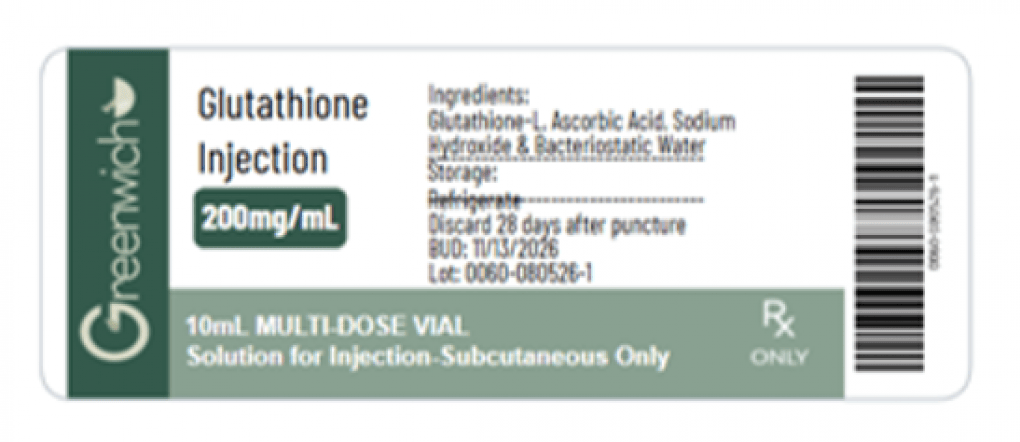
** Greenwich Rx Issues Voluntary Nationwide Recall of Compounded Glutathione Due to Elevated Endotoxin Levels. The glutathione was distributed to patients nationwide between June 26, 2026, and September 21, 2026.
Customers can direct questions regarding this recall to Sedgwick at (866) 552-4916 or GreenwichRx7542@sedgwick.com Monday through Friday between 8:00 AM to 5:00 PM Eastern Time. Complete and submit the report Online: www.fda.gov/medwatch/report.htm
Regular Mail or Fax: Download form www.fda.gov/MedWatch/getforms.htm or call 1-800-332-1088 to request a reporting form, then complete and return to the address on the pre-addressed form, or submit by fax to 1-800-FDA-0178.
** EAK Distribution LLC Recalls HOME GROWN Green Sprouting Calabrese Broccoli Seeds, 8 oz, Heirloom Because of Possible Health Risk. HOME GROWNGreen Sprouting Calabrese Broccoli Seeds, 8 oz, Heirloom was sold on Amazon.com to consumers nationwide between the dates of August 20th, 2026 and September 18th, 2026
HOME GROWNGreen Sprouting Calabrese Broccoli Seeds, 8 oz, Heirloom is in a cream colored pouch with the UPC code 850056627443. The top seal is embossed with the Production Lot Code of AUG172026. There have been no reported illnesses from our product to date. The recall was initiated after our seed supplier notified us that the seeds were identified as being used by a sprout grower whose finished product were part of an FDA investigation involving a multistate food borne illness outbreak. Consumers with any questions may contact EAK Distribution at 541-306-4278, Monday – Friday from 8 am – 5 pm PST.
** WinCo Foods of Boise, ID is Recalling the Following Salsa Bean Dip Trays Due to the Inclusion of Recalled Peperoncini from G.L. Mezzetta. WinCo Foods of Boise, ID is recalling the following Salsa Bean Dip Trays due to the inclusion of recalled peperoncini from G.L. Mezzetta.
WinCo Foods Salsa Bean Dip Tray Express with UPC 2-67173-#####, with a net weight of 54oz.
WinCo Foods Salsa Bean Dip Tray, 16 Inch Catering Tray(by special order only) with UPC 2-67240-##### with a net weight of 104oz.
The affected peperoncini may have been used as an ingredient on the bean dip trays with “Best If Used By” dates of Aug. 14, 2026 through Sept. 25, 2026.
Product was distributed in WinCo Foods retail stores in AZ, CA, ID, MT, NV, OR, UT, and WA.
WinCo Foods was notified by G.L. Mezzetta that a single lot of their Golden Greek Peperoncini has been recalled due to potential pest inclusion due to a video from another grocery chain circulating on social media. Peperoncini are used as an ingredient in the WinCo Foods Salsa Bean Dip Trays.
WinCo Foods did not have or use any product with evidence of pests included in the jar, nor has the company received any complaints regarding potential pests or illness related to the bean dip trays to date. Consumer Contact Information: WinCo Foods Customer Service Desk Phone number: 1-800-824-1706 Website: WinCo Foods – Contact Us Online
** Frutas y Hortalizas del Sur S.A. Expands Recalls to Include Additional Lots of Great Value Frozen Organic Triple Berry Blend 10 OZ, Great Value Frozen Organic Blueberries 10 OZ and One Lot of Trader Joe’s Frozen Organic Mixed Berry Blend 12 OZ Because of Potential Contamination with E. coli O145. The recalled Great Value product was shipped to select Walmart stores in 30 states including Alabama, Arkansas, Connecticut, Florida, Georgia, Iowa, Illinois, Indiana, Kansas, Kentucky, Louisiana, Michigan, Minnesota, Missouri, Mississippi, North Carolina, North Dakota, Nebraska, New Jersey, New York, Ohio, Oklahoma, Pennsylvania, South Carolina, South Dakota, Tennessee, Texas, Virginia, Wisconsin, and West Virginia, along with the Commonwealth of Puerto Rico. Consumers should check their freezers for the affected product. The recalled Trader Joe’s product was shipped to select Trader Joe’s stores in 26 states: Alabama, Arkansas, Colorado, Delaware, Florida, Georgia, Illinois, Indiana, Iowa, Kansas, Kentucky, Louisiana, Maryland, Michigan, Minnesota, Missouri, Nebraska, North Carolina, Ohio, Oklahoma, Pennsylvania, South Carolina, Tennessee, Texas, Virginia, and Wisconsin, along with the District of Columbia.
The affected products are:
Product: Trader Joe’s Organic Mixed Berry Blend 12 OZ with UPC: 00977654 Package Size: 12 oz Lot Code: 6 051 01 (in back of the package) Best Before Date: February 20, 2028
Product: Great Value Organic Triple Berry Blend 10 OZ (Including Strawberries, Blackberries and Blueberries), with UPC: 7874211226 Package Size: 10 oz Lot Code: 6 031 01, 6 041 01 (in front of the package) Best If Used By Date: January 31, 2028 and February 10, 2028
Product: Great Value Organic Blueberries 10 OZ, with UPC: 7874211213 Package Size: 10 oz Lot Code: 6 019 01, 6 040 01 and 6 163 01 (in front of the package) Best If Used By Date: January 19, 2028; February 9, 2028 and June 12, 2028. Consumers who have Great Value Organic Triple Berry 10 OZ with lot code 6 031 01, 6 041 01, Great Value Organic Blueberries 10 OZ with lot code 6 019 01, 6 040 01 and 6 163 01 and Trader Joe’s Organic Mixed Berry Blend 12 OZ with lot code 6 051 01 should not consume those products. The product should be discarded or returned to Walmart or Trader Joe’s for a full refund.
Consumers or customers with questions regarding this recall may contact:
Gias Foods of New York, NY is recalling all lot codes of bettergoods Authentic Italian Lemon Alfredo Fettuccine, because it has the potential to be contaminated with Listeria monocytogenes, an organism which can cause serious and sometimes fatal infections in young children, frail or elderly people, and others with weakened immune systems. Although healthy individuals may suffer only short-term symptoms such as high fever, severe headache, stiffness, nausea, abdominal pain and diarrhea, Listeria monocytogenes infection can cause miscarriages and stillbirths among pregnant women.
The Authentic Italian Lemon Alfredo Fettuccine was distributed nationwide at Walmart stores.
This is the proclamation which set the precedent for America’s national day of Thanksgiving. During his administration, President Lincoln issued many orders similar to this. For example, on November 28, 1861, he ordered government departments closed for a local day of thanksgiving.
Sarah Josepha Hale, a 74-year-old magazine editor, wrote a letter to Lincoln on September 28, 1863, urging him to have the “day of our annual Thanksgiving made a National and fixed Union Festival.” She explained, “You may have observed that, for some years past, there has been an increasing interest felt in our land to have the Thanksgiving held on the same day, in all the States; it now needs National recognition and authoritive fixation, only, to become permanently, an American custom and institution.”
Prior to this, each state scheduled its own Thanksgiving holiday at different times, mainly in New England and other Northern states. President Lincoln responded to Mrs. Hale’s request immediately, unlike several of his predecessors, who ignored her petitions altogether. In her letter to Lincoln she mentioned that she had been advocating a national thanksgiving date for 15 years as the editor of Godey’s Lady’s Book. George Washington was the first president to proclaim a day of thanksgiving, issuing his request on October 3, 1789, exactly 74 years before Lincoln’s.
The document below sets apart the last Thursday of November “as a day of Thanksgiving and Praise.” According to an April 1, 1864, letter from John Nicolay, one of President Lincoln’s secretaries, this document was written by Secretary of State William Seward, and the original was in his handwriting.
On October 3, 1863, fellow Cabinet member Gideon Welles recorded in his diary how he complimented Seward on his work. A year later the manuscript was sold to benefit Union troops. Washington, D.C. October 3, 1863 By the President of the United States of America. A Proclamation.
The year that is drawing towards its close, has been filled with the blessings of fruitful fields and healthful skies. To these bounties, which are so constantly enjoyed that we are prone to forget the source from which they come, others have been added, which are of so extraordinary a nature, that they cannot fail to penetrate and soften even the heart which is habitually insensible to the ever watchful providence of Almighty God. In the midst of a civil war of unequalled magnitude and severity, which has sometimes seemed to foreign States to invite and to provoke their aggression, peace has been preserved with all nations, order has been maintained, the laws have been respected and obeyed, and harmony has prevailed everywhere except in the theatre of military conflict; while that theatre has been greatly contracted by the advancing armies and navies of the Union. Needful diversions of wealth and of strength from the fields of peaceful industry to the national defence, have not arrested the plough, the shuttle or the ship; the axe has enlarged the borders of our settlements, and the mines, as well of iron and coal as of the precious metals, have yielded even more abundantly than heretofore. Population has steadily increased, notwithstanding the waste that has been made in the camp, the siege and the battle-field; and the country, rejoicing in the consciousness of augmented strength and vigor, is permitted to expect continuance of years with large increase of freedom. No human counsel hath devised nor hath any mortal hand worked out these great things. They are the gracious gifts of the Most High God, who, while dealing with us in anger for our sins, hath nevertheless remembered mercy. It has seemed to me fit and proper that they should be solemnly, reverently and gratefully acknowledged as with one heart and one voice by the whole American People. I do therefore invite my fellow citizens in every part of the United States, and also those who are at sea and those who are sojourning in foreign lands, to set apart and observe the last Thursday of November next, as a day of Thanksgiving and Praise to our beneficent Father who dwelleth in the Heavens. And I recommend to them that while offering up the ascriptions justly due to Him for such singular deliverances and blessings, they do also, with humble penitence for our national perverseness and disobedience, commend to His tender care all those who have become widows, orphans, mourners or sufferers in the lamentable civil strife in which we are unavoidably engaged, and fervently implore the interposition of the Almighty Hand to heal the wounds of the nation and to restore it as soon as may be consistent with the Divine purposes to the full enjoyment of peace, harmony, tranquillity and Union.
In testimony whereof, I have hereunto set my hand and caused the Seal of the United States to be affixed.
Done at the City of Washington, this Third day of October, in the year of our Lord one thousand eight hundred and sixty-three, and of the Independence of the United States the Eighty-eighth.
By the President: Abraham Lincoln
William H. Seward,
Secretary of State
Source: Collected Works of Abraham Lincoln, edited by Roy P. Basler et al.
1908 – Henry Ford‘s Model T, a “universal car” designed for the masses, went on sale for the first time.
1938 – Hitler’s troops occupied the Sudetenland portion of Czechoslovakia. In an effort to avoid war, the leaders of Britain and France had agreed to cede the German-speaking area to Hitler, who later broke the agreement and occupied all of Czechoslovakia.
1949 – The People’s Republic of China was founded with Mao Zedong as Chairman.
1979 – After 70 years of American control, the Panama Canal Zone was formally handed over to Panama.
Birthday – Virtuoso pianist Vladimir Horowitz (1904-1989) was born in Berdichev, Russia. He made his American debut in 1928 with the New York Philharmonic and became a U.S. citizen in 1944. In 1986, after a self-imposed absence of 60 years, he performed a concert in his native Russia.
October 2
October 2, 1935 – Mussolini’s Italian troops invaded Abyssinia, beginning an occupation lasting until 1941.
October 2, 1967 – Thurgood Marshall (1908-1993) was sworn in as the first African American associate justice of the U.S. Supreme Court. He served until 1991 and was known for opposing discrimination and the death penalty, and for championing free speech and civil liberties.
October 2, 1968 – California’s Redwood National Park was established. Redwoods are the tallest of all trees, growing up to 400 feet (120 meters) during a lifetime that can span 2,000 years.
Birthday – Indian political and spiritual leader Mohandas (Mahatma) Gandhi (1869-1948) was born in Porbandar, India. He achieved worldwide fame for his devout lifestyle and nonviolent resistance which ended British rule over India. He was assassinated by a religious fanatic in the garden of his home in New Delhi on January 30, 1948.
Birthday – American statesman Cordell Hull (1871-1955) was born in Pickett County, Tennessee. He served in both houses of Congress, as Secretary of State, and was instrumental in the establishment of the United Nations.
October 3
October 3, 1863 – President Abraham Lincoln issued a proclamation designating the last Thursday in November as Thanksgiving Day.
October 3, 1929 – Yugoslavia became the official name of the Kingdom of Serbs, Croats and Slovenes.
October 3, 1932 – Iraq gained independence from Britain and joined the League of Nations.
October 3, 1974 – Frank Robinson was hired by the Cleveland Indians as baseball’s first African American major league manager.
1989 – Art Shell became the first African-American head coach in NFL when he took over the Los Angeles
October 3, 1990 – After 45 years of Cold War division, East and West Germany were reunited as the Federal Republic of Germany.
October 4
October 4, 1582 – The Gregorian Calendar took effect in Catholic countries as Pope Gregory XIII issued a decree stating the day following Thursday, October 4, 1582, would be Friday, October 15, 1582, correcting a 10-day error accumulated by the Julian Calendar. Britain and the American colonies adopted the Gregorian Calendar in 1752.
October 4, 1830 – Belgium gained its independence, after having been a part of the Netherlands since 1815.
October 4, 1943 – The Island of Corsica became the first French territory in Europe freed from Nazi control as Free French troops liberated the city of Bastia.
October 4, 1957 – The Space Age began as the Russians launched the first satellite into orbit. Sputnik I weighed just 184 lbs. and transmitted a beeping radio signal for 21 days. The remarkable accomplishment by Soviet Russia sent a shockwave through the American political leadership resulting in U.S. efforts to be the first on the moon.
October 4, 1965 – Pope Paul VI became the first Pope to visit the U.S. and the first to address the United Nations.
October 4, 1993 – Russian tank-soldiers loyal to President Boris Yeltsin shelled the Russian White House, crushing a hard-line Communist rebellion. Yeltsin then fired Vice-president Alexander Rutskoi and jailed other opposition leaders.
Birthday – St. Francis of Assisi (1181-1226) was born in Assisi, Umbria, Italy (as Giovanni Francesco Bernardone). He renounced his family’s wealth and founded the Friars Minor (Franciscan Order).
Birthday – Rutherford B. Hayes (1822-1893) the 19th U.S. President was born in Delaware, Ohio. He served from March 4, 1877 to March 3, 1881. He was a Republican best known for his much-quoted statement, “He serves his party best who serves his country best.”
Birthday – Artist Frederic Remington (1861-1909) was born in Canton, New York. He studied at Yale Art School then traveled extensively throughout the American West in the late 1800s sketching cowboys, Native Americans, frontiersmen, and soldiers. He also created lively sculptures featuring bucking broncos.
October 5
October 5, 1813 – Shawnee Indian Chief Tecumseh was defeated and killed during the War of 1812. Regarded as one of the greatest American Indians, he was a powerful orator who defended his people against white settlement. When the War of 1812 broke out, he joined the British as a brigadier general and was killed at the Battle of the Thames in Ontario.
October 5, 1877 – Following a 1,700-mile retreat, Chief Joseph of the Nez Perce Indians surrendered to U.S. Cavalry troops at Bear’s Paw near Chinook, Montana. “From where the sun now stands, I will fight no more forever,” he declared.
October 5, 1908 – Bulgaria proclaimed its independence from the Ottoman Empire.
October 5, 1910 – Portugal became a republic following a successful revolt against King Manuel II.
October 5, 1938 – Czech President Dr. Eduard Benes resigned and fled abroad amid threats from Adolf Hitler.
October 5, 1964 – The largest mass escape since the construction of the Berlin Wall occurred as 57 East German refugees escaped to West Berlin after tunneling beneath the wall.
October 5, 1986 – Former U.S. Marine Eugene Hasenfus was captured by Nicaraguan Sandinistas after a plane carrying arms for the Nicaraguan rebels (Contras) was shot down over Nicaragua. This marked the beginning of the “Iran-Contra” controversy resulting in Congressional hearings and a major scandal for the Reagan White House after it was revealed that money from the sale of arms to Iran was used to fund covert operations in Nicaragua.
Birthday – Theologian Jonathan Edwards (1703-1758) was born in East Windsor, Connecticut. He led the “Great Awakening” religious revival in the American colonies and later became president of Princeton.
Birthday – Chester A. Arthur (1830-1886) the 21st President of the U.S. was born in Fairfield, Vermont. He succeeded to the presidency following the assassination of James A. Garfield. He served from September 20, 1881 to March 3, 1885, but was not nominated by the Republican Party for a second term.
Birthday – “Father of the Space Age” Robert Goddard (1882-1945) was born in Worcester, Massachusetts. During his lifetime he was ridiculed by the public and the press over his idea of constructing a space flight machine. In 1926, he launched the world’s first liquid-fueled rocket on a farm near Auburn, Mass. In 1935, his liquid-fueled rocket surpassed the speed of sound. Other developments included a steering apparatus for rocket machines, staged rockets to reach high altitudes, rocket fuel pumps, and a self-cooling rocket motor.
Birthday – Czech playwright and political leader Vaclav Havel was born in Prague, October 5, 1936. He spent over 5 years in prison for speaking out against government abuses. He went on to lead the peaceful “velvet revolution” which ended Soviet-style Communism in Czechoslovakia in 1989.
October 6
October 6, 1927 – The first “talkie” opened in New York. The Jazz Singer starring Al Jolson was the first full-length feature film using spoken dialogue.
October 6, 1928 – Generalissimo Chiang Kai-shek became president of the Republic of China upon the introduction of a new constitution.
October 6, 1949 – “Tokyo Rose” (Iva Toguri d’Aquino) was sentenced in San Francisco to 10 years imprisonment and fined $10,000 for treason. She had broadcast music and Japanese propaganda to American troops in the Pacific during World War II. She was pardoned by President Gerald Ford in 1977.
October 6, 1973 – The Yom Kippur War started as Egypt and Syria launched attacks on Israeli positions on the East Bank of the Suez and the Golan Heights.
October 6, 1978 – Iranian religious leader Ayatollah Khomeini was granted asylum in France after being expelled from Iran for his opposition to the Shah.
October 6, 1981 – Egyptian President Anwar Sadat (1918-1981) was assassinated in Cairo by Muslim fundamentalists while watching a military parade. He had shared the 1978 Nobel Peace Prize with Menachem Begin of Israel. He had signed an American-sponsored peace accord with Israel, but had been denounced by other Arab leaders.
Birthday – Engineer and inventor George Westinghouse (1846-1914) was born in Central Bridge, New York. He developed air brakes for trains and was later responsible for the adoption of alternating current (AC) systems for electric power transmission in the U.S. He was also the first employer to give his employees paid vacations.
Birthday – Norwegian explorer Thor Heyerdahl was born in Larvik, Norway, on October 6, 1914. He used Kon-Tiki and other primitive ocean-going vessels to prove the possibility of transoceanic contact between ancient, widely separated civilizations.
October 7
October 7, 1765 – The Stamp Act Congress convened in New York City with representatives from nine colonies meeting in protest to the British Stamp Act which imposed the first direct tax by the British Crown upon the American colonies.
October 7, 1940 – During World War II in Europe, German troops invaded Romania to take seize strategic oil fields.
October 7, 1949 – The German Democratic Republic came into existence in East Germany. Dominated by Soviet Russia, it lasted until German reunification in 1990.
October 7, 1985 – Palestinian terrorists seized the Italian passenger ship Achille Lauro carrying about 440 persons, threatening to blow it up if Israel did not free 50 Palestinian prisoners. Leon Klinghoffer, an elderly wheelchair-bound American, was murdered.
October 8
October 8, 1871 – The Great Fire of Chicago erupted. According to legend, it started when Mrs. O’Leary’s cow kicked over a lantern in her barn on DeKoven Street. Over 300 persons were killed and 90,000 were left homeless as the fire leveled 3.5 square miles, destroying 17,450 buildings. Financial losses totaled over $200 million.
October 8, 1918 – During World War I in the Argonne Forest in France, U.S. Sergeant Alvin C. York single-handedly took out a German machine-gun battalion, killing over a dozen and capturing 132. He was later awarded the Medal of Honor and the French Croix de Guerre.
October 8, 1993 – The U.N. General Assembly lifted economic sanctions against South Africa following the end of racial apartheid. The sanctions had been imposed since the 1960s.
October 8, 1996 – Palestinian President Yasser Arafat made his first public visit to Israel for talks with Israeli President Ezer Weizman at his private residence.
October 8, 1998 – The U.S. House of Representatives voted 258-176 to approve a resolution launching an impeachment inquiry of President Bill Clinton. It was only the third time in U.S. history the House launched a formal impeachment inquiry of a sitting president. (The other two: Andrew Johnson and Richard Nixon).
Birthday – American fighter pilot Ace Eddie Rickenbacker (1890-1973) was born in Columbus, Ohio. He commanded the first U.S. aero unit to take part in World War I and was credited with 26 victories, becoming America’s leading Ace. He was awarded the Medal of Honor. He later got involved in auto racing and headed Eastern Air Lines from 1934-63.
October 9
1635 – Roger Williams, founder of Rhode Island, was banished from Massachusetts because he had spoken out against punishments for religious offenses and giving away land that belonged to the Indians. Williams had founded Providence, Rhode Island as a place for people to seek religious freedom.
1930 – Aviator Laura Ingalls landed in Glendale, CA, to complete the first solo transcontinental flight across the U.S. by a woman.
October 9, 1962 – Uganda achieved independence after nearly 70 years of British rule.
October 9, 1970 – Cambodia declared itself the Khmer Republic following the abolishment of the monarchy by the legislature.
Birthday – John Lennon (1940-1980) was born in Liverpool, England. He was a member of The Beatles, an influential rock group which captivated audiences first in England and Germany, and later in America and throughout the world. He was murdered in New York City on December 8, 1980.
October 10
October 10, 1954 – Ho Chi Minh entered Hanoi, Vietnam, after the withdrawal of French troops, in accordance with armistice terms ending the seven-year struggle between Communist Vietnamese and the French.
October 10, 1973 – Spiro T. Agnew (1918-1996) resigned the office of Vice President of the United States amid charges of income tax evasion on illegal payments allegedly received while he was governor of Maryland and after he became Vice President. He was later given a $10,000 fine and sentenced to serve three years probation. He was succeeded as Vice President by Gerald R. Ford, who went on to become President after the resignation of Richard M. Nixon.
Birthday – Italian opera composer Giuseppi Verdi (1813-1901) was born in Le Roncole, Italy. His 26 operas include; Rigoletto, Il Trovatore, La Traviata and Aida, and are among the most popular of all classical music performed today.
1986 – U.S. District Judge Harry E. Claiborne became the fifth federal official to be removed from office through impeachment. The U.S. Senate convicted Claiborne of “high crimes and misdemeanors.”
October 11
October 11, 1521 – King Henry VIII of England was given the title “Defender of the Faith” by Pope Leo X following the publication of the King’s book against Martin Luther.
October 11, 1899 – The Boer War began in South African between the British Empire and Boers of the Transvaal and Orange Free State. The war ended in 1902 with the Treaty of Pretoria in which the Transvaal and Orange Free State became British colonies.
October 11, 1939 – Albert Einstein warned President Franklin D. Roosevelt that his theories could lead to Nazi Germany’s development of an atomic bomb. Einstein suggested the U.S. develop its own bomb. This resulted in the top secret “Manhattan Project.”
October 11, 1962 – The Second Vatican Council was opened in St. Peter’s Basilica in Rome by Pope John XXIII. Sessions were held in four successive autumns from 1962-65. Vatican II resulted in sweeping changes to the Catholic Church including the use of English and local native languages in the Mass instead of Latin, and openness and cooperation with other religions and denominations.
October 11, 1976 – The “Gang of Four,” including the widow of Mao Zedong, was arrested in China, charged with plotting a coup. They were subsequently tried and convicted of various crimes against the state.
Birthday – Eleanor Roosevelt (1884-1962) was born in New York City. She was the wife of President Franklin Delano Roosevelt, 32nd U.S. President. As First Lady, she led an unprecedented independent life, striving to improve the lives of people all over the world. In 1933, she became the first wife of a president to give her own news conference in the White House. She traveled extensively on her own and was affectionately called “First Lady of the world.” She served as a U.S. delegate to the United Nations for many years and helped write the Universal Declaration of Human Rights.
Eugenie Anderson becomes the first woman U.S. ambassador.
October 12, 1492 – After a 33-day voyage, Christopher Columbus made his first landfall in the New World in the Bahamas. He named the first land sighted as El Salvador, claiming it in the name of the Spanish Crown. Columbus was seeking a western sea route from Europe to Asia and believed he had found an island of the Indies. He thus called the first island natives he met, ‘Indians.’
1971
The House of Representatives passes the Equal Rights Amendment 354-23.
October 12, 1811 – Paraguay declared its independence from Spain and Argentina.
October 12, 1822 – Brazil became independent of Portugal.
1972 – During the Vietnam War, a racial brawl broke out aboard the U.S. aircraft carrier Kitty Hawk. Nearly 50 sailors were injured.
October 12, 1960 – During a debate over colonialism in the United Nations, Soviet leader Nikita Khrushchev took off his shoe and pounded his desk repeatedly.
1989 – The U.S. House of Representatives approved a statutory federal ban on the destruction of the American flag.
2000
Suicide bombers at Aden, Yemen, damage USS Cole; 17 crew members killed and over 35 wounded.
Birthday – British composer and conductor Ralph Vaughan Williams (1872-1958) was born in Down Ampney, Gloucestershire, England. He combined modern composition techniques with traditional English folk and Tudor music to create a uniquely British style. His major compositions include; Mass in G Minor, Fantasia on a Theme of Tallis and the opera The Pilgrim’s Progress. He also composed nine symphonies, church and choral music, film and stage music and several operas.
October 13
October 13, 54 A.D. – Roman Emperor Claudius died after eating mushrooms poisoned by his wife, the Empress Agrippina.
October 13, 1775 – The United States Navy was born after the Second Continental Congress authorized the acquisition of a fleet of ships.
October 13, 1792 – The cornerstone of the White House was laid by George Washington. The building, located at 1600 Pennsylvania Avenue, is three stories tall with over 100 rooms, and was designed by James Hoban. In November of 1800, President John Adams and his family moved in. The building was first known as the “Presidential Palace,” but acquired the name “White House” about 10 years after its completion. It was burned by British troops in 1814, then reconstructed, refurbished and reoccupied in 1817.
October 13, 1884 – Greenwich was established as the universal time from which standard times throughout the world are calculated.
October 13, 1943 – Italy declared war on its former Axis partner Germany after the downfall of Mussolini and collapse of his Fascist government.
October 13, 1990 – The first Russian Orthodox service in over 70 years was held in St. Basil’s Cathedral, next to the Kremlin, in Red Square, Moscow.
Birthday – Molly Pitcher (1754-1832) was born near Trenton, New Jersey (as Mary Ludwig). She was a water carrier at the Battle of Monmouth in 1778 during the American Revolution. After her husband, artilleryman John Hays, collapsed, she took his place at his cannon.
October 14
October 14, 1066 – The Norman Conquest began with the Battle of Hastings in which King Harold II of England, the last of the Saxon kings, was defeated and killed by William of Normandy’s troops.
October 14, 1912 – Former President Theodore Roosevelt was shot by a fanatic while campaigning in Milwaukee. Roosevelt was saved by his thick overcoat, a glasses case and a folded speech in his breast pocket, all of which slowed the bullet. Although wounded, he insisted on making the speech with the bullet lodged in his chest and did not go to the hospital until the meeting ended. Roosevelt, a rugged outdoorsman, fully recovered in two weeks.
October 14, 1933 – Nazi Germany announced its withdrawal from the League of Nations and stated it would take no further part in the Geneva Disarmament Conference.
October 14, 1947 – U.S. Air Force Captain Chuck Yeager became the first man to break the sound barrier, flying in a rocket-powered research aircraft.
October 14, 1964 – Civil Rights leader Martin Luther King, Jr., became the youngest recipient of the Nobel Peace Prize. He donated the $54,000 in prize money to the Civil Rights movement.
Birthday – Pennsylvania founder William Penn (1644-1718) was born in London. In 1681, he received a Royal charter with a large land grant in America from King Charles II. Penn, a Quaker, welcomed members of all religious faiths and established a democratic form of government in his province which measured over 50,000 square miles.
Birthday – Dwight D. Eisenhower (1890-1969) the 34th U.S. President was born in Denison, Texas. He served two terms as President, from January 20, 1953 to January 20, 1961. Nicknamed “Ike,” he was a West Point graduate and career Army officer who became Supreme Commander of the Allied Forces in Europe during World War II. He held the rank of Five-star General of the Army.
October 15
October 15, 1815 – Napoleon Bonaparte arrived on the Island of St. Helena beginning a British-imposed exile following his defeat at the Battle of Waterloo.
October 15, 1917 – World War I spy Mata Hari was executed by a French firing squad at Vincennes Barracks, outside Paris.
October 15, 1945 – Pierre Laval, the former premier of Vichy France, was executed for collaborating with Nazi Germany during World War II.
October 15, 1946 – Nazi leader Hermann Goering committed suicide by swallowing poison in his Nuremberg prison cell just hours before his scheduled hanging for war crimes.
October 15, 1964 – Soviet Russia’s leader Nikita Khrushchev was deposed as First Secretary of the Soviet Communist Party, and replaced by Leonid Brezhnev.
October 15, 1991 – The U.S. Senate confirmed Clarence Thomas to the Supreme Court by a 52-48 vote following several days of tumultuous hearings before the Senate Judiciary Committee concerning sexual harassment charges made by a former aide. Thomas became the second African American to sit on the Court, replacing retired Justice Thurgood Marshall, an African American.
Birthday – German philosopher Friedrich Nietzsche (1844-1900) was born in the Province of Saxony. Best known for stating, “God is dead,” and for his prediction in the late 1800s, “There will be wars such as there have never been on Earth before.” He eventually succumbed to mental illness.
Birthday – Lee Iacocca was born to Italian immigrant parents in Allentown, Pennsylvania, October 15, 1924 (as Lido Anthony Iacocca). Dubbed “America’s first corporate folk hero,” he was a mechanical engineer who became an automobile executive at Ford and later helped save Chrysler from bankruptcy. He also served as foundation chairman for the rehabilitation of the Statue of Liberty and Ellis Island.
October 16
October 16, 1701 – Yale University was founded in Killingworth, Connecticut (as the Collegiate School of Connecticut). The school moved to New Haven in 1716. Two years later, the name was changed to Yale College to honor Elihu Yale, a philanthropist. In 1886, it became Yale University.
October 16, 1793 – Queen Marie Antoinette was beheaded during the Reign of Terror following the French Revolution. She was the wife of King Louis XVI and had become the symbol of the people’s hatred for the old regime due to her extravagance and frivolity. According to legend, she responded, “Let them eat cake,” when told poor people had no bread.
October 16, 1853 – The Crimean War began after the Turkish Ottoman Empire declared war on Russia, Britain, France and portions of Italy allied with the Turks against Russia. It became the first war observed up close by newspaper reporters and photographers. One of the battles was immortalized in Tennyson’s poem, The Charge of the Light Brigade. Amid poor sanitary conditions, disease killed many wounded French and British troops. British nurse Florence Nightingale then pioneered modern-style sanitation methods, saving many lives.
October 16, 1859 – Fanatical abolitionist John Brown seized the Federal Arsenal at Harpers Ferry with about 20 followers. Three days later, Brown was captured and the insurrection was put down by U.S. Marines under the command of Col. Robert E. Lee. Brown was convicted by the Commonwealth of Virginia of treason, murder, and inciting slaves to rebellion, and was hanged on December 2, 1859.
October 16, 1916 – The first birth control clinic in America was opened in Brooklyn, New York, by Margaret Sanger, a nurse who worked among the poor on the Lower East Side of New York City.
October 16, 1946 – Ten former Nazi leaders were hanged by the Allies following their conviction for war crimes at Nuremberg, Germany.
October 16, 1964 – China detonated its first nuclear bomb at the Lop Nor test site in Sinkiang.
October 16, 1978 – Cardinal Karol Wojtyla of Poland was elected Pope. He was the first non-Italian Pope chosen in 456 years and took the name John Paul II.
October 16, 1995 – The Million Man March took place in Washington, D.C., under the direction of Nation of Islam leader Louis Farrakhan, who delivered the main address to the gathering of African American males.
Birthday – American teacher and journalist Noah Webster (1758-1843) was born in West Hartford, Connecticut. His name became synonymous with “dictionary” after he compiled the first American dictionaries of the English language.
Birthday – Irish poet and playwright Oscar Wilde (1854-1900) was born in Dublin, Ireland. Best known for his comedies including; The Importance of Being Earnest. And his novel The Picture of Dorian Gray in which he wrote, “There is only one thing in the world worse than being talked about and that is not being talked about.”
Birthday – David Ben-Gurion (1886-1973) was born in Plonsk, Poland. He was largely responsible for founding the modern state of Israel in 1948 and is revered as “Father of the Nation.”
Birthday – American playwright Eugene O’Neill (1888-1953) was born in New York City. He wrote more than 35 plays and was the first American dramatist awarded a Nobel Prize for literature. He also received four Pulitzers. His dramas, which dealt realistically with psychological and social problems, included; Beyond the Horizon, The Iceman Cometh, The Emperor Jones and Long Day’s Journey into Night.
Birthday – American jurist William O. Douglas (1898-1980) was born in Maine, Minnesota. He served as an associate justice on the Supreme Court for 36 years and was also a world traveler, conservationist, outdoorsman and author.
October 17
October 17, 1777 – During the American Revolutionary War, British General John Burgoyne and his entire army of 5,700 men surrendered to American General Horatio Gates after the Battle of Saratoga, the first big American victory.
October 17-25, 1944 – The Battle of Leyte Gulf, the largest naval battle in history, took place off the Philippine Islands, during World War II in the Pacific. The battle involved 216 U.S. warships and 64 Japanese ships and resulted in the destruction of the Japanese Navy including the Japanese Battleship Musashi, one of the largest ever built.
1986 In a short-lived victory for the Nicaraguan policy of the Reagan administration, the President signs into law an act of Congress approving $100 million of military and “humanitarian” aid for the Contras. Unfortunately for Ronald Reagan and his advisors, the Iran-Contra scandal is just about to break wide open, seriously compromising their goal of overthrowing the leftist Sandinista government in Nicaragua. history.com
October 18
October 18, 1685 – The Edict of Nantes was revoked by King Louis XIV of France thus depriving Protestant Huguenots of all religious and civil liberties previously granted to them by Henry IV in 1598.
October 18, 1945 – The Nuremberg War Crimes Trial began with indictments against 24 former Nazi leaders including Hermann Göring and Albert Speer. The trial lasted 10 months, with delivery of the judgment completed on October 1, 1946. Twelve Nazis were sentenced to death by hanging, three to life imprisonment, four to lesser prison terms, and three were acquitted.
October 19
October 19, 1781 – As their band played The World Turned Upside Down, the British Army marched out in formation and surrendered to the Americans at Yorktown. More than 7,000 British and Hessian troops, led by British General Lord Cornwallis, surrendered to General George Washington. The war between Britain and its American colonies was effectively ended. The final peace treaty was signed in Paris on September 3, 1783.
October 19, 1960 – The U.S. embargo of Cuba began as the State Department prohibited shipment of all goods except medicine and food.
October 19, 1987 – “Black Monday” occurred on Wall Street as stocks plunged a record 508 points or 22.6 per cent, the largest one-day drop in stock market history.
October 19, 1990 – Beset by a seriously eroding economy, Soviet Russia’s President Mikhail Gorbachev won parliamentary approval to switch to a market economy.
October 20
October 20, 1818 – The U.S. and Britain agreed to set the U.S.- Canadian border at the 49th parallel.
October 20, 1935 – Mao Zedong’s 6,000 mile “Long March” ended as his Communist forces arrived at Yanan, in northwest China, almost a year after fleeing Chiang Kai-shek’s armies in the south.
October 20, 1944 – During World War II in the Pacific, General Douglas MacArthur set foot onPhilippine soil for the first time since his escape in 1942, fulfilling his promise, “I shall return.”
October 20, 1968 – Jacqueline Kennedy married multi-millionaire Greek businessman Aristotle Onassis, ending nearly five years of widowhood following the assassination of her first husband, President John F. Kennedy.
October 20, 1973 – The ‘Saturday Night Massacre’ occurred during the Watergate scandal as President Richard M. Nixon fired Special Prosecutor Archibald Cox and Deputy Attorney General William Ruckelshaus. Attorney General Elliot Richardson resigned. A firestorm of political protest erupted over the firings leading to widespread demands for Nixon’s impeachment.
Birthday – British architect Christopher Wren (1632-1723) was born in Wiltshire, in southwestern England. Considered one of the greatest minds of his time, he designed St. Paul’s Cathedral and 52 churches for the City of London. His secular buildings included the “new” wing of Hampton Court near London and Greenwich Hospital, now the Royal Naval College.
October 21
October 21, 1805 – The Battle of Trafalgar took place between the British Royal Navy and the combined French and Spanish fleets. The victorious British ended the threat of Napoleon’s invasion of England. British naval hero Admiral Horatio Nelson was mortally wounded aboard his ship Victory.
October 21, 1879 – Thomas Edison successfully tested an electric incandescent lamp with a carbonized filament at his laboratory in Menlo Park, New Jersey, keeping it lit for over 13 hours.
October 21, 1915 – The first transatlantic radio voice message was made by the American Telephone and Telegraph Company from Virginia to Paris.
October 21, 1944 – During World War II in Europe, American troops captured Aachen in western Germany after a week of hard fighting. It was the first large German city taken by the Allies.
October 21, 1967 – Thousands of anti-war protesters stormed the Pentagon during a rally against the Vietnam War in Washington, D.C. About 250 were arrested. No shots were fired, but demonstrators were struck with nightsticks and rifle butts.
Birthday – Jazz great Dizzy Gillespie (1917-1993) was born in Cheraw, South Carolina (as John Birks Gillespie). He was a trumpet player, composer, band leader and one of the founding fathers of modern jazz, known for his trademark puffed cheeks and bent trumpet.
October 22
October 22, 1962 – President John F. Kennedy appeared on television to inform Americans of the existence of Russian missiles in Cuba. The President demanded their removal and announced a naval “quarantine” of Cuba. Six days later, the Russians announced they would remove the weapons. In return, the U.S. later removed missiles from Turkey.
October 22, 1979 – The exiled Shah of Iran arrived in the United States for medical treatment. A few weeks later, Iranian militants seized the U.S. Embassy in Tehran and took 66 Americans hostage. They demanded the return of the Shah for trial. The U.S. refused. The Shah died of cancer in July of 1980. The hostages were freed in January of 1981.
Birthday – Hungarian composer Franz Liszt (1811-1886) was born in Raiding, Hungary. He was a brilliant pianist best known for Hungarian Rhapsody No. 2, Liebestraum No. 3, and his Faust and Dante symphonies.
October 23
1775 – Continental Congress approved a resolution barring Blacks from the army.
1910 – Blanche S. Scott became the first woman to make a public solo airplane flight in the United States.
1915 Approximately 25,000 women demanded the right to vote with a march in New York City, NY.
1929 – In the U.S., the Dow Jones Industrial Average plunged starting the stock-market crash that began the Great Depression.
1983 – Terrorists drove a truck loaded with TNT into the U.S. and French headquarters in Beirut, Lebanon, exploding it and killing 241 U.S. Marines and 58 French paratroopers.
1990 – Ukrainian Prime Minister Vitaly Masol resigned after mass protests by students, becoming the first Soviet official of that rank to quit under public pressure.
1998 – Israeli Prime Minister Benjamin Netanyahu and Palestinian Chairman Yasser Arafat reach a breakthrough in a land-for-peace West Bank accord.
October 24
1861 – The first transcontinental telegram in America was sent from San Francisco to Washington, addressed to President Abraham Lincoln from the Chief Justice of California. 2001 – NASA’s 2001 Mars Odyssey spacecraft successfully entered orbit around Mars. 2001 – The U.S. House of Representatives approved legislation that gave police the power to secretly search homes, tap all of a person’s telephone conversation and track people’s use of the Internet. 1962 – During the Cuban Missile Crisis, U.S. military forces went on the highest alert in the postwar era in preparation for a possible full-scale war with the Soviet Union. The U.S. blockade of Cuba officially began on this day. 1940 – In the U.S., the 40-hour workweek went into effect under the Fair Labor Standards Act of 1938.
1901 – Daredevil Anna Edson Taylor became the first person to go over Niagara Falls in a wooden barrel. She was 63 years old.
1929 – “Black Thursday” occurred in the New York Stock Exchange as nearly 13 million shares were sold in panic selling. Five days later “Black Tuesday” saw 16 million shares sold.
1931 – Chicago gangster “Scarface” Al Capone was sentenced to 11 years in jail for Federal income tax evasion. In 1934, he was transferred to Alcatraz prison near San Francisco. He was paroled in 1939, suffering from syphilis. He retired to his mansion in Miami Beach where he died in 1947.
1945 – The United Nations was founded.
October 25
1854 – During the Crimean War, the Charge of the Light Brigade occurred as Lord Cardigan led the British cavalry against the Russians at Balaclava. Of 673 British cavalrymen taking part in the charge, 272 were killed. The Charge was later immortalized in the poem by Alfred Lord Tennyson.
1955 – Austria reassumed its sovereignty with the departure of the last Allied forces. The country had been occupied by the Nazis from 1938-45. After World War II, it was divided into four occupation zones by the U.S., Russia, Britain and France.
October 25-30, 1983 – The Caribbean island of Grenada was invaded by the U.S. to restore “order and democracy.” Over 2,000 Marines and Army Rangers seized control after a political coup the previous week had made the island a “Soviet-Cuban colony,” according to President Ronald Reagan.
Birthday – Artist Pablo Picasso (1881-1973) was born in Malaga, Spain. He was an experimental painter and also became a fine sculptor, engraver and ceramist.
October 26
October 26, 1881 – The shoot-out at the O.K. Corral in Tombstone, Arizona, occurred between the feuding Clanton and Earp families. Wyatt Earp, two of his brothers and “Doc” Holliday gunned down two Clantons and two others.
October 26, 1825 – The Erie Canal opened as the first major man-made waterway in America, linking Lake Erie with the Hudson River, bypassing the British-controlled lower St. Lawrence. The canal cost over $7 million and took eight years to complete.
October 26, 1951 – Winston Churchill became Britain’s prime minister for a second time, following his Conservative Party’s narrow victory in general elections. In his first term from 1940-45 he had guided Britain through its struggle against Nazi Germany.
October 26, 1955 – Ngo Dinh Diem proclaimed South Vietnam a republic and declared himself president.
Birthday – Hillary Rodham Clinton was born in Park Ridge, Illinois, October 26, 1947. She was First Lady from 1993-2001 during the presidency of her husband Bill Clinton. In 2000, she became the only First Lady ever elected to the U.S. Senate, serving as a Democrat from New York. She was re-elected in 2006 and then began a presidential campaign, hoping to become America’s first female president. She lost the Democratic nomination to Barack Obama who went on to win the general election and appointed her as U.S. Secretary of State in 2008.
1787 – The first of 85 Federalist Papers appeared in print in a New York City newspaper. The essays argued for the adoption of the new U.S. Constitution. They were written by Alexander Hamilton, James Madison and John Jay.
1904 – The New York City subway began operating, running from City Hall to West 145th Street, the first underground and underwater rail system in the world.
1978 – The Nobel Peace Prize was awarded jointly to Menachem Begin of Israel and Anwar Sadat of Egypt.
Birthday – British navigator James Cook (1728-1779) was born in Yorkshire, England. He explored New Zealand, Australia, and the Hawaiian Islands.
Birthday – Theodore Roosevelt (1858-1919) the 26th U.S. President was born in New York City. He succeeded to the presidency following the assassination of President William McKinley. Roosevelt served from September 14, 1901 to March 3, 1909. Best remembered for stating, “Speak softly and carry a big stick.”
Birthday – Welsh poet and playwright Dylan Thomas (1914-1953) was born in Swansea, Wales. His works included; The World I Breathe, Portrait of the Artist as a Young Dog, The Doctor and the Devil and the drama Under Milk Wood.
October 28
1636 – Harvard University, the oldest institution of higher learning in America, was founded in Cambridge, Massachusetts. It was named after John Harvard, a Puritan who donated his library and half of his estate. Distinguished alumni include; Ralph Waldo Emerson, Henry David Thoreau, Henry James, and NAACP founder W.E.B. Du Bois.
1846 – The Donner Party departed Illinois heading for California. The group totaled 90 persons, including immigrants, families and businessmen, led by George and Jacob Donner. Tragedy later struck as they became stranded in snow in the Sierras where famine and cannibalism took its toll. There were 48 survivors by the end of their journey in April of 1847.
1886 – The Statue of Liberty was dedicated on Bedloe’s Island in New York Harbor. The statue was a gift from the people of France commemorating the French-American alliance during the American Revolutionary War. Designed by Frederic Auguste Bartholdi, the entire structure stands 300 feet (92.9 meters) tall. The pedestal contains the words: “Give me your tired, your poor, your huddled masses yearning to breathe free, the wretched refuse of your teeming shore. Send these, the homeless, tempest-tost to me, I lift my lamp beside the golden door!”
1918 – The Republic of Czechoslovakia was founded, assembled from three provinces – Bohemia, Moravia, and Slovakia – which had been part of the former Austro-Hungarian empire.
1918 – In the waning days of World War I, mutiny broke out in the German fleet at Kiel. Ships in port ran up the red flag of revolution. The uprising spread to Hamburg, Bremen and Lubeck, resulting in a general strike in Berlin which brought the government of Kaiser Wilhelm to a halt.
1919 – Prohibition began in the U.S. with the passage of the National Prohibition (Volstead) Act by Congress. Sales of drinks containing more than one half of one percent of alcohol became illegal. Called a “noble experiment” by Herbert Hoover, prohibition last nearly 14 years and became highly profitable for organized crime which manufactured and sold liquor in saloons called speakeasies.
1922 – Fascist blackshirts began their “March on Rome” from Naples which resulted in the formation of a dictatorship under Benito Mussolini.
1949 – Helen Anderson became the first woman ambassador, appointed by President Harry Truman to be Ambassador to Denmark.
1958 – Cardinal Angelo Giuseppe Roncalli, Patriarch of Venice, was elected Pope, taking the title John XXIII. Best known for undertaking the 21st Ecumenical Council (Vatican II).
1962 – The Cuban Missile Crisis ended with the announcement by Soviet Russia’s leader Nikita Khrushchev that his Soviet government was halting construction of missile bases in Cuba and would remove the offensive missiles. President Kennedy immediately accepted the offer then lifted the U.S. naval blockade of Cuba.
1971 – The British House of Commons voted 356-244 in favor of joining the European Economic Community.
Birthday – Dr. Jonas Salk (1914-1995) was born in New York City. In 1952, he developed a vaccine for the dreaded childhood disease Polio (poliomyelitis, also known as infantile paralysis). His vaccine reduced deaths from Polio in the U.S. by 95%.
Birthday – Microsoft founder Bill Gates was born in Seattle, Washington, October 28, 1955. In 1975, he co-founded Microsoft with Paul Allen, designing software for IBM computers. By 1980, Microsoft became the leading software company for IBM compatible computers. Gates became a billionaire by age 31 and remains one of the world’s wealthiest individuals.
October 29
On October 29, 1965, nine months after its subject’s assassination, The Autobiography of Malcolm X is first published. The non-traditional autobiography of a singular figure in Black history, the book tells the story and establishes some of the core elements of the legacy of the slain civil rights leader.
1969 “Chicago Eight” defendant Bobby Seale gagged during his trial
1618 – British explorer Sir Walter Raleigh was executed in London for treason on orders from King James I.
1929 – The stock market crashed as over 16 million shares were dumped amid tumbling prices. The Great Depression followed in America, lasting until the outbreak of World War II.
Birthday – Nazi propaganda minister Paul Joseph Goebbels (1897-1945) was born in Rheydt, near Dusseldorf, Germany. Considered a master propagandist, he controlled all Nazi newspapers, radio and film production. He was a virulent anti-Semite who advocated the extermination of the Jews. Devoted to Hitler until the end, he died at Hitler’s Berlin bunker in 1945 after poisoning his six children.
October 30
1905 – To counter the spread of revolutionary movements in Russia, Czar Nicholas II took a step toward constitutional government by allowing for an elected parliament (Duma) with legislative powers and guaranteeing civil liberties.
1938 – The War of the Worlds radio broadcast panicked millions of Americans. Actor Orson Welles and the Mercury Players dramatized the story by H.G. Wells depicting a Martian invasion of New Jersey. Their script utilized simulated radio news bulletins which many listeners thought were real.
1990 – For the first time since the Ice Age, Great Britain was connected with the European continent, via a new rail tunnel under the English Channel.
Birthday – John Adams (1735-1826) the 2nd U.S. President was born in Braintree, Massachusetts. He served from March 4, 1797 to March 3, 1801. He had been George Washington’s vice president, and was the father of John Quincy Adams, the 6th President. He died on July 4, 1826, the same day as Thomas Jefferson, on the 50th anniversary of adoption of the Declaration of Independence.
Birthday – Emily Post (1872-1960) was born in Baltimore, Maryland. She wrote influential books on etiquette and a syndicated newspaper column giving advice on manners in specific situations.
Birthday – Admiral William “Bull” Halsey (1882-1959) was born in Elizabeth, New Jersey. He was the American fleet commander during World War II in the Pacific and played a leading role in the defeat of the Japanese. In 1942, he launched the Doolittle Raid, the first air raid on Japan. From 1942-44, he coordinated successful attacks on the Solomon Islands and New Guinea. In 1944, he led the U.S. fleet to victory at the Battle of Leyte Gulf, the largest naval battle in history.
October 31
31st – Halloween or All Hallow’s Eve, an ancient celebration combining the Christian festival of All Saints with Pagan autumn festivals.
1517 – Martin Luther nailed his 95 Theses to the door of Wittenberg’s palace church, denouncing the selling of papal indulgences and questioning various ecclesiastical practices. This marked the beginning of the Protestant Reformation in Germany.
1940 – The Battle of Britain concluded. Beginning on July 10, 1940, German bombers and fighters had attacked coastal targets, airfields, London and other cities, as a prelude to a Nazi invasion of England. British pilots in Spitfires and Hurricanes shot down over 1,700 German aircraft while losing 915 fighters. “Never in the field of human conflict was so much owed by so many to so few,” declared Prime Minister Winston Churchill.
1941 – Mount Rushmore National Memorial was completed after 14 years of work. The memorial contains 60-foot-tall sculptures of the heads of Presidents George Washington, Thomas Jefferson, Abraham Lincoln and Theodore Roosevelt – representing America’s founding, political philosophy, preservation, and expansion and conservation.
1950 – Earl Lloyd became the first African American to play in a National Basketball Association (NBA) game when he took the floor for the Washington Capitols in Rochester, New York.
1952 – The U.S. detonated its first hydrogen bomb at the Elugelab Atoll in the Eniwetok Proving Grounds in the Pacific Marshall Islands.
1961 – The body of Joseph Stalin was removed from the mausoleum in Red Square and reburied within the Kremlin walls among the graves of lesser Soviet heroes. This occurred as part of Russia’s de-Stalinization program under his successor Nikita Khrushchev. Stalin’s name was also removed from public buildings, streets, and factories. Stalingrad was renamed Volgograd.
1968 – During the Vietnam War, President Lyndon Johnson ordered a halt of American bombing of North Vietnam.
1981 – Antiqua and Barbuda became independent of Great Britain.
1984 – Indian Prime Minister Indira Gandhi was assassinated by three Sikh members of her bodyguard while walking in the garden of her New Delhi home.
Source: (Photo and picture credits: Library of Congress and U.S. National Archives) Source: on this day








You must be logged in to post a comment.