1967 Thurgood Marshall nominated as 1st black Supreme Court justice


Image result for thurgood marshall

President Lyndon B. Johnson appoints U.S. Court of Appeals Judge Thurgood Marshall to fill the seat of retiring Supreme Court Associate Justice Tom C. Clark. On August 30, after a heated debate, the Senate confirmed Marshall’s nomination by a vote of 69 to 11. Two days later, he was sworn in by Chief Justice Earl Warren, making him the first African American in history to sit on America’s highest court.

The great-grandson of slaves, Marshall was born in Baltimore, Maryland, in 1908. In 1933, after studying under the tutelage of civil liberties lawyer Charles H. Houston, he received his law degree from Howard University in Washington, D.C. In 1936, he joined the legal division of the National Association for the Advancement of Colored People (NAACP), of which Houston was director, and two years later succeeded his mentor in the organization’s top legal post.

As the NAACP’s chief counsel from 1938 to 1961, he argued 32 cases before the U.S. Supreme Court, successfully challenging racial segregation, most notably in public education. He won 29 of these cases, including a groundbreaking victory in 1954’s Brown v. Board of Education, in which the Supreme Court ruled that segregation violated the 14th Amendment to the Constitution and was thus illegal. The decision served as a great impetus for the African American civil rights movement of the 1950s and 1960s and ultimately led to the abolishment of segregation in all public facilities and accommodations.

In 1961, President John F. Kennedy appointed Marshall to the U.S. Court of Appeals, but his nomination was opposed by many Southern senators, and he was not confirmed until the next year. In June 1967, President Johnson nominated him to the Supreme Court, and in late August he was confirmed. During his 24 years on the high court, Associate Justice Marshall consistently challenged discrimination based on race or sex, opposed the death penalty, and supported the rights of criminal defendants. He also defended affirmative action and women’s right to reproductive freedom. As appointments by a largely Republican White House changed the politics of the Court, Marshall found his liberal opinions increasingly in the minority. He retired in 1991, and two years later passed away.

history.com

The Problem with No-Fault Divorce: anyway…


No-fault divorce is a type of divorce that does not require proving any wrongdoing or fault by either spouse12

Some problems with no-fault divorce are12:

  • It may increase the divorce rates by making it easier and cheaper to end a marriage.
  • It may encourage bad marital behavior and domestic violence by removing the legal consequences of such actions.
  • It may undermine the concept of mutual interdependence and commitment that was traditionally central to marriage

Wow, the pros and cons are certainly out there for everyone to dig deeper into why MAGARs are doing this… thing is, no-fault seems to leave Women a $dollar dollar short

Source: BingAI for more info

june 26, 1964 ~after an 83 day filibuster … the Bill passes in the senate


The Civil Rights Act of 1964 is a landmark civil rights and labor law in the United States that outlaws discrimination based on race, color, religion, sex, national origin, and later sexual orientation and gender identity. It prohibits unequal application of voter registration requirements, racial segregation in schools and public accommodations, and employment discrimination.

The act “remains one of the most significant legislative achievements in American history”.

: Hubert Humphrey served as America’s 38th Vice President under President Lyndon B. Johnson from 1964-69. He later ran as the Democratic candidate for President in the 1968 election, after Johnson decided not to run again, but lost to Richard Nixon.

A leading progressive in the Democratic party Humphrey was an important legislator during a turbulent period in America’s history. First elected to the Senate in 1948, he was instrumental in pushing for the 1963 Limited Nuclear Test Ban Treaty with the Soviet Union. In 1964 he shepherded the Civil Rights Act into law.

Humphrey’s support for Johnson and for the Vietnam war was a crucial factor in his defeat when he ran for President in 1968. He then returned to the Senate, serving until his death in 1978.

Born: May 271911
Birthplace: Wallace, South Dakota, USA

Died: January 131978 (aged 66)

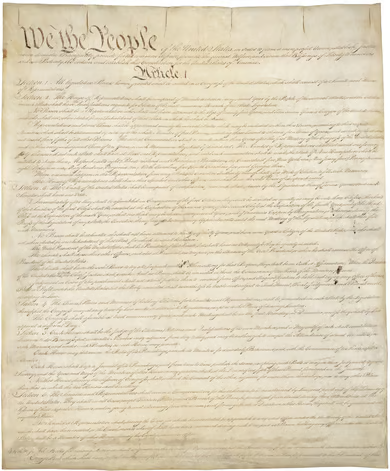
1788 – Virginia is the 10th state to Ratify the U.S. Constitution


The supreme law of the United States of America, the US Constitution, was drafted by the Philadelphia Constitutional Convention which took place between May 25 and September 17, 1787.

It was the first constitution of its kind, and has influenced the constitutions of many other nations.

Since the Constitution came into force in 1789, it has been amended 27 times.

Source: history.com

TO: Congress


Protect the Right to Contraception NOW!

Republicans in the Senate have BLOCKED a bill that would protect the right to use basic birth control, like IUDs, Plan B, and the pill. Sign the petition to demand representatives sign on to a discharge petition that would force Republicans to bring the Right to Contraception Act to a vote in the House THIS YEAR! 

Why is this important?

First, abortion. Then, IVF. Now, conservative lawmakers are putting contraception at risk.

Nearly all voters—Republicans, Democrats, and Independents—support the right to contraception. Millions of people use it to plan their families and manage their health. But instead of protecting this right and enshrining it into law, Republicans in the Senate blocked the Right to Contraception Act.

Every American should have the freedom to use contraception if and when they need it—and the assurance that the government will never take it away from us.

Right now, there’s another path forward. A discharge petition is circulating in the House of Representatives that, if they get enough signatures, would force the Republican majority to bring the Right to Contraception Act to a vote in the House. Sign the petition to urge your representative to support the right to contraception, sign the discharge petition, and fight for our freedom to plan our families and our futures. 

Source: moveon.org

politics,pollution,petitions,pop culture & purses