Limits on Move-In Fees: The regulations also impose limits on move-in fees. This helps prevent excessive upfront costs for renters when moving into a new rental property.
Late Fee Cap: Late fees are now capped at 1.5% of the rent amount. This ensures that landlords cannot impose disproportionately high penalties for late payments.
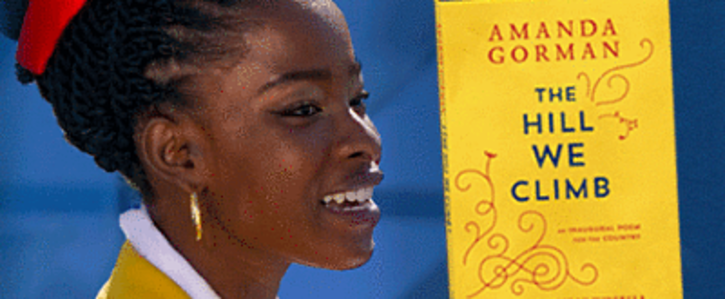
Books are being challenged, restricted, removed, or outright banned from schools across the country—including the first-ever National Youth Poet Laureate Amanda Gorman’s “The Hill We Climb.” Students should be encouraged to read books that accurately reflect the diversity and history of our country. Celebrate this history-making piece of literature and make sure students everywhere have the freedom and encouragement to read it.
Why is this important?
It only took one complaint and one week for a school in Miami-Dade County to restrict Amanda Gorman’s book—“The Hill We Climb”—and limit access for younger students. It was one book of several that an individual parent reported, citing that it was “not educational” and contained indirect hate speech. [1]
Schools should not so swiftly censor literature based on the whims of individual parents. This is part of a sweeping trend across the country to ban and restrict books, often targeting authors and content from historically marginalized and underrepresented groups. And because of conservative laws being passed on the local and state level, it’s even easier in many places for a small but loud minority to challenge books—and win.
In response to the incident, Amanda Gorman wrote: “The Hill We Climb is an inaugural poem for the world. Relocating it to older age group library shelves by its nature bars younger and equally deserving generations from accessing said moment in history.” [2]
Amanda Gorman made history when she read “The Hill We Climb” at President Joe Biden’s inauguration—the youngest inaugural poet to date. People of all ages deserve to have access to her work and see themselves not only in the context of that moment, but also in the possibilities of the future. They, too, can make history.
We refuse to allow one parent’s opinion to limit our children’s freedom to read, learn, and imagine. Join us in calling on the Department of Education and State Education Departments to add “The Hill We Climb” to every associated recommended reading list in the country and to reaffirm the values of equality and access espoused in the mission of the DOE. [3]
A young woman … with people surrounding her crying and screaming; please make, her breathe, asking why won’t she breathe, and lastly, someone else was putting pressure on her chest …
She died…
And
It makes a person angry, hope everyone in America, the International community … The World is watching
HEAD-QUARTERS, DISTRICT OF TEXAS Galveston, Texas June 19, 1865
The people of Texas are informed that in accordance with the proclamation from the executive of the United States. All slaves are free. This involves absolute personal rights, and rights of property between former masters and slaves; and the connection heretofore existing between them becomes that between employer and hired laborer.
The freedmen are advised to remain quietly at their homes, and work for wages. They are informed that they will not be allowed to collect at military posts, and that they will not be supported in idleness either here or elsewhere.
by order of Maj. Gen. Gordon Granger
signed F.W. Emery
Major & A.A.G.
April 19, 1982 – NASA named Sally Ride to be first woman astronaut.
In 1983, astronaut and astrophysicist Sally Ride became the first American woman in space aboard the space shuttle Challenger.
Sally Ride died on July 23, 2012 at the age of 61, following a battle with pancreatic cancer.
Synopsis
Dr. Sally Ride studied at Stanford University before beating out 1,000 other applicants for a spot in NASA’s astronaut program. After rigorous training, Ride joined the Challenger shuttle mission on June 18, 1983, and became the first American woman in space.
Early Life and Education
Born on May 26, 1951, Sally Ride grew up in Los Angeles and went to Stanford University, where she was a double major in physics and English. Ride received bachelor’s degrees in both subjects in 1973. She continued to study physics at the university, earning a master’s degree in 1975 and a Ph.D. in 1978.
NASA
That same year, Ride beat out 1,000 other applicants for a spot in the National Aeronautics and Space Administration’s (NASA) astronaut program. She went through the program’s rigorous training program and got her chance to go into space and the record books in 1983. On June 18, Ride became the first American woman in space, aboard the space shuttle Challenger. As a mission specialist, she helped deploy satellites and worked other projects. She returned to Earth on June 24.
The next year, Ride again served as a mission specialist on a space shuttle flight in October. She was scheduled to take a third trip, but it was canceled after the tragic Challenger accident on January 28, 1986. After the accident, Ride served on the presidential commission that investigated the space shuttle explosion.
Later Years
After NASA, Ride became the director of the California Space Institute at the University of California, San Diego, as well as a professor of physics at the school in 1989. In 2001, she started her own company to create educational programs and products known as Sally Ride Science to help inspire girls and young women to pursue their interests in science and math. Ride served as president and CEO.
Death and Legacy
For her contributions to the field of science and space exploration, Ride received many honors, including the NASA Space Flight Medal and the NCAA’s Theodore Roosevelt Award. She was also inducted into the National Women’s Hall of Fame and the Astronaut Hall of Fame.
On July 23, 2012, Sally Ride died at the age of 61, following a 17-month battle with pancreatic cancer. She will always be remembered as a pioneering astronaut who went where no other American woman had gone before.





 Be a Seed for Change
You must be logged in to post a comment.