1776 – Washington refuses the British general’s letter of reconciliation


On August 30, 1776, General George Washington gives the New York Convention three reasons for the American retreat from Long Island. That same day, he rejects British General William Howe’s second letter of reconciliation.

With Howe and a superior British force having recently landed at Long Island—they handed the Continentals a humiliating defeat at the Battle of Brooklyn Heights on August 27—Washington gave these reasons for his decision to retreat: the need to reunite his forces, the extreme fatigue of his soldiers and the lack of proper shelter from the weather.

For his part, Howe had attempted to reconcile with the Patriots before blood was spilled, but had been rejected by Washington because he had failed to use Washington’s title of “general” when addressing the letter. Even after beating the Continentals at Brooklyn Heights, Howe looked for a peaceful resolution, allowing Washington and his army to escape by boat to Manhattan and sending yet another letter to Washington through American General John Sullivan. Washington refused to accept the missive, but gave Sullivan permission to deliver it to Congress in Philadelphia.

On September 11, Benjamin FranklinJohn Adams and other congressional representatives accepted Howe’s offer and reopened talks on Staten Island. The negotiations fell through when the British refused to accept American independence as a condition for peace.

Ida B. Wells – 19th Amendment Advocate


Ida Belle Wells was born in 1862 in Holly Springs, Mississippi. She was the oldest of six children born to Jim and Lizzie Wells. An intelligent child, Wells would read newspapers to her father and his friends at the family home, according to Patricia A. Schechter, author of “Ida B. Wells-Barnett & American Reform, 1880-1930” (University of North Carolina Press, 2001), writing for All About History magazine. She was brought up to value her education, her family and her Christian faith. In 1878, both of Wells’ parents died in a yellow fever epidemic.

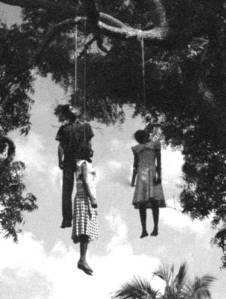
1874 16 blacks kidnapped from Gibson County Jail and lynched in Trenton, Tennessee


New York Times

On August 26, 1874, 16 Black men were seized from the Gibson County Jail in Trenton, Tennessee, and lynched. The group had been transferred from Picketsville, a neighboring town where they’d been arrested and accused of shooting at two white men.

Around 2 am that morning, a contingent of 400-500 masked white men who were mounted on horses and armed with shotguns demanded entrance to the Gibson County Jail. The men confronted the jailer and threatened to kill him if he did not relinquish the keys to the cell holding the African American men. After the jailer gave the leader of the mob the key, the members of the mob bound the Black men by their hands and led them out of the jail cell. The jailer would later testify that he soon heard a series of gun shots in the distance.

Soon afterward, the jailer found six of the men lying along nearby Huntingdon Road—four were dead, their bodies “riddled with bullets.” Two of the men who were found wounded but alive later died before receiving medical attention. The bodies of the 10 remaining men were later found at the bottom of a river about one mile from town.

Local white officials held an inquest that concluded the men were killed by “shots inflicted by guns in the hands of unknown parties.” Though all the victims of the violence had been Black, the town mayor expressed concern that local white people were in danger because Black people throughout the county might be planning to violently retaliate.

Just one day after the mass murder of 16 Black men by hundreds of white men who remained unidentified and free, the mayor ordered police to take all guns belonging to Trenton’s Black residents and threatened to shoot those who resisted.

calendar.eji.org

politics,pollution,petitions,pop culture & purses