

1972 1st black NL umpire is Art Williams for Los Angeles vs San Diego

1940 – “You Can’t Go Home Again” by Thomas Wolfe was published by Harper and Brothers.

“Child, child, have patience and belief, for life is many days, and each present hour will pass away. Son, son, you have been mad and drunken, furious and wild, filled with hatred and despair, and all the dark confusions of the soul – but so have we. You found the earth too great for your one life, you found your brain and sinew smaller than the hunger and desire that fed on them – but it has been this way with all men. You have stumbled on in darkness, you have been pulled in opposite directions, you have faltered, you have missed the way, but, child, this is the chronicle of the earth. And now, because you have known madness and despair, and because you will grow desperate again before you come to evening, we who have stormed the ramparts of the furious earth and been hurled back, we who have been maddened by the unknowable and bitter mystery of love, we who have hungered after fame and savored all of life, the tumult, pain, and frenzy, and now sit quietly by our windows watching all that henceforth never more shall touch us – we call upon you to take heart, for we can swear to you that these things pass.”
― You Can’t Go Home Again
Share this:

1928-Hundreds of Black Victims of Hurricane Denied Proper Burial in West Palm Beach, Florida
On September 16, 1928, a Category 4 hurricane with winds of 140 miles per hour made landfall in Palm Beach County, Florida. The hurricane destroyed a levee that protected a number of small, low-lying farming communities from the waters of Lake Okeechobee. Water from Lake Okeechobee rushed in when the levee was destroyed, killing thousands. Most residents in these areas were Black migrant farm workers.
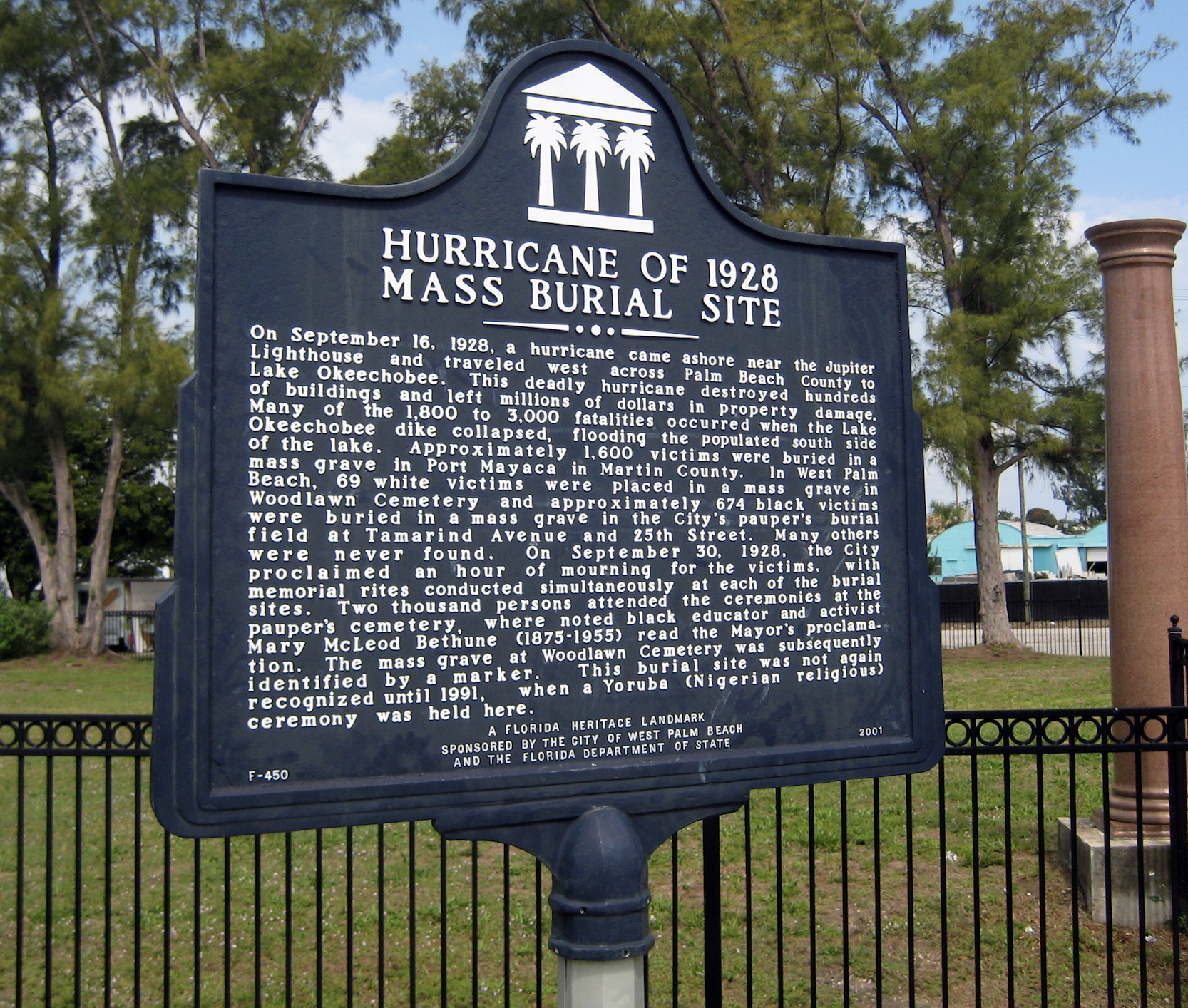
After the hurricane, Black survivors were forced to recover the bodies of those killed. The officials in charge of the recovery effort ordered that food would be provided only to those who worked, and some people who refused to work were shot.
The bodies of white storm victims were buried in coffins in local cemeteries, but local officials refused to provide coffins or proper burials for Black victims. Instead, their corpses were stacked in piles by the side of the roads, doused in fuel oil, and burned. Authorities bulldozed the bodies of 674 Black victims into a mass grave in West Palm Beach. The mass grave was not marked and the site was later sold for private industrial use—first used as a garbage dump, then a slaughterhouse, and then a sewage treatment plant.
calendar.eji.org


 Be a Seed for Change
You must be logged in to post a comment.