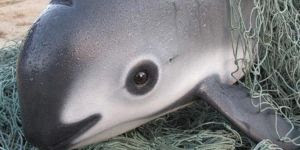
Wildlife …gone? 12 vaquitas left


SIGN HERE

There’s only 12 vaquitas left, down from 30 last year! But it’s not just the vaquitas we’re losing — we’re seeing a sixth mass extinction, and it’s human-made. Top scientists are backing an ambitious plan to put half of the earth under protection so species can recover but we urgently need governments to get on board. A massive nature summit is happening RIGHT NOW — sign the global campaign for nature and Avaaz will deliver our call straight to the meeting!

SIGN HERE

Dear friends,

We just found out that vaquitas — the super-cute “mini-dolphins” that live off the coast of Mexico — probably won’t survive. We’ve been fighting for them, but there are now only 12 left, down from 30 last year!

It’s not just vaquitas being driven into oblivion. A sixth mass extinction is underway and humans are almost entirely to blame. Almost two-thirds of wild animals have disappeared in the last 50 years!

Scientists say the solution is to protect half the planet, letting nature recover and restore itself — but our governments are dragging their feet because this crisis, and its solution, isn’t at the top of headlines!

But we have a small window to change that: a key nature summit is happening RIGHT NOW in Montreal, where our governments will discuss the course of protection for the next 30 years! Sign the global campaign for nature — Avaaz will take our message to the summit and tell the story we need our leaders to hear:

Click to stop the extinction crisis

Overfishing, deadly pesticides, deforestation, poaching — you name it. Humans are putting every animal and plant in the world in danger. Including ourselves. A UN-backed panel of 550 scientists just confirmed that this massive loss of biodiversity can disrupt our global food system, our oceans, the air we breathe, and even our economies.

But it doesn’t have to be this way — if we can kick start a plan to live in harmony with nature, setting aside half the land and sea, and sustainably managing the other half, we can stop this slide to oblivion.

We need to start paying attention to this crisis now — Avaaz has already met with world leaders and each time they say “we need to see that people care, it’s not in the news!” But they said the same thing about climate change, until we rallied millions across the world and campaigned massively to make it the top of the headlines. The result was the historic Paris Climate Agreement.

Now we need to do the same for nature — let’s sound the alarm for our governments and make sure protection is at the top of their list. Add your name now for our plants and animals:

Click to stop the extinction crisis

Our movement has been at the front lines of environmental defense globally — just recently, 1.8 million Avaaz members pushed Brazil to protect a swath of the Amazon the size of Denmark, FOUR times we’ve helped create a new standard for the largest marine reserve on the planet to save our oceans, and much more. It’s time to unite again, to protect our fellow animals and plants who share this planet with all of us.

With hope and determination,

Diego, Marigona, Danny, Alice, Patri and the rest of the Avaaz team.

SOURCES:

Scientists call for a Paris-style agreement to save life on Earth (The Guardian)
https://www.theguardian.com/environment/radical-conservation/2018/jun/28/scientists-call-for-a-paris-style-agreement-to-save-life-on-earth

Only 12 vaquita porpoises remain, watchdog group reports (MongaBay)
https://news.mongabay.com/2018/03/only-12-vaquita-porpoises-remain-watchdog-groups-report/

Life on Earth Is Under Assault—But There’s Still Hope (National Geographic)
https://news.nationalgeographic.com/2018/03/ipbes-biodiversity-report-conservation-climate-change-spd/

Last male northern white rhino’s death highlights ‘huge extinction crisis’ (the Guardian):
https://www.theguardian.com/environment/2018/mar/20/last-male-northern-white-rhinos-death-highlights…

Sixth mass extinction: The era of ‘biological annihilation’ (CNN)
https://www.cnn.com/2017/07/11/world/sutter-mass-extinction-ceballos-study/index.html

Could we set aside half the Earth for nature? (The Guardian):
https://www.theguardian.com/environment/radical-conservation/2016/jun/15/could-we-set-aside-half-the-earth-for-nature

What is Biodiversity?


Biodiversity or Biological diversity is a term that describes the variety of living beings on earth. In short, it is described as degree of variation of life. Biological diversity encompasses microorganism, plants, animals and ecosystems such as coral reefs, forests, rainforests, deserts etc.

Biodiversity also refers to the number, or abundance of different species living within a particular region. It represents the wealth of biological resources available to us. It’s all about the sustaining the natural area made up of community of plants, animals, and other living things that is begin reduced at a steady rate as we plan human activities that is being reduced by habitat destruction.

The United Nations designated 2011–2020 as the United Nations Decade on Biodiversity. In biodiversity, each species, no matter how big or small has an important role to play in ecosystem. Various plant and animal species depend on each other for what each offers and these diverse species ensures natural sustainability for all life forms. A healthy and solid biodiversity can recover itself from variety of disasters.
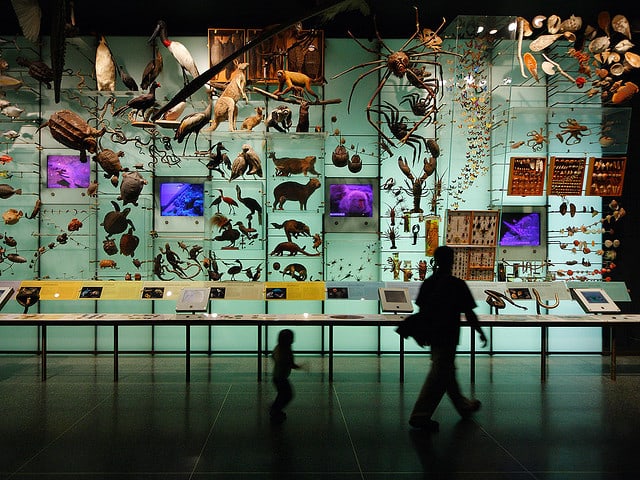
Biodiversity

Biodiversity has three essential elements:

  • Genetic diversity,
  • Eco system diversity and
  • Species diversity

Recently a new aspect has also been added- ‘molecular diversity’.

Biodiversity is unevenly distributed. It varies globally and within regions. The various factors that influence biodiversity include -temperature, altitude, precipitation, soils and their relation with other species. For instance, ocean biodiversity is 25 times lesser than terrestrial diversity. Biodiversity also increases its form as it moves from the poles towards the tropics.

Biodiversity is the result of 3.5 billion years of evolution. It has been subject to periods of extinction. The latest and most destructive stage of extinction is Holocene extinction, which has occurred due to the impact of human beings on the environment.

Why is Biodiversity Important?

Biodiversity has a number of functions  on the Earth. These are as follows:

  • Maintaining balance of the ecosystem: Recycling and storage of nutrients, combating pollution, and stabilizing climate, protecting water resources, forming and protecting soil and maintaining ecobalance.
  • Provision of biological resources: Provision of medicines and pharmaceuticals, food for the human population and animals, ornamental plants, wood products, breeding stock and diversity of species, ecosystems and genes.
  • Social benefits: Recreation and tourism, cultural value and education and research.

The role of biodiversity in the following areas will help make clear the importance of biodiversity in human life:
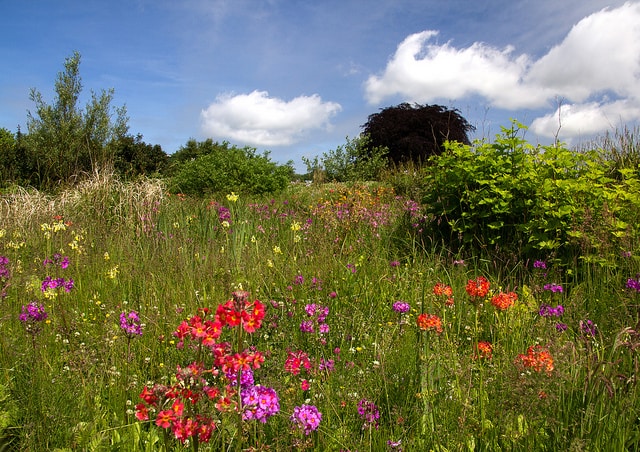
  • Biodiversity and food: 80% of human food supply comes from 20 kinds of plants. But humans use 40,000 species for food, clothing and shelter. Biodiversity provides for variety of foods for the planet.
  • Biodiversity and human health: The shortage of drinking water is expected to create a major global crisis. Biodiversity also plays an important role in drug discovery and medicinal resources. Medicines from nature account for  usage by  80% of the world’s population.
  • Biodiversity and industry: Biological sources provide many industrial materials. These include fiber, oil, dyes, rubber, water, timber, paper and food.
  • Biodiversity and culture: Biodiversity enhances recreational activities like bird watching, fishing, trekking etc. It inspires musicians and artists.

Biodiversity_Plants

Reason for Loss of Biodiversity

The earth’s biodiversity is in grave danger. In the present era, human beings are the most dangerous cause of destruction of the earth’s biodiversity. In 2006, the terms threatened, endangered or rare were used to describe the status of many species. The “evil quartet” identified by Jared Diamond is overkill, habitat destruction, secondary extinctions and introduced species. Factors identified by Edward Wilson are described by the acronym- HIPPO standing for habitat destruction, climate change, invasive species, pollution, human overpopulation and over-harvesting.

Habitat destruction is a major cause for biodiversity loss. Habitat loss is caused by deforestation, overpopulation, pollution and global warming. Species which are physically large and those living in forests or oceans are more affected by habitat reduction.

Some expert’s estimate that around 30% of all species on earth will be extinct by 2050. According to the International Union for Conservation of Nature (IUCN), globally about one third of all known species are threatened with extinction. Even it is estimated that 25% of all mammals will be extinct within 20 years.

Even if a  small element of an ecosystem breaks down, the whole system’s balance  is threatened. Fresh water ecosystems are nowadays the most threatened ecosystems. Invasive species refer to those that would normally remain constrained from an ecosystem because of the presence of natural barriers. Since these barriers are no longer existing, invasive species invade the ecosystem, destroying native species. Human activities have been the major cause for encouraging invasive species.

Species can also be threatened by genetic pollution- uncontrolled hybridization and gene swamping. For instance, abundant species can interbreed with rare species thus causing swamping of the gene pool. Over exploitation is caused by activities such as over fishing, over hunting, excessive logging and illegal trade of wildlife. Over 25% of  global fisheries are being overfished at unsustainable levels.

Global warming is also becoming a major cause for loss of biodiversity. For example if the present rate of global warming continues, coral reefs which are biodiversity hotspots will disappear in 20-40 years. 10% of all species might become extinct by 2015, if global warming continues.

Thus we can see that biodiversity which is crucial for the well being of life on earth, is coming under the threat of many factors related to human activities. There is an urgent need to take action to protect the magnificent biodiversity of our planet. We must create economic policies in order to maintain the Earth’s biodiversity and take appropriate measures to protect habitats and species.

Image credit: Dom Dada , Eiona R.

References:

http://www.nwf.org/Wildlife/Wildlife-Conservation/Biodiversity.aspx

The Nation this week ~ workingwa.org


politics,pollution,petitions,pop culture & purses