What is Biodiversity?


Biodiversity or Biological diversity is a term that describes the variety of living beings on earth. In short, it is described as degree of variation of life. Biological diversity encompasses microorganism, plants, animals and ecosystems such as coral reefs, forests, rainforests, deserts etc.

Biodiversity also refers to the number, or abundance of different species living within a particular region. It represents the wealth of biological resources available to us. It’s all about the sustaining the natural area made up of community of plants, animals, and other living things that is begin reduced at a steady rate as we plan human activities that is being reduced by habitat destruction.

The United Nations designated 2011–2020 as the United Nations Decade on Biodiversity. In biodiversity, each species, no matter how big or small has an important role to play in ecosystem. Various plant and animal species depend on each other for what each offers and these diverse species ensures natural sustainability for all life forms. A healthy and solid biodiversity can recover itself from variety of disasters.
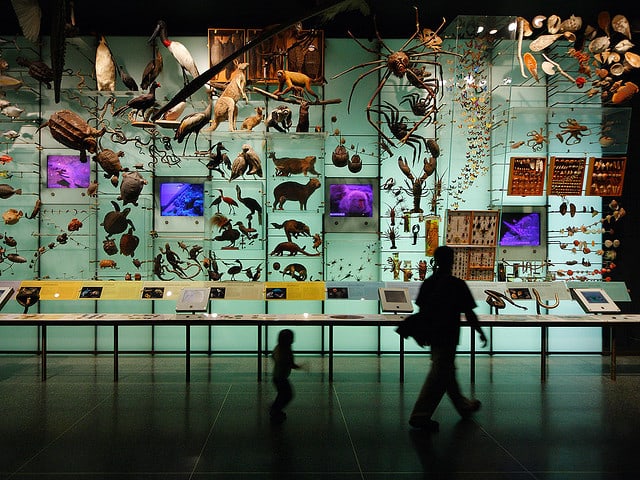
Biodiversity

Biodiversity has three essential elements:

  • Genetic diversity,
  • Eco system diversity and
  • Species diversity

Recently a new aspect has also been added- ‘molecular diversity’.

Biodiversity is unevenly distributed. It varies globally and within regions. The various factors that influence biodiversity include -temperature, altitude, precipitation, soils and their relation with other species. For instance, ocean biodiversity is 25 times lesser than terrestrial diversity. Biodiversity also increases its form as it moves from the poles towards the tropics.

Biodiversity is the result of 3.5 billion years of evolution. It has been subject to periods of extinction. The latest and most destructive stage of extinction is Holocene extinction, which has occurred due to the impact of human beings on the environment.

Why is Biodiversity Important?

Biodiversity has a number of functions  on the Earth. These are as follows:

  • Maintaining balance of the ecosystem: Recycling and storage of nutrients, combating pollution, and stabilizing climate, protecting water resources, forming and protecting soil and maintaining ecobalance.
  • Provision of biological resources: Provision of medicines and pharmaceuticals, food for the human population and animals, ornamental plants, wood products, breeding stock and diversity of species, ecosystems and genes.
  • Social benefits: Recreation and tourism, cultural value and education and research.

The role of biodiversity in the following areas will help make clear the importance of biodiversity in human life:

  • Biodiversity and food: 80% of human food supply comes from 20 kinds of plants. But humans use 40,000 species for food, clothing and shelter. Biodiversity provides for variety of foods for the planet.
  • Biodiversity and human health: The shortage of drinking water is expected to create a major global crisis. Biodiversity also plays an important role in drug discovery and medicinal resources. Medicines from nature account for  usage by  80% of the world’s population.
  • Biodiversity and industry: Biological sources provide many industrial materials. These include fiber, oil, dyes, rubber, water, timber, paper and food.
  • Biodiversity and culture: Biodiversity enhances recreational activities like bird watching, fishing, trekking etc. It inspires musicians and artists.
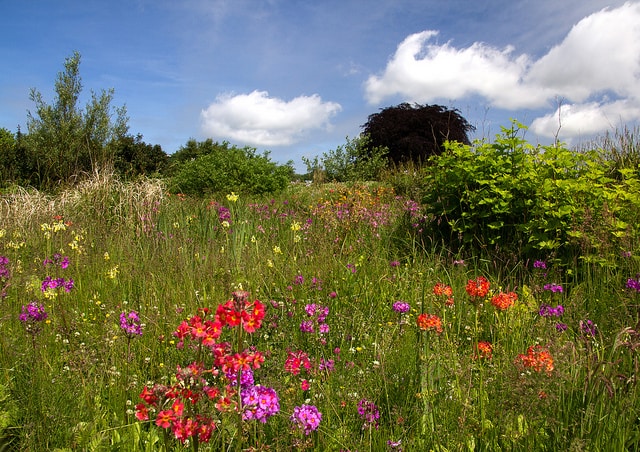
Biodiversity_Plants

Reason for Loss of Biodiversity

The earth’s biodiversity is in grave danger. In the present era, human beings are the most dangerous cause of destruction of the earth’s biodiversity. In 2006, the terms threatened, endangered or rare were used to describe the status of many species. The “evil quartet” identified by Jared Diamond is overkill, habitat destruction, secondary extinctions and introduced species. Factors identified by Edward Wilson are described by the acronym- HIPPO standing for habitat destruction, climate change, invasive species, pollution, human overpopulation and over-harvesting.

Habitat destruction is a major cause for biodiversity loss. Habitat loss is caused by deforestation, overpopulation, pollution and global warming. Species which are physically large and those living in forests or oceans are more affected by habitat reduction.

Some expert’s estimate that around 30% of all species on earth will be extinct by 2050. According to the International Union for Conservation of Nature (IUCN), globally about one third of all known species are threatened with extinction. Even it is estimated that 25% of all mammals will be extinct within 20 years.

Even if a  small element of an ecosystem breaks down, the whole system’s balance  is threatened. Fresh water ecosystems are nowadays the most threatened ecosystems. Invasive species refer to those that would normally remain constrained from an ecosystem because of the presence of natural barriers. Since these barriers are no longer existing, invasive species invade the ecosystem, destroying native species. Human activities have been the major cause for encouraging invasive species.

Species can also be threatened by genetic pollution- uncontrolled hybridization and gene swamping. For instance, abundant species can interbreed with rare species thus causing swamping of the gene pool. Over exploitation is caused by activities such as over fishing, over hunting, excessive logging and illegal trade of wildlife. Over 25% of  global fisheries are being overfished at unsustainable levels.

Global warming is also becoming a major cause for loss of biodiversity. For example if the present rate of global warming continues, coral reefs which are biodiversity hotspots will disappear in 20-40 years. 10% of all species might become extinct by 2015, if global warming continues.

Thus we can see that biodiversity which is crucial for the well being of life on earth, is coming under the threat of many factors related to human activities. There is an urgent need to take action to protect the magnificent biodiversity of our planet. We must create economic policies in order to maintain the Earth’s biodiversity and take appropriate measures to protect habitats and species.

Image credit: Dom Dada , Eiona R.

References:

http://www.nwf.org/Wildlife/Wildlife-Conservation/Biodiversity.aspx

The Nation this week ~ workingwa.org


Americans Reminded to Avoid Foodborne Bacteria on the 4th of July


Hamburgers on a grill.No matter where you find yourself on the Fourth of July, you will probably see copious amounts of food, beverages and grass-stained sneakers. Whether you’re enjoying a barbecue in the great outdoors, traveling to see family or friends, or spending time at home, we are urging everyone to take extra food safety precautions when planning their menu.

The U.S. Centers for Disease Control and Prevention estimates that 1 in 6 Americans (that’s 48 million people) suffer from foodborne illness each year, resulting in roughly 128,000 hospitalizations and 3,000 deaths.

Because foodborne bacteria thrive and multiply more quickly in warmer temperatures, foodborne illness can spike during summer. This is likely because people are spending more time outside – away from the sink and equipment in the kitchen that promotes food safety.

The Danger Zone is the temperature range between 40 °F and 140 °F in which foodborne bacteria can grow rapidly to dangerous levels that can cause illness. Leaving perishables out too long in the Danger Zone is one of the most common mistakes people make, especially during warmer months.

Keep Food Out of the Danger Zone

The USDA’s Meat and Poultry Hotline, staffed by USDA food safety experts, routinely gets calls from consumers with questions about the perishable foods left out too long. Below are their recommendations on how to steer clear of the Danger Zone this Fourth of July:

  • Without refrigeration or a heat source, perishables should not be left out more than two hours if the temperature is below 90 ⁰F, and only one hour if the temperature is at or above 90 ⁰F. Since the weather will likely be very hot on July 4th, food should be returned to the cooler within an hour. If you are not sure how long food has been sitting out, throw it out immediately.
  • Always keep cold food COLD, at or below 40 °F, in coolers or in containers with a cold source such as ice or frozen gel packs. Keep hot food HOT, at or above 140 °F, on the grill or in insulated containers, heated chafing dishes, warming trays and/or slow cookers. If food needs to be reheated, reheat it to 165 °F.
  • Pack an appliance thermometer in your cooler to ensure food stays at or below 40 °F. Divide large amounts of food into shallow containers for fast chilling and easier use.
  • Packing drinks in a separate cooler is strongly recommended, so the food cooler isn’t opened frequently.  Keep the cooler in the shade, and try to cover it with a blanket or tarp to keep it cool. Replenish the ice if it melts.
  • Use the food thermometer to check the internal temperature of meat, poultry and seafood. Use our Is It Done Yet? guide to learn where to place the thermometer in each item. You absolutely can’t tell whether the meat is safely cooked by just looking.
  • If you plan to marinate meat and/or poultry for several hours or overnight prior to the event, make sure to marinate them in the refrigerator – not on the counter. If you plan to reuse the marinade from raw meat or poultry, make sure to boil it first to destroy any harmful bacteria.
  • To ensure safety, leftovers must be put in shallow containers for quick cooling and refrigerated to 40 ⁰F or below within two hours.

If you have food storage questions, download our FoodKeeper application. This app offers guidance on the safe storage or more than 400 food and beverage items. It’ll give you a peace of mind knowing you served your dish safely.

As always, FSIS would like everyone to remember the four easy food safety steps of Clean, Separate, Cook and Chill and have a food safe Fourth of July!

If you have questions about the Danger Zone, or any other food safety topics, call the USDA Meat & Poultry Hotline at 1-888MPHotline or chat live with a food safety specialist at AskKaren.gov. These services are available from 10:00 a.m. to 4:00 p.m. Eastern Time, Monday through Friday, in English and Spanish.

posted 2016

Happy 4th of July


The 4th of July … for many, is just another day; some use it to contemplate on what Independence Day means personally, some partake in public services while others are thinking about war and the intent for independence and the power that it gives.

I admit sometimes it feels like our independence is being compromised every time the Republicans fail to do the right thing for our fellow Americans each day they convene on the floor of Congress.

I grew up in military country; know people who have proudly served, died, live and some who came back damaged.  I think about how war affects our independence and the unimaginable unthinkable things our Soldiers see and go through, having had a brother who suffered through his own horrific journey of war; it could only be seen as a daily dose of hell for him and probably for countless others. So, unless you are a part of the Military or live in a Military town, you can only imagine what a family experiences and as civilians we definitely should be aware and be grateful for their sacrifices

So, as we all celebrate our own style of independence give a shout out to those you know, love and miss who serve and protect us.

Pilot Whale ~ Fact Sheet


CLASS: Mammalia
ORDER: Cetacea
SUBORDER: Odontoceti
FAMILY: Delphinidae
GENUS:  Globicephala
SPECIES: melas (long-finned) and macrorhynchus (short-finned)

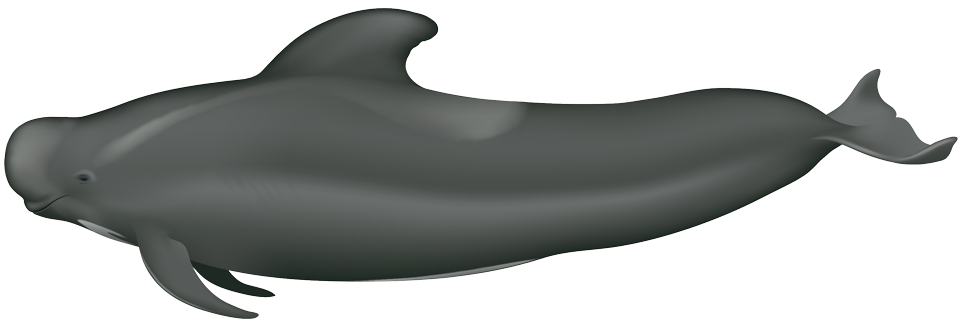
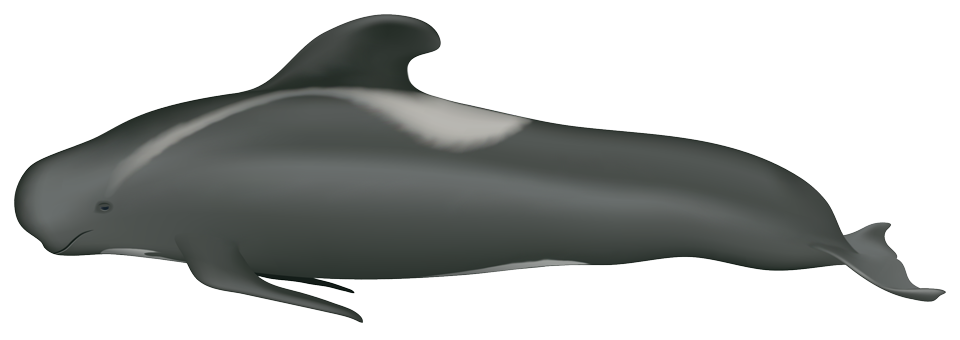
Short-finned pilot whale (Globicephala macrorhynchus)

Short-finned pilot whale

Long-finned pilot whale (Globicephala melas)

Long-finned pilot whale

The pilot whale, like the killer whale, is a member of the dolphin family, and is second only to the killer whale in size. Displaying intelligence equal to that of the bottlenose dolphin, the pilot whale is easily trained. One captive pilot whale named Morgan was trained by Navy scientists to retrieve beeper-attached objects from the ocean floor at depths of over 1,600 feet. Carrying a clamping recovery device in his mouth, he attached it to the located object, which was then raised to the surface by compressed air balloons. The pilot whale is extremely social, and is well known for stranding in groups of a few animals to several hundred at a time.


Physical Description

The pilot whale has a distinct rounded head with a very slight beak and an up-curved mouthline. In males the rounded head may protrude up to 4 inches over the lower jaw. Its body is long and stocky, narrowing along the caudal peduncle (tailstock).

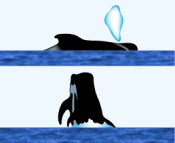
Pilot Whale Surface Characteristics
Surface Characteristics


Color

Generally all black to coal gray, the pilot whale has a white or light gray anchor-shaped patch on its ventral (bottom) surface. The short-finned pilot whale has a faint gray saddle patch behind the dorsal (top) fin.

Fins and Fluke

Its prominent dorsal (top) fin is located on the forward part of its back, and is falcate (strongly curved) with a long base. Its flippers are sickle shaped and, in the long-finned pilot whale, very long.

Length and Weight

Males are much larger than females. Adult males measure up to 20 feet (6.1 m) and weigh up to 3 tons. Adult females measure up to 16 feet (4.9 m) and weigh up to 1.5 tons.

Feeding

The pilot whale feeds primarily on squid, although it’s known to eat octopus, cuttlefish, herring and other small fish when squid is unavailable. It has only 40 to 48 teeth, compared to 120 in many other dolphin species. This may represent an evolutionary trend toward fewer teeth in squid eaters. Its teeth are used only for catching/grasping. An adult pilot whale may eat up to 30 pounds per day. In Newfoundland, pilot whales have been seen hunting in groups to help concentrate their prey. One pod was observed entering a bay in a line, slowly closing the line into a circle, and trapping the prey in the center. Powerful high-pitched whistles appear to be involved in coordinating this activity.

Mating and Breeding

Males reach sexual maturity at about 15 to 16 feet (4.6 m) and 12 years of age. Females reach sexual maturity at about 12 feet (3.7 m) and 6 to 7 years of age. Gestation lasts approximately 12 to15 months and calving occurs once every 3 to 5 years. Calves are generally 6 feet (1.8 m) at birth, and weigh about 225 pounds. The calf nurses for up to 22 months, with some evidence for longer lactation and extensive mother calf bonds. Most calves are born in the summer, though some calving occurs throughout the year. The males may compete for mates with fights involving butting, biting, and ramming. Mating also involves these activities, and some females carry scars from bites inflicted by males during the breeding season. Females have been observed to have calves as late as 35 years old, and lactate as late as 51. This evidence indicates that females may nurse their last calf until puberty (up to 10 years in males).

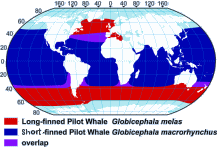
Pilot Whale Range Map
Range Map


Distribution and Migration

In general, pilot whales are found in both the northern and southern hemispheres, in tropical and temperate waters throughout the world. Short-finned pilot whales tend to be found in warmer waters, while cold and more temperate waters are preferred by the long-finned variety. There are some areas of overlap between the two species, but they remain segregated in most areas.

Natural History

Pilot whales are very social, and are most often found in groups of 20 to 90. Within these groups are at least some stable associations, usually between related females and their offspring. There are usually some males in these groups, but genetic evidence has shown that these males are not the fathers of the calves in the group. Several calves in one group may be fathered by the same male, indicating that a male can enter a group for a brief period and mate with more than one female. Partly because of their social nature, pilot whales are often involved in mass strandings. In this century, mass strandings of as many as several hundred pilot whales at one time have been recorded. Although no one knows why these beachings occur, some may result from persistence to keep the group together. Other reasons may involve mis-navigation when following prey, when traveling (possibly due to irregularities in the magnetic field), or possible parasitic infections resulting in neurological disorders.

Status

Figures for both species of pilot whales are unknown, and even though they are depleted in some areas, pilot whales are not considered to be endangered. There are likely to be almost a million long-finned pilot whales and at least 200,000 short-finned pilot whales worldwide. Humans have taken advantage of the social nature of pilot whales. “Drive fisheries,” where groups are herded to the beach for slaughter, have taken place on Cape Cod, Newfoundland, the Faroe, Shetland, and Orkney Islands, Iceland, and Norway. The whales have been killed for meat, bone, fertilizer, and oil. In some places, such as the Faroe Islands, the kill continues today despite an obvious decrease in whale numbers. One drive fishery in Newfoundland killed over 50,000 whales between 1951 and 1961, rapidly decreasing the number of pilot whales in Newfoundland waters. Other kills have not had such a drastic effect. Pilot whales are also being used by man as exhibition animals. They are displayed in many aquariums and zoos.


Bibliography

  • Bernard, H.J. and Reilly, S.B. (1999). Pilot whales. In: Handbook of Marine Mammals (S.H. Ridgeway and R. Harrison, eds.), volume 6. Academic Press, London. Pp. 245-279.
  • Jefferson, T.A., M.A. Webber, R.L. Pitman. 2015. Marine Mammals of the World: A Comprehensive Guide to their Identification, 2nd edition. Elsevier/AP.
  • Olson, P.A. and Reilly, S.B. (2002). Pilot whales. In: Encyclopedia of Marine Mammals (W.F. Perrin, B. Wursig, and J.G.M. Thewissen, eds.). Academic Press, New York. Pp. 898-903.

 Acknowledgements

We greatly appreciate the knowledge and assistance of Kate Sardi and Mason Weinrich, both of the Whale Center of New England, who contributed to the revision of this fact sheet. Illustrations courtesy Uko Gorter, copyright ©2017 all rights reserved.

FACT SHEETS MAY BE REPRINTED FOR EDUCATIONAL OR SCIENTIFIC PURPOSES

politics,pollution,petitions,pop culture & purses