Tag Archives: Barack Obama

Marxism? Socialism? What ism are you?


beaseedforchangestickersGREENjust another rant …

So, is anyone else finding it almost amusing to see how easily folks seem to throw out labels to describe the actions, comments, and stances of candidates from the Democratic Party at a time when this government is seemingly in a kleptocracy moment while existing in a kakistocracy with wannabe autocratic tendencies? We see the media report poll numbers, and Trump is NOT popular. The plan to change America was set a while back, and it appears that McConnell and other Republicans, like Paul Ryan, were waiting for their chance. If you remember Ryan’s comments, he mentioned how he had been waiting for a “unified Republican government.” Thing is, no one really wanted that acting gig until the birther grabbed us by the… bleep, setting all our government agencies on fire; the rule of law, regular order, and norms were replaced with dictator-wannabe behavior. We need to trust the Democratic Party because our morality seems at risk in the hands of Republicans! This should make you think back to at least POTUS 41… but not too long, because you’ll get sick.

However, then reality steps in as people of color continue to be targeted; the police seem triggered more than ever. The problem of a certain group of males continues to gain access to guns, hurting others and, in most cases, themselves, and that is a shame. We have more kids, babies, and seniors, as well as people of color, massacred at malls; kids in school lockdowns have nowhere to hide, and we must never forget all the babies who have died. There are lockdown drills; some states have given teachers guns, but mass shootings continue to occur, and nothing changes. Most teachers do not want to play the role of police in a classroom because they have enough to do, but there was a case of a teacher threatening to shoot her students after having just had training… Sadly, it makes you wonder what could go wrong as more unarmed Black men and women are dying or are already dead! We have been living through so much chaos; thoughts and prayers are NOT enough anymore. The idea that an activist is actually run over and some states decide to pass red flag laws but can’t improve background checks for gun buyers is amazingly offensive. We should all know that folks who belong to the NRA think better background checks are reasonable, but they continue to insist that the gun industry is very strong. So when its favorite organization says to jump, many Republicans and most do jump… There have been many instances of violence in this era of Trump, and hopefully, we can correct what has been broken because this will be a timeline few will want to remember in the new year of 2027. We have to remember that the Bush timeline, aside from the obvious, is sad; the guy acted impetuously and literally drove our economy into a ditch while Wall Street’s “creative accounting procedures” finally came to an ugly head.

There was an epic documentary called *House of Cards* by David Faber on CNBC. It was a cruel reminder or an awakening of how greed affects the mind; it was a truthful documentation of the nasty journey our economy took… for whom, by whom, and how they brought all of us down with them, knowing the government would pay for it all along. Unfortunately, the current Trump unreality potus show doesn’t resemble the docu-drama we watched shortly after our financial system collapsed because this is a moment in time when the question below isn’t so far-fetched… or worse, a dystopian society?

**Are You Having an Existential Crisis?** An existential crisis is something many people may face at some point in their lives when the world seems to become less meaningful and purposeful. People may question the inner logic of social systems, their religion, and everything they have once held true, while becoming more conscious of the brevity of life.

What is an existential issue?

Quite simply, these are issues that pertain to the plight of human existence, the meaning of life, and what meaning, if any, our lives hold. Trump has definitely set off a cause-and-effect due to certain behaviors of human nature. Is anyone else questioning their inner selves? I hope Trump supporters are; it is important to reflect on what it means to affirm your own individual choices and the consequences of such choices. In this current hostile environment, living an authentic life is crucial, but at risk. If we have to subscribe to labels, call me a Marxist who believes in Socialism at this time, lol. I also believe in capitalism, but only with a lowercase “c.” We need someone who cares, is socially responsible, and who believes the gap between the haves and have-nots needs to shrink.

School me, what is wrong with caring for all the people of the United States, not just the one percent? Especially since that one percent has been wheeling and dealing, and that attitude about prosperity trickling down to Main Street is still BS.

Obama was not a socialist or a Marxist. He was a centrist—whose politics and opinions didn’t seem extreme, and who had a strong belief in humanity as POTUS

The question is, what do trump supporters call him now?

Nativegrl77

Silicon Valley’s narrative ~~~ On Black folks …ColorOfChange team


In memory …

Silicon Valley has a problem.

Black Twitter

Tell Twitter to disclose its diversity data and host a public forum on making Silicon Valley more inclusive.

Take Action


Last year, when confronted with criticism about his appointment of an all-white, all-male Board of Directors, Dick Costolo – the CEO of Twitter – responded with a dismissive, joking tweet. 

“The whole thing has to be about more than checking a box & saying ‘we did it!’,” he later typed.1

It’s been months now since Costolo’s defensive response and although Twitter later added a white woman to its Board,2 the company has yet to publicly address the failure to appoint a single Black person despite data that confirms that Black folks make up a disproportionate share of Twitter’s user-base.

Much worse, in recent weeks as other Silicon Valley tech companies like Facebook, Yahoo, Google, and LinkedIn took the historic first step to release depressing data about the racial and gender composition of their staffs, Twitter has remained silent — refusing to jump on the data-release-bandwagon.3

That’s why we’re joining with Rev. Jesse Jackson and the Rainbow Push Coalition to call on Twitter to do two things: 1) release its employee diversity numbers immediately and 2) signal its commitment to real inclusion by hosting a public community forum that addresses the company’s plan to recruit and retain more Black talent. Will you join us? It only takes a minute.

Twitter is unlikely to break any trends

To date, most of the data disclosures have confirmed that Silicon Valley prefers its workers to be male and either white or Asian.4, 5 And although Twitter is unlikely to break any diversity trends that have emerged, transparency and a public commitment to improving the recruitment and retention of Black employees are critical first steps.

Though its minority representation numbers may mirror other Silicon Valley tech companies, Twitter has a unique role to play in this national conversation about hiring discrimination. Via the cultural force known as “Black Twitter,” Twitter has been built off the creativity of Black people, though they’re not on the payroll. 6, 7, 8 As such, the company owes our community more — more transparency, and a more thoughtful, solutions-oriented approach that addresses its failure to be more inclusive without blaming Black people.

Shifting the blame

Unfortunately, many of the tech companies (and their pundits) have been quick to incorrectly blame a leaky “talent pipeline” for the extreme racial hiring disparities revealed by these disclosures; pointing to statistics about the dearth of computer science degrees awarded to Black men and women, and bragging about their own philanthropic-investments in tech education for minorities.  Silicon Valley apologists are working to divert blame. 

Completely ignoring the fact that Black people are also severely underrepresented in nontechnical Silicon Valley roles, these blame-shifting tactics are not only misleading, they also serve to reinforce the false and problematic narrative that Black people are simply “unqualified,” undeserving and not valuable — that Black-thought is unqualified, underserving, and not valuable.

We cannot allow a corporate culture that seems hell-bent on making excuses for its replication of tired “good ol’ boy” networks to malign the intellectual and creative capacities of Black people in the process. 

Will you join us in this fight?

Thanks and Peace,

–Rashad, Arisha, Matt, Aimee, Bhavik, and the rest of the ColorOfChange team.
July 17, 2014

References

1.”Twitter CEO Takes Fire Over All Male Board”, ValleyWag, 2013-07-10

2. “Twitter appoints first woman, Marjorie Scardino, to board of directors“, The Washington Post, 2013-11-15

3. “Some in Silicon Valley Publicize Diversity, While Others Shy Away“, U.S. News, 2014-06-18 

4.”Silicon Valley Firms Are Even Whiter and More Male Than You Thought“, Mother Jones, 2014-05-29 

5. “Status Update: Facebook not so diverse“, USA Today, 2014-06-26 

6. “Black Twitter: A virtual community ready to hashtag out a response to cultural issues“, The Washington Post, 2014-01-20. 

7. “Mama I Made It: Pew Poll Study Confirms The Existence of Black Twitter“, okayplayer, 2014-01-01

8. “Black Twitter FINALLY Gets Recognized…so that Twitter can Sell Ads“, ValleyWag, 2014-21-01 

Nativegrl77's avatar

Nativegrl77nativegrl77Edit Profile

News from … April 4 2015- things to remember!


World

7 San Francisco officers suspended over racist texts Associated Press

**********

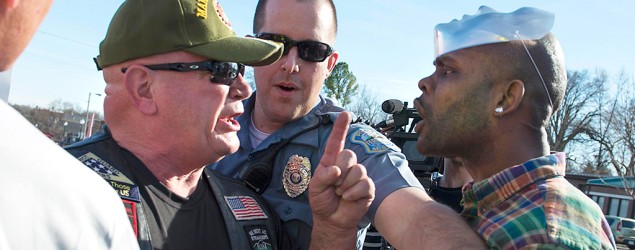
A police officer tries to separate a supporter of Michael Brown from a Ferguson police supporter. (Reuters)

Contents of racist Ferguson emails released

One of the messages compares black welfare recipients to mixed-breed dogs. 

Several references to President Obama »

**********

Here’s What Happens When Pregnant Women Lose Their Rights

Purvi Patel’s case is just the latest miscarriage of justice.

**********

Bethann Hardison on Winning Over the Battle of Versailles  Crowd

“I knew I nailed it.”

**********

A total lunar eclipse is coming Saturday morning. Don’t miss this “blood moon.”

**********

 Water, Cuts and Allocation of Pain
Critics of the historic drought restrictions announced this week by Gov. Jerry Brown want to know why he didn’t bring the hammer down on California farmers.

**********

21st Century … Colonialism


Residual Colonialism In The 21St Century …

  The 21st century deserves better. More importantly, the nearly 2 million people still living under colonial rule deserve better.

Article
definitely a repost
  • 2012•05•29

    John Quintero

    Residual colonialism in the 21st centuryPhoto: DB King

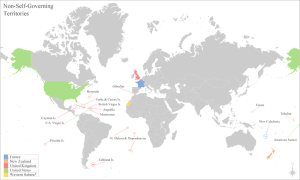
    Though colonialism is generally considered to be a relic of the past, nearly 2 million people in 16 “non-self-governing territories” across the globe still live under virtual colonial rule.  In recognition of the United Nations International Week of Solidarity with the Peoples of Non-Self-Governing Territories (25–31 May), we present this analysis of “residual colonialism in the 21st century”.

    ♦ ♦ ♦

    In 2009, the Government of the United Kingdom (UK) suspended parts of the Constitution of the Turks and Caicos Islands (TCI), a British Overseas Territory, in response to allegations of systemic corruption in the territory. Direct rule from London was imposed over the democratically elected local government. This unilateral, top-down action removed the constitutional right to trial by jury, suspended the ministerial government and the House of Assembly, and charged a UK-appointed Governor with the administration of the islands.

    A tentative period for elections has been given (fall 2012 at the earliest), but this is subject to the deliberation of the British government and tied to a series of specific milestones that must be met. These announcements provoked protests and demonstrations by the islanders. The suspension of the TCI government over corruption allegations seems to run contrary to the way in which financial and governance crises are handled around the world, including in the UK itself. Scandals are part of political life, but constitutions are not suspended nor are democratically elected governments and institutions disbanded.

    How is it that these events have occurred in a world based on a system of supposedly equal sovereign states? The answer lies in the little known fact that colonial structures continue to exist even today in some parts of the world.

    Continuing colonialism

    The wave of decolonization that swept around the world in the latter half of the 20th century was once heralded as one of the great liberating movements in history. Yet, few seem to realize that colonialism is still with us. As of 2012, 16 territories are deemed still to be under colonial rule and are labeled by the United Nations as “non-self-governing territories (NSGTs)” — areas in which the population has not yet attained a full measure of self-government.

    The 16 NSGTs, home to nearly 2 million people, are spread across the globe. They remain under the tutelage of former colonial powers (currently referred to as “administering powers”), such as the UK, the USA and France.

    Most of the NSGTs feature as only small dots on the world map but are in fact prominent players on the world stage. Some act as the world’s leading financial centres, with GDP per capita amongst the world’s top 10 (e.g., the Cayman Islands and Bermuda), some constitute vital bastions for regional security (e.g., Guam), and there are those whose geographical location has made them prone to diplomatic disputes (e.g., Gibraltar and the Falklands/Malvinas).

    A UN committee on decolonization does exist (Special Committee of 24 on Decolonization), under the purview of the Fourth Committee of the United Nations General Assembly (Special Political and Decolonization Committee). Its mission is to oversee the implementation of the Declaration on the Granting of Independence to Colonial Countries and Peoples (14 December 1960).

    The world underwent a political renovation following the formation of the United Nations in 1945, and the number of sovereign UN Member States has skyrocketed from the original 51 to 193. However, the 50-plus years since the founding of the United Nations have proved to be insufficient to eradicate a centuries-old structure of dominance. This is in spite of the advancement of legal systems based on the notions of the sovereign equality of states and human rights prevalent in the contemporary world.

    Decolonization, as bluntly put by UN Secretary General Ban Ki-moon, remains an unfinished business; an unfinished process that has been with the international community for too long. In solidarity with the peoples of the NSGTs, the present decade (2010-2020) has been declared the Third International Decade for the Eradication of Colonialism (as the past two decades have proved inadequate to ensure the disappearance of such an archaic concept).

    Independence is not the only option

    The doctrine of self-determination and political equality has prevailed as the guiding principle for decolonization ever since the inception of the United Nations. Much progress has been achieved and political autonomy for many former dependent states (micro-states, even) has been realized, but the decolonization process remains stalled. No territory has achieved self-government since East Timor (now Timor-Leste) won full independence from Indonesia in 2002.

    The many achievements of decolonization by the United Nations cannot be considered truly global while some peoples continue to live under colonial rule. Administering states such as the UK and France continue to exercise top-down authority through modernized dependency governance models that, while perhaps ensuring sustained economic progress, create a democratic deficit and political vulnerability based on unequal status.

    The decolonization agenda championed by the United Nations is not based exclusively on independence. There are three other ways in which an NSGT can exercise self-determination and reach a full measure of self-government (all of them equally legitimate): integration within the administering power, free association with the administering power, or some other mutually agreed upon option for self-rule.

    The current impasse is due, in part, to the denial by the administering states of these options, but also to a lack of public awareness on the part of the peoples of the NSGTs that they are entitled to freely determine their territory’s political status in accordance with the options presented to them by the United Nations. It is the exercise of the human right of self-determination, rather than independence per se, that the United Nations has continued to push for.
    ColonizedNon-Self-GoverningThe framework against colonialism

    International law provides a particularly effective conceptual framework from which to criticize these complex dependency arrangements. In the UN Charter, not only Articles 1 and 55 maintain that one of its fundamental purposes and principles is “to develop friendly relations among nations based on respect for the principle of equal rights and self-determination of peoples”. A further three chapters of the Charter are devoted to the dependent territories, namely Chapter XI (Declaration regarding Non-Self-Governing Territories), Chapter XII (International Trusteeship System) and Chapter XIII (The Trusteeship Council).

    Core human rights conventions, such as the International Covenant on Civil and Political Rights (ICCPR) and the International Covenant on Economic, Social and Cultural Rights (ICESCR) both affirm the right of self-determination and that the states parties to the covenants have the responsibility to promote the realization of self-determination, in conformity with the provisions of the Charter of the United Nations. Colonialism has been formally delegitimized as an acceptable international practice, as per the Declaration on the Granting of Independence to Colonial Countries and Peoples (General Assembly Resolution 1514 [XV]) in 1960 and a companion resolution defining the three legitimate models of political equality (General Assembly Resolution 1541 [XV]). Further resolutions, for example, established permanent sovereignty over natural resources (General Assembly Resolution 1803 [XVII]).

    In October 1970, UN General Assembly Resolution 2621 (XXV) declared that the further continuation of colonialism in all its forms and manifestations is a crime, and in 1977 General Assembly Resolution 32/14 reaffirmed the legitimacy of the struggle of peoples for independence, territorial integrity, national unity and liberation from colonial and foreign domination and alien subjugation by all available means, including armed struggle.

    The road ahead

    Colonialism made the political world map look much as it does today, drawing up borders with no regard for local sensibilities and realities. It negated or purposefully misconceived the cultural, economic, political and social conditions under which the colonized led their lives. In the process, colonial powers imposed inappropriate identities on the people they ruled, crippling peoples’ self-esteem, thus diminishing their self-efficacy and potentially stunting their long-term social development.

    Given the modern emphasis on the equality of states and inalienable nature of their sovereignty, many people do not realize that these non-self-governing structures still exist. Thus, the world has closed its eyes to continuing colonial dependence.

    World media has the potential to play a pivotal role in advancing decolonization by exposing developments that infringe on the exercise of the right of self-determination and that worsen the political vulnerability of the NSGTs. The issue at hand is not that colonialism does not exist in today’s world because the populations of these territories overwhelmingly do not define these territories as colonies. Rather, it is that these populations have not been provided with an opportunity to decide on a legitimate political status through popular consultation in the form of an acceptable act of self-determination. Once this is made sufficiently clear, media coverage and overview can be expected.

    In light of the disbandment of an overseas democratically elected government in TCI, the international community, the public in general and the peoples of the NGSTs alike have been reminded that the UN agenda on colonialism is very much relevant and crucial — -not only for the protection of fundamental human rights, but to democratic governance and an international order principled upon the notions of sovereignty and the equality of states.

    One of the greatest and most visible achievements of the United Nations has been to pursue the decolonization of the colonized world. However, a successful end to this process cannot be based on simply removing territories from the UN list of NSGTs (de-listing), but rather on the actual achievement of full self-government.

    De-listing cannot be perceived as the goal, but rather as a secondary product resulting from clear indicators of self-government, political equality vis-à-vis the administering state, and the promotion and support of genuine political education programmes that allow the populace of those territories to freely choose their status and their future. Not doing so would result in stymieing the legitimate aspirations of peoples whose human rights the United Nations was created to protect.

    Colonialism is a concept of an exploitative past that runs counter to the principles of sovereign equality on which the United Nations is grounded. As commonly expressed in General Assembly debates, colonialism is anachronistic, archaic, and outmoded; it contravenes the fundamental tenets of democracy, freedom, human dignity and human rights.

    The 21st century deserves better. Most importantly, the nearly 2 million people still living under colonial rule deserve better.

    Black History Month

Social Security …


Ida May Fuller (b. September 6, 1874 – d. January 31, 1975) was the first American to receive a monthly benefit Social Security check. She received the check, amounting to $22.54, on January 31, 1940.

America is a community. We look out for each other as a nation. We build schools for our children, fund police for our safety and provide a secure retirement for our grandparents.  We don’t toss aside our seniors when they need our help the most. Instead, each generation of American workers invests in the Social Security Trust Fund under the guarantee that someday when they retire or get too sick to work, the Trust Fund will be there for them.

Source: unknown,