Tag Archives: black people

Orcas … a repost


orca whales facing high levels of pollution and endangerment

A brutal combination of pollution, global warming, declining prey and heavy boat traffic is sending the Puget Sound orca population to new lows ~ 2006

SEEING KILLER WHALES ply the waters of Washington State’s Puget Sound has long been a great thrill for Seattle-area residents. No other U.S. urban community can boast of resident orcas a few miles from downtown. Whale watching there is a multi-million-dollar tourist draw. As one orca expert puts it, “Everybody wants a kiss from a killer whale.”

But the thrill may soon be gone.

Three orca pods living in Puget Sound from May through October, known as the southern resident killer whale population, were declared federally endangered late last year by the National Marine Fisheries Service (NMFS), the federal agency responsible for protecting marine species. Scientists believe the decline of wild chinook salmon–a major orca food source–as well as global warming, toxic pollution and vessel noise could eliminate this orca population, which ranges beyond Puget Sound into the San Juan Islands and Georgia Strait. “They are teetering,” says Ken Balcomb, senior scientist at the Center for Whale Research in Friday Harbor, Washington. It is “highly likely,” Balcomb adds, that this population of killer whales will be extinct within 100 years if conditions do not improve for both whales and salmon.

“The Puget Sound is our backyard,” adds James Schroeder, an NWF senior environmental policy specialist. “If it’s unhealthy for killer whales because the water is polluted, the sediments are laced with toxins and the food web has collapsed, it’s ultimately uninhabitable for humans.”

The largest members of the dolphin family, orcas weigh about 400 pounds at birth. Adults can measure more than 25 feet long, weigh more than 8 tons and sport a 6-foot dorsal fin. Females can live into their eighties.

Orcas are found in every ocean and, next to humans, are the most widely distributed mammal in the world. Two distinct types of killer whales travel the seas–transients and residents–which are distinguished by differences in genetics, language and food preference. They do not interbreed or even mingle. Transients live in small pods of three to seven and often travel far out to sea, subsisting on marine mammals such as seals, sea lions, dolphins and whales. Residents live closer to shore in pods of 10 to 20, are known for their jumping and splashing and eat only fish, which they sometimes stun with tail slaps. Transients rarely jump or splash and even use sonar less often, behaviors probably designed to avoid alerting the marine mammals they hunt.

Orcas on the Edge - Magazine Layout - Orcas Jumping

Individual orcas can be identified by distinct gray swaths on their backs and flanks near their dorsal fins, called saddle patches. Using these patches, biologists have named each of Puget Sound’s approximately 87 killer whales, which are part of a population that has been carefully studied since 1970, making them some of the best-known orcas in the world. All indications are that the southern resident population and the nearby British Columbia, or northern, resident orcas live primarily on chinook salmon, which are preferred probably because they are the largest salmon, have the highest fat content and are available year-round.

When West Coast wild chinook stocks plummeted in the mid-1990s, the southern resident orca population dropped from 99 in 1995 to about 80 in 2001. The northern resident population went from 219 to 202 during roughly the same time period. “Mortality in some years was 300 percent greater than we expected,” says John K.B. Ford of Fisheries and Oceans Canada–Canada’s lead federal manager of oceans and inland waters–who has studied killer whales for 30 years.

West Coast waters once were rich with wild salmon. The Columbia and Snake Rivers alone produced between 10 million and 16 million salmon yearly, the majority of them chinook. Overfishing in the late 1800s and early 1900s, followed by decades of dam building, logging and other salmon-habitat destruction have reduced wild salmon to a fraction of their original abundance. Today, Columbia and Snake River wild fish runs number only in the tens of thousands. “Perhaps the single greatest change in food availability for resident killer whales since the late 1800s has been the decline of salmon in the Columbia River basin,” according to the NMFS draft orca recovery plan. Even British Columbia’s resident killer whales, declared threatened by Canada in 2001, feed on Columbia and Snake River salmon. “In order to save our orcas, we need to save the salmon runs that sustain them,” Schroeder says.

Beleaguered salmon populations are now further jeopardized by a new challenge, global warming, which is heating some rivers and streams to temperatures lethal to fish. The average temperature of British Columbia’s Fraser River, for example, increased about 1.8 degrees F from 1953 to 1998, yielding a 50-percent mortality rate among the river’s sockeye salmon. “The higher river temperatures are largely due to global warming, as opposed to dams and other significant human-caused problems,” says Patty Glick, an NWF global warming specialist. The Canadian Ministry of Environment agrees. Citing the fact that the climate is warming, the ministry declared in a 2002 report that logging, agriculture and industrial factors have small impact on river temperature “in comparison to the impact of climate change.”

Warming oceans pose another problem–they produce less food for salmon and other fish. Oceans also absorb carbon dioxide, a greenhouse gas produced by burning coal and other fossil fuels. This absorption changes the acidity of seawater, which could have catastrophic consequences for marine life. In addition, global warming is expected to alter the timing and amount of precipitation that keeps water flowing in the rivers and streams where salmon spawn. As rain and snowfall patterns change, chinook runs that now occur throughout the year could be confined to just a few of the wetter months–leaving Puget Sound orcas without salmon for long periods of time.

Salmon scarcity actually hits orcas with a one-two punch. The decline in food is a problem on the one hand, while the toxicity of the fish is a problem on the other. Puget Sound is steeped in toxics from pulp and paper mills, oil refineries, ports, boatyards and storm-water runoff. Salmon and other fish store in their bodies toxic pollutants they absorb from this environment. As a result of eating these contaminated fish, Puget Sound killer whales have some of the highest concentrations of highly carcinogenic polychlorinated biphenyls (PCBs) of any marine mammal in the world, says Gary Wiles, a wildlife biologist with the Washington Department of Fish and Wildlife. They also have high levels of polybrominated diphenyl ethers, which are toxic fire retardants.

As salmon numbers dwindle, killer whales burn blubber to survive, transferring toxics from blubber to vital organs. “When orcas metabolize fat that’s 1,000 parts per million PCBs, it’s phenomenally toxic,” Balcomb says. “Even trace amounts of PCBs disrupt the orcas’ endocrine systems, adversely affecting reproduction and their immune systems. We have seen whales become emaciated and disappear. And lots of reproduction-age females are not reproducing.”

Noise from the thousands of aquatic vessels cruising orca range may compound the food scarcity problem. Puget Sound is teeming with ferries, naval flotillas, whale-watching boats and other noisy craft that interfere with sonar, the clicking sounds orcas use like radar to find salmon. “There’s probably a lot of synergistic interactions between these stressors,” Ford says. “When there are fewer salmon, the whales have to work harder to find food. More noise may make it harder to find those fewer fish. The increased nutritional stress may lead to immuno-suppression and make the orcas more susceptible to disease.”

Orcas on the Edge - Magazine Layout - Killer Whale Pod

Saving Puget Sound orcas will require cleaning up toxic waste sites, stemming storm-water pollution and stopping global warming. The most critical step, however, is restoring salmon runs so orcas have enough to eat. “The Snake River basin once produced more than a third of all the chinook in the Columbia River basin,” Schroeder says. “If the federal government would take out the four outdated lower Snake River dams, it would go a long way toward recovering endangered Columbia River salmon and Puget Sound killer whales.”

A measure the government actually is taking also is likely to help the orcas. NMFS in June proposed new restrictions on development in about 2,500 square miles of inland waters, from Olympia, Washington, north to the Canadian border. The proposal, which covers almost all of Puget Sound, could be final as early as November, requiring any projects using federal funds or conducted under federal permits to include orca protections.

In the end, orca conservation is about a lot more than saving the Puget Sound’s magnificent killer whales. “We ignore this looming environmental problem at our own peril,” Balcomb says. “The orcas are the ultimate indicator of the health of the marine ecosystem. And that ecosystem is two-thirds of our planet.”

Washington journalist Ken Olsen wrote about farmers restoring sage grouse habitat in the April/May issue.


Killer: It’s a Name, Not an Accusation
In recent years, the killer whale has been more commonly called “orca” to avoid the negative connotations of “killer” and perhaps to avoid calling this dolphin species a whale. Nevertheless, most biologists still treat “killer whale” as the accepted common name. It is derived from the name Basque whalers gave the species: ballena asesina–“whale killer”–an appropriate moniker for a predator that hunts and eats whales. The scientific name is Orcinus orca, derived from the Latin word for “vat,” apparently a reference to the animal’s barrel-shaped body.

NWF at Work: Saving Puget Sound Wildlife
Through partnerships with various government agencies, Indian tribes, industries and other conservation organizations, NWF’s Western Natural Resource Center in Seattle is focusing on the protection and recovery of threatened and endangered species in the Puget Sound area, including Pacific salmon and orcas; toxic pollution; habitat fragmentation; global warming and other issues. NWF nationally is working with U.S. policymakers and engaging concerned citizens such as hunters, anglers and bird-watchers to advance regional and national strategies to reduce global warming pollution and to help wildlife survive a rapidly changing environment. For more information on NWF’s efforts to restore the health of Puget Sound, go to What We Do.

    Meeting global air quality guidelines could prevent 2. 1 million deaths per year

Resource:

Environmental Chemistry USD  from echemusd.blogspot.com 2010

sciencedaily.com

nwf.org

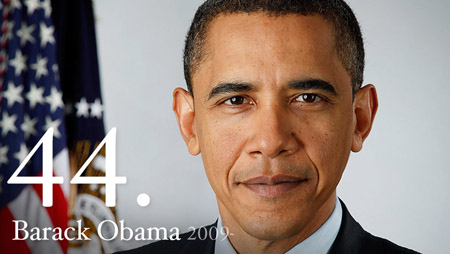
TGIF thoughts as Barack Obama returns to citizen


Reality vs. Fabrication

TGIF to everyone and Thank you for reading my blog … rants

I admit I want to cry be sad that so many drank the #trumpkool-aid and voted for a man who quite possibly will be the worst president ever. I will post over and over how much Barack Obama will be missed. In this era of trump, we must refuse to sit back,  or give up the fight! Please be alert, challenge mainstream media, political entertainers, pundits on/in the airwaves as the news creeps up on the blurriness of truth, political, edited and alternative fact-based.

The high expectations and or higher standard people put on President Obama are points of contention for any sane person and should make us all want to shake somebody but ranting seems a lot more therapeutic…

So, not that anyone needs to be reminded but, the house of Bush gave tax breaks to the wealthy in 2001 sold as a stimulus or that ever-popular republican phrase “trickle-down economics/theory” and again in 2003 when he invested ” in 2 Wars count them t-w-o, which resulted in massive debt and a quick trip to the road of recession just short of a huge depression, actually it was huge. I have to say now that it’s 2016 many parts of America have NOT felt the recovery, which quite possibly is because Republicans refused to help folks in certain area codes… is anyone paying attention! If you dig deep some governors misused, abused and or plugged their budgets with stimulus funds.  While you may NOT want to believe it, Bush allowed his government to spend $$ like a “drunken soldier,” lest we talk or question Bush’s inability to regulate his financial House/banks which led us into an effing ditch!

White the party of Barack Obama tried to move Americans into the 21st Century, most of us thought it was obvious we couldn’t afford to go backward and who would want to because Republicans don’t seem or didn’t seem to believe in inclusion, fairness, or fair share… a phrase that will always ring true to most who lean left of center: Republicans do not have our best interests in their minds or hearts and what better evidence is there then the constant NO votes that could have gotten us out of a number of crisis sooner rather than later, lest we talk about the many short term deals made between Ds and Rs that used to be 1-2yrs now only last weeks and or a month because of a group of seemingly racist men and women who continue to behave unlike any Congress ever since bush left. Tell me …prove to me it isn’t about race.

TGIF, my first post was six years ago,i tweaked it and while it’s now 2016, it has been a long week of clichés we all indulge in and some we can laugh at though most are very accurate as our workweek ends on this day and President Obama becomes a regular citizen again. The thing is, the #workweek didn’t end for President Obama, he has been at work getting our economy back on track for less than two years, and though pundits,cable heads and of course republicans would have you believe progress  is not happening, they are wrong. The recovery has had many obstacles placed in the way of this President, some include members of the Democratic Party, called Conservadems btw which is very odd yet should give the public a better view of how hard this whole thing was going to be. If anyone remembers at all, our then young Obama and candidate for President stated many times that he cannot get the change we believe in or need alone. It still is true that the change we need is one that everyone has to take part in which means that independents should be calling legislators to act in the best interest of the people, stop stalling, holding back and up appointments the President has a right to have to govern.


Speaking of governing, in a year of major elections that will change how our Congress looks many Economists state few in Congress have the courage to commit to change and act boldly to get America straightened out. If you listen to those pushing the negative poll numbers at us, should we all give up just because they say so, this is not the time for democratic supporters, voters the 53% that put this President in office to now turn their backs. The fact is we have 2 political parties and one nation under god but Republicans have forgotten that and have instead set out on a mission to not only bring down this President but in doing so will take the rest of us down with them.


We have Republicans who continue to be obstructionists along with a couple of members of the Democratic Party and that being said, people need reminding. The President was given the worst economy since the depression and has pulled the US back from the ditch that we all faced; actually, a huge percentage of people did fall into that ditch and are now collateral damage the house of Bush failed to stop while he was still in office. In fact, most of the people I talk to cannot even remember where he was after the announcement of just how bad a crisis we were in before this President took over. The President had an agenda during the 2008 campaign that did not include a complete financial crisis. The Mccain/Palin ticket said oh our economy is fundamentally sound and that was the first sign as to whom we all needed to vote into office. The facts slowly came out and we probably have not heard all the truth which means things obviously were worse than they knew people on the right keep trying to hold this President to the original numbers; the fact is everything is relative and the numbers have to adjusted folks. The President can give Congress an agenda but it is up to them to move us into the 21st Century, which means creating and voting on legislation that will put those laws on the books but they continue to say no or treat them as failures.


There have been major changes not failures made by this President and reports of him being weak are just a joke that Americans needed to fight.  The verbal beat downs that people on the right are engaging in… and while we said please who has time for that; unfortunately this ish worked though it was obvious President Obama was not only too busy saving our asses, he wanted republicans to side and act for the “greater good.” which they opted out of for 8yrs. I preferred then and am happy now that his choice was to make progress into the 21st Century and when the move stops we must challenge him or those who continue to stall block and vote against it.


The progress President Obama and our Congress has made seldom got the airtime it should which is annoying, disappointing but what is even more sad to hear that the President’s own advisors pleaded with him to give up on Health Care Reform, we all should be thankful he did not listen as there are at least twenty million plus who have never had healthcare, had it but lost a job or are now stabilized because they qualified for Medicare due to the ACA rules and policies

  – Nativegrl77


Basic Tips for saving water in Washington …from USA.gov


fixLeakFaucet_LgSaving Water Partnership

Seattle and participating water utilities

Many people think that having an environmentally friendly house means spending thousands of dollars on solar panels or planting a garden on the roof to keep the house cool during the summer time.
That’s not really the case. There are many things you can do to help the environment without having to transform your home, or even spend too much money. In fact, you might end up saving hundreds of dollars per year in the process.

For more information click on the link below
http://www.USA.gov

http://www.savingwater.org

chief victims of global warming are women

women walk miles for water and gather the firewood … and women grow the food

In the era of trump and republicans – repost


By

The Crazy Things The Republican Candidates Said, And The Important Things They Left Out

first posted in 2015

Yesterday morning the Cleveland Plain Dealer featured a front page story about the “vanishing middle class.” The writers couldn’t have predicted the middle class would vanish from the presidential debate as well: after nearly three and half hours of debating between the two events, there was virtually no mention of working families and middle class workers.

Over the two debates, the words “middle class” were said exactly two times by candidates. Instead, the cadre of Republican candidates disparaged immigrants, called for repeal of the Affordable Care Act, war-mongered, and ignored working families altogether. Not that it mattered: the few places the GOP candidates offered policy proposals were for the same outdated policies that crippled those families in the first place.

We took a look issue by issue at how the candidates’ debate rhetoric doesn’t match reality:

Economy

As the economy recovers, more and more of the country’s economic gains are going to the wealthy few as the middle class get increasingly squeezed. Rather than offer new ideas for how to help middle-class families, the Republican candidates clung to the same old, failed trickle-down theories.


  • Governor Jeb Bush touted his trickle down record in Florida, saying that he cut taxes every year. He continues to support tax plans that would disproportionately benefit the wealthy, such as eliminating capital gains. However, doing so would mainly benefit the wealthy few in Ohio—92 percent of Ohio’s millionaires would benefit, but the middle class will receive next to nothing.
  • Governor Chris Christie went out of his way to praise his record of economic growth in New Jersey, touting that he “brought the budget into balance with no tax increases.” But, national employment grew almost two times faster that it did in New Jersey since he became governor.
  • Governor John Kasich bragged about how he turned around the economy in Ohio “with jobs and balanced budgets and rising credit and tax cuts.” But Ohio’s middle class is not seeing the benefits. A new report from CAP Action shows the median income in the state is trailing the national average by $5,541 and median income has gone down since 2010—the year before Kasich took office. On the eve the debate, an editorial in the Cleveland Plain Dealer cited CAP Action’s analysis, calling it “eye-opening” and lamenting that tax cuts became “articles of Statehouse faith, robbing Ohio of money it could have invested in education, including early-childhood education, and university-driven innovation.”
  • Senator Marco Rubio pushed his tax plan. But, if enacted, the Rubio plan would be a massive, costly tax giveaway to the wealthiest Americans, while slashing $2.4 trillion in revenue and ballooning the budget deficit.
  • Governor Scott Walker showcased his leadership in Wisconsin, saying “the voters in Wisconsin elected me last year for the third time because they wanted someone who aimed high, not aimed low.” But in Walker’s Wisconsin, Wisconsin ranked 44th in the country for middle-class income growth.

Immigration

GOP candidates continued to oppose sensible action on immigration that would help millions of undocumented immigrants while boosting the U.S. economy. They offered no new solutions, but clung to unworkable ideas such as a big wall at the border.

  • Governor Scott Walker claimed that the president “messed up the immigration system in this country” when he expanded federal actions that focus immigration enforcement on felons, not families. In reality, implementing DAPA and expanding DACA is estimated to help over 5 million individuals to work legally and live here without fear of deportation, and will grow the U.S. economy cumulatively by $230 billion over 10 years.
  • Donald Trump claimed that the Mexican government is sending criminals across the border, saying “the fact is, since then, many killings, murders, crime, drugs pouring across the border, are money going out and the drugs coming in. And I said we need to build a wall, and it has to be built quickly.” But in reality, the border is more secure than ever before.

Health Care

The Affordable Care Act is here to stay and it’s working. It’s helped bring affordable health insurance to millions of people and reduced the uninsured rate. Although the American people oppose efforts to repeal the ACA, the GOP candidates want to take us back to the broken healthcare system we had before.

  • Donald Trump called the ACA a “complete disaster.” Actually, the ACA has succeeded in bringing quality, affordable health insurance to 16.4 million Americans. And since the ACA went into full effect, the uninsured rate has dropped almost 6 percentage points to 11.4 percent in the second quarter of 2015.
  • Governor Jeb Bush continued his attacks on affordable healthcare tonight, saying he would “get rid of Obamacare and replace it with something that doesn’t suppress wages and kill jobs.” Reality check: Since the ACA went into effect, 11 million jobs have been created and unemployment is down by half.

Women’s Health

During the debate, the ten men on stage quickly rushed to attack women’s health, striving to outdo one other on how extreme each can be. But access to quality, affordable health care is not just a right, it’s a matter of economic security for women.

  • Governor Scott Walker boasted about how he “defunded Planned Parenthood more than four years ago.” But Planned Parenthood provides critical health services to millions of Americans. In 2013, Planned Parenthood served more than 2.7 million women, men, and young people; 1.5 million of those patients received services through Title X, the nation’s family planning program.

Education

The GOP presidential contenders offered zero ideas to improve our education system. Instead of ideas to increase access to a quality education for all children, we heard more of the same conservative talking points to eliminate the Department of Education and lip service about the need for high quality education from the same governors that have cut education funding in their own states.

  • Former Governor Mike Huckabee said, “there is no role at the federal level for the Department of Education.” At least five other Republican candidates also believe the U.S. Department of Education should be eliminated. But the Department of Education is critical for the nation’s children, especially at risk and high need students. The Department targets resources to the most at risk and highest need students to receive a quality education and afford college including $28.83 billion in Pell grants per year and over $25 billion to low-income and special needs students.
  • Governor Scott Walker emphasized the importance of education saying that we need to, “give people the education, the skills that the need to succeed…That’s what I’ll do as president, just like I did in Wisconsin.” But during his time as governor, he cut school funding per student more than any other governor in America.

The Topics The Candidates Left Out

What’s just as shocking as the claims the candidates did make are the very important topics that were left out of the debate.

  • A few days after the Clean Power Plan launch, climate change was not mentioned once. Climate change has an impact on every corner of the world – from public health and the environment, to national security and the economy. Earlier this week, the Obama administration released the final version of the Clean Power Plan, the biggest climate action the United States have taken to curb carbon emissions.
  • On the 50th anniversary of the Voting Rights Act, voting rights was not mentioned once. 50 years ago yesterday, the Voting Rights Act was signed into law that prohibited racial discrimination in voting and paved the way for millions to cast ballots. The VRA is often held up as the most effective civil rights law ever enacted, yet many of the candidates have taken steps to further disenfranchise minority voters.
  • Despite its centrality to so many important issues, economic inequality was not mentioned once. Four out of five Americans will experience at least a year of significant economic insecurity at some point during their working years, yet inequality was not brought up in the first Republican debate. Nor was an important aspect of that: the minimum wage. In fact, many of the Republican candidates do not support raising the minimum wage even though it would save taxpayers $52.7 billion over the next ten years.
  • The entire conversation around #BlackLivesMatter lasted a total of 47 seconds. While the Fox News moderators did ask one question on how to address the problem of “overly aggressive police officers targeting young African Americans,” it was quickly deflected by Wisconsin Governor Scott Walker. What’s more, no Republican candidate has yet to reference the movement in their campaigns, except to dismiss and criticize it.
  • The debate was a “gun-free zone.” In the wake of the shootings in Charleston, Chattanooga, and the Lafayette movie theater, no plan was offered for what to do about America’s level of gun violence, which far exceeds that of peer countries. In fact, though a common talking point of conservatives is that so-called “gun free zones” invite gun massacres, neither the Fox News moderators nor those on stage commented on the irony that the debate venue, the Quicken Loans Arena, is a gun-free zone.

BOTTOM LINE: We could have predicted there would be some fireworks at last night’s Republican presidential debate, and there certainly were. But while last night’s debate may have made for good entertainment, that is just about where its value stopped. For what the candidates did choose to talk about, the rhetoric was either extreme or simply not matched by the policy reality. And more surprisingly, the candidates chose not to talk at all about some of the critical challenges — strengthening the middle class, improving the democratic process, tackling inequality, addressing climate change — that face the next president.

#staywoke and see what trump voters missed … you voted against your own best interests as well as those of your friends family and coworkers

Nativegrl77