Tag Archives: black

Green Planet …info on Kenaf -Working with Nature – a Repost


    featured photo is a sunset over Mumbai

The Wall Project – Brightening people’s lives.

Posted on 25. May, 2010 by admin in India, odd stuff

The Mumbai Wall Project began with a blank white compound wall, with an intense burning of “something has to be done to it” It starting with a few enthusiastic people, it has grown to be a bigger and bigger project seemingly taking a life of its own.

It was an initiative to add visual elements of colour, form and texture to a space, to make the area more alive and generate a feeling among people who pass by it daily. Not knowing how people would react, the first onlookers came out slowly and curious to see what was happening and then slowly people and even young kids came out to help and play their part.

Dhanya Pilo, Art Director and Founder of The Wall Project, notes: “Wall art has always existed in India on temple walls, village houses or old Bollywood art, creating a personality unique to each township.” Since public art has always existed, a creative platform of this kind was the logical next step.

The Wall Project have painted in many many nooks and corners of Mumbai. Bandra is the best location – as the best way to see all the wall art you need to cycle/walk around and you will find art work all over Bandra. More recently the wall project, got permission from the city to beautify the North –South roads in Mumbai as a canvas with everything being an inspiration, art, music, nature, love, the abstract, real life and the city itself. (This road is a huge landmark) Everything is acceptable apart from adverts, religious views, political slogans, and foul language. The premise that a work of art can make a colorful difference in the lives of individuals, communities, and cities, The Founders believe that grey, ugly spaces deserve beautification.
Everybody is welcome, not just artists, and they are always looking for permission and interesting locations to paint.

They have worked with a lot of people, shop owners, hospitals, NGO’s and the Alliance Francaise, Kaos Pilot, and are being invited by more people to showcase their ideas/skills. In January ‘08 they collaborated with Fine Art students of Rachana Sansad, Mumbai and painted shops as well as some other walls.

Over the years a lot of talented Graffiti artist from all over the world have come to paint, from Swedish writer Finsta to French writers Dezer, Keflione, Migwel, Rock, Posh, Seth, Boogie & Kid etc have all come and left their designs/marks/stories in the streets of Mumbai giving locals something to smile about.

Regarding, “The Great Wall of Mumbai” – on the Tulsi Pipe Road – They had been eyeing that wall for so so long. They had painted on walls of private homes, shops, schools, etc and they wanted to paint on major public spaces but thought that the process of getting permission would be too daunting and bureaucratic. They were completely surprised when R A Rajeev, Additional Municipal Commissioner, BMC approached them. He gave them complete creative control, it was a dream come true. Around four hundred people of all ages came to help. Some were not artists, some were not. It was about being inclusive and including the local population and the turnout was great.

The Mumbai Wall Projectis bringing the streets to life, in a positive and colourful way with more than 300+ pieces all over Mumbai.

If you want to keep in loop join The Wall Project Facebook Group, they posting most information there, and you can let them know if there are any specific ways you want to be part of the group. They say even dormant members will eventually get colourful, and out of their cocoon.


“This process allows one to be more observant about the spaces we use and move within and how we can use various art forms in the public sphere to generate an interest in the minds of our daily human lives. The wall project in its own way tries to start a conversation, with no political or religious attachments.” – Dhanya Pilo & Nitya Amarnath

Fuel – A different way of thinking?

Posted on 23. Jun, 2010 by admin in mishmash

As you may or may not be aware, I don’t feel that Carbon Dioxide is the the villain at the centre of the world’s problems . I personally believe that is a convenience for Governments to generate revenue amongst other things, a distraction from other more important matters. What I do believe, is that we are extremely wasteful of dwindling resources and are polluting our planet at an alarming rate… More kids are suffering with asthma that ever before. More people have respiratory illnesses than ever before. We are killing ourselves and the planet with pollution and waste in a thousand different ways.

So I was pleased to find The Fuel Film website

A few pollution information gems to consider:

• The levels of toxic diesel fumes inside school buses are 4 times higher compared with outside the buses.

• According to the World Health Organization (WHO), about 2 million premature deaths are caused each year due to air pollution in cities across the world

• A Scottish study has shown that jogging with traffic around results in reduced blood flow to the heart. This is particularly dangerous for people with stable heart disease, because it can trigger off cardiac arrhythmia or even a heart attack

• Every year 335,000 Americans die of lung cancer, which is a direct result of air pollution

And we are not talking CO2 pollution here, just all the other nasties that get pumped into our atmosphere for us to breath.

The Fuel Film… Educational, Informative and surprisingly entertaining

The Big question from sceptics is: … That crops for bio-fuel takes away the ability of the world to feed it’s growing population, this is answered in a couple of ways in the film.

One solution of several is in using marginal land, another is algae
For those that don’t know: Marginal land is land that is difficult to cultivate and is not being used for food crops. This land could be used to grow biomass crops to be used for bio-fuels. California has apparently 1 million acres of marginal land that could generate 5 billion gallons of bio-fuels per year.

Now, while not 100% convinced that it is possible to ‘grow’ all our fuel requirements, it nice to know that there are alternative possibilities and people willing to fight to get them heard.

All it needs now is the desire from Government and vested interests to make it happen… Having said all that what is happening in the Gulf is a wake-up call for the world….

But is anybody listening? Because as sure as death and taxes we are not going to give up our love affair with the car easily

For more information click here

Photo courtesy: U.S. Department of Energy. Pretty, isn’t it? …. In case you’re wondering it’s Bio-fuel Algae

Kenaf – A 21st century crop

Posted on 21. Mar, 2010 by admin in crop

Kenaf, should be the fibre crop of the 21st century, and hopefully explode into the market place for industrial products made from sustainable natural materials. Several multinational companies already use kenaf fibre in small, but growing quantities, in newly-marketed green products such as the Toyota Lexus and NEC mobile phones to replace environmentally-damaging materials.

Crucially, the green tag attached to kenaf is gaining more importance as people, companies and governments realize that the kenaf crop removes substantial amounts of CO2 and NO2 from the atmosphere and three to five times faster than forests with its deep roots improving the soil. Trees take many years to reach a harvestable size, however kenaf grown as an annual crop will reach a mature size in just 120 to 150 days after the seeds are sown, producing the largest biomass of any agricultural crop – far more than trees.

It can clean the environment efficiently and in some Japanese cities, kenaf is planted by the Government to improve the air quality. Kenaf will also greatly reduce our reliance on wood pulp and petroleum-based products. From construction board and concrete to plastic composites for mobile phones, from paper and light-weight, high-strength surfaces in aircraft to non woven industrial fabrics, from newspaper to absorbents for the oil industry. Commerce is waiting for the sustainable kenaf fibre in large quantities.

The kenaf plant is composed of multiple useful components (e.g. stalks, leaves, and seeds) and within each of these plant components there are various usable portions (e.g. fibres and fibre strands, proteins, oils, and allelopathic chemicals). What can’t be harvested can be used as Biomass fuel and fertilizer

Exciting New Technologies

In the past kenaf fibre production has been limited by the manual processing required to extract the fibres once the kenaf crop has been grown and harvested and the non-sustainable method of retting the fibres in rivers. New methods are now becoming available to process kenaf in volume providing a distinct advantage over existing processes, taking them to a new economical viability.

Green Planets and our partners intention is not to compete with other existing kenaf producers or processors, but to enlarge the industry and provide new opportunities for kenaf fibres. In most of the countries chosen, there are existing kenaf customers, we aim to enhance those relationships and the export routes for kenaf to developed nations. While at the same time create locally-owned hubs of agricultural excellence, kenaf business and community social support for the growers.

To find out more and how you can assist us, please contact us at     www.kenaf@greenplanet.com

Kenaf is a crop of importance – to a world in need of it

Orcas … a repost


orca whales facing high levels of pollution and endangerment

A brutal combination of pollution, global warming, declining prey and heavy boat traffic is sending the Puget Sound orca population to new lows ~ 2006

SEEING KILLER WHALES ply the waters of Washington State’s Puget Sound has long been a great thrill for Seattle-area residents. No other U.S. urban community can boast of resident orcas a few miles from downtown. Whale watching there is a multi-million-dollar tourist draw. As one orca expert puts it, “Everybody wants a kiss from a killer whale.”

But the thrill may soon be gone.

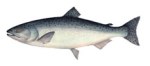
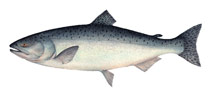
Three orca pods living in Puget Sound from May through October, known as the southern resident killer whale population, were declared federally endangered late last year by the National Marine Fisheries Service (NMFS), the federal agency responsible for protecting marine species. Scientists believe the decline of wild chinook salmon–a major orca food source–as well as global warming, toxic pollution and vessel noise could eliminate this orca population, which ranges beyond Puget Sound into the San Juan Islands and Georgia Strait. “They are teetering,” says Ken Balcomb, senior scientist at the Center for Whale Research in Friday Harbor, Washington. It is “highly likely,” Balcomb adds, that this population of killer whales will be extinct within 100 years if conditions do not improve for both whales and salmon.

“The Puget Sound is our backyard,” adds James Schroeder, an NWF senior environmental policy specialist. “If it’s unhealthy for killer whales because the water is polluted, the sediments are laced with toxins and the food web has collapsed, it’s ultimately uninhabitable for humans.”

The largest members of the dolphin family, orcas weigh about 400 pounds at birth. Adults can measure more than 25 feet long, weigh more than 8 tons and sport a 6-foot dorsal fin. Females can live into their eighties.

Orcas are found in every ocean and, next to humans, are the most widely distributed mammal in the world. Two distinct types of killer whales travel the seas–transients and residents–which are distinguished by differences in genetics, language and food preference. They do not interbreed or even mingle. Transients live in small pods of three to seven and often travel far out to sea, subsisting on marine mammals such as seals, sea lions, dolphins and whales. Residents live closer to shore in pods of 10 to 20, are known for their jumping and splashing and eat only fish, which they sometimes stun with tail slaps. Transients rarely jump or splash and even use sonar less often, behaviors probably designed to avoid alerting the marine mammals they hunt.

Orcas on the Edge - Magazine Layout - Orcas Jumping

Individual orcas can be identified by distinct gray swaths on their backs and flanks near their dorsal fins, called saddle patches. Using these patches, biologists have named each of Puget Sound’s approximately 87 killer whales, which are part of a population that has been carefully studied since 1970, making them some of the best-known orcas in the world. All indications are that the southern resident population and the nearby British Columbia, or northern, resident orcas live primarily on chinook salmon, which are preferred probably because they are the largest salmon, have the highest fat content and are available year-round.

When West Coast wild chinook stocks plummeted in the mid-1990s, the southern resident orca population dropped from 99 in 1995 to about 80 in 2001. The northern resident population went from 219 to 202 during roughly the same time period. “Mortality in some years was 300 percent greater than we expected,” says John K.B. Ford of Fisheries and Oceans Canada–Canada’s lead federal manager of oceans and inland waters–who has studied killer whales for 30 years.

West Coast waters once were rich with wild salmon. The Columbia and Snake Rivers alone produced between 10 million and 16 million salmon yearly, the majority of them chinook. Overfishing in the late 1800s and early 1900s, followed by decades of dam building, logging and other salmon-habitat destruction have reduced wild salmon to a fraction of their original abundance. Today, Columbia and Snake River wild fish runs number only in the tens of thousands. “Perhaps the single greatest change in food availability for resident killer whales since the late 1800s has been the decline of salmon in the Columbia River basin,” according to the NMFS draft orca recovery plan. Even British Columbia’s resident killer whales, declared threatened by Canada in 2001, feed on Columbia and Snake River salmon. “In order to save our orcas, we need to save the salmon runs that sustain them,” Schroeder says.

Beleaguered salmon populations are now further jeopardized by a new challenge, global warming, which is heating some rivers and streams to temperatures lethal to fish. The average temperature of British Columbia’s Fraser River, for example, increased about 1.8 degrees F from 1953 to 1998, yielding a 50-percent mortality rate among the river’s sockeye salmon. “The higher river temperatures are largely due to global warming, as opposed to dams and other significant human-caused problems,” says Patty Glick, an NWF global warming specialist. The Canadian Ministry of Environment agrees. Citing the fact that the climate is warming, the ministry declared in a 2002 report that logging, agriculture and industrial factors have small impact on river temperature “in comparison to the impact of climate change.”

Warming oceans pose another problem–they produce less food for salmon and other fish. Oceans also absorb carbon dioxide, a greenhouse gas produced by burning coal and other fossil fuels. This absorption changes the acidity of seawater, which could have catastrophic consequences for marine life. In addition, global warming is expected to alter the timing and amount of precipitation that keeps water flowing in the rivers and streams where salmon spawn. As rain and snowfall patterns change, chinook runs that now occur throughout the year could be confined to just a few of the wetter months–leaving Puget Sound orcas without salmon for long periods of time.

Salmon scarcity actually hits orcas with a one-two punch. The decline in food is a problem on the one hand, while the toxicity of the fish is a problem on the other. Puget Sound is steeped in toxics from pulp and paper mills, oil refineries, ports, boatyards and storm-water runoff. Salmon and other fish store in their bodies toxic pollutants they absorb from this environment. As a result of eating these contaminated fish, Puget Sound killer whales have some of the highest concentrations of highly carcinogenic polychlorinated biphenyls (PCBs) of any marine mammal in the world, says Gary Wiles, a wildlife biologist with the Washington Department of Fish and Wildlife. They also have high levels of polybrominated diphenyl ethers, which are toxic fire retardants.

As salmon numbers dwindle, killer whales burn blubber to survive, transferring toxics from blubber to vital organs. “When orcas metabolize fat that’s 1,000 parts per million PCBs, it’s phenomenally toxic,” Balcomb says. “Even trace amounts of PCBs disrupt the orcas’ endocrine systems, adversely affecting reproduction and their immune systems. We have seen whales become emaciated and disappear. And lots of reproduction-age females are not reproducing.”

Noise from the thousands of aquatic vessels cruising orca range may compound the food scarcity problem. Puget Sound is teeming with ferries, naval flotillas, whale-watching boats and other noisy craft that interfere with sonar, the clicking sounds orcas use like radar to find salmon. “There’s probably a lot of synergistic interactions between these stressors,” Ford says. “When there are fewer salmon, the whales have to work harder to find food. More noise may make it harder to find those fewer fish. The increased nutritional stress may lead to immuno-suppression and make the orcas more susceptible to disease.”

Orcas on the Edge - Magazine Layout - Killer Whale Pod

Saving Puget Sound orcas will require cleaning up toxic waste sites, stemming storm-water pollution and stopping global warming. The most critical step, however, is restoring salmon runs so orcas have enough to eat. “The Snake River basin once produced more than a third of all the chinook in the Columbia River basin,” Schroeder says. “If the federal government would take out the four outdated lower Snake River dams, it would go a long way toward recovering endangered Columbia River salmon and Puget Sound killer whales.”

A measure the government actually is taking also is likely to help the orcas. NMFS in June proposed new restrictions on development in about 2,500 square miles of inland waters, from Olympia, Washington, north to the Canadian border. The proposal, which covers almost all of Puget Sound, could be final as early as November, requiring any projects using federal funds or conducted under federal permits to include orca protections.

In the end, orca conservation is about a lot more than saving the Puget Sound’s magnificent killer whales. “We ignore this looming environmental problem at our own peril,” Balcomb says. “The orcas are the ultimate indicator of the health of the marine ecosystem. And that ecosystem is two-thirds of our planet.”

Washington journalist Ken Olsen wrote about farmers restoring sage grouse habitat in the April/May issue.


Killer: It’s a Name, Not an Accusation
In recent years, the killer whale has been more commonly called “orca” to avoid the negative connotations of “killer” and perhaps to avoid calling this dolphin species a whale. Nevertheless, most biologists still treat “killer whale” as the accepted common name. It is derived from the name Basque whalers gave the species: ballena asesina–“whale killer”–an appropriate moniker for a predator that hunts and eats whales. The scientific name is Orcinus orca, derived from the Latin word for “vat,” apparently a reference to the animal’s barrel-shaped body.

NWF at Work: Saving Puget Sound Wildlife
Through partnerships with various government agencies, Indian tribes, industries and other conservation organizations, NWF’s Western Natural Resource Center in Seattle is focusing on the protection and recovery of threatened and endangered species in the Puget Sound area, including Pacific salmon and orcas; toxic pollution; habitat fragmentation; global warming and other issues. NWF nationally is working with U.S. policymakers and engaging concerned citizens such as hunters, anglers and bird-watchers to advance regional and national strategies to reduce global warming pollution and to help wildlife survive a rapidly changing environment. For more information on NWF’s efforts to restore the health of Puget Sound, go to What We Do.

    Meeting global air quality guidelines could prevent 2. 1 million deaths per year

Resource:

Environmental Chemistry USD  from echemusd.blogspot.com 2010

sciencedaily.com

nwf.org

TGIF thoughts as Barack Obama returns to citizen


Reality vs. Fabrication

TGIF to everyone and Thank you for reading my blog … rants

I admit I want to cry be sad that so many drank the #trumpkool-aid and voted for a man who quite possibly will be the worst president ever. I will post over and over how much Barack Obama will be missed. In this era of trump, we must refuse to sit back,  or give up the fight! Please be alert, challenge mainstream media, political entertainers, pundits on/in the airwaves as the news creeps up on the blurriness of truth, political, edited and alternative fact-based.

The high expectations and or higher standard people put on President Obama are points of contention for any sane person and should make us all want to shake somebody but ranting seems a lot more therapeutic…

So, not that anyone needs to be reminded but, the house of Bush gave tax breaks to the wealthy in 2001 sold as a stimulus or that ever-popular republican phrase “trickle-down economics/theory” and again in 2003 when he invested ” in 2 Wars count them t-w-o, which resulted in massive debt and a quick trip to the road of recession just short of a huge depression, actually it was huge. I have to say now that it’s 2016 many parts of America have NOT felt the recovery, which quite possibly is because Republicans refused to help folks in certain area codes… is anyone paying attention! If you dig deep some governors misused, abused and or plugged their budgets with stimulus funds.  While you may NOT want to believe it, Bush allowed his government to spend $$ like a “drunken soldier,” lest we talk or question Bush’s inability to regulate his financial House/banks which led us into an effing ditch!

White the party of Barack Obama tried to move Americans into the 21st Century, most of us thought it was obvious we couldn’t afford to go backward and who would want to because Republicans don’t seem or didn’t seem to believe in inclusion, fairness, or fair share… a phrase that will always ring true to most who lean left of center: Republicans do not have our best interests in their minds or hearts and what better evidence is there then the constant NO votes that could have gotten us out of a number of crisis sooner rather than later, lest we talk about the many short term deals made between Ds and Rs that used to be 1-2yrs now only last weeks and or a month because of a group of seemingly racist men and women who continue to behave unlike any Congress ever since bush left. Tell me …prove to me it isn’t about race.

TGIF, my first post was six years ago,i tweaked it and while it’s now 2016, it has been a long week of clichés we all indulge in and some we can laugh at though most are very accurate as our workweek ends on this day and President Obama becomes a regular citizen again. The thing is, the #workweek didn’t end for President Obama, he has been at work getting our economy back on track for less than two years, and though pundits,cable heads and of course republicans would have you believe progress  is not happening, they are wrong. The recovery has had many obstacles placed in the way of this President, some include members of the Democratic Party, called Conservadems btw which is very odd yet should give the public a better view of how hard this whole thing was going to be. If anyone remembers at all, our then young Obama and candidate for President stated many times that he cannot get the change we believe in or need alone. It still is true that the change we need is one that everyone has to take part in which means that independents should be calling legislators to act in the best interest of the people, stop stalling, holding back and up appointments the President has a right to have to govern.


Speaking of governing, in a year of major elections that will change how our Congress looks many Economists state few in Congress have the courage to commit to change and act boldly to get America straightened out. If you listen to those pushing the negative poll numbers at us, should we all give up just because they say so, this is not the time for democratic supporters, voters the 53% that put this President in office to now turn their backs. The fact is we have 2 political parties and one nation under god but Republicans have forgotten that and have instead set out on a mission to not only bring down this President but in doing so will take the rest of us down with them.


We have Republicans who continue to be obstructionists along with a couple of members of the Democratic Party and that being said, people need reminding. The President was given the worst economy since the depression and has pulled the US back from the ditch that we all faced; actually, a huge percentage of people did fall into that ditch and are now collateral damage the house of Bush failed to stop while he was still in office. In fact, most of the people I talk to cannot even remember where he was after the announcement of just how bad a crisis we were in before this President took over. The President had an agenda during the 2008 campaign that did not include a complete financial crisis. The Mccain/Palin ticket said oh our economy is fundamentally sound and that was the first sign as to whom we all needed to vote into office. The facts slowly came out and we probably have not heard all the truth which means things obviously were worse than they knew people on the right keep trying to hold this President to the original numbers; the fact is everything is relative and the numbers have to adjusted folks. The President can give Congress an agenda but it is up to them to move us into the 21st Century, which means creating and voting on legislation that will put those laws on the books but they continue to say no or treat them as failures.


There have been major changes not failures made by this President and reports of him being weak are just a joke that Americans needed to fight.  The verbal beat downs that people on the right are engaging in… and while we said please who has time for that; unfortunately this ish worked though it was obvious President Obama was not only too busy saving our asses, he wanted republicans to side and act for the “greater good.” which they opted out of for 8yrs. I preferred then and am happy now that his choice was to make progress into the 21st Century and when the move stops we must challenge him or those who continue to stall block and vote against it.


The progress President Obama and our Congress has made seldom got the airtime it should which is annoying, disappointing but what is even more sad to hear that the President’s own advisors pleaded with him to give up on Health Care Reform, we all should be thankful he did not listen as there are at least twenty million plus who have never had healthcare, had it but lost a job or are now stabilized because they qualified for Medicare due to the ACA rules and policies

  – Nativegrl77


Basic Tips for saving water in Washington …from USA.gov


fixLeakFaucet_LgSaving Water Partnership

Seattle and participating water utilities

Many people think that having an environmentally friendly house means spending thousands of dollars on solar panels or planting a garden on the roof to keep the house cool during the summer time.
That’s not really the case. There are many things you can do to help the environment without having to transform your home, or even spend too much money. In fact, you might end up saving hundreds of dollars per year in the process.

For more information click on the link below
http://www.USA.gov

http://www.savingwater.org

chief victims of global warming are women

women walk miles for water and gather the firewood … and women grow the food