Tag Archives: black

Science.Howstuffworks.com – reminder 2010


A repost – it’s interesting and informative
10 Sustainable Buildings

10 Sustainable Buildings

Green building is no longer a thing of the future. Find out how architects and builders use solar panels, plastic bottles and straw bale insulation for ten environmentally friendly structures.

See more »

10 Things You Can Do to Help Save the Earth

10 Things You Can Do to Help Save the Earth

It’s a lot easier than you think to “go green” — many of these suggestions require little effort, yet can make a big difference for the environmental. Watch a video and read more about saving the earth.

See more »

5 Amazing Green Cities

5 Amazing Green Cities

Sure, the Emerald City looked green, but you won’t need green-tinted glasses to see how environmentally friendly the cities on this list are. What makes a city amazingly green?

See more »

5 Green Cities of the Future

5 Green Cities of the Future

Sustainable urbanism is no longer a futuristic dream. Welcome to five cities around the world that will be turning a radical shade of green in the coming decades.

See more »

5 Myths About Renewable Energy

5 Myths About Renewable Energy

We’re currently suspended between two ages: a time dependent on fossil fuels and a future dominated by renewable energy sources. Yet not everyone is sold on this vision, so a number of myths about renewable energy persist.

See more »

5 Wacky Forms of Alternative Energy

5 Wacky Forms of Alternative Energy

For those who reduce, reuse and recycle to the beat of their own drum, here are some of the wackier ways to help better the environment and lessen your carbon footprint.

See more »

5 Walkable Cities

5 Walkable Cities

What makes a city walkable? It’s not just sidewalks. You have to be able to access jobs, stores and places of entertainment while feeling comfortable and safe. What are five cities in the United States that have risen to the challenge?

See more »

Are climate skeptics right?

Are climate skeptics right?

It’s evident the debate over climate change is a heated one. Are skeptics clouding the public judgment for money? Are climate-change believers merely alarmists who risk the present for the future?

See more »

Are my bath habits destroying marine ecology?

Are my bath habits destroying marine ecology?

After sloughing off your dead skin, what happens to those plastic microbeads that wash down the drain? Some make it all the way to the ocean and linger until they become a very unhealthy supper.

See more »

Are personal watercraft destroying the planet?

Are personal watercraft destroying the planet?

They may seem like a fun water sport or a noisy nuisance, but whatever your stance on personal watercraft, there’s no denying they pollute. So how bad are they?

See more »

Can air pollution affect heart health?

Can air pollution affect heart health?

Everyone knows air pollution isn’t good for your lungs, but it turns out that it’s not doing your heart any favors either. Why do the particulates in the air we breathe interfere with our heart’s basic job: to keep things ticking?

See more »

Can baking soda save the environment?

Can baking soda save the environment?

One company’s SkyMine technology aims to capture industrial carbon dioxide emissions and turn them into an endlessly useful product: Baking soda. But how do pollutants become a household staple?

See more »

Can house music solve the energy crisis?

Can house music solve the energy crisis?

Electrifying dance moves might impress your friends, but they usually don’t help power the club you’re dancing in. What’s piezoelectricity, and how could it help twist the future of energy generation?

See more »

Can humans start an earthquake?

Can humans start an earthquake?

Earthquakes are “natural” disasters, right? Yes, but that doesn’t mean the shifting plates that cause them can’t be aggravated by human industry.

See more »

Can I travel without expanding my carbon footprint?

Can I travel without expanding my carbon footprint?

You’ve booked a safari with the environment in mind. There’s just one problem: Trans-Atlantic flights aren’t very green. Can green tags make your gas-guzzling trip carbon neutral?

See more »

Can my body generate power after I die?

Can my body generate power after I die?

Haunted by ideas of your body polluting the Earth after you’re gone? Microbial fuel cell technology could allow you to harness the energy of your own decomposition to power batteries.

See more »

Can we bury our CO2 problem in the ocean?

Can we bury our CO2 problem in the ocean?

Carbon dioxide released from burning fossil fuels is a prime suspect in global warming. Could we mitigate the problem by burying the CO2 deep within the ocean?

See more »

Can we harness energy from outer space?

Can we harness energy from outer space?

As alternative energy sources sputter to take off on Earth, scientists are turning an eye toward space. What are the most promising celestial options, and when could they be in use?

See more »

Can we plug the hole in the ozone layer?

Can we plug the hole in the ozone layer?

The ozone layer prevents much of the sun’s ultraviolet light from reaching the Earth. But there’s a problem: a gaping hole the size of Antarctica. What can we do about it?

See more »

Help Keep Trash Out of Our Oceans … repost


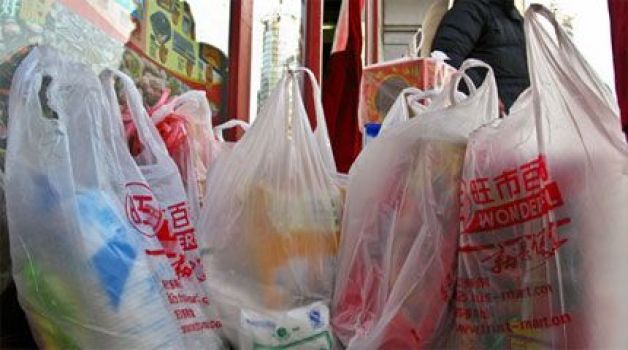
Each year, countless marine animals and sea birds are endangered by the flow of trash into our oceans. The fact is, Sea turtles are entangled and choked by plastic and discarded nets. Whales mistake trash bags for food and perish. And, let’s not forget the harmful impact contaminated marine environments have on human beings. Plastic also attracts and concentrates other pollutants from surrounding seawater, posing a contamination risk to those species that then eat it. Scientists are studying the impacts of that contamination on fish and shellfish.

From plankton to whales, animals across ocean ecosystems have been contaminated by plastic. Plastic has been found in 59% of sea birds like albatross and pelicans, in 100% of sea turtle species, and more than 25% of fish sampled from seafood markets around the world.

Marine debris isn’t an ocean problem—it’s a people problem. That means people are the solution. Ocean Conservancy is committed to keeping our beaches and ocean trash free. For more than 30 years we have organized the International Coastal Cleanup, where nearly 12 million volunteers from 153 countries have worked together to collect more than 220 million pounds of trash. And we’re not the only ones who care about ocean trash: Every day, all over the world, concerned people take the problem into their own hands by cleaning up their local waterways.

Tackling the problem of plastic in the ocean begins on land. Reduction in plastics use, especially of single-use disposable products, and the collection and recycling of plastics in developing countries can help to reduce the amount of plastic waste that enters the ocean.

At our International Coastal Cleanups, volunteers have picked up more than half a million straws and stirrers, making straws one of the top ten items on our annual list. Straws pose a real danger to animals like sea turtles, albatross and fish who can eat them. Take action today: #SKIPtheSTRAW !

Add your voice to the sea of people taking a stand for the ocean. Sign the pledge now and when offered a straw, simply say ‘no thanks.’

We can’t afford to trash our planet – so let’s do something about it.

Trash Travels – even if you do not live near the ocean, you can take action in your community to make sure litter does not end up in our waters.

Please Teach your kids to recycle properly … Save our Planet

resource: Earth Day Network, Ocean Conservancy

Recycling ::: 5 Million Tons ::: Holidays


In 2009 it was reported that the amount above was the amount of trash produced by Americans between Thanksgiving and New Year’s Day, according to the Environmental Protection Agency.  That is 25 percent more than we generate in a typical five or six-week period during the rest of the year … Consider what the numbers are today

**Reuse packaging material, some UPS stores accept clean peanuts for reuse

**Find eco-friendly places to recycle your Christmas Tree

**Use less envelopes.. more ecards or postcards for the Holidays

**Ecyclewashington.org … Washington State and is free for residents & small businesses. They will take 3 items per day…computers, tv, monitors

Do Something to Help Heal our Environment !

Be a Seed for Change

Keep Supporting Jonathan Deeds, Ph.D., ~is working to assure that U.S. seafood is both safe and accurately labeled


WordPressWhatFishIsThat
04/21/2014 01:00 PM EDT
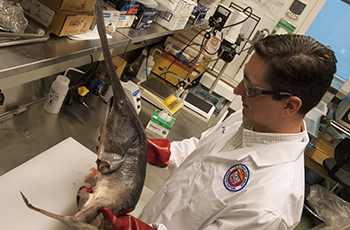
Using some of the technology used in mapping the human genome, FDA scientists are working to create DNA barcodes for fish.
The high-tech effort is aimed to preventing fraud, including the substitution of a cheap fish for an expensive one, and preventing illness.

FDA Logo

Meet Republican Tom Cotton … a repost &reminder


Yes, this man was given a seat in Congress … the man and his Republican crew in Congress seem more dangerous to our very democracy now …

U.S. Rep. Tom Cotton, you may remember, was a co-sponsor of the “Life at Conception Act,” a so-called personhood measure which would give full constitutional rights to each “preborn human person” at the “moment of fertilization. In addition to being a frontal assault on Roe v. Wade, the bill (likely unconstitutional) could ban certain forms of birth control such as IUDs or the morning-after pill. (It could also potentially force women into dangerous pregnancies and to deliver babies that can’t survive outside the womb, or force families in situations like this to keep a braindead woman on life support). Click the graphic for the complete article  COTTON: Co-sponsored bill that could ban certain forms of birth control.

I know no candidate is perfect but if they are running to represent you as a Public Servant there are certain mandatory things they should all live up to … like the oath they take, which is seemingly being tossed aside by Republicans

I am sure there must be more information about where Tom Cotton stands on the issues …. do your research

I have to say that having spent a few minutes looking for actual comments from Mr.Cotton about the issues facing our 21st Century lives is not readily available. I went to plenty of sites, but one that claims they are a factcheck site seemed somewhat biased against mark pryor though they did divulge that Rep tom cotton did have an association or worked with the insurance industry at one time stating, “Cotton’s insurance experience is limited to consulting work for a federal agency.” This seems significant to me, but I am no expert.  The article does not think his consulting work is important, but seems to use the potato paatato meme quite often in their fact checking when his constituents deserve to know what part he played as an insurance consultant. I have a problem with the bottom line! That Rep.Tom Cotton seems to back stripping seniors of Medicare, assuming women have no common sense, backing  any budget coming from Rep.Paul Ryan – Those are just a few of many issues that seems buried in a lot of the surface articles concerning Mr. Cotton. So, it would be in the best interest of the People in Arkansas to ask questions of Tom Cotton … Where do you stand in this 21st Century life? Climate Change, Reproductive Rights, Immigration, ACA and tell your constituents why the GOP has no viable replacement bills plans to replace anything they may want to repeal ? I think the lack of plans offered up proves just how unqualified the 113th Republican members of Congress are

So, there is more information …. of course and for the complete article ~ search for the2013 headline in huffingtonpost.com

Tom Cotton In 1997: Women’s ‘Greatest Fear’ Is Men Leaving Them

Posted: 08/09/2013 1:48 pm EDT  |  Updated: 08/13/2013

among other things …below

Cotton, a freshman congressman who is running for Senate in 2014, warned feminists in a 1997 article for the Harvard Crimson that no-fault divorce will backfire on them by enabling their husbands to leave them for trophy wives.

“Feminists say no fault divorce was a large hurdle on the path to female liberation,” Cotton wrote. “They apparently don’t consult the deepest hopes or greatest fears of young women.”