Tag Archives: public

Understanding The Iran Deal


By

The United States Reaches A Deal To Cut Off Every Pathway For Iran To Obtain A Nuclear Weapon

After more than two and a half years of intense negotiations, the United States, along with its partners and allies comprising the world’s greatest nations, has reached an agreement that will put Iran’s nuclear program under unprecedented international scrutiny. In exchange for easing economic sanctions, the deal will prevent Iran from obtaining a nuclear weapon.

This agreement is the result of years of tough-minded American diplomacy and a comprehensive strategy. When President Obama took office, Iran was hiding a covert nuclear facility and was well on its way to producing a bomb. But after instituting tough sanctions on Iran that helped the United States and the world’s other leading powers negotiate from a position of strength, we have reached an accord that proves that American diplomacy — and not war — can bring meaningful change to make our homeland and the world safer and more secure.

Despite the rhetoric from many who would rather try to score political points instead of do the hard work of actually governing, this agreement is in fact a good deal. In April, the Center for American Progress laid out five criteria to be met in order to ensure US interests are protected and its security concerns are met. The deal reached yesterday meets every single one:

  • The agreement cuts off all pathways to an Iranian nuclear weapon.
  • The agreement is verifiable through rigorous international inspections of Iran’s nuclear supply chain and facilities.
  • Sanctions relief is conditional on Iran fulfilling its commitments and sanctions can “snap back” if those commitments are broken — without being blocked unilaterally by Russia or China.
  • The United States retains the ability to counter Iranian human rights abuses and support of terrorism.
  • All options remain on the table to stop Iran from developing a nuclear weapon.

The many months of negotiations and the decades of economic sanctions have paid off with a meaningful agreement. But now that a deal has been reached, the hard work of monitoring and verification begins. The ultimate success of this deal rests on its robust implementation in the future.

Congress played an important role leading up to the deal by approving sanctions, but now the ball is back in their court. After the hard work of our diplomats, President Obama has made clear that he will veto any attempt to undo the agreement. Congress has 60 days to approve the deal, and has the opportunity to play a constructive role in making the deal even stronger. Instead of the political grandstanding many elected officials employed earlier this spring, Congress should approve the deal and take concrete steps to strengthen it.

BOTTOM LINE: This agreement with Iran is a crucial first step that will allow the United States and its allies to more strongly oppose Iran’s destabilizing behavior in the Middle East. This is just the beginning, not the end, of the hard work. Congress must work to approve and strengthen the deal so attention can turn to robust implementation of the agreement.

Weekly Address: Meeting the Global Threat of Climate Change


In this week’s address, the President spoke about his upcoming trip to Alaska, during which he will view the effects of climate change firsthand. Alaskans are already living with the impact of climate change, with glaciers melting faster, and temperatures projected to rise between 6 and 12 degrees by the end of the century.

In his address, the President spoke to ways in which we can address these challenges, including the transition away from fossil fuels to more renewable energy sources like wind and solar, an effort in which America is already leading. And he stressed that while our economy still has to rely on oil and gas during that transition, we should rely more on domestic production than importing from foreign countries who do not have the same environmental or safety standards as the United States.

The President looked forward to his upcoming trip, and promised that while he is in office, America will lead the world to meet the threat of climate change before it’s too late.

Watch the President’s Weekly Address here.

Watch the Weekly Address.

U.S. Dept. of Health & Human Services ~ Public Health Emergency Weekly Report


National Preparedness Month 2015

National Preparedness Month serves as a reminder that we must take action to prepare for disasters now and throughout the year. Learn what we are doing and what you can do to help keep yourself, your family, and even your community safe and healthy in a disaster.  Learn More >>

Series of icons: people, health, city, computer

Don’t Wait! Communicate! Make your Emergency Plan Today!

When disaster strikes, your family might not be together. Make a plan so that your family can get in touch with each other. Learn about your area’s emergency alerts, have a plan for finding your loved ones in a disaster, share information, and practice your plan.  Get started today!  Learn More >>

Don't Wait! Communicate! Make your Emergency Plan Today!

Staying Healthy with a Hurricane and a Baby on the Way

Shelly Lopez Gray, MSN, RNC-MNN, IBCLC; Labor and Delivery Nurse at Houston Methodist San Jacinto, recalls how she relied on her mom, her neighbors, and some emergency supplies to help her make it out of Houston, TX safely during a 17 hour evacuation in advance of Hurricane Rita. Learn More >>

Shellie Lopez-Gray and Baby

Overpacker or Prepared?  A Plan & a Go-bag Helped this Dad’s Family When Seconds Counted.

Ron Piedrahita has an unusual talent: he can get a lot of stuff into a very small space.  He is also meticulous about keeping his family’s go-bags up to date.  When a derecho blew through his neighborhood, Ron was able to get his family out of the house in minutes with everything from clothes that fit his growing toddler to her favorite stuffed animal, “piggy”, thanks in part to his well-stocked and frequently updated go-bags.  Learn More >>

Public Health Emergency. Resilient People. Healthy Communities. A Nation Prepared.


Floating coffins


 Avaaz's profile photo
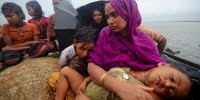
Dear friends,The most persecuted peoples on our earth are right now taking to ‘floating coffins’ to flee violence and seek sanctuary for their families. But instead of responding with humanity, our governments are closing their doors, letting them starve and drown at sea.

The Mediterranean and Andaman Seas are becoming graveyards.

Burma is driving the Rohingya out, and thousands of families are drifting helplessly at sea, forced to drink their own urine because Malaysia, Thailand and Indonesia had turned them away. Syrians and Africans risk drowning every week off the coast of Southern Europe, braving the terrifying crossing as their last hope to escape torture, hunger, and traffickers.

We are facing the biggest refugees crisis since World War II, but so far governments have let them die in a climate of rising xenophobia. Now it has reached a crisis, and our community has a unique chance to jam the culture of fear with a wave of compassion.

If we each chip in a small amount now, we’ll help fund rescue operations at sea; build an Avaaz refugee team to assist those missions and resettlement, and create effective lobby cells to get leaders to open up borders; and launch ads to counter the racism.

Together we can help rescue refugees, and rescue our shared humanity.

Unless we act fast, 2015 could become the year of the boat people!

Pledge to urgently launch the Avaaz refugee campaign — Avaaz will only process your donations if we raise enough to start saving lives:

To pledge another amount, click here.
Avaazers have already kick-started this campaign in the UK. The government has only allowed in 143 Syrians out of the 4 million refugees! In response, over 1,000 Avaazers have joined forces to challenge this disgraceful policy by offering to help refugees resettle, and calling on their local councils to give homes to 50 Syrian refugees each. Already 4 councils have agreed and with our pressure, we hope many more will too.

But this isn’t just a UK and Syria problem. It is a crisis of humanity when our planet’s most vulnerable are treated as criminals and left to die. Here’s a five point plan of the most critical actions Avaaz could take if we raise enough together:

  1. Support organisations that are bravely rescuing the refugees at sea.
  2. Launch Flotillas for Humanity with more private boats to assist rescue operations.
  3. Build an Avaaz refugee team to lobby governments, the EU and the Association of South East Asian Nations (ASEAN) to push for effective search and rescue operations, and increased numbers of refugee places.
  4. Support local groups in Europe and South East Asia to provide assistance to refugees arriving in reception centres, and into communities.
  5. Run hard hitting billboards and newspaper ads to counter the culture of xenophobia.

30 thousand refugees could drown in the Mediterranean this year. These families are fleeing terror and misery, and their choice to board a boat may be the only choice they have. Let’s join forces to stop these tragedies at sea. Pledge now:
Our community is one of the only in the world with millions of citizens in both the countries from which these families are fleeing and the countries they are seeking help. We have already funded extraordinary work to tackle Ebola and humanitarian work in Nepal. Now let’s take on this emergency and catalyse change with acts of inspired love and inspired bravery.

With hope and determination,

Alice, Ben, Oli, Diego, Mais, Emily, Dalia, Ricken and the Avaaz team

SOURCES:

Myanmar Muslim migrants abandoned at sea have been ‘drinking their own urine’ to survive  (The Independent UK)
http://www.independent.co.uk/news/world/asia/myanmar-muslim-migrants-abandoned-at-sea-drinking-their-own-urine-to-survive-after-thailand-refuses-boat-entry-10249854.html

Syria Refugee Regional Response (UNHCR)
http://data.unhcr.org/syrianrefugees/regional.php

Mediterranean migrants: Details emerge of deadly capsize (BBC)
http://www.bbc.com/news/world-europe-32399433

Lost at sea, unwanted: The plight of Myanmar’s Rohingya ‘boat people’ (CNN)
http://edition.cnn.com/2015/05/19/asia/rohingya-refugee-ships-explainer/

Stranded Rohingya migrants say: ‘We’re dying on board’ (Al Jazeera)
http://www.aljazeera.com/news/2015/05/stranded-rohingya-migrants-dying-board-150517130244345.html

EdNet: The National Food Safety Educator’s Network


FoodSafety.gov

EdNet, the National Food Safety Educator’s Network, is a monthly, multi-agency electronic news journal from the U.S. Food and Drug Administration (FDA), Food Safety and Inspection Service (FSIS), and the Centers for Disease Control and Prevention (CDC). EdNet provides educators, consumer advocates, government officials, and industry representatives with a quick monthly summary of news about food safety programs and activities.

In this issue:

Advisories, Alerts, and Warnings

Resources for Educators

Industry