
WASHINGTON (AP) – Michelle Obama says being criticized is part of the president’s job, and she understands why her husband has been on the receiving end.

“The Sunburnt Queen is an extraordinary narrative. The writing’s fresh immediacy brings history to life.”—The Sunday Independent (South Africa)
In the late 1730s, the local inhabitants of South Africa found a seven-year-old girl called Bessie, washed ashore on the beach of the Wild Coast. Bessie was brought up by them, growing into a young woman of legendary beauty and wisdom, and marrying one of the most important tribal chiefs in the area.
Using oral histories and written accounts by early missionaries, Hazel Crampton traces the extraordinary story of Bessie and the turbulent history of the Eastern Cape.
Resource: amazon.com

so, i read this review of a book that took me back to information given to us in class at the UW …stunning, sad and eye opening information yet this book review revealed much more …
By Leonard Pitts Jr. / Syndicated columnist
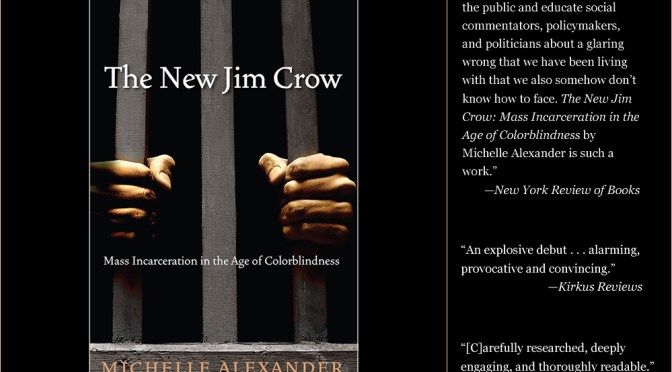
Michelle Alexander’s ‘The New Jim Crow,’ a troubling and necessary book
Columnist Leonard Pitts Jr. suggests reading “The New Jim Crow,” by Michelle Alexander, who contends that the mass incarceration of black men for nonviolent drug offenses, combined with sentencing disparities and laws making it legal to discriminate against felons in housing, employment, education and voting, constitute nothing less than a new racial caste system.
Syndicated columnist
Related
“You have to face the fact that the whole problem is really the blacks. The key is to devise a system that recognizes this all while not appearing to.”
— Richard Nixon as quoted by H.R. Haldeman, supporting a get-tough-on drugs strategy
“They give black people time like it’s lunch down there. You go down there looking for justice, that’s what you find: just us.”— Richard Pryor
Michelle Alexander was an ACLU attorney in Oakland, preparing a racial-profiling lawsuit against the California Highway Patrol. The ACLU had put out a request for anyone who had been profiled to get in touch. One day, in walked this black man.
He was maybe 19 and toted a thick sheaf of papers, what Alexander calls an “incredibly detailed” accounting of at least a dozen police stops over a nine-month period, with dates, places and officers’ names. This was, she thought, a “dream plaintiff.”
But it turned out he had a record, a drug felony — and she told him she couldn’t use him; the state’s attorney would eat him alive. He insisted he was innocent, said police had planted drugs and beaten him. But she was no longer listening. Finally, enraged, he snatched the papers back and started shredding them.
“You’re no better than the police,” he cried. “You’re doing what they did to me!” The conviction meant he couldn’t work or go to school, had to live with his grandmother. Did Alexander know how that felt? And she wanted a dream plaintiff? “Just go to my neighborhood,” he said. “See if you can find one black man my age they haven’t gotten to already.”
She saw him again a couple of months later. He gave her a potted plant from his grandmother’s porch — he couldn’t afford flowers — and apologized. A few months after that, a scandal broke: Oakland police officers accused of planting drugs and beating up innocent victims. One of the officers involved was the one named by that young man.
“It was,” says Alexander now, more than 10 years later, “the beginning of me asking some hard questions of myself as a civil-rights lawyer. … What is actually going on in his neighborhood? How is it that they’ve already gotten to all the young African-American men in his neighborhood? I began questioning my own assumptions about how the criminal-justice system works.”
The result is a compelling new book. Others have written of the racial bias of the criminal-injustice system. In “The New Jim Crow,” Alexander goes a provocative step further. She contends that the mass incarceration of black men for nonviolent drug offenses, combined with sentencing disparities and laws making it legal to discriminate against felons in housing, employment, education and voting, constitute nothing less than a new racial caste system. A new segregation.
She has a point. Yes, the War on Drugs is officially race-neutral. So were the grandfather clause and other Jim Crow laws whose intention and effect was nevertheless to restrict black freedom.
The War on Drugs is a war on African-American people and we countenance it because we implicitly accept certain assumptions sold to us by news and entertainment media, chief among them that drug use is rampant in the black community. But. The. Assumption. Is. WRONG.
According to federal figures, blacks and whites use drugs at a roughly equal rate in percentage terms. In terms of raw numbers, whites are far and away the biggest users — and dealers — of illegal drugs.
So why aren’t cops kicking their doors in? Why aren’t their sons pulled over a dozen times in nine months? Why are black men 12 times likelier to be jailed for drugs than white ones? Why aren’t white communities robbed of their fathers, brothers, sons?
With inexorable logic, “The New Jim Crow” propounds an answer many will resist and most have not even considered. It is a troubling and profoundly necessary book.
Please read it.
Miami Herald columnist Leonard Pitts Jr.’s column appears regularly on editorial pages of The Times. His e-mail address is: lpitts@miamiherald.com
Wednesday’s tragic murder of nine black parishioners in Charleston’s Emanuel African Methodist Episcopal Church by a 21-year-old white man wanting “to start a civil war” is weighing heavily on the hearts of all of us. We cannot begin to understand the grief felt by the families of those lost or the Charleston community. But we can speak about what we do know. This was a racist committing a racially motivated murder. This was another tragic example of how guns too easily fall into the hands of dangerous people. This was a terrorist act.
Here is a round-up of the columns and news that we are reading and talking about. We hope they foster and inform your conversations, reflections, and actions too:
1. Jelani Cobb in The New Yorker: Murders in Charleston. “We have, quite likely, found at 110 Calhoun Street, in Charleston, South Carolina, the place where Columbine, Aurora, and Newtown cross with Baltimore, Ferguson, and Sanford.”
2. Ta-Nehisi Coates in The Atlantic: Take Down the Confederate Flag—Now. “Moral cowardice requires choice and action. It demands that its adherents repeatedly look away, that they favor the fanciful over the plain, myth over history, the dream over the real. Here is another choice. Take down the flag. Take it down now.”
3. Jeff Duo in the Washington Post: The legal loophole that allowed Dylann Roof to get a gun. “Dylann Roof, the man accused of a shooting spree that left nine people dead at a historic black church in Charleston on Wednesday night, should not have been able to get a gun.”
4. Jamelle Bouie in Slate: The Black American Holiday Everyone Should Celebrate but Doesn’t. “Juneteenth isn’t just a celebration of emancipation, it’s a celebration of our commitment to make it real.”
5. Jennifer Mascia in The Trace: Charleston Area Faced Gun Violence Spike Before Church Shooting. “Nearly eight out of every 10 killings in the area last year involved a firearm.”
6. Dan Wasserman’s editorial cartoon in The Boston Globe:

CREDIT: Dan Wasserman
And be sure to check out the latest news and opinions from our partners at ThinkProgress:
1. Judd Legum: NRA Board Member Blames Charleston Victim For His Own Death. Seriously.
2. Ian Millhiser: When John Roberts Said There Isn’t Enough Racism In America To Justify The Voting Rights Act. It’s a sordid business, this divvying up the amount of racism in the United States to decide whether Congress is allowed to enact laws intended to fix it.
3. Jack Jenkins: How The Charleston Shooting Is Linked To The Confederate Flag, According To A South Carolinian. While the Confederate flag is certainly about heritage, it is and always has been about hate.
4. Kiley Kroh: Charleston Victim’s Son Addresses Media On The Baseball Field. “Love is always stronger than hate. So if we just love the way my mom would, then the hate won’t be anywhere close to where the love is.”
Wishing you a safe and peaceful weekend.
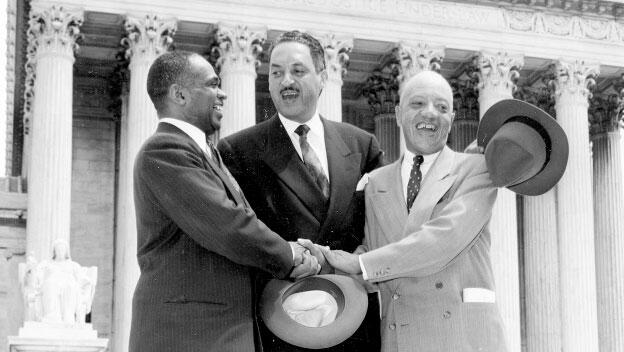
On May 17, 1954, Supreme Court under Chief Justice Earl Warren rendered a unanimous, landmark decision (9-0) declaring that state laws establishing separate public schools for black and white students and denying black children equal educational opportunities unconstitutional. The Brown v. the Board of Education of Topeka ruling overturned previous “separate but equal” rulings, including the 1896 decision, Plessy v. Ferguson. In effect, separation by race de jure (by law) violated the Equal Protection Clause of the Fourteenth Amendment of the United States Constitution.
In 1951, thirteen Topeka parents filed the class action lawsuit on behalf of their 20 children in the United States District Court for the district of Kansas. Leaders of the Topeka NAACP recruited the plaintiffs with Oliver Brown as the named plaintiff in the suit. The contention was that the state of Kansas, essentially, did not comply with separate but equal facilities for black and white children. Oliver Brown’s daughter, Linda, had to walk 6 blocks to catch a school bus that took her to the black elementary school 1 mile from their neighborhood, while a white elementary school was only seven blocks from the Browns’ home. Brown tried to register Linda at the school but was rejected. The Brown lawsuit was presented before the Supreme Court on appeal along with other suits representing plaintiffs in Washington, D. C., Virginia, South Carolina and Delaware.
The plaintiffs by name are as follows: Oliver Brown, Darlene Brown, Lena Carper, Sadie Emmanuel, Marguerite Emerson, Shirley Fleming, Zelma Henderson, Shirley Hodison, Maude Lawton, Alma Lewis, Iona Richardson, and Lucinda Todd.
Chief counsel for the NAACP, Thurgood Marshall, argued the case before the Supreme Court.




 Be a Seed for Change
You must be logged in to post a comment.