Tag Archives: Senate

U.S. Dept. of Health & Human Services ~ Public Health Emergency Weekly Report


National Preparedness Month 2015

National Preparedness Month serves as a reminder that we must take action to prepare for disasters now and throughout the year. Learn what we are doing and what you can do to help keep yourself, your family, and even your community safe and healthy in a disaster.  Learn More >>

Series of icons: people, health, city, computer

Don’t Wait! Communicate! Make your Emergency Plan Today!

When disaster strikes, your family might not be together. Make a plan so that your family can get in touch with each other. Learn about your area’s emergency alerts, have a plan for finding your loved ones in a disaster, share information, and practice your plan.  Get started today!  Learn More >>

Don't Wait! Communicate! Make your Emergency Plan Today!

Staying Healthy with a Hurricane and a Baby on the Way

Shelly Lopez Gray, MSN, RNC-MNN, IBCLC; Labor and Delivery Nurse at Houston Methodist San Jacinto, recalls how she relied on her mom, her neighbors, and some emergency supplies to help her make it out of Houston, TX safely during a 17 hour evacuation in advance of Hurricane Rita. Learn More >>

Shellie Lopez-Gray and Baby

Overpacker or Prepared?  A Plan & a Go-bag Helped this Dad’s Family When Seconds Counted.

Ron Piedrahita has an unusual talent: he can get a lot of stuff into a very small space.  He is also meticulous about keeping his family’s go-bags up to date.  When a derecho blew through his neighborhood, Ron was able to get his family out of the house in minutes with everything from clothes that fit his growing toddler to her favorite stuffed animal, “piggy”, thanks in part to his well-stocked and frequently updated go-bags.  Learn More >>

Public Health Emergency. Resilient People. Healthy Communities. A Nation Prepared.


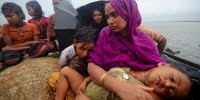
Floating coffins


 Avaaz's profile photo
Dear friends,The most persecuted peoples on our earth are right now taking to ‘floating coffins’ to flee violence and seek sanctuary for their families. But instead of responding with humanity, our governments are closing their doors, letting them starve and drown at sea.

The Mediterranean and Andaman Seas are becoming graveyards.

Burma is driving the Rohingya out, and thousands of families are drifting helplessly at sea, forced to drink their own urine because Malaysia, Thailand and Indonesia had turned them away. Syrians and Africans risk drowning every week off the coast of Southern Europe, braving the terrifying crossing as their last hope to escape torture, hunger, and traffickers.

We are facing the biggest refugees crisis since World War II, but so far governments have let them die in a climate of rising xenophobia. Now it has reached a crisis, and our community has a unique chance to jam the culture of fear with a wave of compassion.

If we each chip in a small amount now, we’ll help fund rescue operations at sea; build an Avaaz refugee team to assist those missions and resettlement, and create effective lobby cells to get leaders to open up borders; and launch ads to counter the racism.

Together we can help rescue refugees, and rescue our shared humanity.

Unless we act fast, 2015 could become the year of the boat people!

Pledge to urgently launch the Avaaz refugee campaign — Avaaz will only process your donations if we raise enough to start saving lives:

To pledge another amount, click here.
Avaazers have already kick-started this campaign in the UK. The government has only allowed in 143 Syrians out of the 4 million refugees! In response, over 1,000 Avaazers have joined forces to challenge this disgraceful policy by offering to help refugees resettle, and calling on their local councils to give homes to 50 Syrian refugees each. Already 4 councils have agreed and with our pressure, we hope many more will too.

But this isn’t just a UK and Syria problem. It is a crisis of humanity when our planet’s most vulnerable are treated as criminals and left to die. Here’s a five point plan of the most critical actions Avaaz could take if we raise enough together:

  1. Support organisations that are bravely rescuing the refugees at sea.
  2. Launch Flotillas for Humanity with more private boats to assist rescue operations.
  3. Build an Avaaz refugee team to lobby governments, the EU and the Association of South East Asian Nations (ASEAN) to push for effective search and rescue operations, and increased numbers of refugee places.
  4. Support local groups in Europe and South East Asia to provide assistance to refugees arriving in reception centres, and into communities.
  5. Run hard hitting billboards and newspaper ads to counter the culture of xenophobia.

30 thousand refugees could drown in the Mediterranean this year. These families are fleeing terror and misery, and their choice to board a boat may be the only choice they have. Let’s join forces to stop these tragedies at sea. Pledge now:
Our community is one of the only in the world with millions of citizens in both the countries from which these families are fleeing and the countries they are seeking help. We have already funded extraordinary work to tackle Ebola and humanitarian work in Nepal. Now let’s take on this emergency and catalyse change with acts of inspired love and inspired bravery.

With hope and determination,

Alice, Ben, Oli, Diego, Mais, Emily, Dalia, Ricken and the Avaaz team

SOURCES:

Myanmar Muslim migrants abandoned at sea have been ‘drinking their own urine’ to survive  (The Independent UK)
http://www.independent.co.uk/news/world/asia/myanmar-muslim-migrants-abandoned-at-sea-drinking-their-own-urine-to-survive-after-thailand-refuses-boat-entry-10249854.html

Syria Refugee Regional Response (UNHCR)
http://data.unhcr.org/syrianrefugees/regional.php

Mediterranean migrants: Details emerge of deadly capsize (BBC)
http://www.bbc.com/news/world-europe-32399433

Lost at sea, unwanted: The plight of Myanmar’s Rohingya ‘boat people’ (CNN)
http://edition.cnn.com/2015/05/19/asia/rohingya-refugee-ships-explainer/

Stranded Rohingya migrants say: ‘We’re dying on board’ (Al Jazeera)
http://www.aljazeera.com/news/2015/05/stranded-rohingya-migrants-dying-board-150517130244345.html

Walker’s Wisconsin


By

As Governor, Scott Walker Has Protected The Wealthy Few At The Expense Of Middle-Class Families

The GOP has its newest official candidate today, with Wisconsin Gov. Scott Walker becoming the 15th Republican candidate to enter the presidential race. While Gov. Walker claims he is worried about the American dream becoming “out of reach” for too many families, his record in Wisconsin has proven to promote an economy that benefits the wealthy few at the expense of the middle class. New analysis by CAP Action shows that during Walker’s tenure, middle-class incomes fell $728 from 2011 to 2013, ranking the state 44th in the nation in middle-class income growth. Meanwhile, the 1% have the lowest tax rates in the state.

Even in the midst of his presidential announcement, Gov. Walker has continued hurting the middle class. Yesterday, Walker signed a state budget which included a last-minute amendment to remove a provision to allow workers to file a complaint if they are not paid a “living wage.” The living wage in Wisconsin, according to an MIT study, comes out to $10.13 an hour, while the minimum wage in Wisconsin is only $7.25. That means that if Walker were to actually follow the state’s living wage law, the 41,000 minimum wage workers in the state would earn $5,990 more per year, putting a cumulative $245,600,000 in the pockets of Wisconsin workers annually.

Check out this infographic to get the facts on Walker’s Wisconsin:

BOTTOM LINE: Scott Walker has feigned concern for the middle class, but the reality is that he has stood on the side of the wealthy few. From tax breaks for the top one percent to eliminating the state’s living wage laws, hardworking Wisconsin families have paid the price for Walker’s political gain.

Mayor Rauner … seems to be against his constituents


  Rauner suspends $26 million in social services, public health grants

Rauner suspends $26 million in social services, public health grants

Gov. Bruce Rauner’s office worked with the Departments of Human Services and Public Health “to see which grants could be suspended and prioritized essential services.”


Associated Press

Illinois Gov. Bruce Rauner suspended $26 million in social services and public health grants as part of his push to whittle away at a $1.6 billion shortfall in the current state budget.

The Republican’s office released a list of targeted programs late Friday that included funding to pay for the funerals and burials of public-assistance recipients, smoking cessation, teen programs, autism, and HIV and AIDS programs, among other things.

Rauner also froze $3.4 million in funding for immigrant integration assistance as part of ongoing efforts to keep the state rolling through the June 30 end of the fiscal year.

Rauner’s office said the check-writing halt – he also interrupted $180 million in parkland grants in March – is necessary because the expenditures were based on the assumption a temporary income tax would be extended past January, but it wasn’t after Rauner won the election.

“Part of the solution to solving the inherited $1.6 billion budget hole without raising taxes or increasing borrowing is to continue to evaluate the current fiscal year’s budget,” Rauner spokeswoman Catherine Kelly said. “The governor’s office worked with agencies to see which grants could be suspended and prioritized essential services.”

The cuts will save the state $21.8 million in Department of Human Services Grants and $4.5 million in unexpended funding through the Department of Public Health. The suspensions only affect this year’s funding, Kelly said.

But there’s always another price – this one paid for by constituents who, as soon as Monday morning, will be told through closed doors there’s no more money to help them.

Breandan Magee, senior director of programs for the Illinois Coalition for Immigrant and Refugee Rights, said dozens of organizations assisted 102,000 legal immigrants in 2014 with applications for citizenship, English as a Second Language classes and health and nutrition programs for low-income immigrants.

“There are 299 jobs across 60 different immigrant-services agencies at risk” with funding ceasing, Magee said Saturday. “There are workshops scheduled for citizenship, applications for citizenship pending, ESL classes hallway through.”

Immigrant integration programs – which Rauner proposed eliminating entirely in the 2016 budget – will forfeit nearly half of their $6.7 million budget, according to figures provided by the governor’s office. Magee said he hopes the state will cover expenses he’s already incurred.

A copy of Friday’s letter from Human Services, obtained by The Associated Press, notifies the recipient to “immediately cease incurring additional obligations, costs or spending any further grant funds.” Agencies must submit records of all spending for the year. Jimi Orange of Children’s Home and Aid faces the unenviable task of telling up to 25 of the 100 children in Chicago’s impoverished West Englewood neighborhood they can’t come to Earle Elementary School for after-class tutoring and cultural activities because the state has recalled the remaining $3.1 million of Teen REACH money for kids ages 7 to 17.

“The staff’s concern is how to tell the families? What to tell the kids? How to tell the kids?” Orange said. “These are kids who already have abandonment issues, trust issues.”

Parkland-related grants Rauner has suspended this year include $90 million for park facility construction, $56 million for local governments to purchase open space for future parkland, and $30 million for museum capital-construction grants.

Grants suspended by Rauner include:

DEPARTMENT OF HUMAN SERVICES

Funeral & Burial, $6.9 million

Rauner’s ‘turnaround budget’ has cuts called ‘reckless,’ ‘wrong priorities’

You be the judge. Look at the list below and decide if grants for the Homeless or for HIV assistance, Addiction  prevenetion, and so on are reckless.

Immigrant Integration Services, $3.4 million

Welcoming Centers, $191,300

ARC Lifespan, $118,100

Best Buddies, $250,000

Autism, $1 million

Group Home Loans, $20,000

Compulsive Gambling $406,000

Westside Health, $94,200

Addiction Prevention, $1.6 million

Assistance for Homeless, $300,000

Community Services, $2 million

Teen REACH, $3.1 million

Coalition F/Tech Assist-Child, $250,000

For Children’s Health Program, $231,600

Outreach to Individuals to Engage in Services, $380,700

Regions Special Consumer Support, $277,700

SMRF Training, $420,100

Transportation, $43,900

DD Latino Outreach, $87,500

Microboard Development and Outreach, $47,500

Epilepsy, $514,700

DHS TOTAL: $21.8 million

DEPARTMENT OF NATURAL RESOURCES

Brothers and Sisters United Against HIV/AIDS, $789,800

Increasing Access to Health Care-Wellness on Wheels, $180,000

Wellness on Wheels – Mobile Administration 2015, $135,000

Illinois Tobacco Quitline, $3.1 million

Project Safe Sleep Education and Outreach, $250,000

MidAmerica Regional Public Health Leadership Institute, $75,000

IDPH TOTAL: $4.5 million

DEPARTMENT OF NATURAL RESOURCES*

Park and Recreational Facility Construction, $89.5 million

Open Space Lands Acqusition and Development, $56.3 million

Museum Capital Grants, $30.4 million

Bike Paths, Mud-to-Parks, others, $2.6 million

IDNR TOTAL: $178.8 million

*Grants suspended in March

Better Than Billionaires


By

Automatic Voter Registration Allows More Americans’ Voices To Be Heard

“Who’s your billionaire?” Now more than ever, any serious presidential candidate needs to have an answer for this question. Over the weekend, we found out who the answer for Senator Marco Rubio is: Norman Braman, a billionaire auto dealer from Miami.

Braman isn’t just supporting Rubio’s White House bid to the expected tune of $10 million; he has been a key figure in Rubio’s professional and personal life for many years. Here is the New York Times report:

As Mr. Rubio has ascended in the ranks of Republican politics, Mr. Braman has emerged as a remarkable and unique patron. He has bankrolled Mr. Rubio’s campaigns. He has financed Mr. Rubio’s legislative agenda. And, at the same time, he has subsidized Mr. Rubio’s personal finances, as the rising politician and his wife grappled with heavy debt and big swings in their income.

To state the obvious: The increasing influence of big money in politics from donors like Norman Braman, the Koch Brothers, and others, drowns out the voices of everyday Americans in the political process. There are a number of ways to combat this threat to democracy; one big target for reformers is to overturn the judicial decisions like Citizens United that have opened the floodgates to unlimited spending on elections. That is a critical fight.

Here is another important way to make it easier for all citizens to have their voices heard: make voting more accessible. One of the most progressive methods for doing that is called Automatic Voter Registration (AVR), a system by which states would integrate information from existing government databases — such as departments of motor vehicles, the Postal Service, revenue agencies, and others — to compile and update the voting rolls with information that they already collect. Oregon just became the first state in the country to implement this type of system, and it expects to add 300,000 people to voter rolls as a result.

Now, a new report from the Center for Popular Democracy outlines some of the transformative impacts AVR would have across the country. If Automatic Voter Registration were adopted in all states, it would potentially result in 55 million new voters added to the rolls.

AVR would result in the registration of currently underrepresented communities as well, including approximately:

  • 17 million new Black and Latino registrants
  • 31 million registrants under age 45
  • 29 million registrants with an annual income of $50,000 or less

While most voting rights news focuses on the concerted efforts by conservatives to suppress the vote, especially among disadvantaged communities, automatic voter registration is gaining momentum. California, which just advanced its own AVR bill late last month, could be the next state to take this important step.

BOTTOM LINE: With our campaign finance laws continuing to loosen, millionaires and billionaires will only increase the amount of influence they exert in our political process. But there are important steps being taken to counter them: policies like automatic voter registration would register millions of voters, raise voter turnout, and make our democracy healthier and more representative of its citizens.

politics,pollution,petitions,pop culture & purses