Good afternoon–This week, thousands of folks have shared how $40 less in every paycheck would affect them if Congress didn’t extend the payroll tax cut for 160 million Americans.And it worked.This afternoon, lawmakers got this done. The President will sign that bill into law next week, and we’ve already invited some of the folks who shared their stories to come to the White Housewhen he does.The past few days have been a constant reminder of how incredible it can be when people from all walks of life join together to speak out. On Tuesday, we sat down with another group of Americans who added their voices to the debate, and they recorded a message just for you. It’s a powerful thing to watch.
There will be other fights in the weeks and the months ahead when the kind of engagement they’re talking about in this video could make all the difference. So check it out, then pass it along to anyone who is skeptical that real people can’t have an impact:
Our grassroots movement to repealCitizens United is gaining steam. Progressives from across the country are coming together in a fight to bring transparency back to our elections and give our democracy back to the people.
Karl Rove and the corporate-backed special interests are enjoying their new privileges — Rove just announced that his “Crossroads” group raised more than $50 million last year.
And they’re counting on our momentum to slow down. But we have to show them that we’re not going to stop until we’ve repealed Citizens United once and for all.
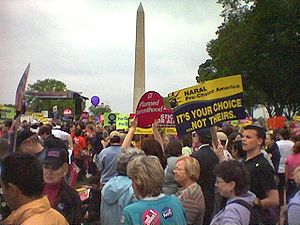
When the news got out that the Susan G. Komen foundation had cut off funding for breast cancer screenings at Planned Parenthood, men and women across the country were outraged. They didn’t understand the decision, they didn’t agree with it—and they did something about it. They made their voices heard loud and clear, and they got results. Komen did the right thing and announced that they had reversed their initial decision—and I want to commend them for that. Their mission— and their great work in the fight against breast cancer— is too important to get mixed up in partisan politics. Although this reversal was a great victory for so many women across America, let’s be clear: Our fight for women’s health does not end here. There are still many who will continue to put partisan politics ahead of women’s health and we need to make sure that the grassroots support and energy that successfully came together to right this wrong continues to stand firm against each and every attack that comes our way.
This week, I had the opportunity to chat one-on-one with veterans across the country in a Virtual Town Hall Meeting, organized by Disabled American Veterans, a non-profit charity dedicated to building better lives for America’s disabled veterans and their families. In the hour-long chat, I heard from people on a wide range of issues including mental health care, VA claim wait times, women veterans, and veterans jobs. Over 3,000 veterans, members of the military, and family members participated in the chat. I will use the struggles, stories, and suggestions I heard to continue to fight for veterans in Washington, D.C. – Read more
Lonnie Bunch, museum director, historian, lecturer, and author, is proud to present A Page from Our American Story, a regular on-line series for Museum supporters. It will showcase individuals and events in the African American experience, placing these stories in the context of a larger story — our American story.
A Page From Our American Story
Members of the Tuskegee Airmen Circa May 1942 to Aug 1943 Location unknown, likely Southern Italy or North Africa
Not many people know the entire story of the Tuskegee Airmen. The Smithsonian’s National Museum of African American History and Culture is going to change that. The Tuskegee Airmen epitomize courage and heroism. Their story, however, is more than just their legendary success escorting American bombers over Nazi Germany.
Their story begins more than 23 years earlier. In fact, from the early days of World War I, African Americans wanted to serve as pilots in the Army Air Force. They were repeatedly rejected — because of their race. In 1941, when Congress finally forced the Army Air Force to train African Americans, the powers in the Pentagon created a training program with one purpose — wash out the men who want to be aviators.
However, the Pentagon was in for a surprise — the Tuskegee Airmen did not fail. They would succeed and go on to serve in spectacular fashion. Their success would force military leaders to take a hard look at the policies of segregation that treated black servicemen and women as second class citizens.
I offer this brief, brief summary of the Tuskegee Airmen story as a way of introducing a short, but fascinating video that features a treasured object in the Museum’s collection — a restored World War II-era PT-13 Stearman used to train many of the Tuskegee Airmen. The video documents this biplane’s historic journey across the nation on its way to being presented to the Museum in the summer of 2011.
The addition of the PT-13 Stearman helps bring the powerful story of the Tuskegee Airmen to life. Together they help fulfill the Museum’s mission to engage, educate, and bring pride to all Americans.
The National Museum of African American History and Culture is the newest member of the Smithsonian Institution’s family of extraordinary museums.The museum will be far more than a collection of objects. The Museum will be a powerful, positive force in the national discussion about race and the important role African Americans have played in the American story — a museum that will make all Americans proud.








 Members of the
  Click here to take flight with the Spirit of Tuskegee!


You must be logged in to post a comment.